REVIEW · AMSTERDAM
Rijksmuseum & Amsterdam City Center Semi-Private Tour 12ppl Max
Book on Viator →Operated by Babylon Tours Amsterdam · Bookable on Viator
Small groups make the Rijksmuseum feel human. I like the skip-the-line entry that keeps your morning moving, and I like the all-day Rijksmuseum ticket so you can come back after the walk. This semi-private tour (max 8) also gives you a proper orientation to Amsterdam’s sights without the squeeze of a big bus-group schedule.
One possible drawback: it’s a lot of walking after lunch, and it’s not recommended for anyone with walking disabilities or using a wheelchair. Some stops are quick views from the street or courtyard, not long museum-style visits.
On top of the format, I’m glad the guide quality shows up in the details. One guide named Diana is specifically described as excellent and accommodating, especially for making the Rijksmuseum time feel organized instead of overwhelming.
In This Review
- Key things I’d plan for
- Getting to the right spot at 10:00am: start smart, start calm
- Inside the Rijksmuseum: 2.5 hours that doesn’t feel like a blur
- What you’ll actually focus on
- Don’t trip over the museum rules
- Lunch break: you choose the food, then you choose your energy
- The canal-and-cobblestone walk: Amsterdam’s core sights, paced for humans
- How the stops work (and what to expect at each)
- Churches, towers, and old city walls: the quieter Amsterdam side
- Chinatown streets to market squares: Zeedijk and Nieuwmarkt at walking speed
- Canal-company landmarks: guild halls, East India Company courtyards, and house geometry
- From Rembrandt to the Stopera: art, government, and the city’s layered identity
- Canal mansions and the end-of-walk payoff near Papeneiland
- What this costs and why it can still be good value
- Who should book this Rijksmuseum and city-center tour
- Should you book this tour?
- FAQ
- Is this tour a small group or a large group?
- What is the duration of the tour?
- What time does the tour start?
- Where does the tour start and where does it end?
- Is lunch included?
- Is the tour in English?
- Are entrance fees included?
- Can I return to the Rijksmuseum after the tour ends?
- Does the tour run in bad weather?
- Who should avoid booking?
Key things I’d plan for
- Max 8, semi-private pacing: enough attention from your guide without feeling herded.
- Rijksmuseum entry is the anchor: you start at 10:00 am and prebooking is meant to guarantee access.
- A “museum first, street second” day: you get 2.5 hours inside the Rijksmuseum, then a long historic walk.
- Lunch is on your own: you get a break, but you’ll need to choose where to eat near the route.
- Not every stop includes entry: several sights are free to view, but a few entrances are marked as not included.
- Rijksmuseum security rules matter: no large bags; handbags or small thin bag packs are allowed through security.
Getting to the right spot at 10:00am: start smart, start calm
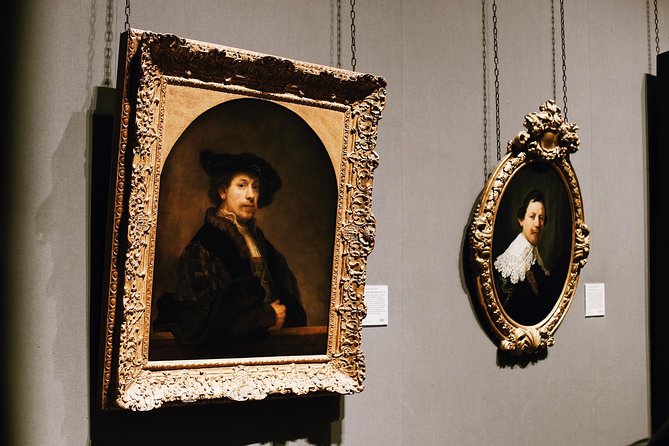
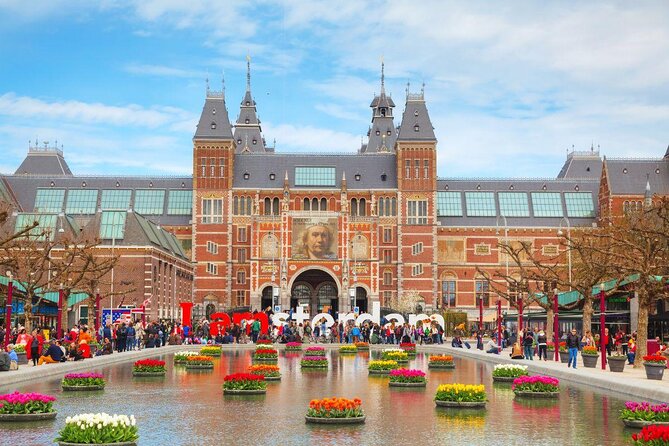
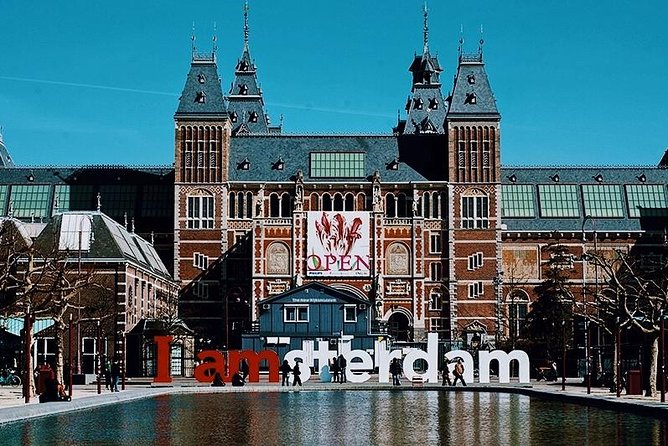
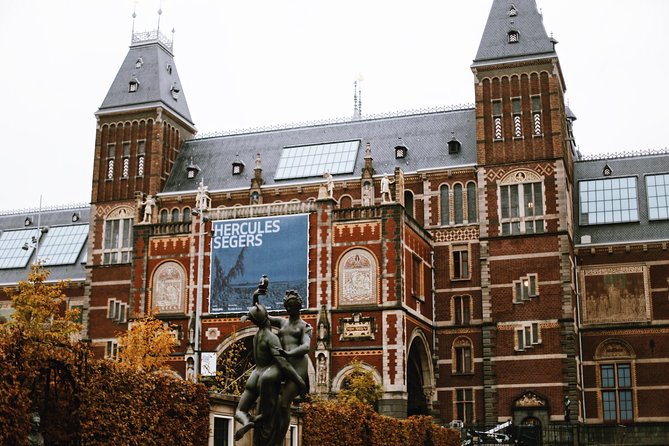
This tour starts at 10:00 am in the Amsterdam canal-center area. The listed meeting point is Cobra Café on Hobbemastraat 18, and the tour description also points you to the letter I on the giant I am Amsterdam sign outside the Rijksmuseum. Either way, the practical move is simple: show up a few minutes early and be ready to match up with your guide near the Rijksmuseum area.
From the start, the format is built around avoiding dead time. Prebooking is there to help you skip the often-long Rijksmuseum line, which makes a big difference when you’re trying to see both museum highlights and city-center sights in one day. Your tour also runs rain or shine, so you should dress for wet cobblestones and plan on using sidewalks and bridges, not shortcuts.
A quick heads-up on comfort: the tour is set up for people with moderate physical fitness. The route includes cobblestones and several walk segments, and it’s not positioned as an option for wheelchair users or anyone who struggles with sustained walking.
You can also read our reviews of more city tours in Amsterdam

Inside the Rijksmuseum: 2.5 hours that doesn’t feel like a blur
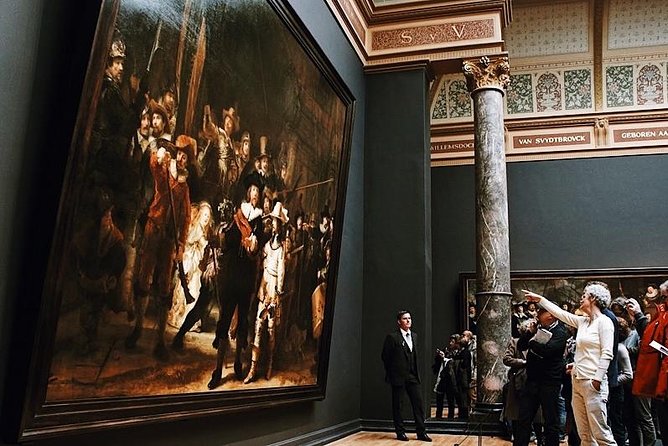
You start at the Rijksmuseum and spend about 2 hours 30 minutes inside. With the small group size (up to 8), the guide can pace the visit in a way that usually works better than the standard crowd shuffle. And because this is a semi-private set-up, you’ll get more chances to ask questions instead of waving your hand over shoulder-to-shoulder noise.
The big reason to care: the Rijksmuseum has more than 8,000 objects, so without a guide it’s easy to bounce from room to room and miss the thread. With a guide, you get a curated path through Dutch art and Dutch life, including artists you’ll recognize right away—plus some items that are less famous but more interesting than you’d expect.
What you’ll actually focus on
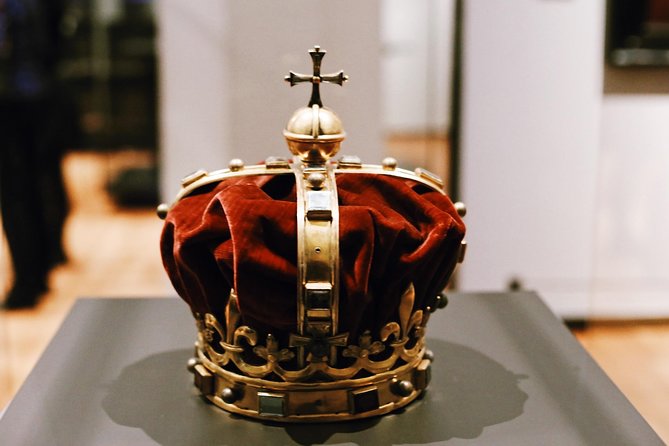
A good chunk of the time is geared toward making Dutch culture make sense through art. You’ll see major works tied to big names like Rembrandt and Vermeer, and you’ll also get context for why the museum’s collection tells a story across centuries. The description specifically calls out Rembrandt and Vermeer, including Vermeer’s The Milkmaid, plus smaller “wait, what is that?” objects like 17th-century dollhouses.
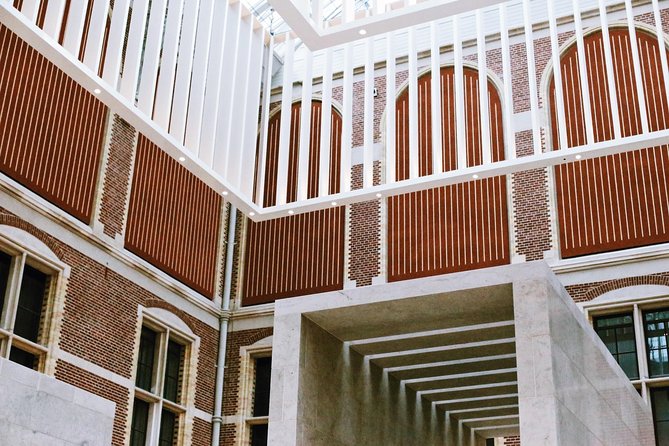
One of the more memorable parts of the museum visit is the 19th-century library—not just as a photo-stop, but as a way to show how literature fits into Dutch cultural identity. It’s the kind of stop that helps first-timers feel like they understand what the museum is about, beyond paintings hung on walls.
Don’t trip over the museum rules
Rijksmuseum security and site rules can make or break your mood. This tour notes that you’ll need to follow the baggage rules: no large bags or suitcases, only handbags or small thin bag packs through security. If you’re traveling with a bigger bag, plan for it before you arrive so you’re not scrambling at the checkpoint.
Also keep in mind that some rooms may be quiet or have restricted right to speak. Your guide will brief you before entering those spots, which helps everyone stay respectful—and helps you actually hear what matters.
Finally, the museum can occasionally have unexpected closures, and the notice says that if the opening time is delayed more than 1 hour from the tour’s start time, the tour will provide an appropriate alternative but refunds or discounts won’t be available in those cases. It’s rare, but it’s worth knowing.
Lunch break: you choose the food, then you choose your energy
The tour includes a lunch break, but lunch itself is not included. That’s actually a plus for many people: you’re not forced into one set meal, and you can pick something that matches your pace and cravings—quick bites near the route, a sit-down meal, or a snack you can eat while you reset.
How I’d handle it: eat something that won’t bog you down on cobblestone walking. You’ll then shift from museum interiors to outdoor history—medieval gates, canals, and bridges—so keep your lunch practical. Also, since your ticket is valid all day, you can return to the Rijksmuseum after the walking portion if you want a second look at a room you didn’t get enough time in.
You can also read our reviews of more private tours in Amsterdam





The canal-and-cobblestone walk: Amsterdam’s core sights, paced for humans

After the museum, your guide takes you on a historical walking tour through Amsterdam’s center. The walk is meant to help you get oriented fast: medieval boundaries, how the city grew around the Amstel River, and the look-and-feel of older streets.
You’ll spend time on the streets around canals and bridges, including cobblestone lanes and the kind of street geometry that makes Amsterdam feel instantly recognizable once you’ve walked it. The description frames Amsterdam as a city known for openness and vice as much as charm, and that’s the real value here: you learn context while you’re still in motion, so the city doesn’t feel like a list of landmarks. It feels like a place with cause-and-effect.
How the stops work (and what to expect at each)
A big portion of the experience is short, focused stops—some with optional or paid entrances later, many designed for exterior views and quick explanations. This matters because you’re not just sightseeing; you’re collecting a mental map.
Here’s the shape of what you’ll see:
Churches, towers, and old city walls: the quieter Amsterdam side
You begin the street portion with St. Nicholas Basilica, discussed as the city’s primary Roman Catholic church and as a building tied to a time when Catholics could profess faith publicly again after centuries of prohibition. The building is described as a blend of different architectural styles and artistic movements, and the stop is short, but the story behind it helps you “read” what you’re seeing.
Next comes the Weeping Tower (Schreierstoren), known as the Tower of Tears. Even if you only look at it briefly, the idea is clear: it’s linked to the belief that women wept there for husbands leaving from the port for war or fishing. It’s one of those odd local legends that sticks because it gives human emotion to a stone landmark.
Then you pass major religious architecture points like Zuiderkerk, Amsterdam’s first purpose-built Protestant church designed by Hendrick de Keyser. The tower is noted as a defining landmark, so you’re not left guessing what you’re looking at—this stop gives you a visual anchor.
If you want atmosphere, the day also includes hofjes, those tucked-away courtyard communities. Begijnhof is one, described as one of the oldest hofjes in Amsterdam, centered around a secluded courtyard and garden. The Beguines lived there under vows of chastity, and today it’s tied to two churches. It’s a great stop because it shows a different side of Amsterdam living—less postcard canal, more calm courtyard.
You’ll also see the Coöperatieve Vereniging Karthuizerhof (noted as the largest hofje in Amsterdam), again with an emphasis on how these places housed the poor and elderly around a tranquil courtyard. Even a quick look here helps you understand Amsterdam’s social design, not only its art and trade.
Chinatown streets to market squares: Zeedijk and Nieuwmarkt at walking speed
One of the most fun sections of the walk is heading through Zeedijk, described as the Chinatown of Amsterdam and filled with Asian markets, restaurants, shops, plus the Zeedijk Buddhist temple, noted as the largest Chinese-style Buddhist temple in Europe. This is more than a name-drop. It gives you a “today” Amsterdam moment while you’re still learning the “then” of historic city growth.
From there you reach Nieuwmarkt, a lively market square with commerce and socializing going back to the 17th century. The explanation ties it to the convenience of being inside the old city gate for traders seeking fresh produce. That kind of “why here, why then” makes the square feel logical instead of random.
Around Nieuwmarkt you also see De Waag, a 15th-century non-religious building and one of the oldest remaining examples of this type. It was originally part of city gate walls and later served roles including guildhall, museum, and firestation. Even if you don’t go inside, the guided framing helps you spot why the building is important.
Canal-company landmarks: guild halls, East India Company courtyards, and house geometry
Amsterdam’s wealth stories show up in buildings that look almost too refined for their age. This tour includes several pointed views tied to trade and architecture.
You’ll spot the Trippenhuis and Klein Trippenhuis. The guide description calls out the contrast: the Trippenhuis is Amsterdam’s widest home, spanning about 22 meters, while the Klein Trippenhuis is among the narrowest houses, placed across the street. Nearby details like narrow facades are explained through land taxes—so you understand the architecture as a response to economics, not just style.
You’ll also step into the courtyard of the Dutch East India Company’s headquarters at Oost-Indisch Huis, described as the birthplace of the world’s first multinational corporation. Even a short courtyard visit can feel meaningful here because Amsterdam’s canal-era power is basically trade infrastructure made visible.
Then there’s a practical, visual contrast with the Kleine Trippenhuis again as a reminder of tall, narrow design shaped by high land taxes. It’s the kind of detail your brain files under “Amsterdam makes sense,” which is exactly what a city orientation walk should do.
From Rembrandt to the Stopera: art, government, and the city’s layered identity

Not everything is a museum inside today, but art still matters in the street portion.
You’ll pass the Museum Het Rembrandthuis, Rembrandt’s house and art museum where he lived and worked from 1639 to 1656. The tour description frames the museum’s collection as including Rembrandt’s etchings and paintings of his contemporaries. You’re not doing a full interior visit here, but you are placing Rembrandt in a real street location rather than a timeline.
You’ll also see the Stopera, a building complex that houses Amsterdam’s city hall alongside the Dutch National Opera and Ballet. The stop’s description mentions that the construction took at least 60 years, which gives you context for why the complex looks the way it does and why it has been part of the city’s long-term planning story.
If you like the idea of connecting WWII memory to architecture and skyline, the tour pauses outside the Anne Frank House. It’s a quick moment, but the guide includes the basic directional context: the Westerkerk nearby has the tallest church tower in Amsterdam.
Canal mansions and the end-of-walk payoff near Papeneiland
As you get closer to the end, the walking tour leans into the “look up” part of Amsterdam. You’ll see ornate façades including Huis aan de Drie Grachten, a rare 17th-century canal house with façades facing in three directions.
You’ll also spot quirky gable stone details at De Drie Hendricken aan de Bloemgracht—the carved allegories and trade emblems are the kind of decoration you’d miss if you were just rushing for photos.
Then you reach Dam Square, a major hub with the Royal Place, New Church, and National Monument. The stop is short, but it’s helpful if you want a clean mental map of the city’s biggest public spaces.
After that comes the “Golden Bend” moment: Herengracht. The description focuses on the canal’s richest, most ornate canal mansions from the Dutch Golden Age. It’s one of the reasons the walk works even if you’ve seen Amsterdam pictures before. You start to feel the scale and rhythm of the canal streets.
Finally, the tour ends at Papeneiland at Prinsengracht 2, described as one of Amsterdam’s prettiest canal corners. There’s also a reference to Het Papeneiland, a brown café said to serve some of the best apple pie in town. Even if you don’t stop for pie (you might), the ending point is scenic and easy to build your next plan around.
What this costs and why it can still be good value
At $286.56 per person, this tour isn’t a bargain. But you’re paying for a mix that adds up: a guided Rijksmuseum visit with admission included, plus a long city-center walking tour in English with a maximum of 8 guests, which usually means more guide attention and less time wasted.
The other value piece is flexibility. Your Rijksmuseum ticket is valid all day, so you’re not stuck with only what fits into the scheduled tour window. If something catches your eye—say a specific room, painter, or the library—you can return later with less pressure.
Where the price can feel less worth it is if you dislike walking or if you want every stop to include long interior visits. Some sites on this route are exterior or courtyard viewing, and some entrances are listed as not included. You’ll get the context either way, but your expectations should match that “orientation walk” style.
Who should book this Rijksmuseum and city-center tour
This tour is a good match if:
- you want a small-group way to handle Amsterdam’s top museum
- you’d rather have a guide explain what you’re seeing than scan labels alone
- you like historic neighborhoods, canals, and architecture, not just one big museum ticket
- you’re comfortable walking cobblestones for several hours after lunch
This tour is a weaker match if:
- you need wheelchair access or you struggle with sustained walking
- you want every stop to include major interior time
- you travel with large suitcases, since Rijksmuseum bag rules will limit what you can bring inside
Should you book this tour?
If your priority is the Rijksmuseum without the stress of sorting out crowds and timing, I’d seriously consider it. The combination of prebooked entry, a focused museum narrative, and then a guided walk through Amsterdam’s core sights is a smart use of one day.
Book it when you want structure but not chaos—small group size, a real guide, and an ending in a scenic canal spot where you can keep exploring at your own pace. Skip it if you’re sensitive to lots of walking after lunch, or if you only want museum interiors and no street stops.
FAQ
Is this tour a small group or a large group?
It’s a semi-private tour with a maximum of 8 travelers.
What is the duration of the tour?
The tour runs about 5 hours 30 minutes (including the lunch break).
What time does the tour start?
It starts at 10:00 am.
Where does the tour start and where does it end?
It starts at Cobra Café, Hobbemastraat 18, 1071 ZB Amsterdam and ends at Papeneiland, Prinsengracht 2, 1015 DV Amsterdam.
Is lunch included?
No. There is a break for lunch, but lunch is own expense.
Is the tour in English?
Yes, the tour is offered in English.
Are entrance fees included?
All entrance fees are listed as included, and the Rijksmuseum admission ticket is specifically included for the museum portion. Some specific sites on the walking route are marked as not included.
Can I return to the Rijksmuseum after the tour ends?
Yes. Your Rijksmuseum ticket is valid all day, so you’re free to return after the walking portion.
Does the tour run in bad weather?
Yes. The tour will run rain or shine.
Who should avoid booking?
The tour is not recommended for walking disabilities or wheelchair use, and it requires moderate physical fitness.