REVIEW · AMSTERDAM
Self Guided City Tour in Amsterdam – Amsterdam Tulip
Book on Viator →Operated by Train your Brain tours · Bookable on Viator
Amsterdam has a way of surprising you. This self-guided Amsterdam Tulip route turns major sights into a game you can pace yourself, with audio and videos that you access on your phone via WhatsApp. You’ll start at Rembrandtplein and follow a tulip-shaped style walk that keeps you moving without herding you into a group.
I especially like the low-friction setup: no new app to download, just WhatsApp and login instructions, plus a mobile ticket. I also like that it’s built like a “do it your way” experience, so you can pause, backtrack a bit, or slow down at the spots that catch your eye.
The main thing to watch is timing and phone power. The route is long enough that if your battery dips or you stop often, you may end up taking longer than the 2 to 3 hours the activity suggests.
In This Review
- Key things I’d bank on before you go
- How Amsterdam Tulip works (and why it’s easier than it sounds)
- Price and value: $9.63 is the hook, but the format is the payoff
- Timing and logistics: plan for a longer day than the 2–3 hours
- Stop-by-stop: Rembrandtplein to De Wallen (what you’ll notice and why)
- 1) Rembrandtplein (starting point)
- 2) Muntplein
- 3) Begijnhof
- 4) Gay Monument
- 5) Anne Frank House
- 6) Nieuwe Kerk
- 7) De Beurspassage
- 8) Dam Square
- 9) Oude Kerk
- 10) Red Light District (De Wallen)
- 11) Equestrian statue of Queen Wilhelmina
- The best part: avoiding crowds without giving up context
- Who this fits best (and who might prefer something else)
- Should you book Amsterdam Tulip?
Key things I’d bank on before you go
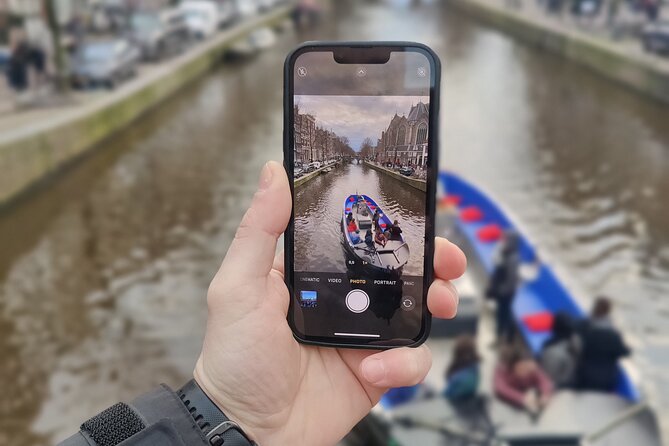
- WhatsApp-based self-guided experience with instructions and a mobile ticket, no dedicated app required
- 35-point route game with trivia-style questions to keep your attention
- 27 storytelling audio recordings plus 5 video stories for visual context
- Private, group-only feel so you’re not stuck behind strangers
- You pass the major landmarks from Begijnhof to the Red Light District, with pacing at your discretion
How Amsterdam Tulip works (and why it’s easier than it sounds)
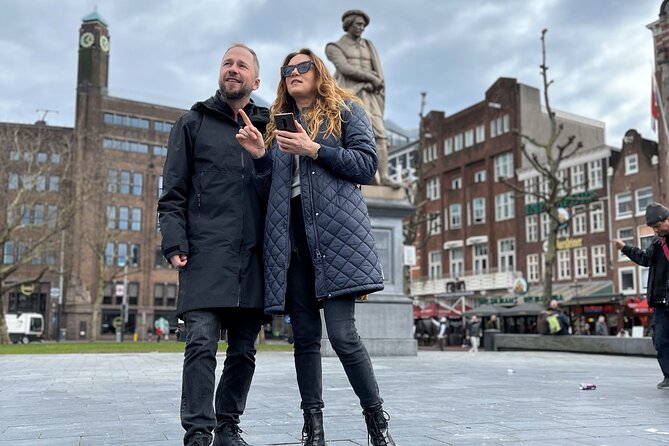
This is a self-guided city tour that feels structured, without acting like a fixed group tour. You get a login and instructions, then you follow a set route across central Amsterdam, learning through short audio segments, video clips, fun facts, and photo content.
The practical win is the delivery method. The experience is designed to work through WhatsApp on your phone, which means you can focus on walking and reading audio cues instead of wrestling with another app. You also get a mobile ticket, and the activity content remains available for 24 hours after you finish the route, so you’re not forced to “catch everything” in one sitting.
Because it’s private to your party, you can treat it like a personalized walk. Couple energy? Great. Family pace? Fine. Two friends wandering with curiosity? Perfect. You’re not trying to keep up with a guide, and you’re not managing a big group’s schedule either.
You can also read our reviews of more guided tours in Amsterdam



Price and value: $9.63 is the hook, but the format is the payoff
At $9.63 per person, this sits in the “cheap enough to try” category compared with a guided tour or museum add-ons. What makes it feel like good value is what you get for that price: a structured itinerary plus 27 audio recordings, 5 videos, and a 35-point interactive game layer.
You’re not paying for transport. You’re paying for time-saving context. Instead of just seeing Amsterdam landmarks as photos on a postcard, you’re getting quick storytelling chunks that help you understand what you’re looking at—especially the cultural bits that casual strolling can miss.
One more value point: it’s admission-light. The route’s stops are set so you’re not required to buy separate tickets to simply view the places along the way. That doesn’t mean every attraction on the route is open to you for entry, but it does keep this as a walk-first experience.
Timing and logistics: plan for a longer day than the 2–3 hours

The activity suggests 2 to 3 hours. In real life, there are two common reasons it stretches:
- you stop longer than expected at one or two of the big stops
- your phone slows down (battery drops, signal issues, or you spend time navigating around waterways and streets)
One of the easiest fixes is simple: start with a charged phone and ideally a power bank. Even if your route is efficient, you’ll use your phone constantly for prompts and audio.
A few logistics notes that matter:
- It runs daily in the activity window, with hours shown as 12:00 AM to 11:30 PM.
- It’s near public transportation, so you can get there easily and still keep your day flexible.
- There’s no WiFi on board (so don’t build your plan around expecting onboard internet).
- You should have moderate physical fitness since you’ll be walking the route.
And yes, it’s practical for kids. The format uses audio and mini-challenges, and it includes guidance when you approach sensitive areas so you can decide what’s comfortable for your group.
Stop-by-stop: Rembrandtplein to De Wallen (what you’ll notice and why)
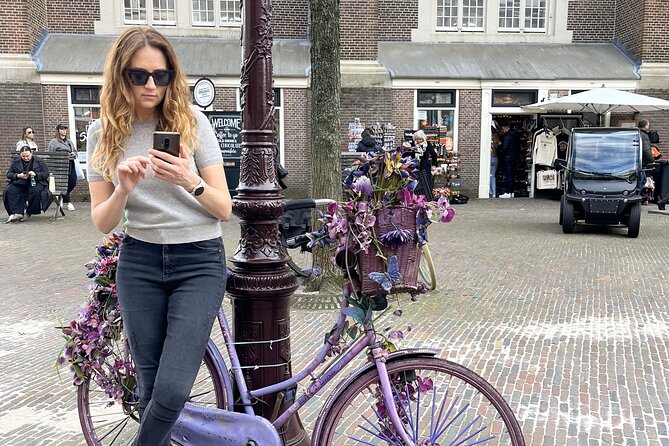
Here’s the route as you’ll experience it, with what’s worth paying attention to at each stop.
1) Rembrandtplein (starting point)
You begin at Rembrandtplein, which is a good choice because it gives you a clear anchor point and a lively central starting area. This is where the tour “clicks into gear”—you’re ready to walk, and the audio helps you orient fast.
Practical tip: stand still for a minute at the start and let the first audio prompt settle. It sets the tone for what to look for as you move.
You can also read our reviews of more city tours in Amsterdam





2) Muntplein
At Muntplein, you’ll get short information tied to the sight in front of you. This kind of stop is useful because it breaks up the walk and gives you a reason to look around instead of just passing through.
Drawback to note: with stops timed around a few minutes each, you can miss details if you rush. If something catches your eye, take an extra minute—just don’t let one stop eat your whole schedule.
3) Begijnhof
Begijnhof is the kind of place where Amsterdam’s character shows up in quiet corners. The tour gives you context so you’re not only noticing the architecture, but also the human history around the space.
What I like about this stop in a self-guided format: you can slow down at your own pace. These lanes and courtyards tend to reward unhurried looking.
4) Gay Monument
At the Gay Monument, the tour adds story and meaning so it isn’t just another statue. If you’re the type who likes understanding what public art represents, this stop is a strong one for that.
Consideration: this is a popular area on foot, so if you want photos, expect to wait a little or be flexible with your angles.
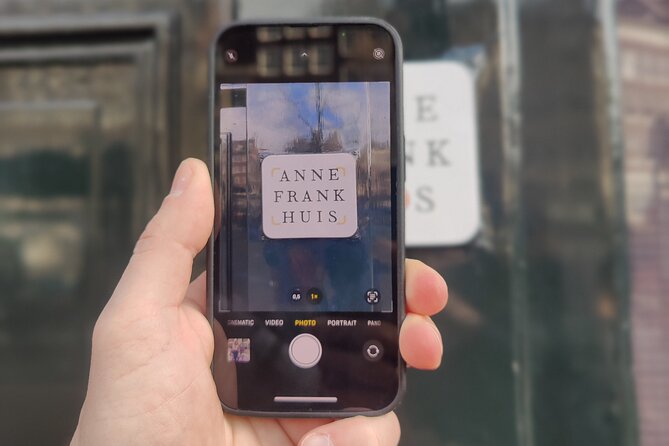
5) Anne Frank House
You’ll reach Anne Frank House, and the audio there is designed for quick learning during a brief viewing stop. Even if you know the basics, the tour format helps you notice what you might otherwise overlook while passing.
Important vibe check: this is an emotionally heavy stop. Give it a moment. Don’t treat it like a checklist item.
6) Nieuwe Kerk
At Nieuwe Kerk, you get guidance tied to what you’re seeing. Church buildings in Amsterdam can feel intimidating if you don’t know what to look for, so these short story segments help you focus.
Tip: if you’re stopping mainly for the tour content, use this as a reset. Quick audio, quick scanning, then move on.
7) De Beurspassage
De Beurspassage is one of those “Amsterdam hides things in plain sight” spots. The tour uses that to your advantage by giving you information you can connect to the space.
Why it works self-guided: you can read the prompts, look up, and then walk through at a natural pace without worrying about matching a guide’s footsteps.
8) Dam Square
At Dam Square, expect a longer stop. The tour gives you enough time to understand the place beyond the postcard version.
Reality check: Dam Square is busy and iconic. Self-guided pacing helps here because you can wait for a gap in foot traffic or step aside to get a clearer look.
9) Oude Kerk
At Oude Kerk, the tour gives quick context so the church reads like more than a landmark. This is another “look longer” stop if you enjoy architecture and old building details.
Good approach: don’t stare straight ahead the whole time. Angle your head, look at surrounding elements, and let the audio tie it together.
10) Red Light District (De Wallen)
Here’s where the experience really proves it can be flexible. The route includes De Wallen, and the tour content has a warning when you’re approaching the area, so you can decide how you want to handle it.
This is the stop where your comfort level matters most. If you prefer to keep things away, you can slow down, pause the audio, or simply view from a distance while you decide what to do next. The tour design supports your choice, rather than forcing a single “go look at everything” moment.
11) Equestrian statue of Queen Wilhelmina
The tour finishes with the equestrian statue of Queen Wilhelmina, another short learning stop. It’s a tidy way to close the storyline: you see Amsterdam through art, power, and public symbols.
Last-minute tip: don’t let your energy crash right at the end. Finish the audio prompt even if you think you know what you’re looking at—you might catch a detail you missed earlier.
The best part: avoiding crowds without giving up context

What makes this tour work for me is the balance. You avoid the stress of a big guided group, but you still get meaningful info as you walk. It’s not just “here are the places.” It’s “here’s why this place matters,” delivered in short pieces you can absorb on the move.
The game layer helps too. By answering trivia-style questions for points, you’re nudged to actually pay attention rather than letting Amsterdam rush by. And the tour structure gives you a reason to walk a longer route that still feels coherent.
One small bonus: the tour content includes lots of historical pictures, which can help you connect the street-level view to how things used to look. That’s especially useful in a city where the buildings can look timeless, even when the stories are very specific.
Who this fits best (and who might prefer something else)
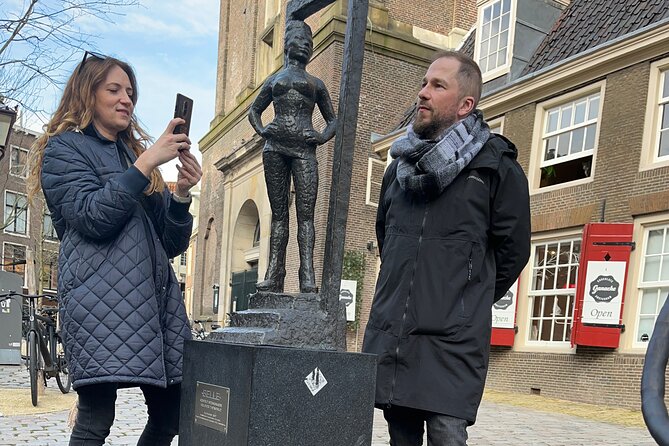
This is a strong pick if you want:
- a self-guided walk with a clear route and learning built in
- a format that works for couples, small groups, and families
- an “on your feet” way to see central Amsterdam landmarks without paying for guide time
It may be less ideal if:
- you hate interactive formats like quizzes and point scoring
- you rely on your phone for everything and don’t like carrying a charger
- you want long stops and deep museum-level learning, since this is built for a walk-first itinerary
Should you book Amsterdam Tulip?
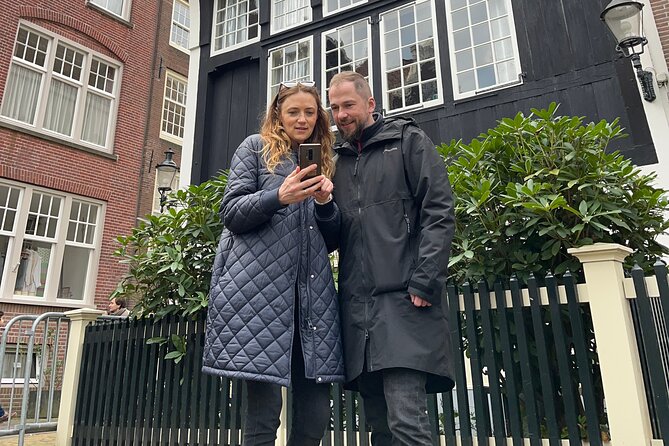
Book it if you want a cost-friendly way to get structure, stories, and a bit of fun while wandering Amsterdam on your own terms. At $9.63, with audio, video, and a points game, it’s a solid match for anyone who likes learning without being stuck to a schedule.
Skip it (or pair it with other plans) if you’re planning a day packed with museum tickets and you don’t want your phone to be your main companion. Also, if your group is very sensitive about adult-oriented areas, go in with a plan—this route includes De Wallen, and the tour warns you as you approach, but you’ll still be walking in that neighborhood.
If you do book it, I’d start with a fully charged phone and leave a little wiggle room. Amsterdam moves fast, and so will your curiosity once the audio starts talking.