REVIEW · AMSTERDAM
Van Gogh Museum Guided Tour •10 people• Face to Face with Vincent
Book on Viator →Operated by ScreenTours · Bookable on Viator
Brushstrokes become clues. This small-group Van Gogh Museum guided tour (up to 10 people) is built around meeting Vincent face-to-face, using his technique, influences, and emotional arc to turn the museum into a clear story. It runs about 2 hours and 30 minutes, and admission is included.
What I like most is how the guide brings you close to the work without turning it into a lecture. You’ll get a guided pathway through his brushstrokes and how his technique changed over time, plus why illness mattered in what he made. The second big win is the way the tour connects what’s on the canvas to where it came from: Japanese influences, Paris streets, and the way light and shadows show up in different periods.
One possible drawback: if you prefer wandering slowly and reading every label cover to cover, the 2.5-hour format can feel a bit structured. You’ll see a lot, but you won’t have free-roam time to go deep on every corner of the museum.
In This Review
- Quick highlights before you go
- Entering the Van Gogh Museum with a face-to-face mindset
- Small group pacing, and why it makes a difference
- Stop inside: brushstrokes, technique evolution, and the role of illness
- A practical tip: look for contrasts the guide calls out
- Japanese influences: how prints shaped the way he handled shadows
- Paris in the background: streets that trained his color
- If color is your thing, this section lands
- The last stage and the 70-day sprint of more than 80 paintings
- A balanced way to process it
- Theo and Jo Van Gogh: why the story didn’t end with Vincent
- Price and value: what $52.06 buys you
- Timing: 2 hours 30 minutes in a museum built for longer visits
- Guides matter: Ana’s style and why it shows up in the experience
- Should you book the Van Gogh Museum Face to Face tour?
- FAQ
- How long is the Van Gogh Museum Guided Tour?
- What is the meeting point?
- Where does the tour end?
- What time does the tour start?
- How big is the group?
- Is museum admission included?
- How do I receive my ticket?
- Who operates the tour?
- What is the price per person?
- Is free cancellation available?
- Is the tour suitable for most travelers?
Quick highlights before you go
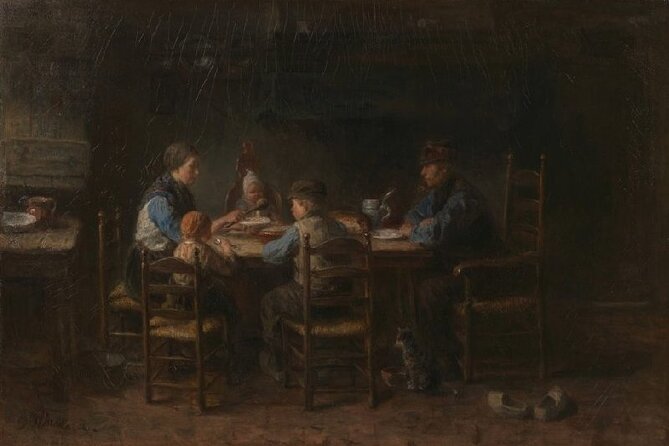
- Up to 10 people for a more personal pace at the museum
- Admission included so you only need to focus on arriving and meeting the guide
- Brushstroke-to-story teaching style that links technique to emotion and context
- Influences explained in plain language, including Japanese impact and Paris color
- The last stage gets real attention, including the 70-day sprint of output
- Theo and Jo Van Gogh are part of the full picture, not an afterthought
Entering the Van Gogh Museum with a face-to-face mindset
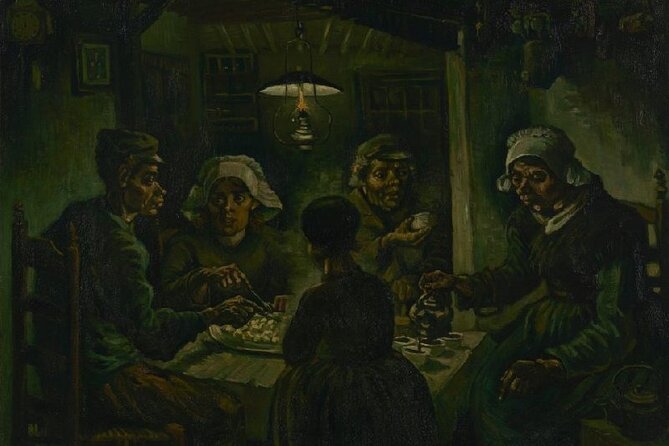
The Van Gogh Museum can feel overwhelming in the best way. There are so many works, so many styles, and so much information that your brain can start to bounce between details. This tour gives you a frame, fast. Instead of asking you to memorize dates and titles, it teaches you how to look.
That matters because Van Gogh isn’t just a painter of nice images. His work often works like a message you have to decode. When the guide starts with technique—how marks are made, how color is used, how shadows behave—it changes your whole museum experience. You stop seeing paintings as separate objects and start seeing them as evidence of a process.
The face-to-face approach also helps with the human side. You aren’t just chasing facts about a famous artist. You’re being guided toward why he painted the way he did, and why it wasn’t simple. The tour leans into the idea that genius can be hard to understand, and then it shows you how understanding can be built step by step.
You can also read our reviews of more guided tours in Amsterdam

Small group pacing, and why it makes a difference
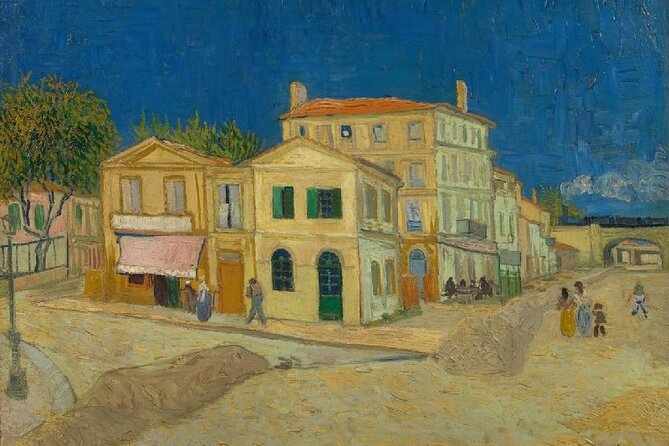
This is a maximum-10-person tour. That’s not a throwaway detail. At the Van Gogh Museum, crowds and bottlenecks are real, especially around the most in-demand rooms. In a larger group, you can spend the whole tour playing squeeze-and-shift.
Here, the smaller size tends to keep the experience readable. You get time to ask questions and you’re less likely to feel like you’re looking at the guide’s back instead of the painting. It also helps the guide keep your attention where it belongs: on the work in front of you.
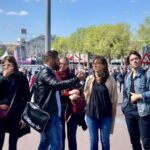
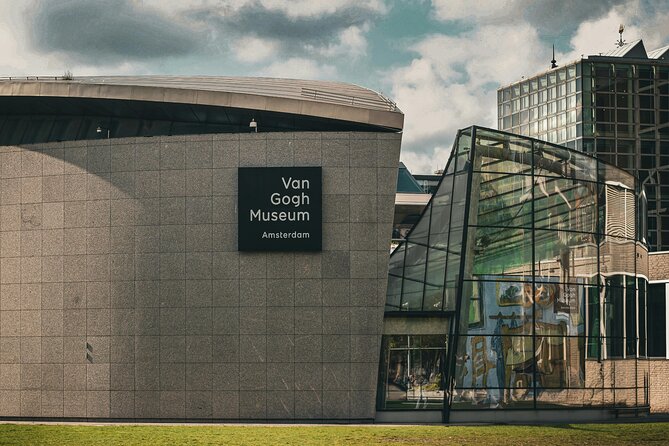
The start point is Paulus Potterstraat 7 in Amsterdam (1071 CX). The tour meets there at 10:00 am and ends back at the same spot. If you like arriving with a plan, this is straightforward.
Stop inside: brushstrokes, technique evolution, and the role of illness
The heart of the tour is what happens inside the museum over about two hours, with admission included. The guide’s first job is to help you see the evolution of Van Gogh’s technique without getting lost in art-history jargon.
You’ll spend time on brushstrokes—how they’re laid down, how his handling changes as his style develops, and how those visual choices connect to his mental and physical state. The tour specifically highlights the link between his technique and illness. That doesn’t mean it reduces the paintings to symptoms. It’s more about understanding why his process could feel urgent, shifting, or intense.
If you’ve ever looked at a painting and thought, I get the emotion but not the method, this is the fix. The tour treats technique like a language. Once you learn a few “grammar rules” (for example, what certain contrast choices do for the eye, or how stroke direction can guide your attention), paintings become easier to read.
A practical tip: look for contrasts the guide calls out
One of the tour’s themes is contrast—especially shadows versus light. As you move through the museum, keep an eye out for how dark areas frame the scene and how light seems to press forward. This is the kind of detail you can miss if you’re mostly skimming for famous subjects.
Japanese influences: how prints shaped the way he handled shadows
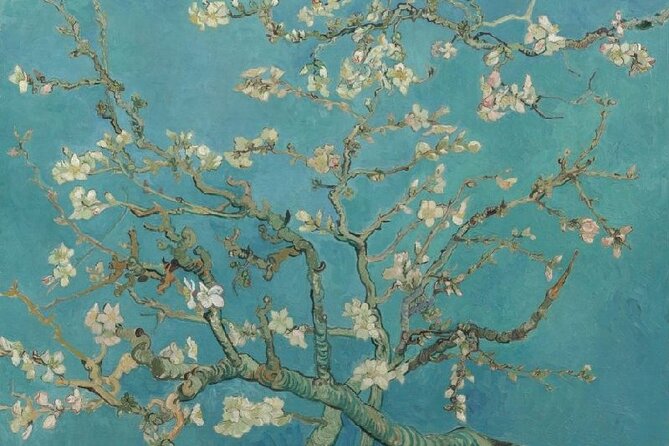
Van Gogh didn’t paint in a vacuum. One of the most useful parts of this tour is how it points out influences you can actually see. Japanese influence is part of the tour narrative, and it’s not just a vague mention of East Asian art.
You’ll learn to recognize how those ideas can show up in how Van Gogh structures space, uses color, and handles the relationship between figure and background. The goal is to help you identify visual strategies rather than memorize external references.
The tour also uses the Japanese influence to set up the bigger story: how shadows work in relation to light across different periods. That matters because Van Gogh’s shadows often don’t behave like neutral, realistic darkness. They can look purposeful, rhythmic, and sometimes almost like part of the painting’s emotional volume.
You can also read our reviews of more museum experiences in Amsterdam




Paris in the background: streets that trained his color
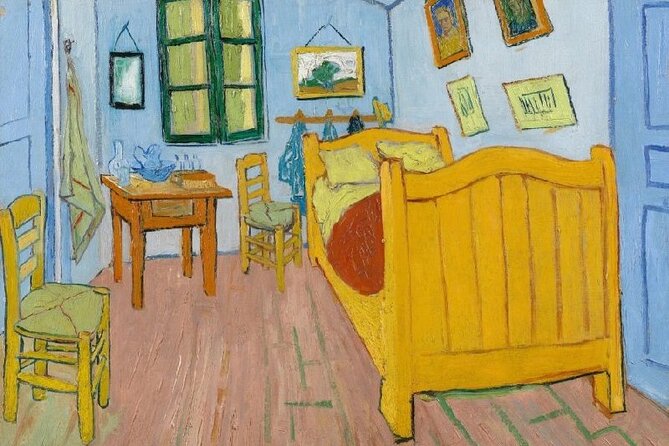
Another major thread is Paris. The tour explains that the streets inspired his color. That might sound obvious until you realize how much “color training” is really about observation and choices: what to emphasize, what to simplify, and how to make the viewer’s eye move.
As the guide connects Paris street life to the way color appears in his works, you get a sense of how his palette matured. It becomes less about one famous city and more about the process of learning what to notice. This is why the tour feels didactic without being cold: you aren’t just told that Paris influenced him, you’re shown what to look for.
If color is your thing, this section lands
If you’re the kind of person who always ends up at paintings with strong color decisions, you’ll likely enjoy this part. It turns the museum into a set of visual experiments rather than a storage room for masterpieces.
The last stage and the 70-day sprint of more than 80 paintings
The tour’s emotional arc ramps up when it reaches Van Gogh’s last stage. You’ll hear about a dramatic period where, in 70 days, he painted more than 80 paintings. That level of output is staggering on paper, but the tour’s value is what it does with that fact.
It doesn’t treat output as a checklist. It connects the pace to the rejection he felt. You’re guided through how his final works reflect the pressure of that rejection, and how the painting itself can feel like it’s responding to an inner storm rather than simply documenting the outside world.
This section can be heavy, but it’s also grounding. When the guide links context to the visual choices you’re seeing, it helps you avoid the common trap of guessing what you’re supposed to feel. Instead, you get to understand what the painting is doing.
A balanced way to process it
If you’re sensitive to heavy topics, go into this with that awareness. The tour doesn’t wallow, but it does treat the last stage as central. You might want a moment to pause and stand back from a painting instead of taking everything in at full speed.
Theo and Jo Van Gogh: why the story didn’t end with Vincent
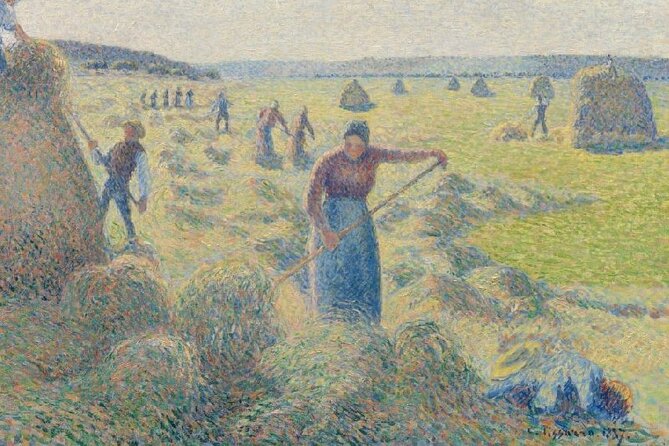
A big part of the tour’s completeness is that it doesn’t stop at tragedy. It also covers how the story of Van Gogh’s work continued through his family.
You’ll learn about his tragic end, and then the tour brings in Jo Van Gogh, who led to worldwide recognition. On its face, that might sound like the standard “and then history happened” ending. Here, it’s used as a bridge so you can see Van Gogh’s legacy as something shaped by people who believed in him and pushed his work into the world.
Theo is referenced in the tour’s framing, including the famous idea that even his brother struggled to understand the genius in front of him. That sets an emotional tone early: understanding isn’t instant. It’s built by looking closely, and by learning the steps that lead from one painting to the next.
This is one reason the tour feels more complete than many quick museum overviews. You get both sides: the creation and the aftermath.
Price and value: what $52.06 buys you
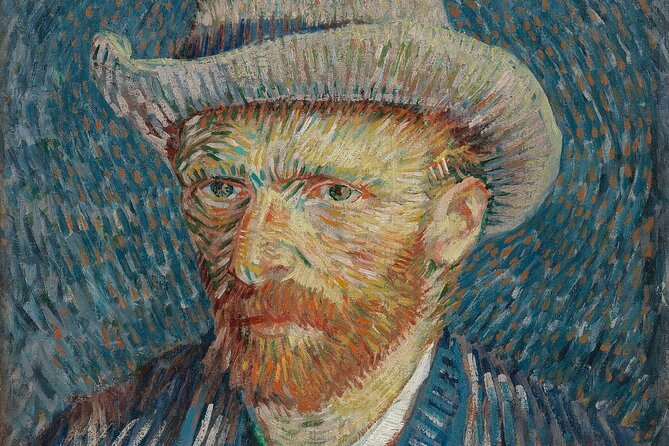
At $52.06 per person, this is not a budget-only museum stroll. But it’s also not priced like a luxury experience. What makes it feel like value is that admission is included, and the format is built for clarity.
You’re paying for:
- A guided structure that helps you understand technique and context
- A short-group environment that keeps the tour readable
- Time focused on major ideas—brushstrokes, influences, the last stage—rather than random browsing
The tour also tends to be booked about 68 days in advance on average. That suggests people know this is one of the better ways to do the museum without spending your whole day trying to figure out where to start.
If you’re the type who loves art but wants the “how do I read this” part answered, the pricing makes more sense. If you only want to see a handful of the most famous paintings and you’re happy doing your own self-guided wandering, you might decide to save money. But if you want a guided pathway with interpretive help, this cost is easier to justify.
Timing: 2 hours 30 minutes in a museum built for longer visits
The tour lasts about 2 hours 30 minutes. That’s a sensible window for one museum with many highlights. In that time, you can still feel like you’ve moved through something meaningful without losing your attention.
What you can expect is a curated experience with a strong narrative arc: technique and illness, Japanese and Paris influence, the final burst of painting in 70 days, and the legacy through Jo and Theo. The pace is designed to keep you from drowning in options.
If you arrive expecting a full museum day, you’ll be disappointed. If you arrive expecting a guided learning experience, you’ll likely feel satisfied.
Guides matter: Ana’s style and why it shows up in the experience
This tour is run by ScreenTours, and the guide experience is a major selling point in the kind of feedback this tour has earned. One name that comes up clearly is Ana, praised for being close, familiar, funny, and full of Van Gogh and Netherlands knowledge.
That matters because museum tours can be either dry or overly scripted. When a guide can keep the tone human and still explain technique, you end up paying attention. Ana’s approach also gets credit for making questions easy to ask and answering them with confidence.
If you care about personality and clarity, this is exactly what you want from a museum guide: passion that doesn’t turn the experience chaotic.
Should you book the Van Gogh Museum Face to Face tour?
I’d book this tour if:
- You want more than labels. You want to understand how Van Gogh worked.
- You like your museum time guided by themes like light, shadow, and brushstroke behavior.
- You appreciate a story arc that includes both Vincent and the family legacy through Theo and Jo.
- You value a small group so you can actually hear and see what matters.
Skip it (or consider self-guided) if:
- You already know Van Gogh’s techniques well and you’re mostly looking to wander at your own rhythm.
- You want to spend long, unhurried hours in every room with no structure.
- You dislike tours that shape how you look at art, even when they do it well.
If you want the Van Gogh Museum to feel understandable instead of just impressive, this is a strong choice. It turns the museum into a coherent experience: Vincent’s marks, his influences, his final push, and the legacy that followed.
FAQ
How long is the Van Gogh Museum Guided Tour?
The tour is about 2 hours 30 minutes.
What is the meeting point?
The meeting point is Paulus Potterstraat 7, 1071 CX Amsterdam, Netherlands.
Where does the tour end?
The tour ends back at the meeting point.
What time does the tour start?
The start time listed is 10:00 am.
How big is the group?
The maximum group size is 10 travelers.
Is museum admission included?
Yes, admission ticket is included.
How do I receive my ticket?
This experience uses a mobile ticket.
Who operates the tour?
The experience provider is ScreenTours.
What is the price per person?
The price is $52.06 per person.
Is free cancellation available?
Yes, you can cancel for a full refund up to 24 hours in advance of the experience start time.
Is the tour suitable for most travelers?
The information provided says most travelers can participate.