REVIEW · AMSTERDAM
Van Gogh Museum Private Tour
Book on Viator →Operated by 360 Amsterdam Tours · Bookable on Viator
Van Gogh can hit you fast. This private Van Gogh Museum tour turns a long museum day into a tight 2-hour story of his life through the paintings you’d otherwise miss or struggle to connect. Two things I really like: the private guide attention (you can ask questions and keep your pace) and the whisper system, which makes every explanation easy to follow inside a busy museum. One thing to consider: the museum has rules about what you can bring in, and after the tour you’re generally not allowed to stay unless you’re traveling lightly.
If you want a smart “first look” at Van Gogh, this works well. You’ll see key self-portraits and track how his style changes from early realism to Paris-era scenes, then into the South of France, and finally the Saint-Rémy and Auvers paintings. It’s also a good fit when you want to break up the day without sacrificing depth.
In This Review
- Key highlights worth knowing before you go
- The real value of a private Van Gogh Museum tour
- Where you start: Cobra Café to Museumplein
- The route through Van Gogh: how the guide turns rooms into a story
- What you’ll notice at each stop (and why it matters)
- Self-portraits: the fastest way to understand his changing perspective
- Early realism and rural life: Millet, Breton, and the human scale
- Paris: café scenes and everyday modern life
- Arles and the South: sunflower intensity and the meaning of place
- Saint-Rémy and Auvers: the late shift you can feel in the walls
- Whisper system: why it makes a museum tour feel smoother
- Tour length and pacing: 2 hours that don’t feel rushed
- Price and value: does $263.20 make sense?
- Who this tour suits best
- After the visit: museum stay rules you should plan for
- Should you book the Van Gogh Museum Private Tour?
- FAQ
- How long is the Van Gogh Museum private tour?
- Is admission included?
- What language is the tour offered in?
- Does the tour include audio equipment?
- Where does the tour start?
- Where does the tour end?
- Is food or drinks included?
- Can I stay in the museum after the tour?
- Who is this tour for?
- What is the cancellation policy?
Key highlights worth knowing before you go
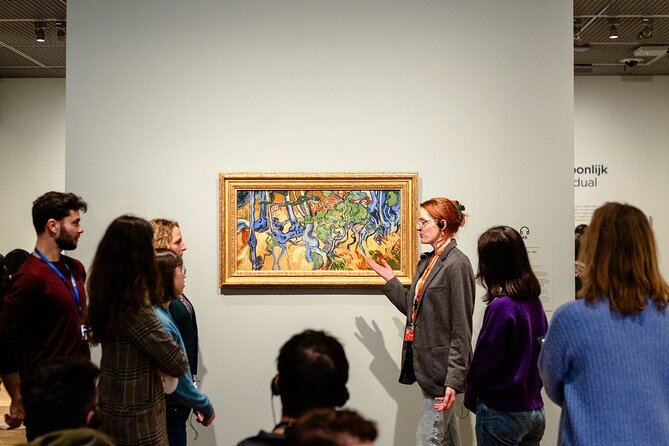
- Private guide + chosen language: you get real-time answers instead of guessing what you’re looking at.
- Whisper system included: you hear the guide clearly as you move room to room.
- Focused two-hour route: short enough to keep momentum, long enough to feel the story.
- Admission tickets included: you’re not juggling paperwork or timing your entry.
- A clear “life timeline” through masterpieces: portraits, Paris café life, Arles nature, and late-period works.
The real value of a private Van Gogh Museum tour
The Van Gogh Museum is popular for a reason, but that popularity has a downside: you can spend your time walking, not thinking. A private guided format fixes that. You’re not just collecting paintings by the handful—you’re learning how to connect them, and you can steer the questions toward what interests you most.
I like that this is structured as a short, guided sweep through the permanent collection. At about 2 hours, it’s long enough to see multiple phases of his work, yet short enough that you won’t feel fried by the end. That matters if you’re also doing canal walks, a tram ride, or other museum stops the same day.
There’s also the practical win: you get a guide of your chosen language and a whisper headset system. Inside galleries, sound bounces around and crowds thin out, so hearing your guide consistently makes the experience feel calmer and more personal.
You can also read our reviews of more private tours in Amsterdam
Where you start: Cobra Café to Museumplein
Your tour begins at Cobra Café, Hobbemastraat 18, 1071 ZB Amsterdam. Meeting at a café works because it’s a recognizable spot and you can usually grab a quick drink before you go in. The route also gets you pointed in the right direction for the museum area.
The tour ends at Museumplein 6, 1071 DJ Amsterdam. That’s a useful finish point because it keeps you near the park and major museum zone, so you can keep exploring without needing extra transport. If you’re planning lunch, this location is also handy for transitioning to food plans nearby.
The route through Van Gogh: how the guide turns rooms into a story
Even with just a couple hours, the pacing matters. This tour is built around major “chapters” in Van Gogh’s artistic life, with time carved out for you to actually look—not just pass by.
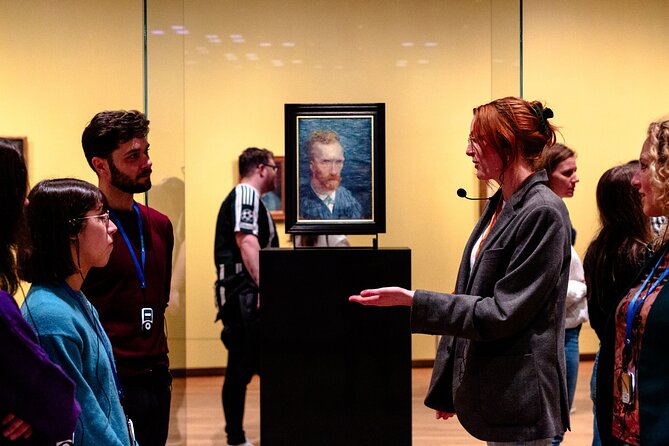
You’ll start with Van Gogh’s self-portraits. This is a smart opening because it gives you a baseline. You learn to recognize how he viewed himself across different years, not just how he depicted other subjects.
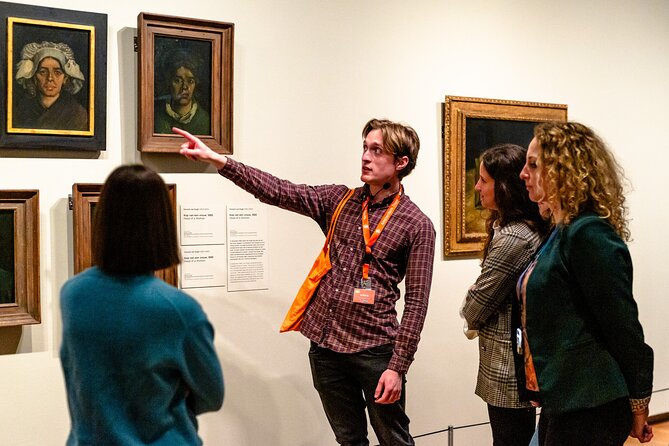
From there, the tour moves into the museum’s early themes—works tied to everyday people and rural life. You’ll spend time on pieces linked to Millet and Jules Breton, and you’ll also see works like Woman Lifting Potatoes and The Potato Eaters. The effect is that you get context for why Van Gogh cared about ordinary labor and physical reality, not just dramatic scenery.
Then the story pivots to his Paris years (1886–1888). This is where the guide helps you watch for shifts in subject and mood. You’ll see works such as Self Portrait with Felt Hat, Still Life with Absinthe, and the café painting In the Café: Agostina Segatori in Le Tambourin. You’ll also look at Garden with Courting Couples—an important reminder that in Paris, Van Gogh wasn’t only painting what he saw, he was responding to social life and modern energy.
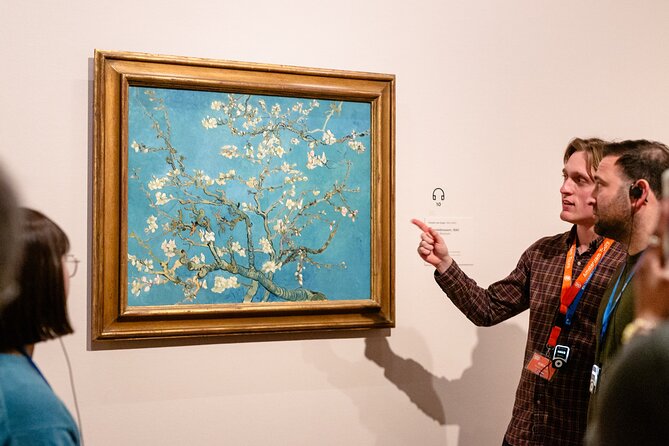
After Paris, you’ll step into the phase where the South of France becomes the backdrop for his art—Arles (starting in 1888). The tour includes Sunflowers, Almond Blossoms, The Bedroom, and The Yellow House. You’ll also see Japanese paintings, described as copies from prints. That’s a key detail because it explains how Van Gogh absorbed ideas from outside Europe and applied them to his own visual language.
The last part of the route brings you to Level 3 for the Saint-Rémy-de-Provence period and then the Auvers works. Here you’ll see paintings like Wheatfield with a Reaper, Iris, Almond Blossoms, and Pieta (After Delacroix). Then, in the Auvers room, you’ll view Tree Roots and Wheatfield with Crows. This late-stage pairing is worth paying attention to: the themes get heavier, and the atmosphere changes, even when the subject looks similar.
What you’ll notice at each stop (and why it matters)
Self-portraits: the fastest way to understand his changing perspective
The museum can feel like a stack of masterpieces. The self-portraits cut through that. When you look at them with guidance, you start noticing how Van Gogh’s choices reflect emotion and observation, not just technique.
A self-portrait isn’t only a face—it’s a statement. It shows you how he wanted to be seen at that moment in his life. Starting here is a smart move because it prepares your eyes for everything that comes after.
You can also read our reviews of more museum experiences in Amsterdam




Early realism and rural life: Millet, Breton, and the human scale
When the tour reaches the early rooms, you’ll see works tied to rural labor and portraiture. The Potato Eaters and Head of a Peasant Woman help you understand why these subjects were so meaningful to Van Gogh before the color fireworks became the headline.
A practical tip: spend your time here by looking at hands, posture, and the direction of light. These paintings reward slow attention, and a guide can point out what to look for so you don’t have to guess.
Paris: café scenes and everyday modern life
In Paris, the tour highlights scenes like Still Life with Absinthe and Agostina Segatori in Le Tambourin. Even if you don’t know the art terms, you can still sense how the mood changes. These works pull you toward modern city life—social spaces, entertainment, and the everyday objects around him.
What I like about this part of the route is that it makes subject matter feel connected. The guide can help you connect why a still life matters right after a self-portrait, or why a café scene fits the timeline.
Arles and the South: sunflower intensity and the meaning of place
The Arles section is where you get the most iconic images: Sunflowers, Almond Blossoms, and The Yellow House. But the real value is that you’re not just ticking off famous paintings. You’re learning how place shapes the art.
The Bedroom also changes the pace. It’s not landscape, but it’s still about atmosphere and structure—how a room can feel like a world. And seeing The Yellow House alongside those works helps you understand that Van Gogh’s art wasn’t detached from his daily reality.
The tour’s inclusion of Japanese paintings (copies from prints) is another thoughtful touch. It’s a reminder that Van Gogh didn’t copy blindly; he absorbed outside influences and reworked them into his own style.
Saint-Rémy and Auvers: the late shift you can feel in the walls
The late-period rooms are the emotional center of the tour. You’ll see Wheatfield with a Reaper, Iris, and Almond Blossoms, plus Pieta (After Delacroix), which adds a different kind of theme—religious subject matter interpreted through Van Gogh’s eyes.
Then the Auvers room takes you into darker air with Wheatfield with Crows and Tree Roots. Even if you’re not an art expert, the guide helps you look at composition, not just color, so the changes feel understandable instead of random.
If you only do one thing in the late rooms, it’s this: don’t rush. This is where the paintings are asking more questions.
Whisper system: why it makes a museum tour feel smoother
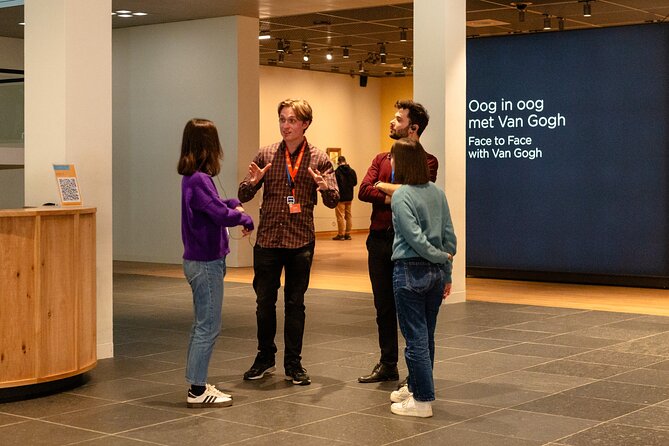
Headphones are worth it when the museum is loud, and this one includes a whisper system. That means you can stand in place, listen, and still hear the guide even when other visitors drift into your orbit.
In plain terms: you spend less effort trying to catch audio, and more effort actually seeing the painting. It’s the difference between a guided tour and a guided tour that you have to keep re-starting every few minutes.
Tour length and pacing: 2 hours that don’t feel rushed
A 2-hour private tour is a sweet spot. Long enough to cover multiple phases, short enough to keep the “story” from snapping in half.
The pacing is also designed for people who want a break from constant walking. It’s a strong option if you’ve already lined up canal cruising, the Rijksmuseum, or a neighborhood wander and you don’t want to commit to a half-day museum marathon.
One thing to know: each section includes a set amount of time for viewing, so you may not be able to linger as long as you would on your own. That’s not bad—it’s simply the tradeoff for hearing the full narrative.
Price and value: does $263.20 make sense?
At $263.20 per person for a 2-hour private tour, this isn’t a budget add-on. But it can be good value depending on how you like to travel.
Here’s how I think about it:
- You’re paying for a private guide and admission included for the museum entry tied to the tour.
- You’re getting a route with a coherent timeline, which is often the hardest thing to assemble alone.
- You’re also getting the whisper headset, which reduces friction and makes every minute count.
If you’re the type who reads labels slowly and wants context, a private tour often saves time and frustration, which is where the money tends to “pay itself back.” If you only want a fast look at famous paintings, you could do it cheaper on your own. But if you want the museum to make sense, this format is easier to justify.
Who this tour suits best
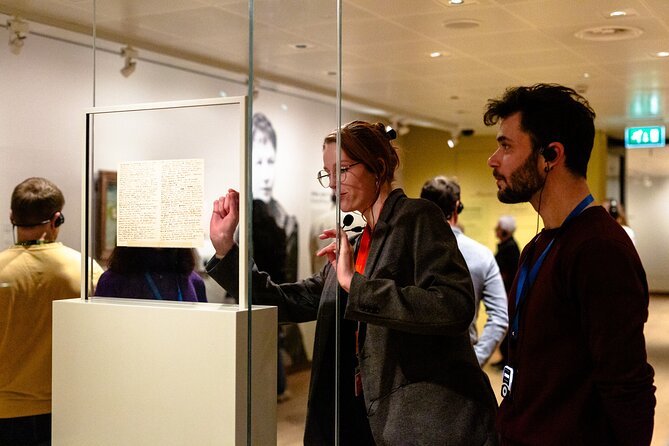
This tour is private and designed for adults, so it’s best if you’re traveling as a group of adults and want everyone on the same page. It’s also useful if you’re visiting during peak hours and want someone to help you move efficiently without turning the museum into a race.
It’s a particularly good match if:
- You’re visiting Amsterdam for a few days and want one focused Van Gogh experience.
- You like asking questions rather than reading everything solo.
- You’re not trying to see every gallery in one trip, just the strongest story beats.
After the visit: museum stay rules you should plan for
There’s an important rule for your timing. After the visit, you are not generally allowed to stay in the museum unless you’re not carrying thick (winter-)jackets, suitcases, large bags, and liquids. If you keep it light—small jacket and a small handbag—you can typically remain until closing.
This matters because it changes how you plan the rest of your day. If you’re bringing a lot of stuff, plan to step out right after the tour.
Should you book the Van Gogh Museum Private Tour?
Yes, if you want a guided, story-driven Van Gogh experience in a time-friendly package. The big wins are the private attention, the whisper system, and the way the route follows his changing periods—from self-portraits through Paris, Arles, and the late works in Saint-Rémy and Auvers.
I’d skip (or reconsider) this tour if you’re happiest wandering without structure or if you only need a quick hit of the most famous paintings. For everyone else who wants the museum to feel like a coherent timeline, this tour is a strong choice.
FAQ
How long is the Van Gogh Museum private tour?
It’s listed at about 2 hours.
Is admission included?
Yes. Admission ticket access is included for the museum stops on the route.
What language is the tour offered in?
The tour provides a private guide in your chosen language.
Does the tour include audio equipment?
Yes. It includes a whisper system so you can hear the guide clearly.
Where does the tour start?
The meeting point is Cobra Café, Hobbemastraat 18, 1071 ZB Amsterdam.
Where does the tour end?
The tour ends at Museumplein 6, 1071 DJ Amsterdam.
Is food or drinks included?
No. Food and beverages are not included.
Can I stay in the museum after the tour?
You are not allowed to stay after the visit unless you are traveling lightly. If you have no thick winter jackets, suitcases, large bags, or liquids (for example, only a small jacket and small handbag), you can stay until closing time.
Who is this tour for?
This tour is only for adults 18 years or older.
What is the cancellation policy?
You can cancel for a full refund up to 24 hours before the experience starts. If you cancel less than 24 hours before, the amount you paid is not refunded.