REVIEW · AMSTERDAM
Amsterdam Central Walking Tour
Book on GetYourGuide →Operated by Yellow Bike Tours & Rental · Bookable on GetYourGuide
Canals and curious corners in two hours. Yellow Bike’s Amsterdam Central walking tour threads through crooked houses and the Negen Straatjes, with a local guide who connects the city’s past canal life to what you see today. It’s an easy way to get oriented fast, without feeling like you’re just checking boxes.
I especially like the small group feel and how the guide keeps things moving with smart context, not lectures. You’ll also get a traditional Dutch café break (drinks not included), which helps break up the winter chill. One possible drawback: the route includes the Red Light District area, where the guide sets clear rules about behavior and photos, so it’s not a laid-back, wander-anywhere stroll.
In This Review
- Key highlights you’ll feel right away
- Meeting Yellow Bike at Nieuwezijds Kolk: where the walk starts
- Price and timing: does $26 for 2 hours make sense?
- Small groups and guided flow: why the size matters in Amsterdam
- Crooked houses and wooden poles: Amsterdam’s physics, explained
- Westertoren and the church-tower view: a skyline lesson
- Negen Straatjes: from craft streets to today’s shopping lanes
- Red Light District basics: respect, rules, and no lingering
- Spui and Spuistraat: Provo’s civil resistance, told where it happened
- Crooked corners meet practical canal history
- Grain to breweries and Amsterdam’s beer nickname
- Koepelkerk and Amsterdam after fire: resilience in copper tones
- Jan Roodenpoortstoren and Torensluis: bridges, prisons, and defense
- Bartolotti House and the Gay monument: power, people, and change
- Anne Frank House area: WWII remembrance with careful framing
- The Brown Cafe Pitstop: warmth and a real local feel
- Kalverstraat and Dam Square: finishing where the city’s pulse is
- What to bring for a winter walk (and what to wear)
- Who this tour fits best (and who should think twice)
- Should you book Yellow Bike’s Amsterdam Central Walking Tour?
- FAQ
- Where is the meeting point for the Amsterdam Central Walking Tour?
- How long is the tour?
- What does the tour cost?
- How many people are in a group?
- Which languages are offered?
- Is luggage storage included?
- Are drinks included at the café stop?
- Does the tour run in bad weather?
- Is the tour wheelchair accessible?
- What should I bring for the walk?
- Is there free cancellation or reserve-and-pay-later options?
Key highlights you’ll feel right away
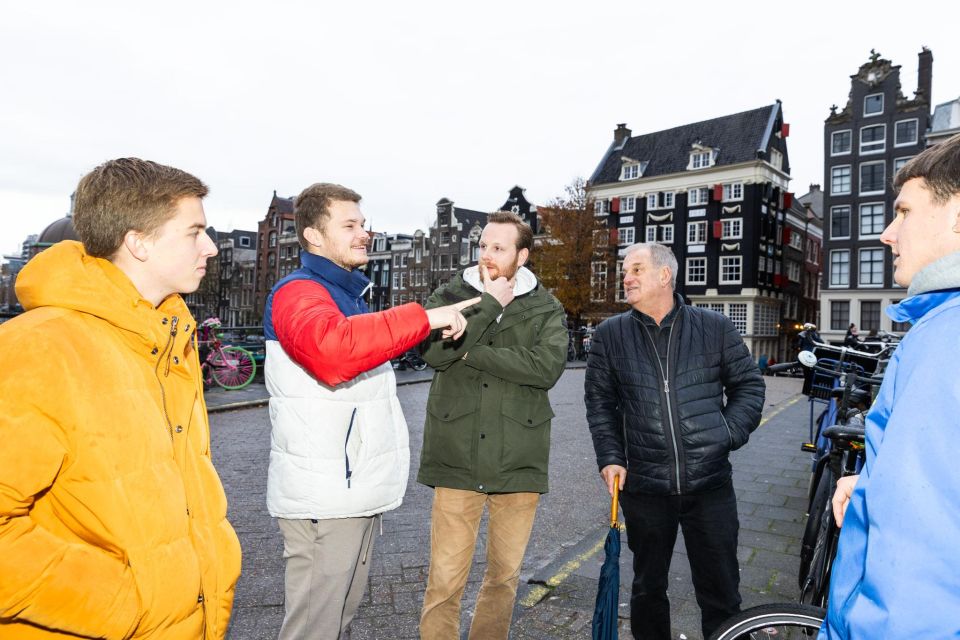
- Small group touring with a maximum of 12, and it can even run with fewer people
- Local guide energy seen in real-world examples like Sid, Willem, and Willen leading groups in English
- Iconic canal-side stops tied to why Amsterdam is built the way it is, including tilted houses
- A respectful Red Light District segment with photo-free guidance and no lingering
- Winter-friendly rhythm: 2 hours, rain or shine, with a warm café pit stop
Meeting Yellow Bike at Nieuwezijds Kolk: where the walk starts
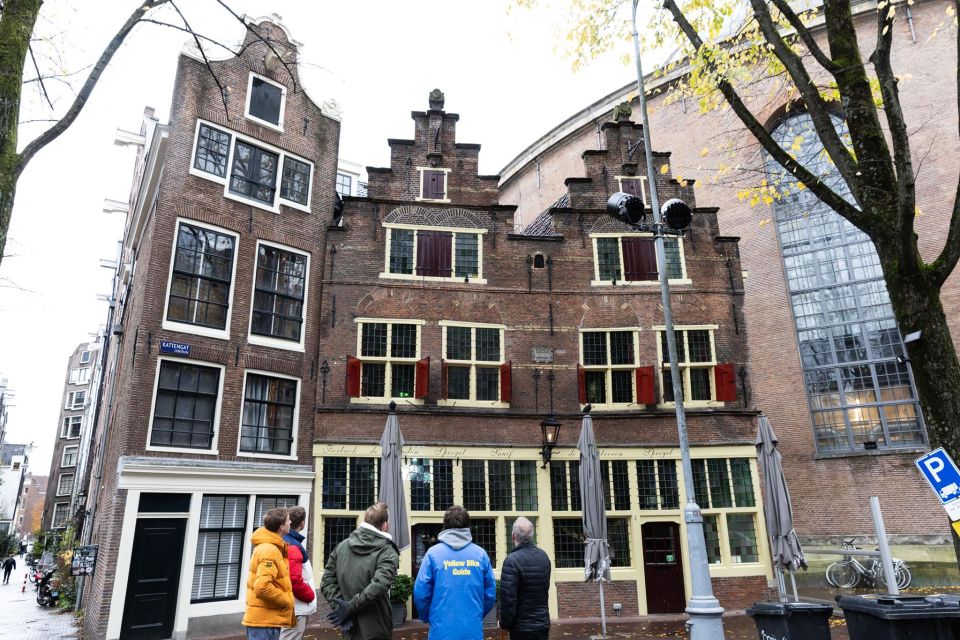
The tour begins at Nieuwezijds Kolk 29, right by the Yellow Bike counter. That matters because Amsterdam can be a maze, and starting in a central, easy-to-find spot helps you settle in before the first stories begin.
From that launch point, you’ll work your way through central neighborhoods that most people recognize, but usually don’t connect into one coherent story. The pace is designed for a winter walk, so you’re not stuck waiting around for long stretches.
You can also read our reviews of more walking tours in Amsterdam



Price and timing: does $26 for 2 hours make sense?
At $26 per person for about 2 hours, you’re paying for three things: a real local guide, a tight route, and a plan that avoids wasted time. You’re not paying for transportation, and there’s no big production—just a focused walking loop with notable stops.
You also get free luggage storage, which is a quiet win if you’re arriving by train or ferry and you still have bags. Drinks at the café aren’t included, but the break itself is part of the value: it keeps the tour comfortable in cold or rainy weather.
Small groups and guided flow: why the size matters in Amsterdam
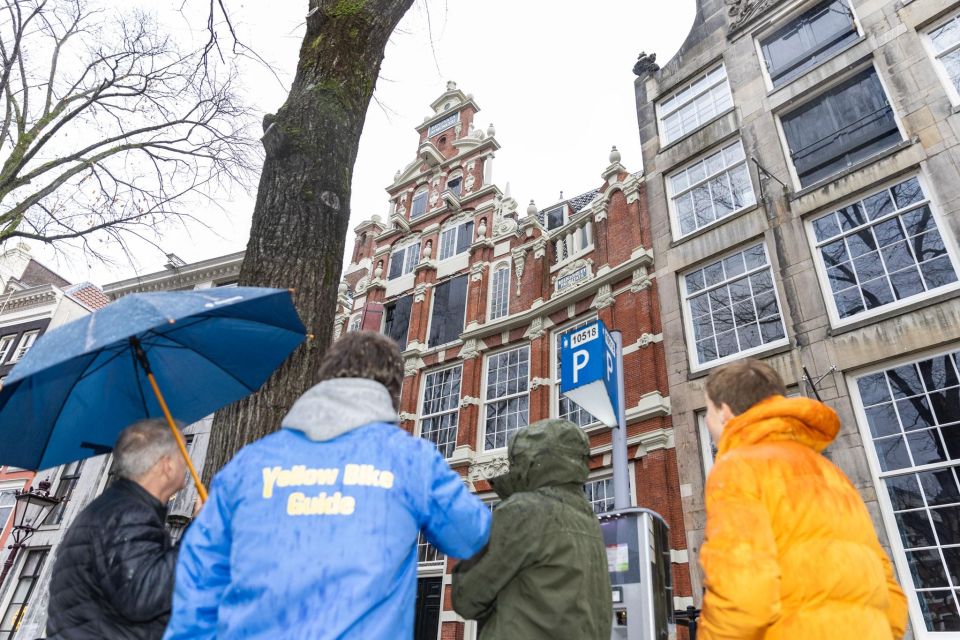
The tour caps at 12 people, and it often ends up smaller. That’s not a luxury detail—it changes everything. Fewer people means you can hear the guide, ask questions, and actually follow the thread of the story as you move between canal corners.
It also helps on cobblestones. Amsterdam streets are pretty, but they’re not forgiving. In a small group, you can slow down without feeling like you’re holding everyone hostage.
Crooked houses and wooden poles: Amsterdam’s physics, explained
One of the early pleasures is seeing the famous tilted houses and getting the explanation behind them. You’ll learn why Amsterdam stands on wooden poles and how the city’s water management and building methods shaped what you see on street level.
Even if you’ve walked past these structures before, the guided context changes the way you look at them. You stop seeing them as a quirky photo spot and start understanding them as a long-term engineering compromise with the water.
Westertoren and the church-tower view: a skyline lesson
As the walk turns toward landmark areas, you’ll get time with Westertoren, Amsterdam’s tallest church tower. The guide shares historical significance, and the tower becomes a handy reference point for where you are in the city’s map.
This stop is also useful in practical terms. Once you know how the tower fits into the skyline, it’s easier to plan the rest of your day afterward. You can keep your bearings even when the canals blur together.





Negen Straatjes: from craft streets to today’s shopping lanes
The tour includes the Negen Straatjes, a set of picturesque streets that were once home to artisans. Now you’ll see a more modern mix of boutiques and cafés, which makes the area fun to walk even if you’re not shopping.
In winter, this neighborhood can feel especially atmospheric: smaller streets, close architecture, and lots of window life. It’s also a good place to slow down and notice how Amsterdam’s street layout funnels you from one canal pocket to another.
Red Light District basics: respect, rules, and no lingering
A major component is the Westerlijke Wallen segment, including the Red Light District area. The guide sets expectations clearly: no photos and no lingering. It’s framed as a place of respect and understanding, not a free-for-all.
This is the moment when you’ll want to switch into guided-mode thinking. The street is what it is, and the tour’s job is to help you pass through it with the right behavior and context. If you’re hoping for unrestricted wandering, this part may feel more structured than you expected.
Spui and Spuistraat: Provo’s civil resistance, told where it happened
When the route reaches Spui, you’ll learn about the symbolic Provo statue and the role it played in student protests and cultural movements. The stories extend into the area’s recent narratives, including civil resistance and squatting history along Spuistraat.
This is one of the most interesting stretches because it connects activism to physical space. Instead of treating politics as an abstract concept, you see how public debate and youth culture shaped what people talk about in Amsterdam.
Crooked corners meet practical canal history
The tour doesn’t only aim for big-famous landmarks. It also includes smaller, story-rich sites that make Amsterdam feel like a city with systems, not just scenery.
You’ll hear about Nieuwe Haarlemmersluis and how the city combats seawater intrusion from its historic canals. That’s a very Amsterdam theme: engineering that quietly protects daily life, often behind pretty facades.
Grain to breweries and Amsterdam’s beer nickname
You’ll also walk by Brouwersgracht, where the guide traces the supply of grain to breweries. The tour connects food and trade to the nickname Booze Capital, which helps explain why beer culture became part of Amsterdam’s identity.
This part works well if you like economic history. It’s not heavy. It’s just enough context to make the city’s canal network feel purposeful.
Koepelkerk and Amsterdam after fire: resilience in copper tones
Another stop includes Koepelkerk, described as a copper-clad Lutheran church with an intriguing story tied to Amsterdam’s resilience after a massive fire. It’s one of those places where architecture becomes a memory device.
Even if you don’t normally notice church details, the guide helps you understand what to look for. You start seeing Amsterdam as a city that rebuilds and adapts, not just one that preserves.
Jan Roodenpoortstoren and Torensluis: bridges, prisons, and defense
The route includes Jan Roodenpoortstoren, with stories about secrets beneath the bridge, including historic prison cells. It’s eerie in a grounded way. It also reminds you that canals and bridges weren’t always leisure features.
You’ll also see Torensluis, described as the oldest bridge in Amsterdam and once part of the city’s defensive wall. That’s a big theme in the walk: structures that look charming today often had practical roles yesterday.
Bartolotti House and the Gay monument: power, people, and change
You’ll get a stop at Bartolotti House, which the tour frames as Amsterdam’s finest mansion, with an interesting past tied to how the city’s wealth moved and concentrated.
Then there’s the Gay monument, connecting Dutch LGBTQ+ struggles and victories to the site of the world’s first gay marriage. This part adds modern human stakes to the same streets that also carry older trade and architecture stories.
Anne Frank House area: WWII remembrance with careful framing
The tour includes Anne Frank House as an iconic stop, with time for reflection on World War II and the story behind the diary. This segment is emotionally heavy, so it helps that the tour keeps the pace from turning it into a quick photo moment.
I like how this fits among the more general city-history stops. Amsterdam’s identity isn’t only architecture and trade—it also includes how people endured and documented life under oppression.
The Brown Cafe Pitstop: warmth and a real local feel
About halfway through (depending on how the group moves), you’ll take a break at a traditional Dutch pub, the Brown Cafe Pitstop. Drinks aren’t included, so you can choose what you want, but you do get a built-in moment to warm up and reset.
In winter, this kind of scheduled stop matters. You’re walking for 2 hours in rain or shine, so having a reliable place to pause makes the whole tour more enjoyable.
Kalverstraat and Dam Square: finishing where the city’s pulse is
Your route ends at Dam Square and then you walk back to Yellow Bike at Nieuwezijds Kolk. Along the way, you’ll stroll down Kalverstraat, a major shopping street in the Netherlands.
Finishing at Dam Square is handy because it’s a natural hub for onward plans. You’re not stranded on a random side street—you’re dropped near the places most first-timers already want to see again.
What to bring for a winter walk (and what to wear)
Comfortable shoes are non-negotiable. Amsterdam’s cobblestones look charming and feel heavy on the feet after a while, especially in winter.
Pack warm clothing, and bring a hat, gloves, and scarf. The tour runs rain or shine, so you’re not going to get a shelter break unless you’re at the café stop.
Who this tour fits best (and who should think twice)
This is a great fit if you:
- Want a guided overview that connects neighborhoods into one story
- Like history, but prefer it told where you can see it (towers, bridges, canal engineering)
- Appreciate clear guidance in sensitive areas, like the Red Light District
It may be a rough fit if you:
- Have mobility limitations. The tour is listed as wheelchair accessible, but it’s also marked not suitable for people with mobility impairments. If that affects you, it’s worth extra caution before booking.
Should you book Yellow Bike’s Amsterdam Central Walking Tour?
If you want an efficient, story-driven walking route that covers major Amsterdam landmarks plus lesser-seen context, I’d book it. For $26, you’re getting a tight 2-hour plan, small-group attention, and a practical café stop—without the stress of figuring out what to see in what order.
If you dislike strict rules or you’re expecting a free-roaming photo stroll in the center, decide carefully. The Red Light District segment comes with firm expectations, and the tour is designed to respect that.
Overall: it’s a smart way to build a mental map of Amsterdam quickly—then use the rest of your trip to roam with confidence.
FAQ
Where is the meeting point for the Amsterdam Central Walking Tour?
The meeting point is Nieuwezijds Kolk 29. Look for Yellow Bike and check in at the counter.
How long is the tour?
The tour lasts 2 hours.
What does the tour cost?
The price is $26 per person.
How many people are in a group?
The tour has a maximum of 12 participants.
Which languages are offered?
The live guide speaks Dutch and English.
Is luggage storage included?
Yes. Free luggage storage is included.
Are drinks included at the café stop?
No. The tour includes a break at a Dutch café, but drinks are not included.
Does the tour run in bad weather?
Yes. The tour takes place rain or shine.
Is the tour wheelchair accessible?
It is listed as wheelchair accessible, but it is also marked as not suitable for people with mobility impairments. If you have mobility needs, it’s best to consider that carefully.
What should I bring for the walk?
Bring comfortable shoes and warm clothing, plus a hat, gloves, and scarf.
Is there free cancellation or reserve-and-pay-later options?
Yes. You can cancel up to 24 hours in advance for a full refund, and there’s a reserve now & pay later option (pay nothing today).