REVIEW · AMSTERDAM
Amsterdam: Anne Frank Walking Tour – Guided in EN/DE/IT/ES
Book on GetYourGuide →Operated by Amsterdamliebe · Bookable on GetYourGuide
Some streets carry impossible stories. This Amsterdam Jewish Quarter walk connects landmark corners to Anne Frank diary excerpts, guided in English, German, Italian, or Spanish. It’s a focused route that helps you understand how a neighborhood formed, prospered, and was then crushed by Nazi persecution.
I especially like how the tour balances everyday Jewish life with the brutal end of the story, including resistance by Jews and non-Jews. The one drawback to plan for: you won’t visit or even see the Anne Frank House, so keep that separate if it’s on your must-do list.
In This Review
- Key tour takeaways (what to watch for)
- Start at De Waag on Nieuwmarkt: finding your guide fast
- The Jewish Quarter behind the postcards
- Nieuwmarkt Square to Zuiderkerk: the route’s opening chapters
- Huis de Pinto, Rembrandt House, and Sint Antoniesluis: one neighborhood, many identities
- Portuguese Synagogue and the Jewish Historical Museum: faith and memory side by side
- Auschwitz Monument, The Dokwerker, and the Holocaust Names Monument: why these stops hit hard
- How diary excerpts shape the tone (and what to expect)
- Pace, distance, and weather: practical comfort for a serious walk
- Languages: pick the option that matches your listening comfort
- Price check: is $28 good value for this route?
- Who should book this tour (and who might skip it)
- Should you book it? My quick decision guide
- FAQ
- Where does the tour start?
- How long is the walking tour?
- About how much walking is involved?
- What languages are available?
- Does this tour include the Anne Frank House?
- Are there admission fees for the sights on the route?
- What should I bring with me?
- Is the tour wheelchair accessible?
- Does the tour run in bad weather?
Key tour takeaways (what to watch for)

- Diary passages on the street: you’ll hear short Anne Frank readings that make the history feel personal and specific.
- Streets with layered stories: Portuguese synagogue, Jewish memorials, and sites tied to Amsterdam’s WWII era all connect.
- Resistance gets credit: the guide talks about courage during the Nazi occupation, not just tragedy.
- Stolpersteine and memorial stops: you’ll see how memory shows up in everyday city detail.
- 2 to 3 kilometers of walking: it’s not long, but it is steady, so comfy shoes matter.
Start at De Waag on Nieuwmarkt: finding your guide fast
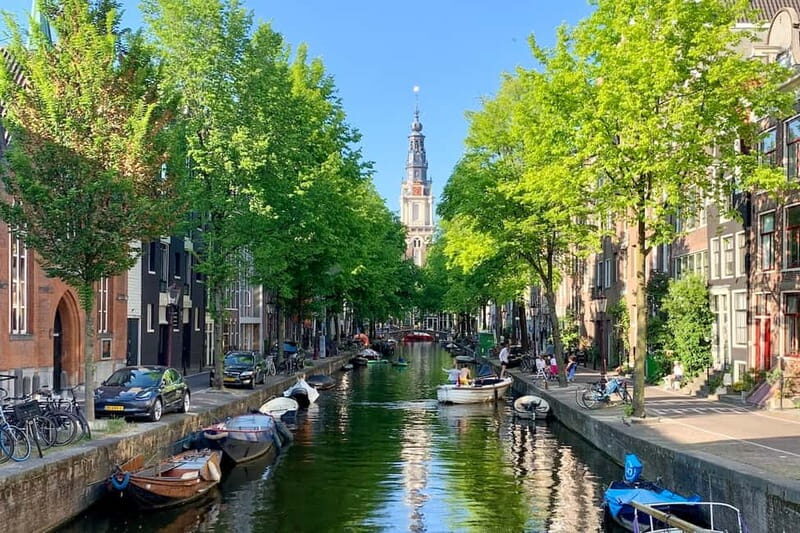
Meet your guide at the entrance to De Waag in the middle of Nieuwmarkt, the square that sits right in the thick of the old city. The guide wears a red name tag, so once you’re oriented, it’s easy to spot them.
One practical tip that saves time: sometimes Google Maps shows the wrong side of De Waag. If you see the coffeeshop Jolly Joker, you’re on the wrong side. Walk around the “castle-like” building and head for the actual entrance. That little detour prevents the awkward start-from-scratch moment.
You can also read our reviews of more walking tours in Amsterdam


The Jewish Quarter behind the postcards

This tour is built around the Jodenbuurt and the Jewish Triangle area, but it doesn’t treat them like museum pieces. You get the bigger story: how Amsterdam’s Jewish community took shape, how it was shaped by European politics, and how neighborhood life was interrupted by WWII.
You’ll hear about the expulsion of Jews from the Iberian world during the Spanish Inquisition era, and how that pushed commerce and community growth in Amsterdam. The guide also points out that this was not only a Jewish neighborhood. Non-Jews lived here too, including Rembrandt van Rijn, and the mix matters because it shows how integrated city life can be before it is forcibly broken.
And then comes the hard turn: Nazi discrimination, deportations, and the Holocaust. The tour uses Anne Frank’s diary excerpts to help you understand what people lost, not just what happened.
Nieuwmarkt Square to Zuiderkerk: the route’s opening chapters

You begin near De Waag and then head to Nieuwmarkt Square, where the guide sets context—think neighborhood history and why this part of Amsterdam became such a focal point.
Next is Zuiderkerk. The stop works well because it gives you a sense of how older Amsterdam anchors itself in stone and street layout. In a tour like this, those “normal city” landmarks matter. They show you that persecution didn’t happen on another planet. It happened here, among real buildings and real routines.
Expect the guide to shift quickly between city growth and the later horror of occupation-era policies. It’s emotionally serious, but the guide keeps it structured so you’re not just absorbing chaos.
Huis de Pinto, Rembrandt House, and Sint Antoniesluis: one neighborhood, many identities
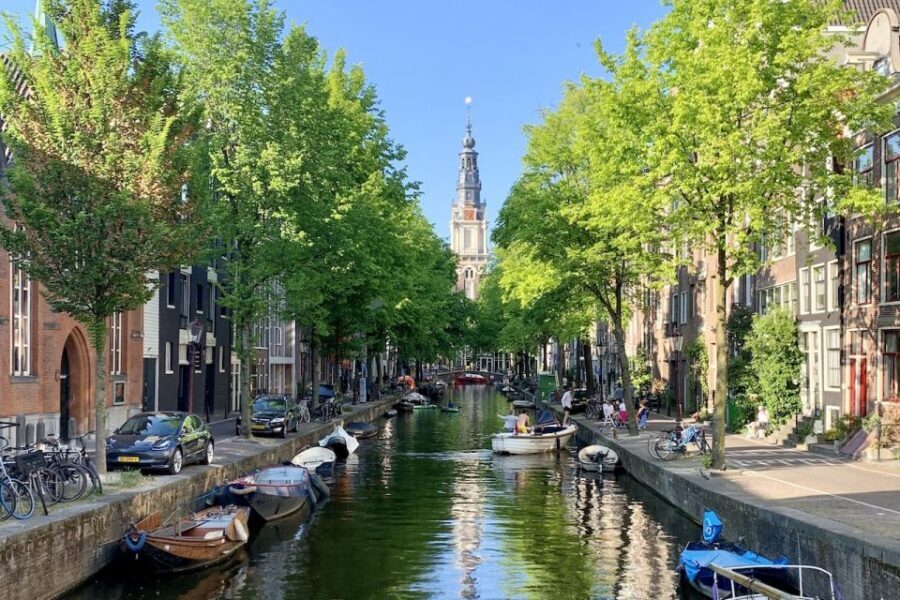
From Zuiderkerk you move through the part of town that feels especially layered. At Huis de Pinto, you get a quick but telling look at the kind of built environment associated with wealth and community presence in the Jewish Quarter.
Then the tour passes Rembrandt House. This is a smart stop because it challenges the common mental image of the area as only Jewish and only sorrow. You hear how artists and others also had homes there. It helps you see Amsterdam as a real city with overlapping lives, not a single story frozen in time.
Sint Antoniesluis is another key point where the guide keeps connecting geography to history. You’re walking through streets that people used for daily movement, and the guide helps you imagine what “normal” looked like before Nazi rule tightened everything.
This section is one reason the tour feels more than a list of sites. The stops line up so you can feel the shift from coexistence to cruelty.
Portuguese Synagogue and the Jewish Historical Museum: faith and memory side by side

At the Portuguese Synagogue, you’ll have a photo stop plus a guided explanation. Even without going inside, it’s a powerful marker because the synagogue signals community continuity—something that existed before WWII and outlasts it.
From there, you move to the Jewish Historical Museum area. The stop is short, but it acts like a hinge. It reminds you that Jewish history in Amsterdam is not only an ending. There are archives, scholarship, and ongoing cultural identity. You get a sense that this neighborhood’s story continues after the war.
The tour also points out memorial objects you’d otherwise overlook. You may see Stolpersteine—the small street-level commemorations—and other reminders connected to the Jewish experience in Amsterdam during Nazi occupation.
You can also read our reviews of more guided tours in Amsterdam



Auschwitz Monument, The Dokwerker, and the Holocaust Names Monument: why these stops hit hard
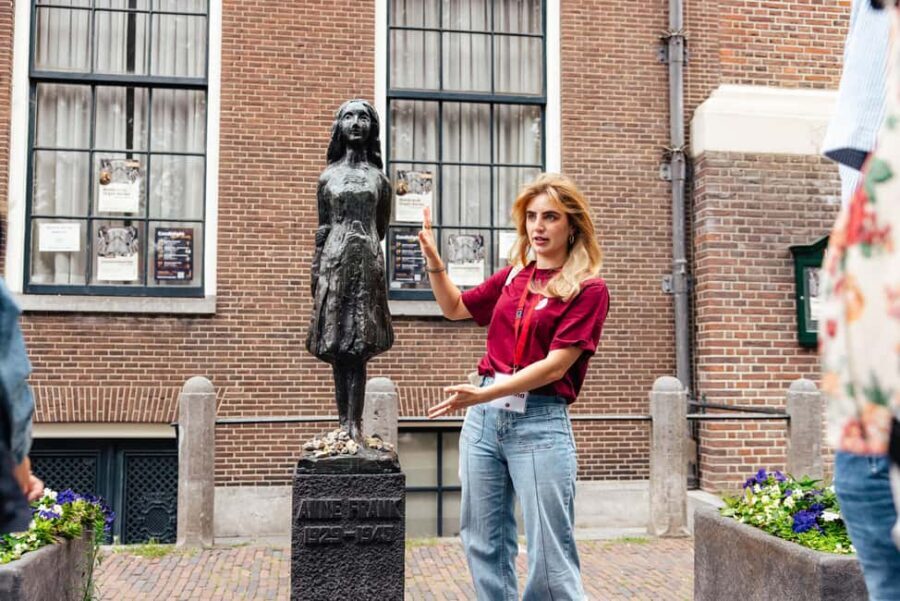
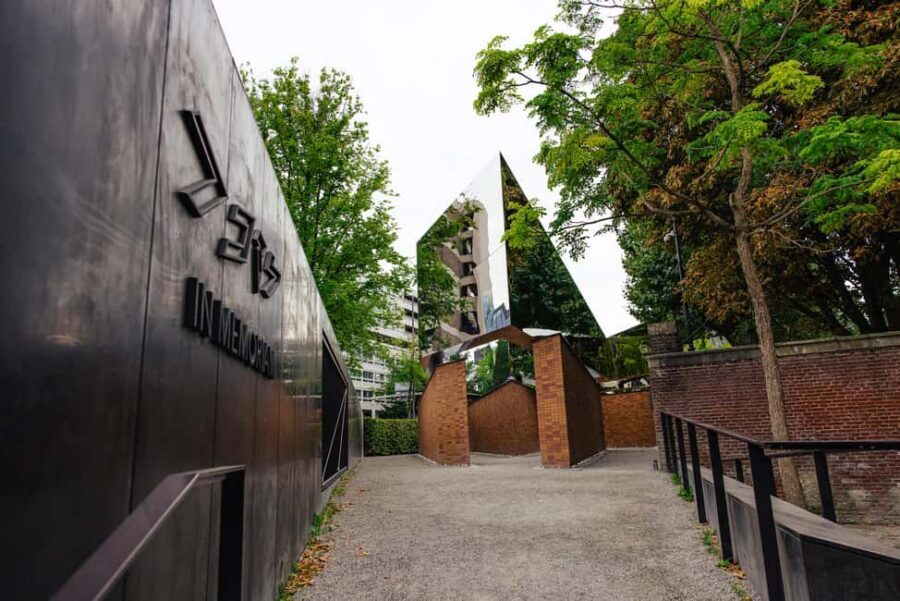
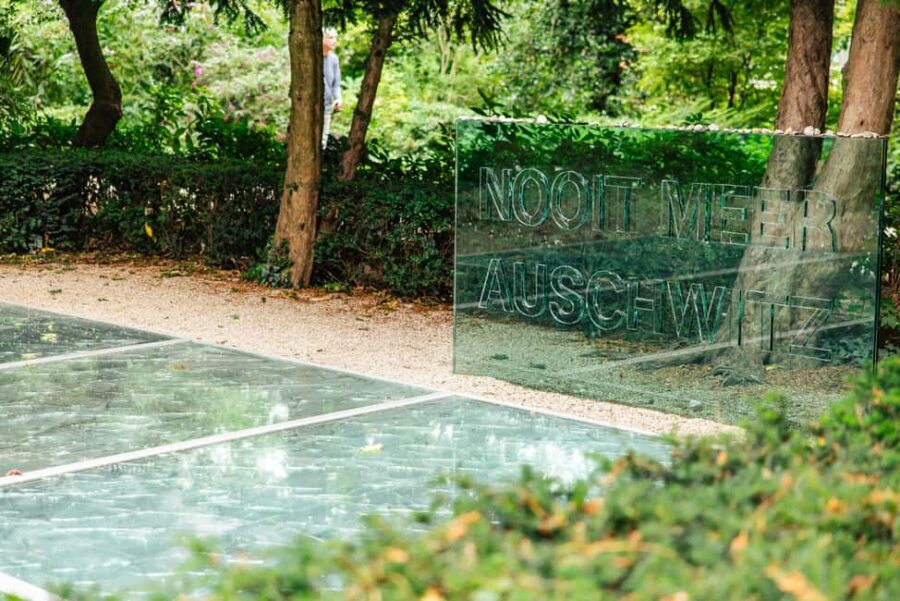
The emotional center of the tour arrives with Auschwitz Monument, Amsterdam. This stop doesn’t try to soften the meaning. It’s there to ground you in what deportation and extermination represent.
Then you move to The Dokwerker. This quick stop matters because it keeps the story tied to work, labor, and how systems of control worked in practice. Again, the guide’s job is not only to explain dates, but to connect those dates to human lives.
The tour finishes at the National Holocaust Names Monument. It’s one of those places where your brain wants to rush through, but your body slows down. The names and the scale of remembrance make the tragedy feel less like an abstract historical topic and more like a civic duty to remember accurately.
You’ll also hear about the February Strike in 1941 and the resistance that included Jews and non-Jews. That emphasis is important for balance. You don’t leave thinking only about helplessness. You leave with evidence of courage—and the brutal fact that courage came with risk.
How diary excerpts shape the tone (and what to expect)
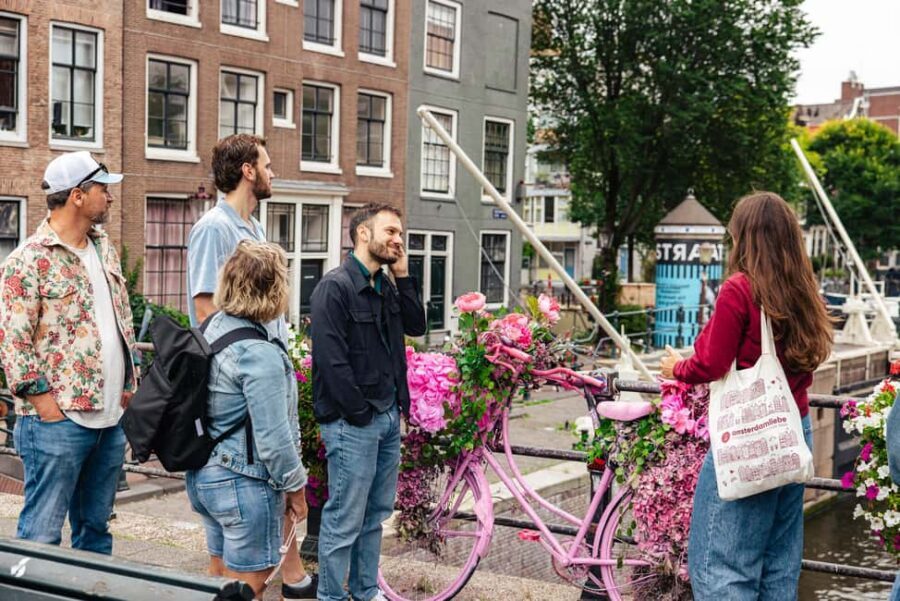
What really sets this tour apart is how the guide uses Anne Frank diary excerpts as a recurring thread. When the guide reads passages, it changes the tone from lecture-style history to something closer to a human witness. It’s also why choosing the correct language matters so much here.
Guides often pace the readings so they don’t feel like a random insert. You get them where they fit the story: connected to Jewish life, persecution, hiding, deportation fears, and the meaning of hope and fear in daily writing.
If you’re wondering what guides are like, the overall pattern in guide quality is strong. Many tours get delivered by guides such as Sarah, Emilia, Valentina, Deborah, Josh, and David, and the common thread is clear communication and respectful delivery. People also respond to the guides’ willingness to work at an easy walking pace and answer questions when you have them.
Pace, distance, and weather: practical comfort for a serious walk
This is a 2-hour guided experience, with about 2 to 3 kilometers of walking. That distance is manageable for most people, but it adds up. Plan on staying on your feet and bringing supplies that keep you steady.
Bring:
- Comfortable shoes
- Water
- Weather-appropriate clothing (yes, rain and wind count)
The tour runs in all weather conditions, so pack an umbrella if rain is possible. If it’s cold, add a layer. If it’s hot, plan to sip water even if you feel fine at the start.
Good news: it’s wheelchair accessible, so it’s designed with mobility needs in mind. The route still involves walking time with the group, but accessibility is explicitly supported.
Languages: pick the option that matches your listening comfort
The tour is offered in German, English, Spanish, or Italian. The key point: it’s not bilingual. You should choose the language you’ll follow best, especially for diary readings and WWII details where small misunderstandings can change the meaning.
If you’re traveling with someone whose comfort level differs, decide together. I’d rather you both understand every stop than rely on partial comprehension.
Price check: is $28 good value for this route?
At $28 per person, this is a solid value for Amsterdam, mainly because you’re paying for a focused guide-led narrative across multiple major WWII-era and Jewish Quarter landmarks. You’re not just buying “a walk.” You’re paying for how the guide connects each location into one story.
Another value point: there are no admission fees during the tour, because the sights included can be visited for free. That means your cost stays predictable.
You do miss one common expectation: the tour does not include entry to the Anne Frank House. If the House is your top target, budget for it separately. If your priority is the Jewish Quarter context and WWII memory across multiple sites, this price often feels fair for what you get.
Who should book this tour (and who might skip it)
This tour is a great fit if you:
- Want a guided route through the Jewish Quarter that connects WWII history to specific places.
- Like learning through a mix of memorial sites and neighborhood context.
- Appreciate the human side of history through Anne Frank diary excerpts.
You might skip it (or adjust expectations) if:
- You specifically need the Anne Frank House visit itself.
- You prefer lighter sightseeing on your first day. This one is emotionally heavy, and it stays respectful about that.
Should you book it? My quick decision guide
Book it if you want your Amsterdam time to include the places where memory is written into the city—along with a guide who keeps the story clear, paced, and human. It’s priced reasonably, it doesn’t require extra tickets for the stops on the route, and the diary readings give the walk emotional structure.
Skip it if your main goal is only the Anne Frank House. Since this tour doesn’t visit or even show that location, you’ll have to pair it with something else to get that experience.
FAQ
Where does the tour start?
You meet your guide at the entrance to De Waag, in the middle of Nieuwmarkt. The guide wears a red name tag.
How long is the walking tour?
The tour runs for about 2 hours (check available starting times).
About how much walking is involved?
It’s a 2 to 3 kilometer walk total, so plan on comfortable shoes.
What languages are available?
The guide leads the tour in German, English, Spanish, or Italian. The tour is not bilingual, so choose the right language option.
Does this tour include the Anne Frank House?
No. The Anne Frank House is not visited or seen during this tour.
Are there admission fees for the sights on the route?
No admission fees are needed for the included sights, since they can be visited for free.
What should I bring with me?
Bring comfortable shoes, water, and weather-appropriate clothing. An umbrella helps if it rains.
Is the tour wheelchair accessible?
Yes, the tour is listed as wheelchair accessible.
Does the tour run in bad weather?
Yes. The tour takes place in all weather conditions, so dress for the day.