REVIEW · AMSTERDAM
Amsterdam: Private Bike Tour
Book on GetYourGuide →Operated by Orange Adventures · Bookable on GetYourGuide
Getting around Amsterdam by bike feels like cheating—in a good way. This private tour uses the city’s famous bike lanes to show you neighborhoods and history you usually skip, from the 15th-century De Waag to the Albert Cuyp street market. I especially like the low-key, confidence-building guide vibe and how you get safe routing through real local traffic. One thing to keep in mind: the tour price covers the guide, not the bike rental, so you’ll want to plan for that.
With about 881,000 bikes in Amsterdam, cycling is how the city moves, not a tourist gimmick. You’ll ride off the main walking-circuit paths and come away with practical tips for seeing more of Amsterdam on your own. If you’re not comfortable on a bike, you may feel a little exposed at first, but the guide’s job is to get you comfortable.
In This Review
- Key Things You’ll Notice on This Private Amsterdam Bike Tour
- How Amsterdam Bike Lanes Change the Way You See the City
- Private Group Comfort: Hotel Pickup and a Guide Who Can Read the Room
- Riding to the Old Warehouse District Built on Reclaimed Islands
- De Waag and the 15th-Century Landmark You Can Actually Find
- Albert Cuyp Street Market: A Local Stop, Not a Staged Performance
- Remnants of City Walls and Bulwarks You’ll Notice More After This Ride
- The Old Industrial Port Now Turned Residential: Seeing Reinvention Up Close
- What You Pay (and Why It’s Fair for a Private Bike Tour)
- Who This Bike Tour Suits Best
- Practical Tips to Make Your Ride Easy (and Not a Soggy Mistake)
- Should You Book This Amsterdam Private Bike Tour?
- FAQ
- How long is the Amsterdam private bike tour?
- What is the price for the private tour?
- Is bike rental included?
- Where does the tour start?
- What areas and sights are included?
- Is there a live guide?
- Can the guide tailor the tour to my interests?
- What should I bring if it rains?
- What start times are available?
- Are food and drinks included?
Key Things You’ll Notice on This Private Amsterdam Bike Tour
- Hotel-center pickup to start riding without wasting time
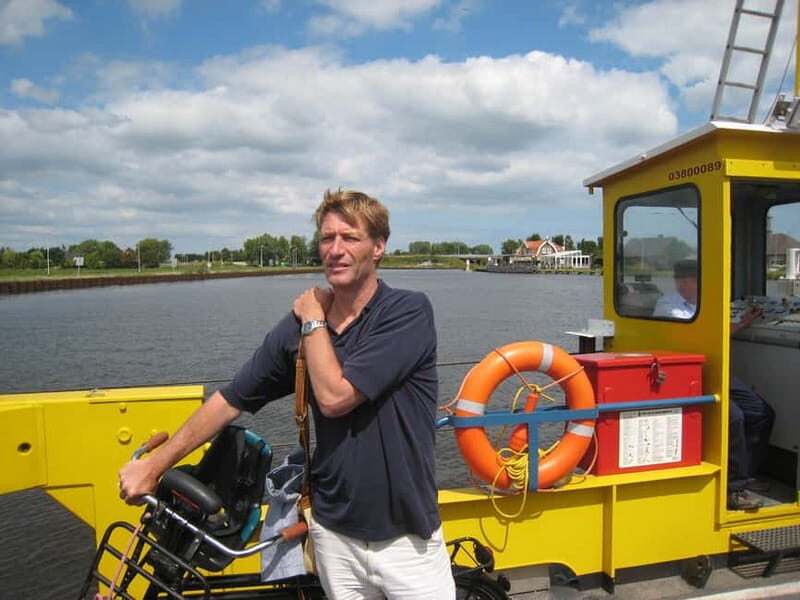
- Bike-lane focused route that helps you feel at ease in traffic
- De Waag (15th century) as a real historic anchor point
- Albert Cuyp street market for local food-shopping and atmosphere
- Old warehouse district on 3 reclaimed islands for unusual geography
- Old city walls and bulwarks hints you can spot in everyday streets
How Amsterdam Bike Lanes Change the Way You See the City
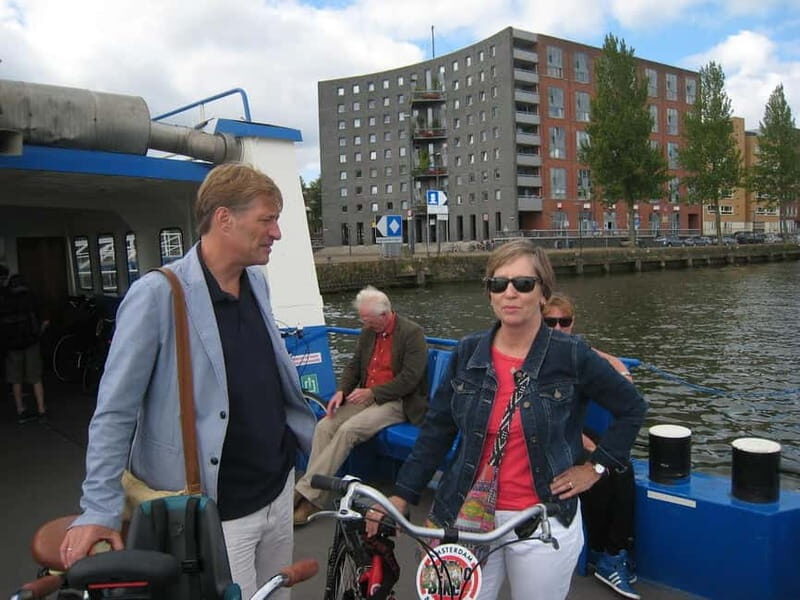
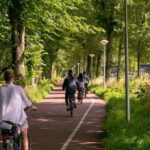
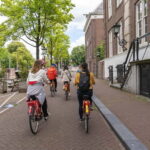
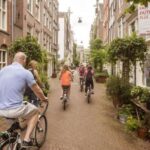
Amsterdam’s cycling culture is more than a photo. It’s a system. With roughly 800,000 residents using bikes daily and around 881,000 bikes rolling around the city, the streets are built for two wheels. On this tour, that matters because you don’t have to cross chaos on foot or fight for space in lanes that weren’t meant for cars.
I like that the focus stays on the bike infrastructure. You get to experience Amsterdam at actual street level speed—slow enough to notice details, fast enough to cover ground. You’re also not stuck inside a bus or walking at a pace that turns every stop into a sprint.
The other big win is safety and comfort. The guide approach is described as low key and informative, and that sounds exactly right for a private group. If you’ve never ridden in busy city traffic, you need coaching more than heroics. On this tour, the guide helps you get settled, including how to handle the busier parts without turning the ride into a stressful test.
You can also read our reviews of more cycling tours in Amsterdam
Private Group Comfort: Hotel Pickup and a Guide Who Can Read the Room
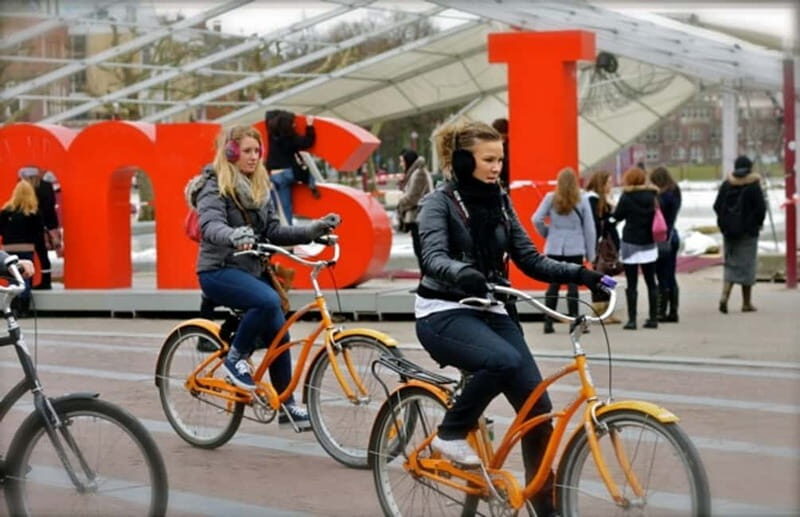
This is a private group experience, priced for a group of up to 2. That changes the whole feel. There’s no waiting for stragglers or negotiating with a crowd about what matters.
You also start with pickup from your hotel in the center of Amsterdam. If you’re not staying in the city center, you’ll use a central pickup point you choose during booking. Either way, you cut out the time cost of reaching a meeting spot. In a city where you could easily lose an hour just finding the right tram stop, that’s real value.
The guide is where the tour becomes flexible. The tour is offered in English, Dutch, and German, and you can ask for an angle—history, culture, architecture, or landmark monuments. That matters because Amsterdam can feel like the same postcard over and over unless someone helps you connect the dots.
If you’re into architecture, you’ll likely get more attention paid to the landmarks you pass. If you care more about how people actually live here, you’ll spend time looking at everyday streets and local stops instead of only the big-ticket sites.
Riding to the Old Warehouse District Built on Reclaimed Islands
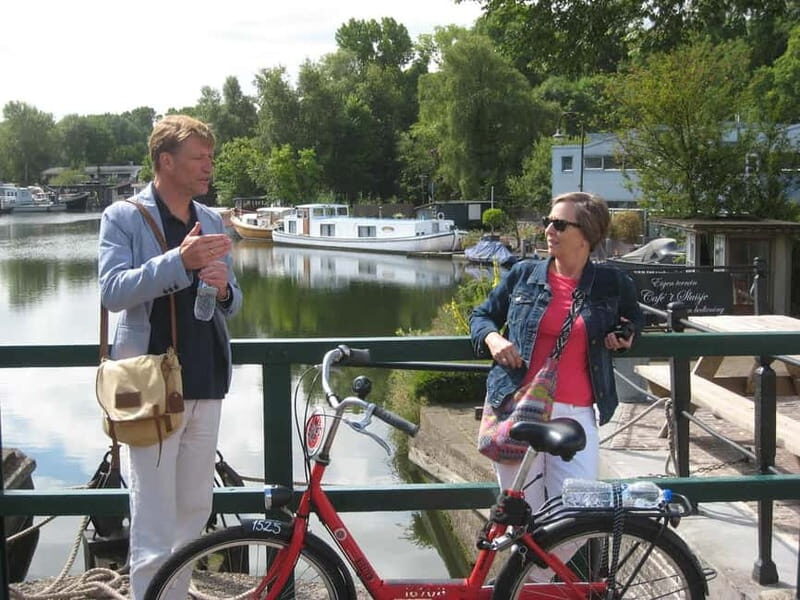
One of the most intriguing things on this bike route is the ride toward the old warehouse district, tied to the city’s watery geography. This area is built on three islands reclaimed from the sea, and it’s the kind of detail you only really understand when you’re moving through it.
On a bike, you can feel the layout of Amsterdam’s ports and warehouses. You’re not just reading a plaque. You’re seeing how water-shaped planning affects where people built storage, trade access, and later, how the city evolved.
Historically, warehouse districts are about commerce and logistics. But the tour framing makes the point that the area connects Amsterdam’s past to what you see now: structure, streets, and a sense of a district designed for movement of goods. It’s one of those stops where the “why” of the city becomes visible instead of theoretical.
Practical note: even if you’re not a big “old buildings” person, this is still worth it because the geography is unusual. Amsterdam’s building story isn’t only about canals and bridges. It’s also about land made by engineering and reclaimed over time.
De Waag and the 15th-Century Landmark You Can Actually Find
The tour calls out De Waag, a 15th-century landmark, as a historic highlight you’ll cycle past along the route. It’s an ideal kind of stop for a bike tour: recognizable enough to matter, but not so long that you lose the rhythm of riding.
What I like about bike-tour history is that the facts stay tied to the street. De Waag shows up in the ride as a landmark you can orient to. You’re learning what parts of the city used to be important—then you keep moving, which helps the information stick.
There’s also a subtle benefit: you get practice noticing city form. When you ride by landmarks like De Waag, you start to see how canal-side or street-side buildings relate to older trade patterns and city planning. That kind of “street reading” makes your next day in Amsterdam easier, because you’ll recognize what you’re looking at.
Albert Cuyp Street Market: A Local Stop, Not a Staged Performance
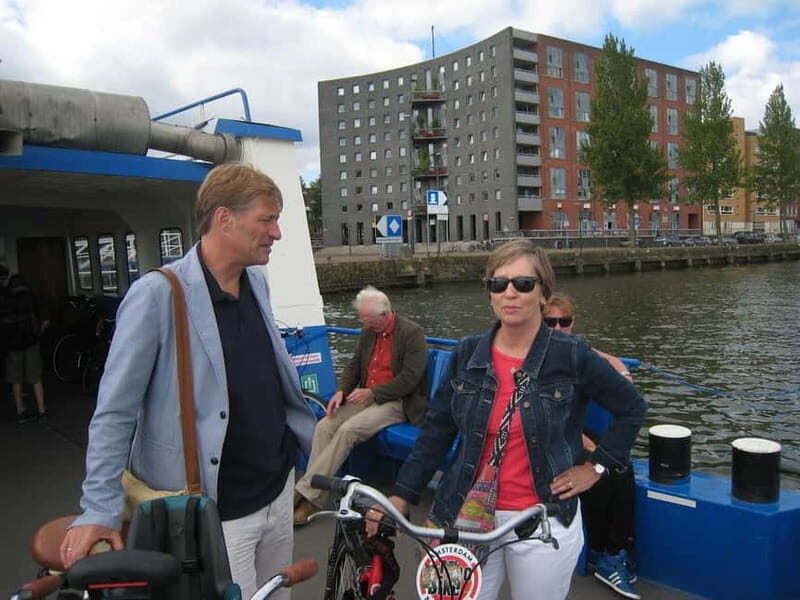
A famous market has a reputation problem. It can become too polished for its own good. This tour’s stop is Albert Cuyp street market, and the difference here is that you’re getting there by bike and mixing it into the neighborhoods around it.
On a bike, you arrive without the “tour-bus landing” feeling. You’re already oriented to the area, and you’re not just dropping in for a quick browse. Market time works well inside a 2–3 hour tour because you can walk a bit, snack if you want, and still be ready to keep riding.
Also, markets are one of the easiest ways to learn a city’s daily habits without a museum ticket. Even if you don’t buy much, you’ll pick up on what locals treat as normal: foods, packaging style, what people carry, and how vendors set up shop.
Important: food and drink are not included on this tour. That’s good because it keeps the experience flexible. You can grab something small if you want, or just use it as a people-and-street-life stop.
You can also read our reviews of more private tours in Amsterdam



Remnants of City Walls and Bulwarks You’ll Notice More After This Ride
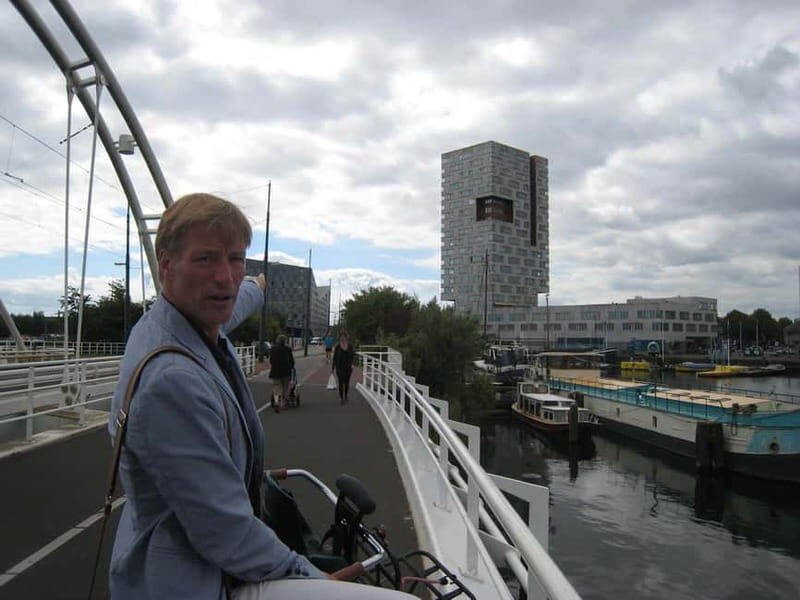
One of the tour highlights is discovering remnants of the old city walls and bulwarks. This is the kind of history that can be easy to miss on foot, because the evidence isn’t always dramatic. From street level, it can look like ordinary urban edges.
Cycling helps because you cover more area with continuity. You can connect small sections—what you’re seeing and where it sits relative to the rest of the route. Instead of learning history as separate facts, you get a sense of how the city used to define boundaries.
You’ll also pass a few really old churches, which gives the ride a deeper timeline. It’s not only defensive architecture. You’re seeing how religious landmarks, older streets, and city structures overlap.
For me, that combination is the value: walls and bulwarks show planning for protection and control, while churches show community and identity. Together, they help you understand what kind of place Amsterdam used to be before modern districts and traffic patterns took over.
The Old Industrial Port Now Turned Residential: Seeing Reinvention Up Close
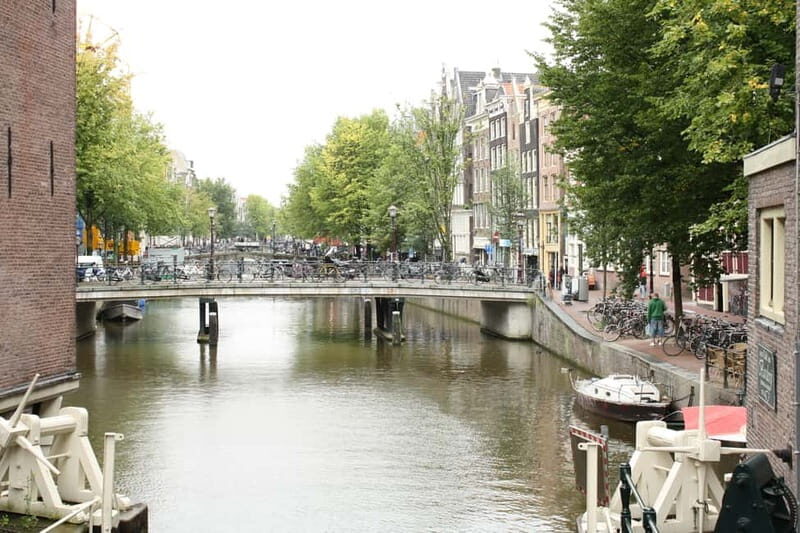
Another standout is the shift from industrial function to everyday life. The tour includes the old industrial port, now one of Amsterdam’s most desired residential areas. That phrase matters because it tells you the city didn’t just preserve the past. It repurposed it.
When you ride through an area like this, you can spot the logic: where work used to happen, people now live, walk, and bike. You get to see the outcome of urban change without needing a museum explanation.
This part of Amsterdam can be visually quieter than the main “must-see” grid, which makes it feel more like a local neighborhood. You’re still in the center of things, but the details feel less scripted and more lived-in.
If you like urban planning and how cities adapt old infrastructure, this stop usually lands well. If you only want the biggest monuments, you might think it’s less “wow.” But it’s exactly the point of the tour: how Amsterdam works day-to-day, not only what makes the postcard.
What You Pay (and Why It’s Fair for a Private Bike Tour)
The price is $227 per group up to 2 for 2–3 hours. That’s not cheap compared to a standard group tour. But it’s also not aiming to be cheap. It’s aiming to be useful.
Here’s what you’re paying for:
- A private guide, not a crowd
- A bike-focused route built around Amsterdam’s infrastructure
- Time-saving hotel pickup in the center
- Flexible guiding, including the ability to tailor toward history, culture, architecture, or landmarks
- A ride that covers several distinct areas without the logistical hassle
The catch is also clear: bike rental is not included. So your real cost depends on what you pay for a rental near your hotel. The operator can sometimes help with recommendations, and occasionally make reservations for groups, but you’ll still want to check.
Food and drink are also not included. That’s normal for bike tours, and it lets you choose what you actually want from Albert Cuyp street market or nearby.
If you’re traveling as a couple or two friends who want a calm pace with a guide who can answer questions, this price often feels reasonable. If you’re solo and comfortable booking a self-guided ride, a private guide might feel pricey. But for many first-time visitors who want structure, it can save you from wandering randomly and missing the best parts.
Who This Bike Tour Suits Best
This tour fits best if you:
- Want to see multiple neighborhoods in a short time
- Prefer riding on bike lanes over walking long distances
- Like history, but also want it tied to streets you can understand
- Enjoy markets and everyday city life like Albert Cuyp street market
- Value a guide who can adjust the focus, not one fixed script
It might be less ideal if you:
- Can’t or don’t want to ride a bike in city traffic
- Expect the tour to include bike rental, food, and drinks (it doesn’t)
- Want only major museum stops, because this route leans neighborhood and street-level history
Practical Tips to Make Your Ride Easy (and Not a Soggy Mistake)
Check the weather before you book and then again the morning of. The guidance is simple: raincoats are a must if it’s raining. Amsterdam rain can be light, fast, and still enough to turn a short ride unpleasant.
Dress for movement, not for staying cute. You’ll be cycling, so layers help, and comfortable shoes matter.
Also, ask about your start time. You can choose your own start between 9AM and 6PM, but you’ll confirm the exact time with the operator after booking. If you want the best chance of enjoying the market without peak crowds, you’ll likely want to pick a time with decent daylight and reasonable weather.
Finally, handle the bike rental early. Since it’s not included, contact the supplier for help finding the nearest rental and whether they can set up a reservation for your group. That one step prevents a last-minute scramble.
Should You Book This Amsterdam Private Bike Tour?
Yes, if you want Amsterdam the local way—by bike lanes, with a guide who keeps things calm and informative, and with stops that include history plus everyday city life. The low-key coaching is a big deal, especially if you’re new to cycling in traffic.
Book it especially if you’re a couple or small group who benefits from a private guide and you like the idea of mixing: De Waag, old wall remnants, the Albert Cuyp street market, and the warehouse/port story that shows how Amsterdam made and remade land.
Skip it only if you’re expecting the bike rental and meals to be included, or if riding in city bike traffic isn’t for you. If you can handle the bike aspect, this tour is a smart use of time.
FAQ
How long is the Amsterdam private bike tour?
The duration is listed as 2–3 hours. Exact starting times vary, so you’ll want to check availability for what fits your day.
What is the price for the private tour?
It’s $227 per group, up to 2 people. That price is for the guided experience, not for bike rental.
Is bike rental included?
No. Bike rental is not included in the tour cost. The operator can help you find the nearest rental and may be able to help with reservations in some group cases.
Where does the tour start?
Pickup is included, and the tour will start from your hotel in the center of Amsterdam. If you’re not staying in the city center, you’ll choose a preferred central pickup point during booking.
What areas and sights are included?
You’ll cycle along bike lanes to historic highlights like the 15th-century De Waag, see remnants of old city walls and bulwarks, visit Albert Cuyp street market, and explore the old warehouse district and the old industrial port area that’s now residential.
Is there a live guide?
Yes. The tour includes a live guide, with languages offered in English, Dutch, and German.
Can the guide tailor the tour to my interests?
Yes. You can request a tour oriented toward history or culture, architecture, or landmark monuments.
What should I bring if it rains?
Check the weather forecast and dress accordingly. Raincoats are recommended, and they’re noted as a must if it’s raining.
What start times are available?
You can choose your own start time between 9AM and 6PM. After booking, you’ll confirm the time directly with the tour operator.
Are food and drinks included?
No. Food and drink are not included. The tour includes the guide, and the rest is up to you.