REVIEW · AMSTERDAM
Amsterdam Food and Cultural Tour with Tastings
Book on Viator →Operated by Ollantay Food Tour · Bookable on Viator
Food, history, and a happy walk through town. This Amsterdam food-and-cultural tasting blends classic Dutch bites with quick, funny context about how the city got shaped, including monarchy stories and neighborhood quirks. It runs about 3 hours 30 minutes with a small group capped at 15, so you’re not just standing in line and hoping for the best.
Two things I really like: the food stops feel local and real, not like snack tables arranged for tourists, and the guide connects what you’re eating to what you’re seeing. You’ll hit Amsterdam’s flower-market energy at Bloemenmarkt, then slip into the calm of Begijnhof, and finish in the charming Jordaan—so the tour works as both a tasting and a crash course in how different parts of the city feel.
One consideration: while it’s labeled vegetarian (not vegan), the tour also includes items like herring, and it’s not gluten-free. If your dietary limits are strict, plan to ask the guide what you’ll receive on your day and whether substitutions are possible.
In This Review
- Key highlights worth carving out time for
- Why this Amsterdam food-and-history mix is such a solid first move
- The Dutch bites to expect (and why they’re a good mix)
- Bloemenmarkt and Begijnhof: color outside, quiet inside
- Torensluis crooked houses and the monarchy story
- Anne Frank House pass and the Jordaan neighborhood finish
- Roman’s small-group style: more attention, more comfort
- Timing, meeting points, and how to plan your 1-day rhythm
- Vegetarian label vs. real food: what to check before you go
- Price and value: is $91.07 worth it?
- Who should book this tour (and who might skip it)
- Should you book this Amsterdam food-and-cultural tour?
- FAQ
- How long is the Amsterdam food and cultural tour?
- What does the tour cost?
- How big is the group?
- Do I get a mobile ticket?
- Where does the tour start and end?
- Is the tour vegetarian?
- What are the main stops during the walk?
- Is there an admission fee for the stops?
- Are service animals allowed and is it near public transportation?
- Is the experience affected by weather or minimum group size?
Key highlights worth carving out time for
- Small group (max 15) for more questions and less rushing
- Bloemenmarkt + Begijnhof for big color up front, quiet peace right after
- Jordaan walk where neighborhood stories land better than on a bus
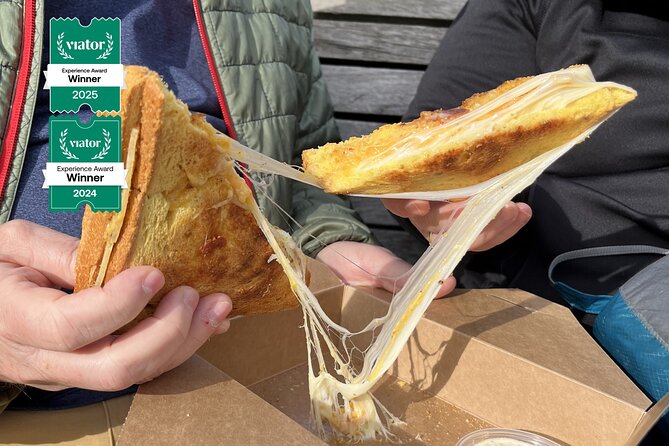
- Iconic Dutch tastings like Tom Pouce, Dutch fries, and herring
- History talk you can place on a map, from monarchy to crooked houses
Why this Amsterdam food-and-history mix is such a solid first move
Amsterdam has a way of overwhelming you fast. Streets twist, buildings lean, canals glitter, and your brain keeps asking: What am I looking at, and why does it matter? This tour helps because it pairs tastings with short, clear explanations that match what’s right in front of you.
The length is also a big deal. At about 3.5 hours, you get multiple stops without turning the day into a stamina test. And with a small group, you can actually hear the guide, ask questions, and keep the pace human instead of “tour-bus quick.”
Most people book this kind of tour early because it helps you get your bearings. But it can work later too—if you’ve already walked a lot, the history and food context can still make familiar streets feel new.
You can also read our reviews of more food & drink experiences in Amsterdam


The Dutch bites to expect (and why they’re a good mix)
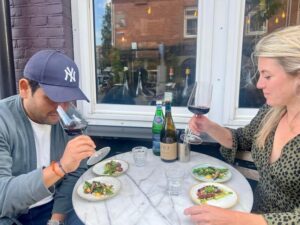
This is a tasting-focused tour, and the menu leans into classic Dutch comfort food and popular street snacks. You should expect familiar items plus a few things you might not try on your own.
Here are the specific tastings that are clearly part of the experience:
- Tom Pouce: a well-known Dutch treat you’ll see referenced again and again around town.
- Dutch fries: yes, fries. In Amsterdam, they’re a legit part of the food culture, not an afterthought.
- Herring: a classic Dutch bite that can be polarizing, which is exactly why it’s worth trying with context.
You’ll also learn the stories around foods and how they fit Dutch everyday life and traditions. That matters because the goal isn’t just tasting sugar or salt—it’s understanding why these foods stick around.
One extra note from the guide’s style: Roman’s tour vibe is heavy on personality and humor, and that’s often what makes “I wouldn’t have ordered this” foods go down easier. If you’re the type who enjoys learning while eating, you’ll likely have a good time.
Bloemenmarkt and Begijnhof: color outside, quiet inside
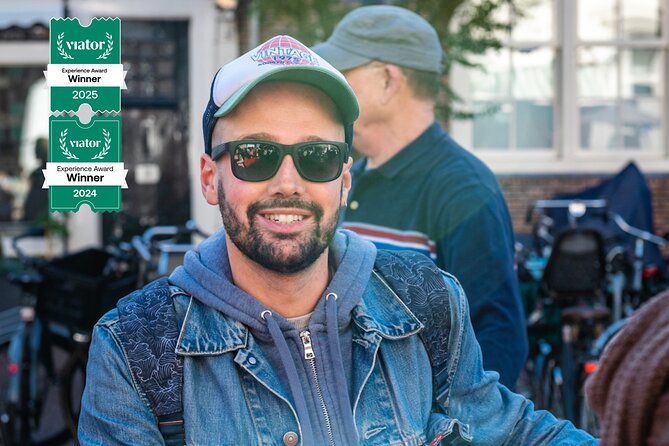
The route starts with Bloemenmarkt, the famous flower market area. It’s the kind of place where you immediately feel Amsterdam’s showy side—bright stalls, a sense of constant motion, and that postcard energy people come for.
You won’t be there forever—just long enough to take it in and understand what makes it iconic. And because it’s early, it gives you a visual anchor for the rest of the walk. After that, the tour shifts tone.
Next is Begijnhof, a historic and peaceful courtyard cut off from the rest of the city. This is one of those places where the contrast hits you right away: busy streets outside, calm inside. It’s also a reminder that Amsterdam isn’t one mood only. The city can be loud and playful, then quiet and reflective, all within minutes.
Even if you’ve seen photos of Begijnhof, it still works in person because the experience is about atmosphere as much as facts. The guide’s stories help you notice details you might otherwise walk past.
Torensluis crooked houses and the monarchy story
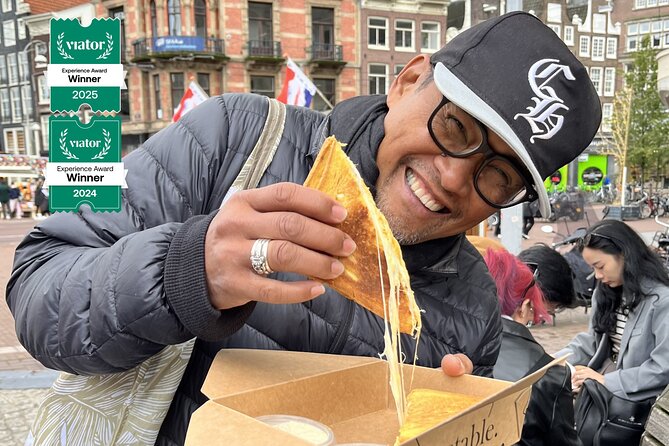
After the calmer courtyard, the tour starts leaning into the “how Amsterdam looks so weird” question. The area around Torensluis is where you’ll hear more about the city’s distinctive building shapes—specifically the famous crooked houses.
Why this stop is worth it: Amsterdam’s architecture can look odd from a distance, but it’s much easier to understand when someone points out what to look for. Instead of saying “these buildings are different,” the guide gives you the cultural and historical reasons that make the quirks feel logical.
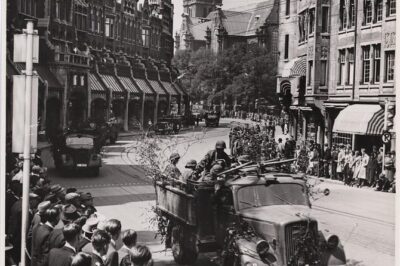
Then there’s a monarchy angle—at the end, you’ll walk away with a clearer sense of how that system fits into Dutch history. That’s a neat pairing with the crooked-house explanations. You start seeing how the Netherlands protects tradition while still reinventing daily life around it.
Anne Frank House pass and the Jordaan neighborhood finish
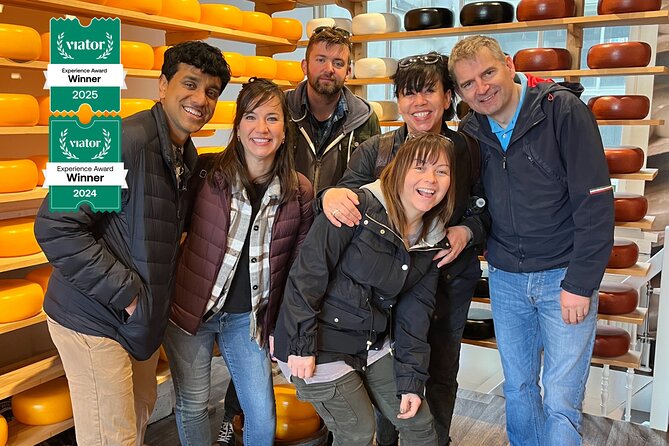
One part of the tour that helps with “Amsterdam orientation” is where it connects the dots between famous landmarks and the neighborhoods people actually linger in.
You’ll pass by the Anne Frank House area, then move into the Jordaan, often described as Amsterdam’s most charming neighborhood. The Jordaan is where you get the walk-around feeling: streets that seem made for wandering, smaller-scale scenes, and plenty of places where stories make more sense than they do from a distance.
Roman’s approach tends to focus on anecdotes—fun bits of local character—so the Jordaan doesn’t feel like a checklist. It feels like a place with a personality, which is what you want if this is your first serious time in town.
The end point is at Café Hegeraad near Noordermarkt, which is a good location to continue exploring on your own afterward. Even if you plan other sightseeing, you’ll likely finish with a better sense of direction than when you started.
You can also read our reviews of more tours and experiences in Amsterdam




Roman’s small-group style: more attention, more comfort
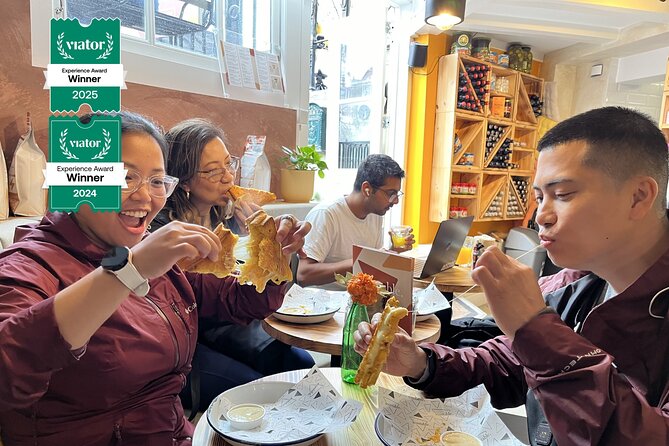
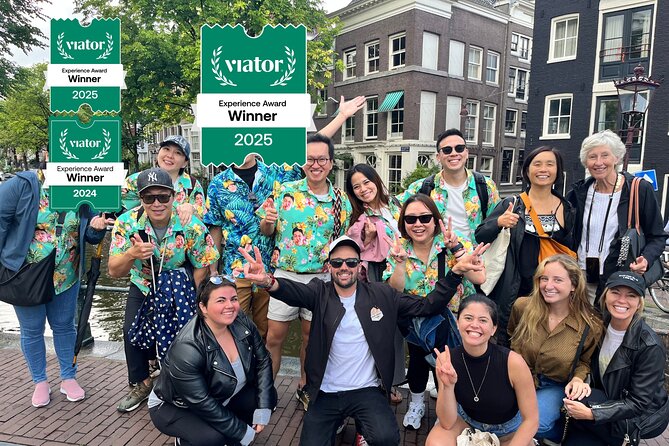
A lot of food tours promise “small group,” but in practice you still get swallowed by a crowd. Here, the cap at 15 matters. It makes a difference in:
- whether you can hear the guide
- whether you can ask questions
- whether you get enough time at each stop to actually experience it
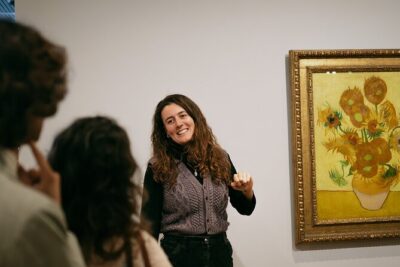
The guide named Roman is repeatedly praised for caring about each person’s experience and for being funny and personable. That combination matters because tastings can feel awkward if you’re unsure what you’re doing. A guide who checks in, explains what you’re about to try, and keeps the energy moving turns the tour into something you’ll remember for the right reasons.
There are also mentions of small practical touches—like water and hand sanitizer—and even improvised comfort when something in the group needs help. None of that is required for the tour to work, but it’s the kind of attention that often separates a good tour from a great one.
If you like guides who learn names and talk to people instead of reading a script, this is the right vibe.
Timing, meeting points, and how to plan your 1-day rhythm

The tour runs about 3 hours 30 minutes. That’s long enough to fit in meaningful tastings and neighborhood context, but short enough that you can still do museum time or canal time later.
You start at:
Vijzelstraat 5-A, 1017 HD Amsterdam
And you end at:
Café Hegeraad, Noordermarkt 34, 1015 NA Amsterdam
It’s also noted that the experience is near public transportation, and you’ll get a mobile ticket. So you don’t need to hunt for a paper voucher at the last minute.
One practical thing: this is a walking tour through central areas, including indoor/outdoor transitions (market area, courtyard, streets, then the Jordaan). Wear shoes you trust on uneven sidewalks and bring a light layer if the weather turns.
Also, the experience requires good weather. If it’s rainy or miserable, you could be offered a different date or a refund. I’d plan flexible sightseeing around this one if you can.
Vegetarian label vs. real food: what to check before you go
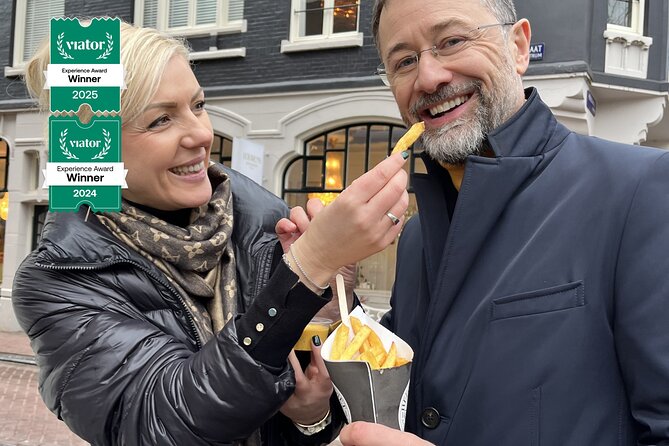
Here’s the part to take seriously: the tour is labeled vegetarian, but it’s not vegan and it’s not gluten-free. At the same time, the stated tastings include items like herring.
So what should you do? Don’t assume. If you eat vegetarian but avoid fish, or if gluten is a hard no, message or ask the guide directly when you arrive. The tour description gives clear limitations, but your personal needs still deserve a quick check so you’re not surprised on the spot.
A good approach is to treat this as a food experience designed around Dutch classics, then verify how it’s adapted for your diet. If you’re flexible on small ingredients, you’ll probably have an easy time. If you’re strict, ask early and be specific.
Price and value: is $91.07 worth it?
At $91.07 per person, this isn’t the cheapest walk in town. But for Amsterdam, it sits in the zone where you’re paying for three things:
- Multiple tastings (not just one snack)
- A live local guide who connects food to place
- A small group experience rather than a mass tour
The tour also includes stops where admission is free (for the flower market and Begijnhof-related portions), which helps keep the total experience straightforward.
If you’re doing Amsterdam for a short window—like a first trip or a quick stopover—this can be a high-value day. Food tours are often the fastest way to learn what a city “eats,” and the history bits here help you place what you’re tasting in context.
If you already plan to spend hours doing food on your own, you might feel like you can skip this. But if you want a guided route where the city story and the food story go together, the price tends to make sense.
Who should book this tour (and who might skip it)
Book this if:
- it’s your first meaningful visit to Amsterdam and you want your bearings fast
- you like learning through short stories tied to real places
- you want to try Dutch classics like Tom Pouce and Dutch fries without guessing where to go
Skip or choose something else if:
- gluten-free or strict vegan needs are non-negotiable for you
- you know you’ll hate trying herring and you’d rather only eat safe, familiar foods
- you’re traveling when weather is often unpredictable and you can’t rearrange a plan
One more good sign: people mention that the tour can work for mixed ages and different walking needs, including groups with a stroller. That doesn’t mean it’s designed for wheelchairs or heavy mobility issues, but it suggests the pace is generally manageable for varied groups.
Should you book this Amsterdam food-and-cultural tour?
I think it’s a strong yes if you want a practical intro to the city that mixes food tastings with neighborhood storytelling. The small group size and guide style—especially Roman’s humor and attention—seem to be the real “value driver,” not just the menu.
If you have diet restrictions, don’t skip it out of fear—just plan to verify your options before you meet. Once that’s clear, this is the kind of 3.5-hour outing that can make the rest of your Amsterdam day easier and more fun.
FAQ
How long is the Amsterdam food and cultural tour?
It’s about 3 hours 30 minutes.
What does the tour cost?
The price is $91.07 per person.
How big is the group?
The maximum group size is 15 travelers.
Do I get a mobile ticket?
Yes, the tour uses a mobile ticket.
Where does the tour start and end?
It starts at Vijzelstraat 5-A, 1017 HD Amsterdam, and ends at Café Hegeraad, Noordermarkt 34, 1015 NA Amsterdam.
Is the tour vegetarian?
The tour is vegetarian, but it is not vegan and it is not gluten free.
What are the main stops during the walk?
You visit Bloemenmarkt and Begijnhof, then continue through Torensluis and the Jordaan area, with the route also including a pass by the Anne Frank House area.
Is there an admission fee for the stops?
The listed stops (Bloemenmarkt, Begijnhof, and the related segments of the route) show admission as free.
Are service animals allowed and is it near public transportation?
Service animals are allowed, and it’s near public transportation.
Is the experience affected by weather or minimum group size?
Yes. It requires good weather and it also requires a minimum number of travelers; if either condition fails, you may be offered a different date or a refund.