REVIEW · AMSTERDAM
Amsterdam: World War II Private Walking Tour
Book on Viator →Operated by Slagveldreizen.nl · Bookable on Viator
WWII in Amsterdam happens on ordinary streets. This private WWII walking tour traces the Nazi occupation years through the Monument to Jewish Resistance and the places that keep the story present. It’s led by Ben de Jong and Peter Schaapman, with a steady, thoughtful pace and a short break about halfway.
I like two things a lot. First, it’s truly private, restricted to your own group of up to four people, so you can ask questions and linger when something hits you. Second, it’s built for an off-the-beaten-path feel, focusing on memorials and corners you’re unlikely to find on your own.
One possible drawback: the subject is heavy. It’s suggested for ages 13+ and requires moderate walking, and it doesn’t include major WWII stops like the Anne Frank House, the Resistance Museum, or Hollandsche Schouwburg—so if those are must-dos, you’ll want to plan them separately.
In This Review
- Key highlights I’d plan around
- Starting at Prinsengracht: what the morning setup feels like
- Between memorials: what you’ll actually cover on the walk
- The guide factor: Ben de Jong and Peter Schaapman
- Why the Monument to Jewish Resistance is the anchor stop
- The weight of the topic (and how to prepare for it)
- What’s included vs. what you’ll pay separately
- Price in real terms: is $180.04 good value?
- What the tour does not include (so you don’t guess wrong)
- Timing, pace, and getting there with less stress
- Should you book this Amsterdam WWII private walk?
- FAQ
- What languages are offered for the tour?
- How long is the Amsterdam WWII private walking tour?
- Is this tour private or shared with other groups?
- Where do I meet and where does the tour end?
- What time does the tour start?
- What important WWII sites are not included on this walk?
- Is the admission ticket included?
- Is there a minimum age or a fitness requirement?
- Can I cancel for free?
Key highlights I’d plan around
- Private group up to 4 means a more personal pace and real Q&A time
- Ben de Jong and Peter Schaapman guide the walk with a historian’s tone
- Monument to Jewish Resistance focus keeps the story anchored and concrete
- Memorial-route walking connects WWII-era sites to today’s remembrance
- 3 hours (approx.) with a mid-walk coffee or restroom break
Starting at Prinsengracht: what the morning setup feels like
This tour starts at Prinsengracht 263 (1016 GV), with a 9:30 am meeting time. You’ll end at the National Holocaust Names Monument (1018 DP), so it’s a point-to-point walk rather than a back-and-forth circuit.
I like this format because it avoids the “now where do we go?” feeling. You get a clear start, a route built around memory sites, and a purposeful finish. Also, since it’s restricted to your own group, the guide can adjust the pace to how your group is taking in the material.
There’s also a mobile ticket, and the tour is offered in English and German. Near public transportation, it’s easy to get to on your own without planning a complicated route around trams or buses.
You can also read our reviews of more walking tours in Amsterdam



Between memorials: what you’ll actually cover on the walk
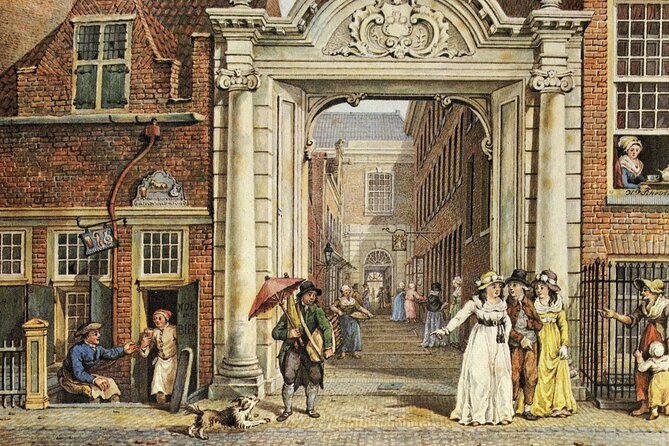
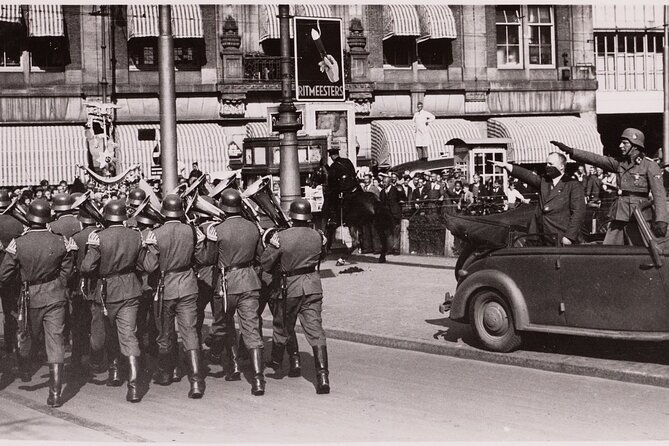
The core of the experience centers on the Monument to Jewish Resistance. From there, you’ll visit important sites and monuments connected to the Nazi occupation of Amsterdam (1940–45). The point isn’t to cram in a list of famous names. It’s to help you understand how these events played out across the city in real streets and real neighborhoods.
You can expect a guided experience that treats the walk like an informed route: pauses at key places, explanations that put each stop into context, and time to absorb what you’re looking at. The tour description also stresses the ongoing legacy of World War II, so you’re not just learning what happened—you’re seeing how Amsterdam carries the memory forward.
At the halfway point, there’s a short break for coffee and/or a restroom stop. That matters on a 3-hour walk, especially when the topic is emotionally intense. You’ll keep moving without feeling rushed, and you’ll have a moment to reset your attention.
The finish at the National Holocaust Names Monument gives the walk a strong closing note. Instead of ending at a random place, you end at a memorial designed for remembrance, which can help the whole story land in a more grounded way.
The guide factor: Ben de Jong and Peter Schaapman
This tour is guided by Ben de Jong and Peter Schaapman. I’m a big believer that WWII tours live or die on the guide’s tone. Here, the emphasis is on historical explanation plus human clarity—talking about traumatic events without turning them into a lecture you can’t connect to.
Peter Schaapman is described in the provided information as having a published historian approach, and the style fits the walk well. The best kind of guide for this subject doesn’t speed-run facts. They help you notice what you’re seeing, then place it in context so it makes sense as part of Amsterdam’s longer story.
Also, because it’s private for your group, the guide can answer your questions directly. If you’re the type who wants to know why a certain street matters, or you’re trying to connect WWII history to what you see in the city today, this format usually works better than larger tours.
Why the Monument to Jewish Resistance is the anchor stop
The Monument to Jewish Resistance sets the tone for the whole tour. Choosing this as the anchor stop matters because it keeps the focus on Amsterdam under Nazi control and the reality of resistance and persecution during 1940–45.
I like anchored tours like this because they prevent the common problem of WWII sightseeing feeling scattered. Instead of jumping between unrelated stops, you stay on a theme. The guide can connect the dots across the city, showing how occupation-era life and suffering showed up in multiple places.
The tour also explicitly positions this experience for people who want to go off the beaten path. That’s a clue about the pacing and the type of spots you’ll cover. This isn’t meant to compete with the most famous WWII museums. It’s meant to deepen your understanding of what Amsterdam looked like during those years and how memory is kept visible in everyday space.
The weight of the topic (and how to prepare for it)
This is not a light walking tour. It deals with the Nazi occupation of Amsterdam and the lasting legacy of the Second World War. That’s true even if your route includes memorials that look calm from a distance. The information and discussions behind the stops are the main event.
That’s why there are two practical considerations in the tour details:
- Suggested minimum age: 13
- Moderate physical fitness needed
Also, a mid-walk break for coffee or a restroom visit helps, but it won’t make the topic any easier. If you’re the kind of traveler who prefers an overview with less emotional intensity, you might find this tour heavy. On the other hand, if you want context and you can handle serious history, it’s a powerful way to understand Amsterdam beyond postcard landmarks.
You can also read our reviews of more private tours in Amsterdam




What’s included vs. what you’ll pay separately
The price is $180.04 per group (up to 4 people) for about 3 hours. It includes all fees and taxes and the walk includes an admission ticket free component for what’s covered.
What’s not included:
- Coffee and/or tea (you’ll get a short break halfway through, but you’ll likely pay for drinks yourself)
- Museum tickets for major sites because they are not visited
- Drinks during stops (not included)
This is important for your planning. If you’re budgeting only for “one WWII activity,” make sure you’re comfortable skipping certain museums. If you’re the kind of person who wants to spend hours inside major exhibits, you’ll probably prefer to pair this walk with museum time on another day.
Price in real terms: is $180.04 good value?
$180.04 per group can sound steep until you do the math. Since the group limit is up to 4 people, the effective cost becomes about $45 per person if you fill all four spots.
That makes a private WWII walking tour a lot more reasonable. You’re paying for:
- a guide’s time
- a route tied to specific memorial sites
- private group access (no crowd noise)
- a topic-focused explanation you can’t easily replicate with a guidebook
If you’re traveling as a duo, the per-person cost will be higher than the full-group scenario—but you still get the benefit of privacy. For families or friends who want serious context without splitting up, this can be one of the better “private history” values you’ll find in Amsterdam.
What the tour does not include (so you don’t guess wrong)
This experience does not include visits to:
- the Anne Frank House
- the Resistance Museum
- Hollandsche Schouwburg (described here as the deportation center)
It also notes that tickets for these museums are not included.
I’m glad this is clear up front, because these are the exact stops many people plan around when they say WWII in Amsterdam. The trade-off here is simple: this walk focuses on the memorial and memorial-route approach, rather than museum admissions and inside exhibits. If you want the Anne Frank House experience or the specific museum stops, treat this as one piece of your WWII day plan, not your entire plan.
Timing, pace, and getting there with less stress
Plan on about 2.5–3 hours on the walk. That’s a good length for this kind of subject. Long enough to understand a theme, short enough that you’re not stuck feeling mentally overloaded for half a day.
The tour starts at 9:30 am, which can be a win. You’ll start earlier in the day, before crowds become a bigger factor for your overall Amsterdam schedule. It also helps if you’re planning a museum or dinner later, since the walking segment has a predictable window.
It’s also near public transportation, so you’re not locked into one exact transit route. Bring comfortable shoes, and if you use a mobility aid, remember the tour requires moderate physical fitness. Service animals are allowed, which is good to know if that’s relevant for your group.
Should you book this Amsterdam WWII private walk?
If you want a private, memorial-based WWII experience that’s built around the Nazi occupation years (1940–45) and the ongoing legacy of the Second World War, I think this is a strong choice. The fact that you end at the National Holocaust Names Monument gives it a coherent, meaningful arc.
Book it if:
- you care about history you can see in the streets, not just behind museum walls
- you want a smaller-group experience where the guide can respond to your questions
- your group can handle serious material (age 13+ is suggested)
Consider a different option if:
- you’re specifically trying to do the Anne Frank House or the Resistance Museum as part of this one booking
- you’d rather start with a lighter or more general overview
FAQ
What languages are offered for the tour?
The tour is offered in English and German.
How long is the Amsterdam WWII private walking tour?
The tour takes about 3 hours (approximately 2.5–3 hours).
Is this tour private or shared with other groups?
It’s a private tour/activity. Only your group will participate, with a group size of up to 4 people.
Where do I meet and where does the tour end?
Meet at Prinsengracht 263, 1016 GV Amsterdam. The tour ends at the National Holocaust Names Monument, 1018 DP Amsterdam.
What time does the tour start?
The start time listed is 9:30 am.
What important WWII sites are not included on this walk?
This walk does not visit the Anne Frank House, the Resistance Museum, or Hollandsche Schouwburg. Tickets for those are not included.
Is the admission ticket included?
Yes. The experience notes admission ticket free and includes all fees and taxes.
Is there a minimum age or a fitness requirement?
The suggested minimum age is 13, and you should have moderate physical fitness for the walking portion.
Can I cancel for free?
Yes, you can cancel for a full refund if you cancel at least 24 hours before the experience start time.
If you tell me how many people are in your group and whether you also want to visit the Anne Frank House, I can suggest a simple way to pair this walk with the right museum day.