REVIEW · AMSTERDAM
From Amsterdam: Rotterdam and The Hague Tour in Spanish
Book on GetYourGuide →Operated by Camaleon Tours · Bookable on GetYourGuide
Two cities, one clean day plan. You’ll bounce from the seat of power in The Hague to the Cube Houses of Rotterdam, all explained by a Spanish-speaking guide with real personality. I love how the tour mixes classic Dutch landmarks with the post-war, design-forward attitude that shaped Rotterdam. The one drawback to plan around: food and drinks aren’t included, so lunch is on you.
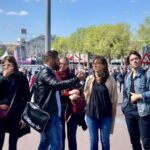
This is a straight-through, bus-based day that still leaves breathing room. After an organized run of major sights, you get about 3 hours of free time in Rotterdam for lunch, snacks, and shopping at street level. The staff meet you by green umbrellas, so even if you arrive a little frazzled, you shouldn’t have trouble finding the group.
In This Review
- Key things to know before you go
- The Hague first, Rotterdam second: why this route makes sense
- Binnenhof and Noordeinde Palace: where Dutch power shows its face
- Mauritshuis and the Peace Palace: art meets international law
- Rotterdam’s wartime memory: the Man without a Heart
- Cube Houses and the odd-angled genius of Piet Blom
- From Oude Haven to Markthal: historic port flavor and modern food energy
- The River Meuse and Rotterdam’s skyline: your panoramic payoff
- Your guide matters: Spanish-first, humor-forward, and sometimes English help
- Price and logistics: $46 for two cities, a bus day, and major landmarks
- How to plan your day: what to bring and how to pace yourself
- Who this tour is best for
- Should you book this Rotterdam and The Hague tour from Amsterdam?
- FAQ
- What language is the guide?
- How long is the tour from Amsterdam?
- Is food included in the price?
- Where is the meeting point?
- Are hotel pickup and drop-off included?
- Is there free time during the day?
Key things to know before you go
- Spanish-speaking guide with personality: The tone is upbeat and practical, not a textbook lecture.
- Big sights, efficient pacing: The day hits The Hague’s power center and Rotterdam’s signature architecture.
- Rotterdam’s design story is front and center: From WWII memory to the Cube Houses and modern streetscape.
- Oude Haven and Meuse views: You’ll get both historic-port atmosphere and city-skyline panoramas.
- 3 hours of freedom in Rotterdam: Enough time to eat, browse, and reset on your own.
- Clear meeting point: Outside Aloha Bowling, with staff easily spotted by their green umbrellas.
The Hague first, Rotterdam second: why this route makes sense

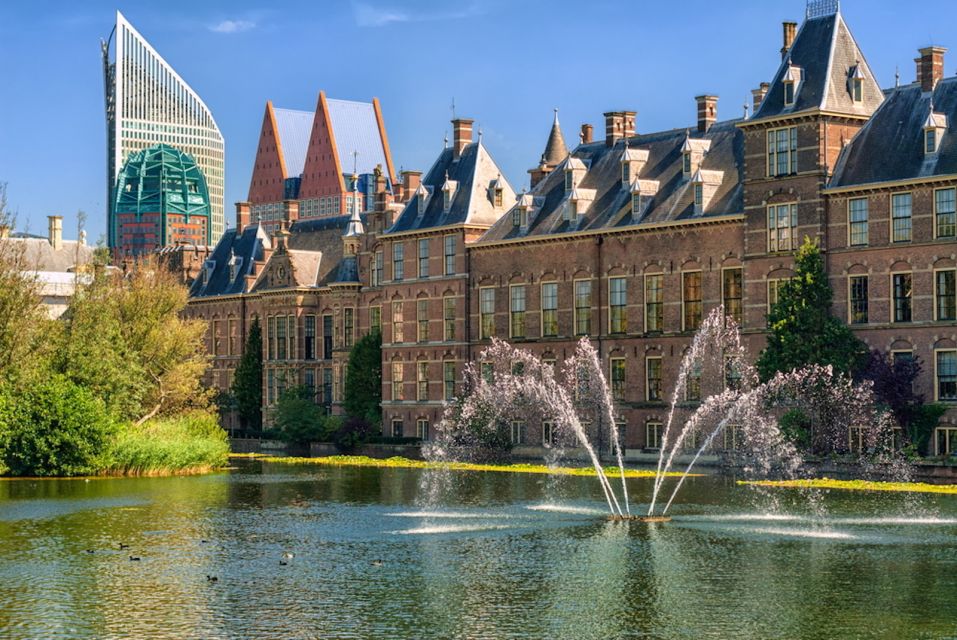
If you’re doing only a day and you want contrast, this is a smart pairing. The Hague is about institutions, government buildings, and formal spaces. Rotterdam is about rebuilding, reinvention, and architecture that answers the question: what do you do after a city gets wrecked?
You start in Amsterdam and travel by bus to The Hague. The day then runs like a visual checklist: government complex, museum area tied to major Dutch painters, and the Peace Palace. After that, you head to Rotterdam for WWII memorials, the Cube Houses, a historic port corner, and modern food-hall energy.
The practical upside for you: it’s hard to stitch these two cities together smoothly on your own in one day without losing time. The tour handles the transit and keeps you moving between districts.
You can also read our reviews of more tours and experiences in Amsterdam.


Binnenhof and Noordeinde Palace: where Dutch power shows its face
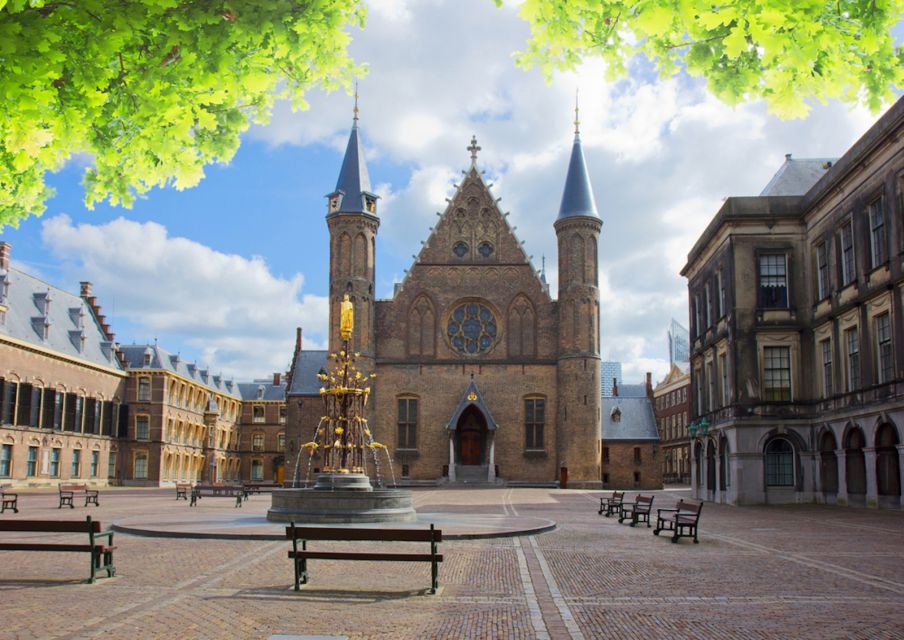
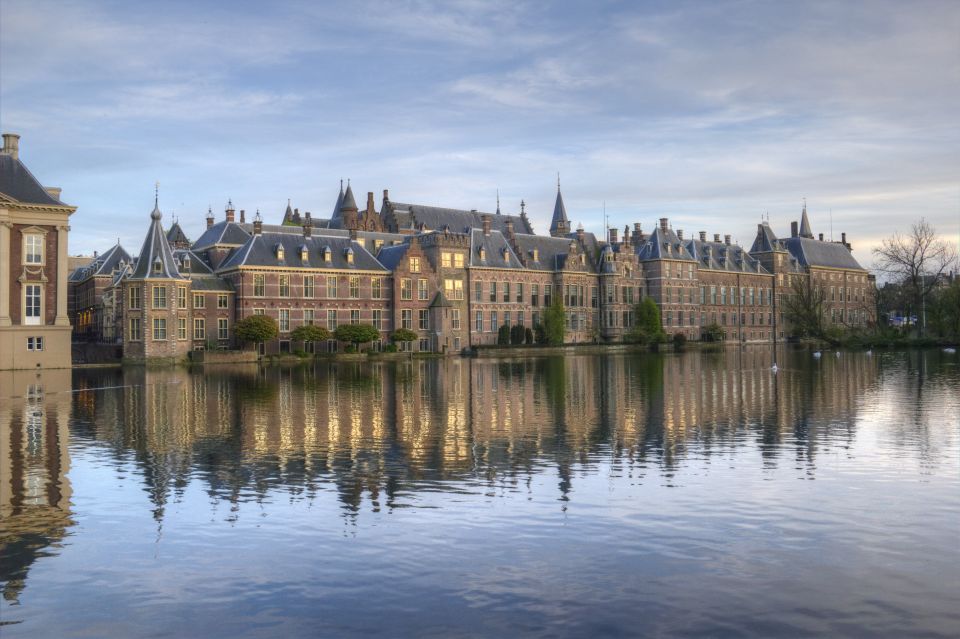
The Hague’s highlight is the Binnenhof complex, often described as the seat of power at the center of Dutch governance. On your visit, you’re not just looking at buildings—you’re seeing how the Netherlands presents authority in stone, courtyards, and carefully kept grounds.
A key stop here is the royal Noordeinde Palace area as part of the day’s focus on the city’s power sites. This is one of those locations where a guide can make the details click. You’ll hear how these institutions fit into the wider story of the Netherlands, and you’ll likely pick up small context clues that help you read the architecture instead of just photographing facades.
One consideration: this portion of the day is more about watching, listening, and taking in the setting than popping into lots of places. So if you love information and explanation, you’ll probably enjoy this segment more than if you want nonstop walk-in sites.
Mauritshuis and the Peace Palace: art meets international law
After the government stops, the tour shifts toward art and global governance.
You’ll head to the Mauritshuis Museum area, where you can see art by Rembrandt and Vermeer on display. Even if you’re not a hardcore museum person, the names matter. They’re the kind of painters that anchor Dutch art in the mind, and seeing them referenced during a city walk helps you understand why people travel here even when they know they won’t have hours in a gallery.
Then comes the Peace Palace and the headquarters of the International Court of Justice. This is the part that adds a “world stage” feeling to the day. The Hague isn’t just local politics—it’s where international justice happens, housed in a very recognizable landmark setting.
Practical tip for you: when you’re in a building-focused part of the day, wear shoes you can stand in. The tour moves you along a route, and you’ll want comfort for the viewpoints and walking time.
Rotterdam’s wartime memory: the Man without a Heart
Now for the emotional pivot. Rotterdam is famous for its skyline, but it also has a strong need to remember what happened during World War II.
You’ll see the Man without a Heart sculpture by Ossip Zadkine, built as a reflection on the destruction of the city. It’s not a giant spectacle meant to shock you from far away. It works more like a quiet but sharp marker in the city’s rebuilding story. You’ll get a better read on the sculpture if you pause, look at it, and take a moment before moving on.
This stop matters because it explains Rotterdam’s attitude. Without that context, the city can feel like one big “new” neighborhood. With it, you see the deliberate choices in what Rotterdam built afterward.
Cube Houses and the odd-angled genius of Piet Blom
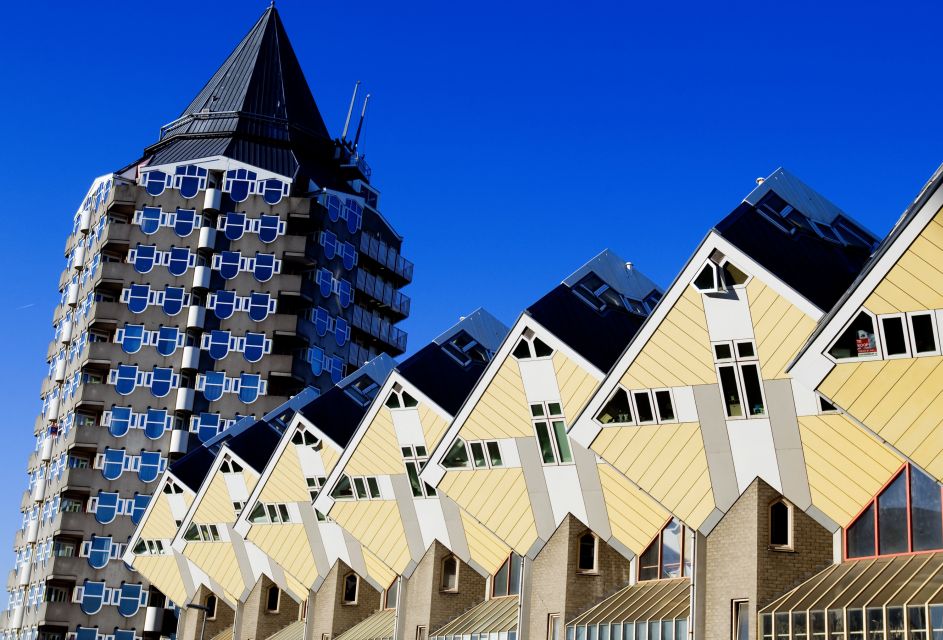
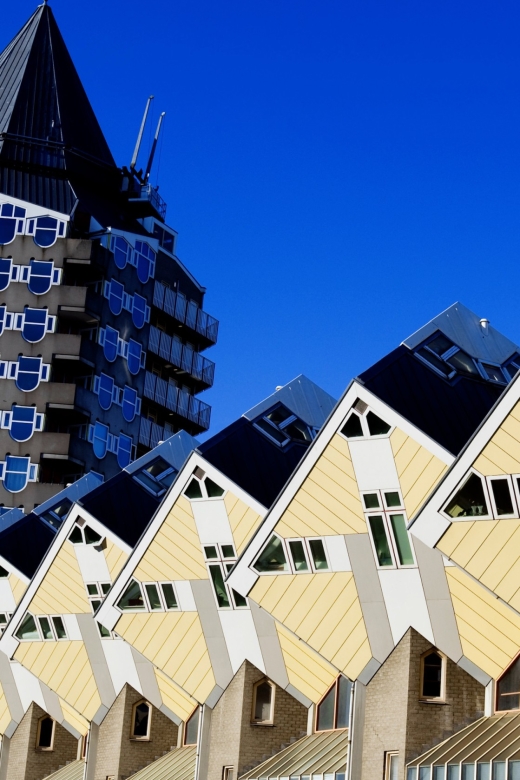
One of the most photo-worthy parts of the day is the Cube Houses, designed by Piet Blom. These aren’t just clever shapes. They’re a bold answer to the idea that apartments should fit neatly into the grid like everything else.
When you look at them up close, you get a feel for Rotterdam’s design culture. The city leans into angles, experiments, and architecture that you don’t just admire from a distance. Even if you’re not an architecture nerd, you’ll probably find yourself studying them for a few extra minutes.
If you like modern design, this is the portion that usually delivers maximum wow per minute. If you’re less into design, it still pays off because it’s one of Rotterdam’s most recognizable symbols—and your guide can point out what makes them more than a novelty photo.


From Oude Haven to Markthal: historic port flavor and modern food energy
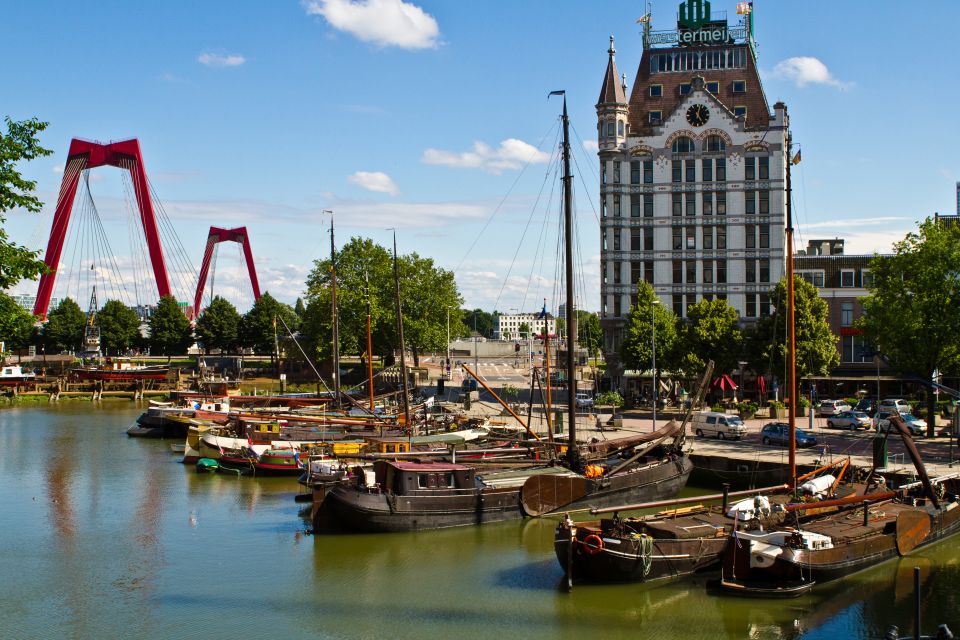
Rotterdam’s old port area, Oude Haven, gives you atmosphere. It’s the spot where the city feels more like a working place rather than only an architecture showcase. Strolling here is a great break from the more institutional vibe of The Hague.
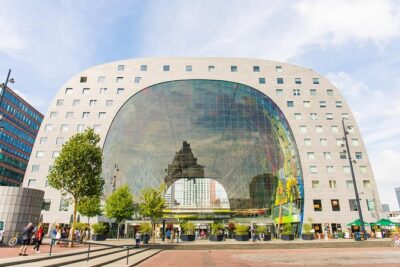
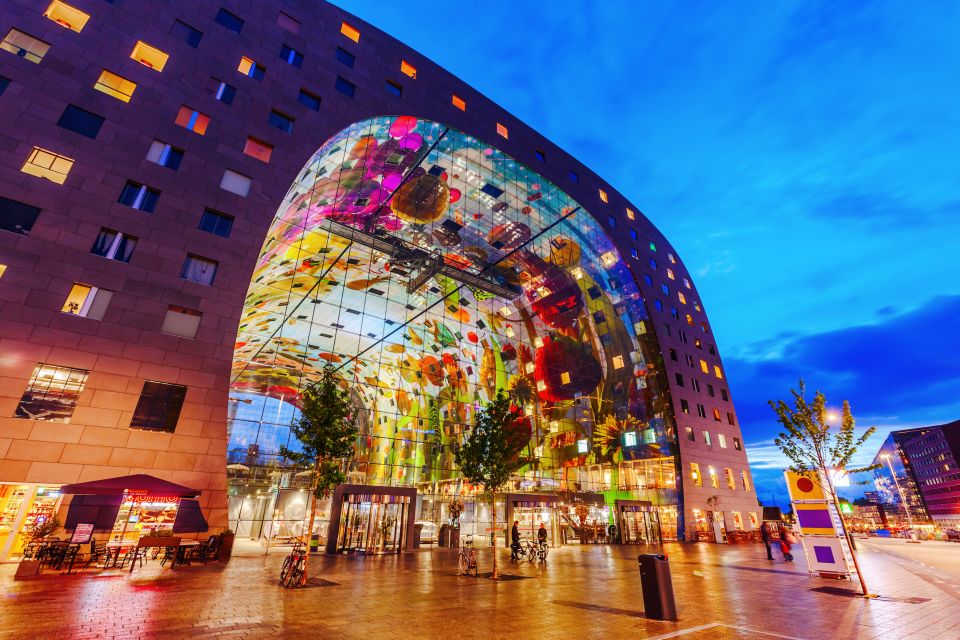
Then the day moves you toward the Markthal, the covered food and market hall. This is the stop that turns your guide from “telling you facts” into “helping you enjoy the moment,” because food halls are designed for people who want to taste without a long plan.
Even if you don’t eat there, you’ll get the visual experience: stalls, crowds, and that sense of everyday life. And because food and drinks aren’t included on this tour, the Markthal area becomes an especially useful option for you when you later hit the free time block.
The River Meuse and Rotterdam’s skyline: your panoramic payoff
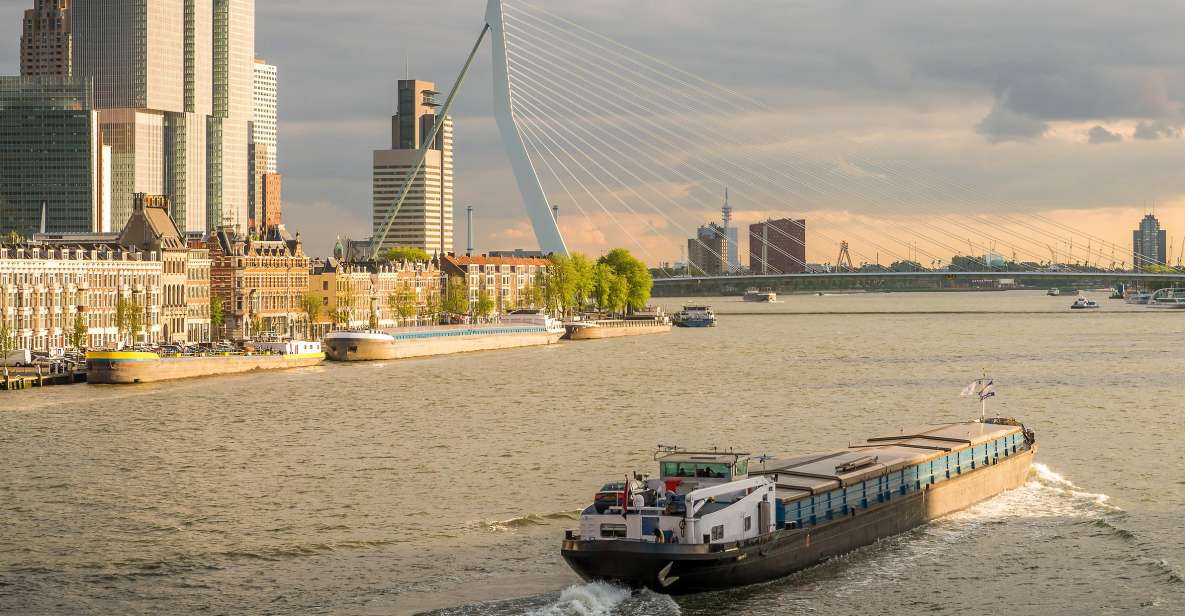
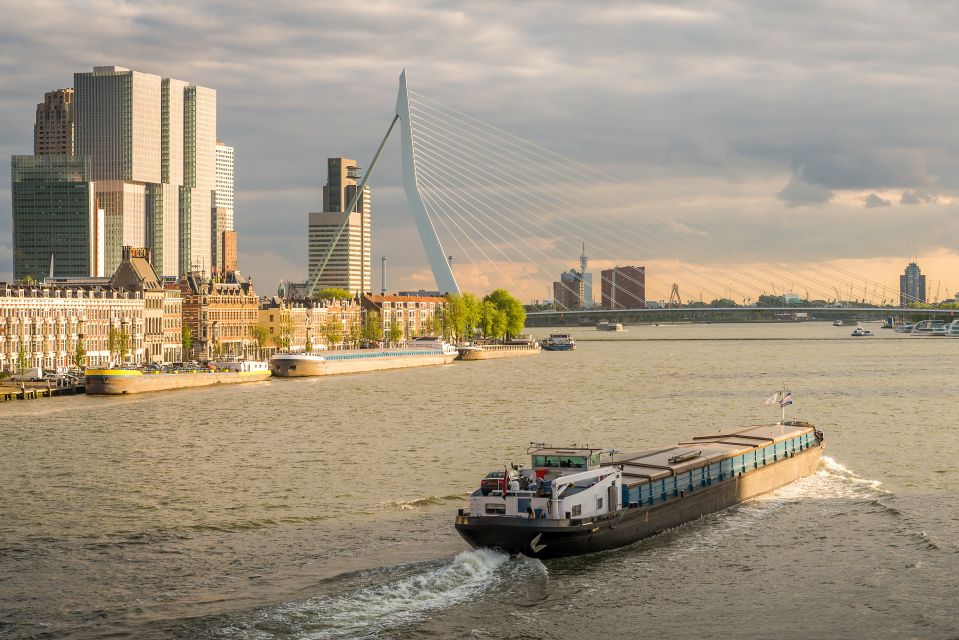
Later, you’ll stroll along the banks of the River Meuse for panoramic views of Rotterdam’s skyscrapers. This is a good momentum switch: you get to walk without rushing into another “look here, look there” stop, and the wide river views let you take in the city’s scale.
Rotterdam can feel like a set of landmarks when you’re moving quickly. From the Meuse, the city starts to look like a whole place—different districts, different eras, and a lot of vertical ambition.
If you’re traveling with someone who isn’t obsessed with architecture, this segment often works well because the views are simply impressive. It’s a “everyone can agree” stop.
Your guide matters: Spanish-first, humor-forward, and sometimes English help
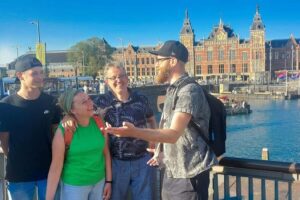
A lot of the value here comes down to the guide’s style. On this tour, you’ll be with a Spanish-speaking guide, and the best part is when that language comes with structure and humor, not just facts.
From the guides I’ve seen associated with this tour, names like Fanny, Facundo, Silvia, and Blas show up in people’s notes for being attentive, funny, and clear. Even when someone doesn’t understand Spanish, some guides also give occasional instructions in English. That means you can still follow the “where to go next” and “what to notice” pieces without getting lost.
So if your Spanish is basic, don’t panic. You can still get a lot out of this day by listening for the guide’s directions and using your eyes for the architecture cues.
Price and logistics: $46 for two cities, a bus day, and major landmarks
Let’s talk value. For about $46 per person and roughly 8 hours, you’re paying for the big time-saver: transportation between Amsterdam, The Hague, and Rotterdam, plus a Spanish-speaking guide to connect what you see.
You’re not paying for meals, and that’s important. Since food and drinks aren’t included, budget for lunch in Rotterdam and any snacks you want along the way. If you plan ahead, it’s easy to make the day feel affordable rather than expensive.
Logistically, there’s also a built-in simplicity: you meet outside Aloha Bowling, show up about 15 minutes early, and find your group by the green umbrellas. That removes a lot of first-day travel stress.
If you’re comparing this to doing both cities on your own, the question becomes: do you want the hassle of planning transit and getting your bearings? This tour is the choice for people who want a guided route and minimal friction.
How to plan your day: what to bring and how to pace yourself
Because you’re covering two cities and multiple districts, your comfort matters.
Bring:
- Comfortable walking shoes (the day includes walking along rivers and through city areas)
- A water bottle or a small snack for the bus ride and in-between moments
- Cash or a card you can use for lunch during the free time
Pacing is built in. The tour provides a structured run of stops, then gives you roughly 3 hours to roam in Rotterdam. That free time is your chance to choose your own vibe: a sit-down lunch, quick bites, a browse through shops, or a relaxed stroll back toward the places you liked most.
Who this tour is best for
I’d aim this at you if:
- You want a one-day overview of The Hague and Rotterdam without stressful planning.
- You like architecture and city design, especially modern forms like the Cube Houses.
- You enjoy learning how places connect: WWII memory, rebuilding, government power, and international justice.
It’s also a good option if you’re traveling with mixed interests. One part of the day satisfies the “landmarks and institutions” crowd. Another part satisfies the “look at that skyline and weird buildings” crowd.
Should you book this Rotterdam and The Hague tour from Amsterdam?
Yes, if you want a guided, time-efficient way to see the contrasts that define these cities. The big wins are the pairing of Binnenhof / Noordeinde / Peace Palace with Rotterdam’s signature architectural stops, and the fact that you still get breathing space in Rotterdam for lunch and personal exploration.
Skip it or reconsider if you hate bus days and prefer slow, self-paced wandering. This is a packed day designed to cover a lot, with free time saved for Rotterdam rather than spread out everywhere.
If you’re a planner, bring your lunch budget and your walking shoes. If you’re more spontaneous, use the free time to follow your own curiosity—this tour gives you the map, and you decide what to do with it.
FAQ
What language is the guide?
The tour is conducted in Spanish.
How long is the tour from Amsterdam?
The duration is 8 hours.
Is food included in the price?
No. Food and drinks are not included, so you’ll need to plan your own lunch and snacks.
Where is the meeting point?
Meet outside the main entrance to Aloha Bowling. Arrive about 15 minutes before the activity starts.
Are hotel pickup and drop-off included?
Hotel pickup and drop-off are included if you select a private tour.
Is there free time during the day?
Yes. You’ll have about 3 hours of free time to explore, eat, and shop on your own in Rotterdam.