REVIEW · AMSTERDAM
Amsterdam: Small-group Guided Walking Tour (French/English)
Book on GetYourGuide →Operated by Voyage & Souvenir Amsterdam Tours · Bookable on GetYourGuide
A few blocks can teach Amsterdam fast. This small-group walk turns Dam Square, the canal belt, and the Jordaan into clear stories you can revisit later.
What I liked most: you get personal recommendations during and after the walk, and you’ll understand why each stop matters instead of just snapping a photo. One possible drawback: the route is efficient, so you spend more time moving between sights than lingering.
In This Review
- Key highlights to know before you go
- First Meeting at the IJ: Pancakes Amsterdam, Ferries, and a Fast Start
- What you should bring
- Price, Time, and Why $33 Can Make Sense
- From Centraal to Secret Corners: Central Landmarks That Set the Story
- Amsterdam Centraal Station: the quick orientation photo stop
- Dancing Houses: architecture with a grin
- Basilica of Saint Nicholas: a church stop with a purpose
- Zeedijk Street: old street energy, canal-era connections
- Major Alida Bosshardt Statue: remembering the people behind history
- Ons’ Lieve Heer op Solder: the attic church that makes Amsterdam make sense
- Oude Kerk to Chinatown to the Narrowest House: Old Streets, Trade, and Side Stories
- Oude Kerk: Amsterdam’s old heartbeat
- Burgwallen Oude Zijde: canal-side street patterns
- Amsterdam Chinatown: a multicultural layer in the center
- De Waag: weighing goods and telling trade stories
- VOC area: Dutch East India Company and the trade engine
- Narrowest House in Europe: an oddity that says a lot
- Dam Square, Royal Palace, and the Canal Belt: UNESCO in Plain Language
- Dam Square: the city’s main stage
- Royal Palace: power and presentation
- Magna Plaza: the city’s shopping evolution
- Torensluis Bridge and the UNESCO canal belt
- Anne Frank House, Westerkerk, and the Jordaan: The Amsterdam That Stays With You
- Anne Frank House: story tied to place
- Westerkerk: a church landmark with a sense of scale
- The Jordaan: canals, courtyards, and neighborhood rhythm
- What You Get After: Links, Food Leads, and Little Wins
- How to Make the Most of the Walk (Without Running Out of Energy)
- Who This Walk Fits Best (and who should consider something else)
- Should you book this Amsterdam walking tour?
- FAQ
- Where is the meeting point for the tour?
- How long does the guided walking tour last?
- What languages are available for the guide?
- Is this a small-group tour or can I book private?
- Is the tour wheelchair accessible?
- What should I bring?
- What’s included, and what’s not included in the price?
- Can I cancel for free or pay later?
Key highlights to know before you go
- Meet at the IJ waterfront (Pancakes Amsterdam area) so you start with real context, not a random back street
- A guide-led route through iconic + offbeat stops like Ons’ Lieve Heer op Solder and the Attic Church area
- UNESCO canal-belt focus with the big-picture story of how Amsterdam grew
- Anne Frank and the city’s daily-life details tied to the streets you’re walking
- Actionable food and sightseeing tips at the end, plus links you can use immediately
First Meeting at the IJ: Pancakes Amsterdam, Ferries, and a Fast Start
Your tour begins near the water at Pancakes Amsterdam at the IJ, behind Amsterdam Centraal. Look for the area by the white-and-blue ferries leaving for Amsterdam North, next to Pancakes Amsterdam, near a big D ferry halte sign by the bike lane.
This starting point is a sneaky good choice. You’re already seeing Amsterdam as a city built around movement—boats, trade, and water routes—before you ever hit the central streets. And it helps you orient quickly, especially if you just arrived or you’re juggling museum tickets later.
You’ll also spot your guide by appearance: glasses, a beard, and a baseball hat. In many of the tour experiences tied to this walk, the guide is named Chris, and the consistent theme is how much he answers and how freely he gives practical tips.
You can also read our reviews of more walking tours in Amsterdam


What you should bring
Since this is a walking tour (and the city can shift weather quickly), pack comfortable shoes, an umbrella, and water. Dress for the day you’re having, not the weather forecast from two hours ago.
Price, Time, and Why $33 Can Make Sense
At $33 per person for a 2–3 hour guided walk, this is aimed at value: you’re paying for orientation, context, and decision-making help later. You’re not buying museum entry or a meal. The good deal is that you leave with a better plan for the rest of your Amsterdam time.
You’ll also see a lot of the core areas without the mental load of figuring out the route yourself. That matters in Amsterdam. Between canals, side streets, and one-way systems, it’s easy to waste energy wandering.
One more practical point: the walk is photo-stop paced. Many of the stops are brief (often around a few minutes each), so it’s great for getting the lay of the land. It’s less ideal if you want long, slow, sit-down time at every building.
From Centraal to Secret Corners: Central Landmarks That Set the Story
The early part of the walk is about building Amsterdam’s “why.” You’ll start near the station area, then move through streets where the city’s layers show up in architecture, religion, and old commerce.
Amsterdam Centraal Station: the quick orientation photo stop
You’ll pass by Amsterdam Centraal for a short stop and photo. Even if you’ve seen it from a distance, this stop helps you connect the station to the rest of the walking route. It’s useful because Amsterdam’s neighborhoods can feel far apart even when they’re close.
The trade-off: it’s not the time for a deep dive inside the station. Think “orientation,” not “tourist browsing.”
You can also read our reviews of more guided tours in Amsterdam



Dancing Houses: architecture with a grin
Next come the Dancing Houses, where the facades look like they’re leaning or twisting. This is the kind of place where a guide’s stories matter. Without context, it’s just a quirky facade. With context, it becomes a clue to how Amsterdam blends classic urban life with modern design.
You’ll get a photo stop and a quick explanation—perfect if you like architecture but don’t want to spend half an hour reading everything on site.
Basilica of Saint Nicholas: a church stop with a purpose
Then you’ll reach the Basilica of Saint Nicholas (Basiliek van Sint-Nicolaas) area. This stop gives you a sense of the city’s older religious roots right in the central zone.
A practical consideration: churches require a bit of walking and sometimes have rules for entrances or quiet behavior. If you’re visiting in a group, follow the guide’s timing so you don’t lose the flow.
Zeedijk Street: old street energy, canal-era connections
Zeedijk Street is where you start feeling the long, commercial spine of the city. The guide’s job here is to connect the street’s feel to its history, so you’re not just looking at buildings—you’re learning how this area functioned.
Major Alida Bosshardt Statue: remembering the people behind history
You’ll also stop by the major Alida Bosshardt statue. This kind of stop is often missed on standard sightseeing circuits, but it matters because it pulls history away from only kings and palaces and toward the people who shaped life here.
Ons’ Lieve Heer op Solder: the attic church that makes Amsterdam make sense
One of the best “only in Amsterdam” moments is Ons’ Lieve Heer op Solder (Our Lord in the Attic Museum). Even if you only get a quick exterior/photo stop on this walk, the story is the point. This is where Amsterdam’s religious history gets explained in a way that feels tied to daily life, not like a textbook.
The drawback is simple: with a walking route, you don’t have the time to explore every room like a standalone museum visit would. If you love this stop, plan to return on your own.
Oude Kerk to Chinatown to the Narrowest House: Old Streets, Trade, and Side Stories
As you move deeper into the historic core, the walk starts stacking up details. You’ll see older churches, old street patterns, and then shift into trade-focused stories that explain why Amsterdam became a powerhouse.
Oude Kerk: Amsterdam’s old heartbeat
At Oude Kerk, the name means Old Church, and that’s not marketing. This is one of those stops where you can feel the age. The guide frames it with how Amsterdam evolved and how different eras left their marks.
If you’re the type who likes history, this is a strong early anchor. The place is old; the explanation helps you read the city around it.
Burgwallen Oude Zijde: canal-side street patterns
Burgwallen Oude Zijde is a canal-side zone where the city’s layout tells you a lot. You’ll get a guided look at how streets and waterways work together.
This is also a spot where you may notice Amsterdam’s blend of beautiful and practical: places that look postcard-perfect are also lived-in.
Amsterdam Chinatown: a multicultural layer in the center
A stop near Amsterdam Chinatown shows how the city isn’t stuck in the past. The guide ties it into Amsterdam’s modern multicultural vibe, so your understanding becomes more current, not only “Golden Age” themed.
This isn’t a long food crawl on this walk. If you want snacks, you’ll use your guide’s advice afterward.
De Waag: weighing goods and telling trade stories
Next is De Waag Restaurant. Even if it’s a restaurant today, the name points you toward an older role: commerce, measurement, and the systems that made trade function.
A brief stop works here because the guide’s story does the heavy lifting.
VOC area: Dutch East India Company and the trade engine
You’ll also see a VOC / Dutch East India Company connection. This is where Amsterdam’s growth makes logical sense. The city’s wealth didn’t come from luck—it came from networks, shipping, and the global connections of the era.
Narrowest House in Europe: an oddity that says a lot
Finally in this cluster: the Narrowest House in Europe. It’s a fun photo moment, but the real value is why it exists and how Amsterdam’s canal-era economics shaped buildings.
And yes, this is the type of place where you remember the story more than the exact measurements.
Dam Square, Royal Palace, and the Canal Belt: UNESCO in Plain Language
Then the walk shifts to the center of attention: big landmarks, heavy symbolism, and the long canal story that shaped Amsterdam into what it is today.
Dam Square: the city’s main stage
At Dam Square, you’ll get the anchor points: what the square represents, how it functions, and why it sits at the core of Amsterdam identity. It’s the kind of stop where a guide helps you see beyond the crowds and notices the logic of the space.
Royal Palace: power and presentation
From Dam Square you continue to the Royal Palace. This is one of those sites where the outside alone can feel impressive but vague. The guide’s job is to connect the palace to how the city presented authority and how that changed over time.
Magna Plaza: the city’s shopping evolution
A stop at Magna Plaza adds a modern contrast. It reminds you that Amsterdam’s center is not only museums and monuments; it’s also people moving through shops and everyday life.
This isn’t a lengthy retail stop. If you like shopping, the best use of this moment is to get your bearings and then follow your guide’s suggestions later.
Torensluis Bridge and the UNESCO canal belt
You’ll reach Torensluis Bridge and then get a focus on Grachtengordel (the canal belt). The guide frames the canal belt as a 400-year-old UNESCO World Heritage site, which is the magic phrase—because it explains why these canals are not just pretty water lines.
This is also where you’ll hear the bigger story: Amsterdam grew from a small fishing village on the Amstel River into a bustling European trading hub. Once you understand that growth, the canal belt makes emotional sense, not just historical sense.
Photo stops here work well because you’re seeing different angles fast. The only drawback: if you want a quiet canal moment, you’ll need to plan that after the tour.
Anne Frank House, Westerkerk, and the Jordaan: The Amsterdam That Stays With You
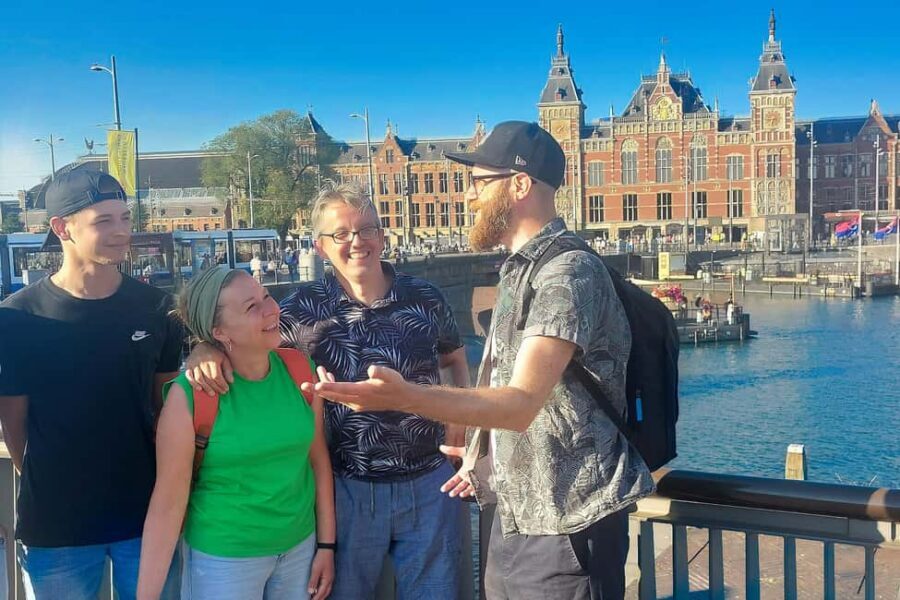
Toward the end, the walk turns more personal. The city becomes less about systems and more about people and neighborhoods.
Anne Frank House: story tied to place
You’ll pass by the Anne Frank House area. The guide connects the site to the wider story of Anne Frank, and that pairing—story plus location—changes how you feel walking by.
A practical note: this area can be busy. Since the stop is brief, don’t expect deep museum time here during the walking tour. If Anne Frank is a priority for you, plan a separate visit.
Westerkerk: a church landmark with a sense of scale
At Westerkerk, you get another historic anchor. This stop helps you understand Amsterdam’s skyline logic and religious presence in different parts of the city.
It’s also a good end-of-route checkpoint. You can look back at what you’ve already learned because the route becomes more map-like in your head.
The Jordaan: canals, courtyards, and neighborhood rhythm
Finally, you reach the Jordaan—one of Amsterdam’s best-known neighborhood areas for atmosphere. On this walk, the guide also weaves in ideas like hidden courtyards and secret gardens, plus smaller Dutch heritage stories such as tulip mania and other daily-life facts.
This is where the walking tour feels most useful for planning your next day. The Jordaan is the kind of place you’ll want to explore slowly, eat well, and then wander until your feet complain.
What You Get After: Links, Food Leads, and Little Wins
The “I booked this for practical help” angle is strong here. Your guide doesn’t just talk during the walk and vanish.
By the end, you receive helpful links to make the most of your Amsterdam time. You also get ongoing guidance on where to eat, what to shop for, and how to do sightseeing efficiently—often including suggestions that match what you asked during the tour.
In the experiences tied to this walk, the guide is also known for recommending real Dutch comfort foods like bitterballen and for sharing bar and cafe ideas you can use right away. There’s also a pattern of answering follow-up questions and even helping with route ideas if you want to head somewhere specific afterward.
The big value is that it saves you guesswork. You’ll likely leave with a short list you can act on within an hour.
How to Make the Most of the Walk (Without Running Out of Energy)
This tour is best when you treat it like an orientation and story engine.
First, wear shoes that can handle uneven cobblestones. Second, bring a small umbrella and water so you don’t get stuck in a bad mood if the weather changes. Third, ask questions. The format is built around the guide responding and tailoring what you notice next.
You should also know that the route can adjust. The tour may change to fit your interests when possible, or to handle construction and other unforeseen issues.
Who This Walk Fits Best (and who should consider something else)
You’ll love this tour if:
- You’re short on time and want a clear sense of the city center fast
- You prefer a guide who answers questions and gives dining and sightseeing recommendations
- You like stories that connect architecture, street life, and the Dutch past—without needing museum tickets for every stop
You might want a different option if:
- You want long museum time at major sites (this walk is photo-stop paced)
- You’re looking for a quiet, slow neighborhood drift without backtracking or fast transitions
And if you’re traveling with mobility needs, this one is wheelchair accessible, which is a real plus for a route that covers a lot of ground.
Should you book this Amsterdam walking tour?
If your goal is to get your bearings, learn how the city grew, and leave with a usable plan, I think you should book it. $33 for 2–3 hours is a fair trade when the guide adds context and hands you practical next steps.
Choose it especially if you want a guided path through Dam Square, the canal belt, the Jordaan, and the Anne Frank area with stories that connect the dots. Just go in knowing the pacing is efficient—so if you like to linger, plan to spend your extra time afterward in the places that grab you most.
FAQ
Where is the meeting point for the tour?
You meet behind Amsterdam Centraal near the white and blue ferries leaving for Amsterdam North, next to Pancakes Amsterdam at the IJ near the water. Look for a big D ferry halte sign by the bike lane. The guide wears glasses, a beard, and a baseball hat.
How long does the guided walking tour last?
The tour runs for 2–3 hours, depending on the session time.
What languages are available for the guide?
The tour is offered in English or French.
Is this a small-group tour or can I book private?
You can book private or small groups.
Is the tour wheelchair accessible?
Yes, the tour is wheelchair accessible.
What should I bring?
Bring comfortable shoes, an umbrella, and water, plus weather-appropriate clothing.
What’s included, and what’s not included in the price?
Included: the walking tour, a local English or French-speaking guide, recommendations for dining/shopping/food/drinks/boats/sightseeing, and links to help you after the tour. Not included: food and drinks.
Can I cancel for free or pay later?
Yes. There is free cancellation up to 24 hours in advance for a full refund, and you can reserve now & pay later.