REVIEW · AMSTERDAM
Amsterdam: 3h E-Bike Tour with break
Book on GetYourGuide →Operated by Yellow Bike Tours & Rental · Bookable on GetYourGuide
Amsterdam by bike is the smartest shortcut. You’ll glide through Jordaan canals and major sights like Anne Frank House, led by bilingual locals (Willem, Jaan, Luka show up often in guides’ stories). I especially like the easy pace on e-bikes plus the chance to photograph streets and courtyards you’d miss on foot. The one drawback to think about is simple: you need to be comfortable cycling in Amsterdam traffic, and there’s a height limit (under 155 cm won’t fit the bikes well).
What makes this tour feel “worth it” for a first or second day is the mix of famous stops and off-the-main-lane moments—harbor-area cycling, trendy neighborhood streets, and quick picture breaks—without turning the whole morning into a sprint. I also like that you get proper bike and traffic instructions before you roll, and the ride can include a free poncho if the weather turns.
If you want Amsterdam’s history told in a human way (district-by-district, street-by-street), this is a solid 3-hour plan. You’ll trade museum-line waiting for moving views, and you’ll come away with a clearer sense of how the city is laid out.
In This Review
- Key highlights you’ll feel in real time
- Why Amsterdam’s cycling rhythm makes this tour click
- The 3-hour flow: what your route actually covers
- Getting started near Amsterdam Central without losing time
- Jordaan by e-bike: narrow streets, trendy energy, real photo angles
- Vondelpark and the Rijksmuseum area: big landmarks without the crowd fatigue
- Rembrandt’s house and the Anne Frank House area: context that travels with you
- The built-in break: how it changes the whole tour experience
- E-bikes, size limits, and the traffic reality check
- Price and value: why $49 can be a bargain if it fits you
- Who this tour is best for (and who should choose differently)
- Should you book the Yellow Bike 3-hour Amsterdam E-bike tour with a break?
- FAQ
- How long is the e-bike tour?
- What sights are included on the route?
- Is the guide available in English?
- Do I need to bring a bike or helmet?
- Are food and drinks included?
- What happens if it rains?
- Where do I meet the guide?
Key highlights you’ll feel in real time
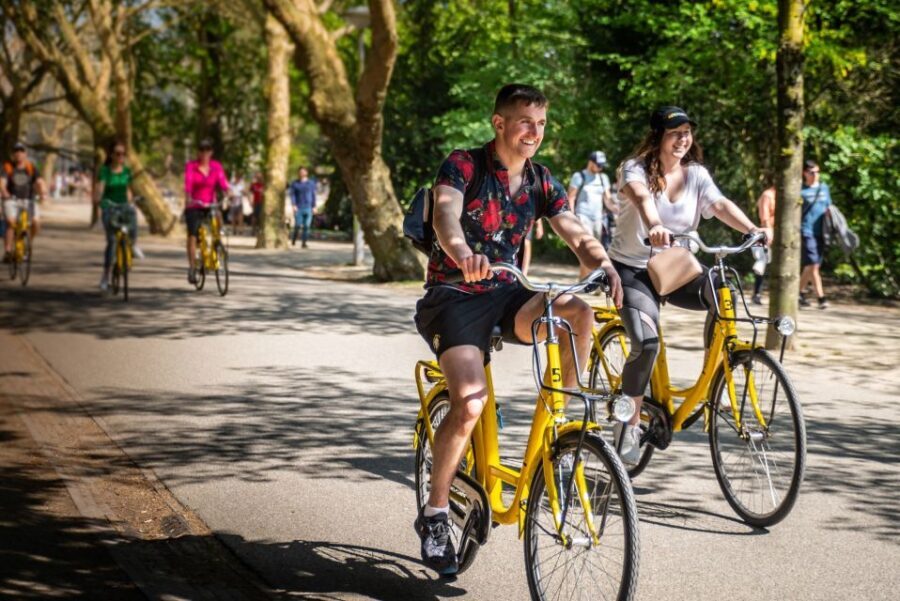
- E-bikes that keep the ride easy even when you’re covering a lot of ground in 3 hours
- Bilingual guide service (English and Dutch), with guides like Willem, Jaan, and Luka highlighted in past groups
- Jordaan canal streets and narrow lanes where the city feels lived-in, not staged
- Vondelpark and Rijksmuseum area cycling for big-city landmarks plus calmer green space
- Anne Frank House area stops paired with context about the surrounding neighborhood
- A break built into the route, so the tour doesn’t feel like one long blur
Why Amsterdam’s cycling rhythm makes this tour click
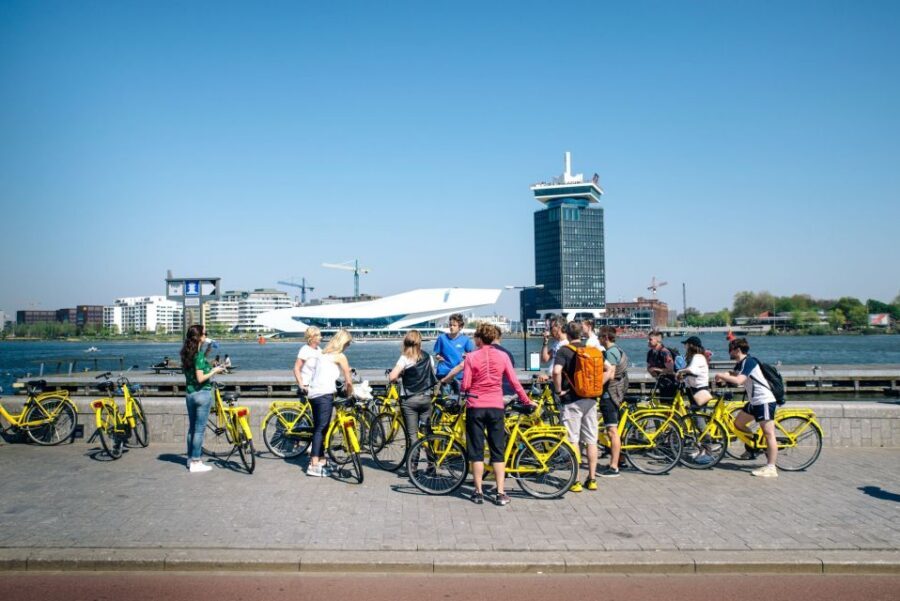
Amsterdam is one of Europe’s easiest cities to see quickly by bike because the “map” is already built into the streets: canals, bridges, and bike lanes do the heavy lifting. This 3-hour e-bike format works especially well if you want variety without getting worn down.
The biggest practical win is that e-bikes flatten the city’s small surprises—slight hills, long stretches of headwind, or just the reality of cycling while taking photos. You’re still riding a bike, but you’re not wrestling it. That matters because your guide is moving the story along, and you’re better able to focus on what’s being pointed out rather than on staying balanced.
You also get bicycle and traffic instructions before you go. That may sound basic, but in Amsterdam it can be the difference between feeling calm and feeling stressed. The tour is designed around a ride that’s “easy to follow,” not an athletic test.
You can also read our reviews of more cycling tours in Amsterdam
The 3-hour flow: what your route actually covers
This is a compact loop that blends major landmarks with district-level touring. Expect a mix of canal-side riding, neighborhood streets, and bike-friendly segments where the group can roll together.
Even though the tour is only 3 hours, the stops are arranged so you don’t just “pass by” famous places—you get enough time in the right parts of the city to notice details:
- where canals shape daily movement,
- how neighborhoods feel different street to street,
- and what changed over time in Amsterdam’s layout.
A typical day starts near Amsterdam Central Station, then heads out into the city’s core cycle network. You’ll cycle through areas tied to the city’s everyday life—then hit the bigger visual anchors like Rijksmuseum and Vondelpark—before finishing back toward the center.
The route also includes Rembrandt’s house and Anne Frank’s house in the broader flow. Those are high-recognition names, but the value here is the way they’re stitched into a wider neighborhood story instead of treated as isolated photo stops.
Getting started near Amsterdam Central without losing time
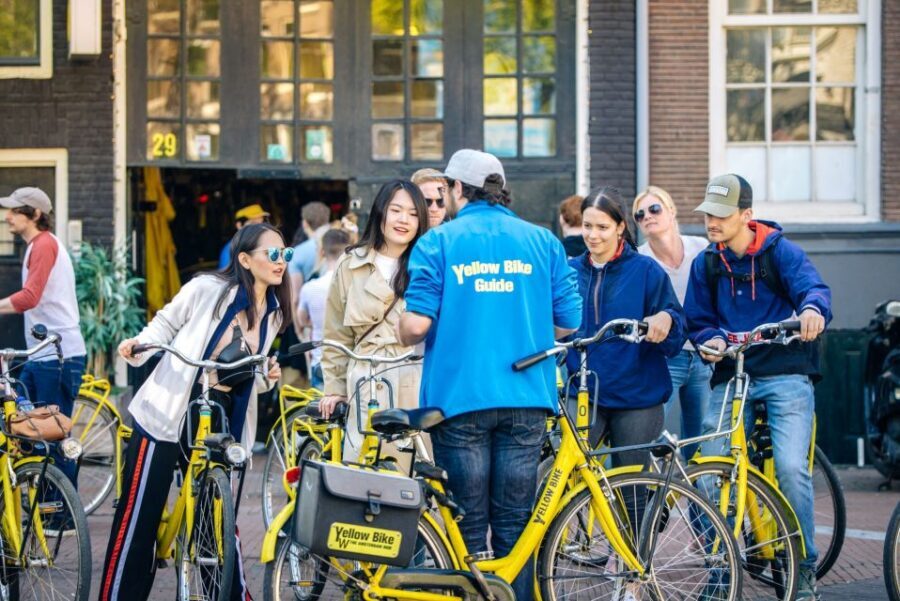
The meeting point is at Yellow Bike Tours & Rental, a 5–10 minute walk from Amsterdam Central Station. From Central, follow the tram line along Nieuwezijds Voorburgwal and look for the big Yellow Bike sign.
Arrive 15 minutes early for check-in. There’s also construction work taking place in the street, so it’s worth showing up with a little buffer so you don’t end up hunting for a workaround right when the tour is supposed to depart.
This matters more than it sounds. A bike tour runs on momentum: if you’re late, you’re late for the entire ride, and that can throw off how the guide times the group through canal crossings and busy junctions. Being there early helps you start relaxed, not rushed.
Jordaan by e-bike: narrow streets, trendy energy, real photo angles
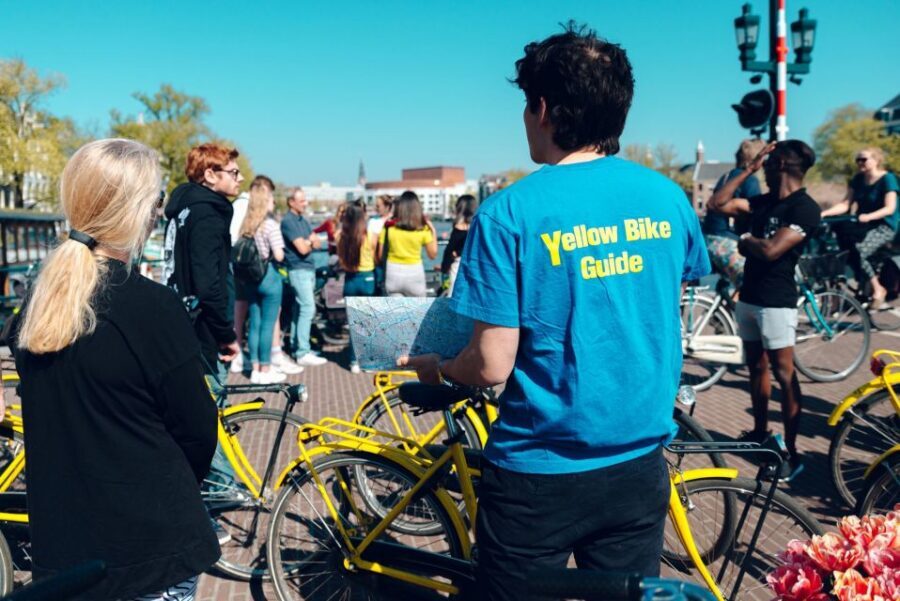
If you’ve only seen Amsterdam in postcards, Jordaan will probably feel like the first true reality check. It’s the kind of neighborhood where the charm isn’t just the buildings—it’s the tight network of streets, the canal geometry, and the way the area feels active.
On this tour, you cycle past narrow canal streets and through trendy parts of the district. What makes this segment worth it on an e-bike is how many “micro scenes” you can catch in a short time:
- canal edges that frame a street bend,
- small courtyards off the main lanes,
- and shopfront-to-canalside views that are hard to replicate from a walking route.
This is also where a good guide earns their fee. A bilingual local can connect what you’re seeing to how Amsterdam’s districts formed and how the neighborhood’s character developed. Past groups have praised guides such as Willem and Jaan for pairing street-level observations with history that doesn’t feel like a textbook reading.
One consideration: canal-side streets can be visually tight, and Amsterdam traffic can be busy at certain hours. The tour is paced so you don’t have to be an expert cyclist, but you should still feel steady enough to ride confidently.
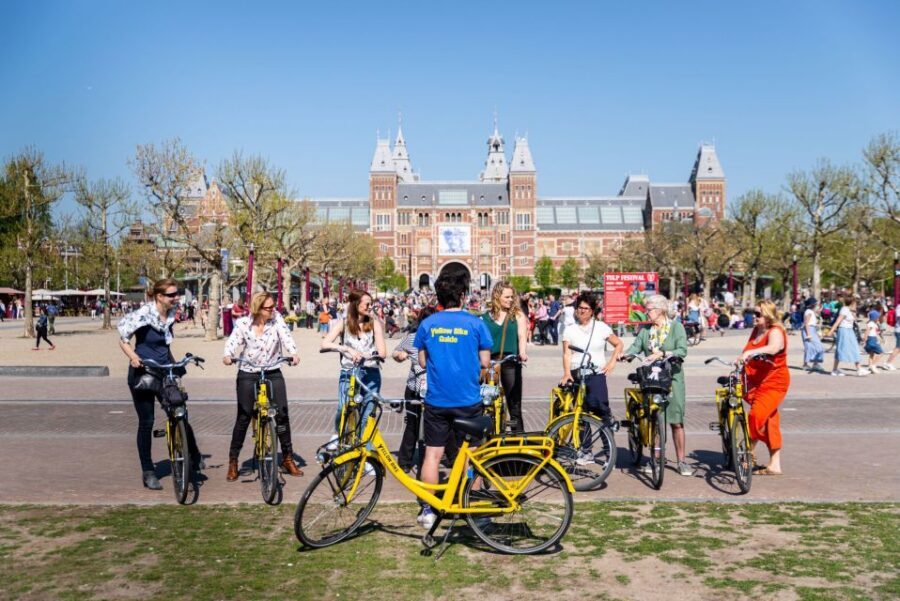
Vondelpark and the Rijksmuseum area: big landmarks without the crowd fatigue
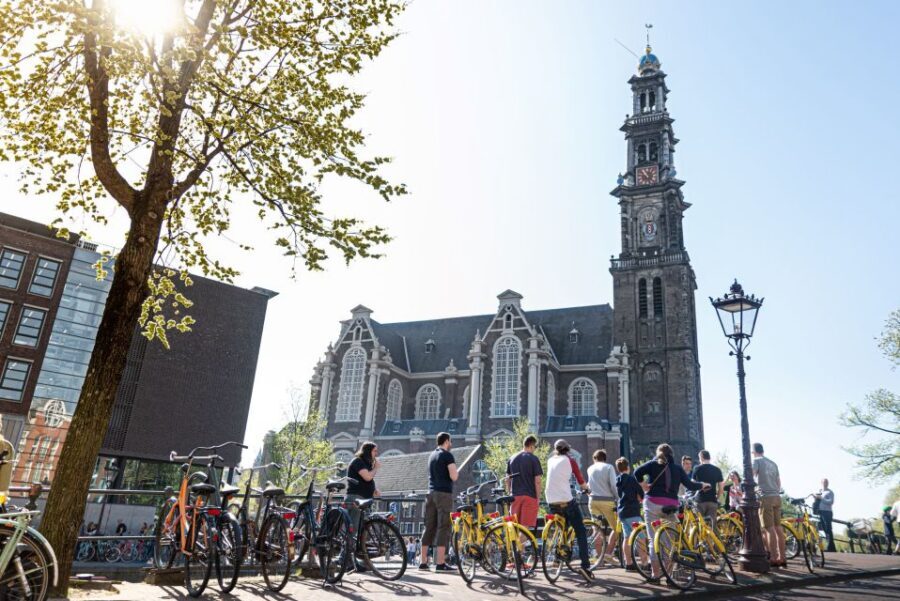
You’ll ride along Vondelpark and through the area associated with Rijksmuseum. This is a smart pairing because it mixes two different “Amsterdam moods”:
- Vondelpark gives you a break from dense streets and tight canal corridors. Even from a bike seat, you’ll notice how the city feels more open.
- The Rijksmuseum area brings you to a landmark zone where you can anchor your sense of where you are in the city.
On a bike, you get the best of both worlds: the landmark scale of the museum district plus the smoother ride feel of park-adjacent routes. It also helps if you’re the type who gets impatient in long indoor museum lines. This tour doesn’t replace a museum visit if you want one, but it helps you decide whether you should add Rijksmuseum later.
If you’re worried about rain, you’re covered with a free poncho if the weather turns. Wet streets in Amsterdam can change the comfort level, so having that small safety net is genuinely useful.
You can also read our reviews of more tours and experiences in Amsterdam


Rembrandt’s house and the Anne Frank House area: context that travels with you
This route includes Rembrandt’s house as well as Anne Frank’s house. Even if you already know the names, getting them in the context of nearby streets and canal layouts helps the story land more clearly.
The practical benefit of cycling here is that you’re not stuck trying to interpret distances on foot. Amsterdam’s districts can feel confusing until you see how quickly you can move between “world-famous” points and ordinary neighborhood lanes. The guide’s role is to connect those dots in plain language.
Guides like Luka (praised for humor and keeping the group together) and David (praised for delivering a lot without leaving people behind) reflect a common strength: the guide manages the group so you can stay with the pacing. You’re not constantly split from the pack, which is important when you’re trying to take photos and listen at the same time.
One more thing to keep in mind: this is a sensitive historical area. The tour is designed to give historical context, but you should still bring the right mindset—listen closely, move respectfully, and plan for a more reflective stop rather than a casual sightseeing sprint.
The built-in break: how it changes the whole tour experience
A 3-hour tour sounds short until you’re riding in a city where you want to stop for photos, process stories, and not feel like you’re constantly bracing for what’s next. The inclusion of a break helps you reset.
That break matters because it’s not just about resting legs. It also gives you a moment to:
- check that everyone in your group is still together,
- regroup if you drifted slightly out of sync,
- and take a breath from the sights so the history sticks.
In past experiences with this company, groups have noted that guides keep things flowing without getting too far ahead—so the break is usually timed to keep the tour feeling like one unit rather than a chase.
E-bikes, size limits, and the traffic reality check
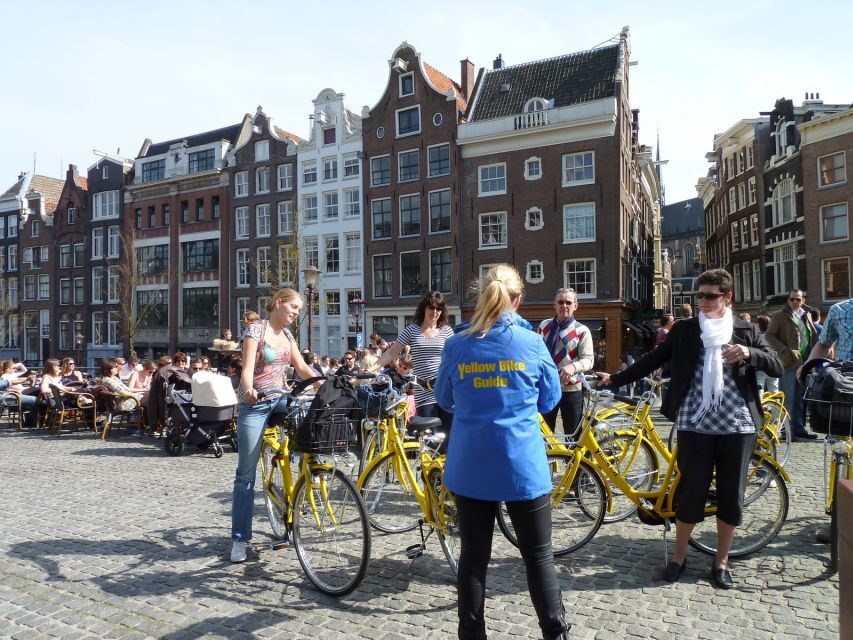
The tour is designed for easy-to-ride cycling, but Amsterdam cycling comes with a baseline of traffic awareness. You get bicycle and traffic instructions, and you ride with a bilingual guide who stays responsible for the group.
That said, your comfort level matters. One key constraint: the tour isn’t suitable for people under 5 ft 1 in (155 cm). If you’re short, the bike fit can become unsafe or uncomfortable fast. If you’re at the lower end of that range, it’s worth asking about sizing before committing.
Also, the tour can get busy depending on the day and time. One group noted crowded and even a few tense moments during a busy event period. The good news is the tour uses a controlled group pace, but you should still expect that popular Amsterdam moments can mean thicker traffic and more bikes on the road.
Price and value: why $49 can be a bargain if it fits you
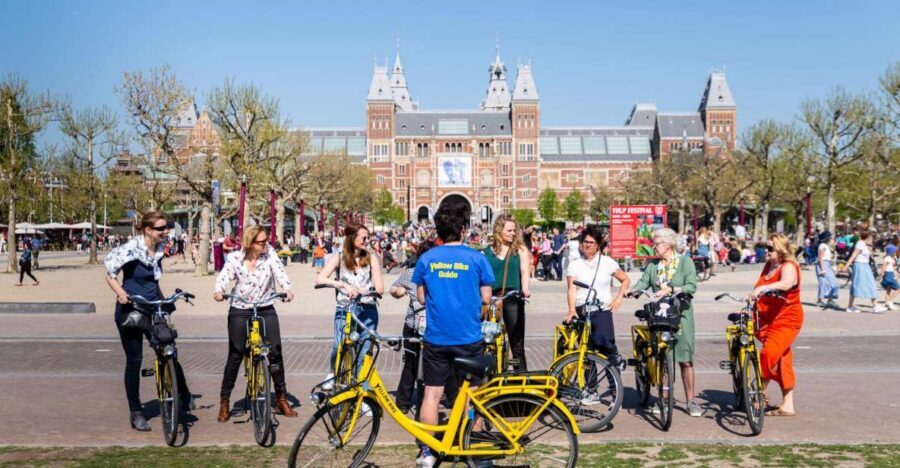
At $49 per person for a 3-hour ride, the value comes from what’s included:
- the e-bike itself,
- a bilingual guide,
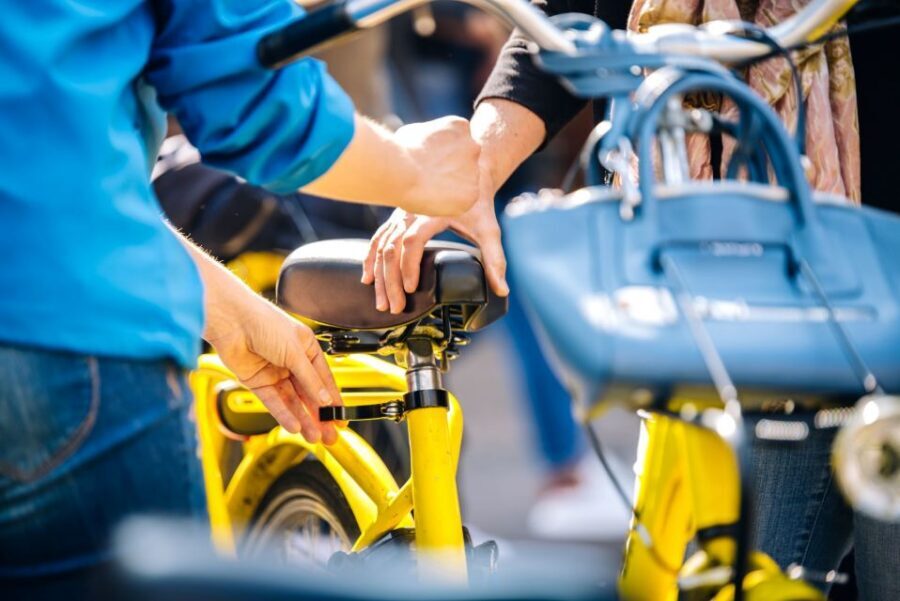
- personalized bike setup,
- bicycle and traffic instructions,
- and a free poncho if it rains.
Food and drinks are not included, but that’s common for short city tours. What you’re paying for is efficient sight time plus guided context while you cover a lot of ground without tiring out.
Here’s how to think about the math:
- If you’d otherwise spend a chunk of time figuring out transit routes, bike rentals, and where to go first, this turns that uncertainty into a pre-planned ride.
- If you’re traveling with limited time in Amsterdam, a 3-hour guided bike segment is one of the fastest ways to get an orientation of the city’s layout—canals, districts, and landmark zones.
If you’re a confident cyclist and already know the neighborhoods well, you might feel this is less “necessary.” But if you want structure, context, and a smooth start in a city that can be overwhelming, the price looks fair.
Who this tour is best for (and who should choose differently)
This tour is ideal if you:
- like cycling and want to see more than you’d cover on foot in the same time,
- want a guided orientation to Jordaan, Vondelpark, Rijksmuseum area, and Anne Frank House,
- prefer a local guide to explain how neighborhoods connect instead of reading everything yourself.
It’s also a great “first Amsterdam experience” because it helps you understand where the city’s main districts sit and how the canal network organizes movement.
You might skip it if:
- you’re not comfortable riding in busy traffic situations,
- you don’t meet the height requirement,
- or you prefer slow, museum-style pacing rather than cycling between stops.
Should you book the Yellow Bike 3-hour Amsterdam E-bike tour with a break?
I’d book it if you want a high-efficiency Amsterdam overview that still feels personal. The biggest reason is the combo of landmark-area riding (Rijksmuseum and the Anne Frank House zone) with district street life (Jordaan’s canal network), delivered with bilingual guiding and a ride that’s set up to be easy to follow.
It’s also a smart choice for rainy-day planning because you get a poncho, and a short 3-hour window keeps weather disruptions from derailing your whole day.
The main reason to hesitate is the biking-in-traffic piece. If you’re a nervous rider or not sure you can handle crowded bike lanes, you’ll likely enjoy a walking tour more.
If you’re comfortable on a bike and want Amsterdam’s story told while you move, this tour is a practical way to get your bearings fast.
FAQ
How long is the e-bike tour?
The tour runs for 3 hours.
What sights are included on the route?
You’ll ride through and around areas including Jordaan, Vondelpark, Rijksmuseum, and the Anne Frank House, plus other canal-and-neighborhood spots.
Is the guide available in English?
Yes. The live tour guide works in English and Dutch.
Do I need to bring a bike or helmet?
No. The tour includes a personalized bike and an e-bike, along with bicycle and traffic instructions.
Are food and drinks included?
No. Food and drinks are not included.
What happens if it rains?
You’ll get a free poncho if it rains.
Where do I meet the guide?
Meet at Yellow Bike Tours & Rental, about a 5–10 minute walk from Amsterdam Central Station. Follow the tram line along Nieuwezijds Voorburgwal and look for the big Yellow Bike sign. Arrive about 15 minutes early for check-in.