REVIEW · AMSTERDAM
Amsterdam: Allard Pierson Heritage Collections Entry Ticket
Book on GetYourGuide →Operated by Allard Pierson · Bookable on GetYourGuide
A museum ticket that feels like a time machine.
At Allard Pierson in Amsterdam, the story of how humans learned, traded, and told stories moves from ancient artifacts straight into the city’s own past. You get book history you can actually follow, and a jaw-dropping look at maps and atlases.
I particularly love the way the collection connects ideas, not just objects. The museum treats cartography and printing like living tools, so the highlights land fast: huge map holdings, medieval manuscripts, and the wider culture around them.
One thing to consider: it’s at its best if you’re new-ish to museum-style deep history on these themes; if you’re already an Egyptology or cartography superfan, you may want to plan extra time.
In This Review
- Key things to know before you go
- Why the Allard Pierson experience feels different than a typical museum
- What you’ll see in the permanent exhibitions (and how to read the rooms)
- Amsterdam’s book history and the big world of maps
- Plaster casts in the attic: the Greek and Roman study moment
- Egyptian hieroglyphs, Sudanese collections, and the ancient-to-modern story
- Temporary exhibition: Face to Face mummy portraits (what to look for)
- How long to plan and how to pace your visit without rushing
- Price and value: is an $18 ticket a good deal?
- Who should buy this ticket (and who might want a different plan)
- A practical note on language, help, and comfort
- Should you book the Allard Pierson heritage ticket?
- FAQ
- Where is the Allard Pierson museum ticket valid?
- What’s included with the entry ticket?
- How long is the ticket valid?
- Is the temporary exhibition included?
- Is it available in English?
- Is the museum wheelchair accessible?
Key things to know before you go

- Amsterdam’s book history is a major thread, not just a side display
- One of the world’s largest map and atlas collections makes scale feel real
- Plaster casts in a Greek and Roman attic help you see how copying shaped art and study
- Ancient Egypt and Sudanese collections broaden the ancient world beyond one region
- Face to Face mummy portraits (Oct to Feb) adds a highly human angle to Roman-era Egypt
Why the Allard Pierson experience feels different than a typical museum
Allard Pierson doesn’t feel like a warehouse of stuff behind glass. It feels like a guided idea: human curiosity, expressed through objects that record knowledge. One moment you’re looking at the material evidence of writing and early book production. The next you’re seeing how people in Amsterdam fit into older trade and storytelling networks.
I like that the museum’s permanent presentation is built around the interaction between the ancient and the modern world. It’s not only about what’s old. It’s also about what survives, what gets copied, what gets preserved, and what gets reinterpreted. That makes it easier to stay engaged even if your interests are a bit mixed—archaeology one minute, cartography the next, then church history or zoology when you least expect it.
The setting also helps you settle in. You’re not fighting crowds in a blockbuster line for every room. Instead, you can choose your pace, spend longer on the pieces that catch your eye, and come back to see the connections again.
You can also read our reviews of more tours and experiences in Amsterdam



What you’ll see in the permanent exhibitions (and how to read the rooms)
The permanent displays are designed around a big storyline: how early knowledge traveled and transformed. The museum frames humankind’s unbloved curiosity from the origins of writing to early industrial book production, then into the kinds of commerce and culture that shaped places like Amsterdam. You’ll see references to Assyrian merchants and theatre makers in Amsterdam, which is a clever trick. It turns “history” into a web of people, jobs, and skills—not just dates.
As you move through the galleries, expect a mix of familiar and surprising items. The museum highlights include Egyptian hieroglyphs, Greek pottery, and Roman glass—so you get a sense of daily life and material culture. You’ll also find medieval manuscripts and 17th-century atlases and books, which makes the jump from ancient writing to later publishing feel less abrupt.
Here’s how I’d approach it if you want maximum enjoyment:
- Pick one theme to track first, like writing and books.
- Then use that theme to make sense of the rest, like maps as practical knowledge and plaster casts as learning tools.
That method keeps you from feeling like you’re sprinting through unrelated displays. This is especially helpful because the collection covers many fields: archaeology, cartography, book history, church history, zoology, and more.
Amsterdam’s book history and the big world of maps
If you care about how information gets packaged, this is the heart of the visit. The museum’s book history of the city of Amsterdam is a standout angle, because it anchors the wider European story in a specific place you can walk through later. Instead of reading about books as an abstract invention, you see them as part of Amsterdam’s identity.
The map and atlas collection is the headline for a reason. You’re told it’s one of the largest collections in the world, and you can feel what that means in person. Scale becomes the point. Large-format atlases don’t just show routes—they show ambition, planning, and the belief that the world can be measured, sorted, and understood.
Practical tip: give yourself a moment to stand back before you start reading labels. Big atlases and maps are visual first, text second. If you go straight to tiny descriptions, you can miss what makes the collection special—its size, its layout, and how the images carry the story.
If you’re the type who likes to connect art with technology, this section is a great fit. Maps sit right on the border between creativity and engineering. And bookmaking sits right on the border between scholarship and industry. Allard Pierson plays in that space comfortably.
Plaster casts in the attic: the Greek and Roman study moment

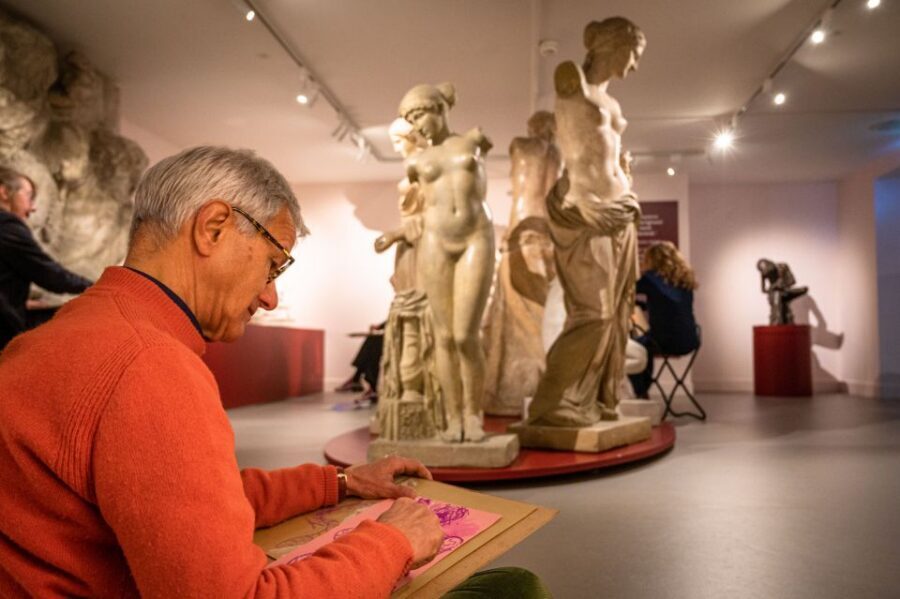
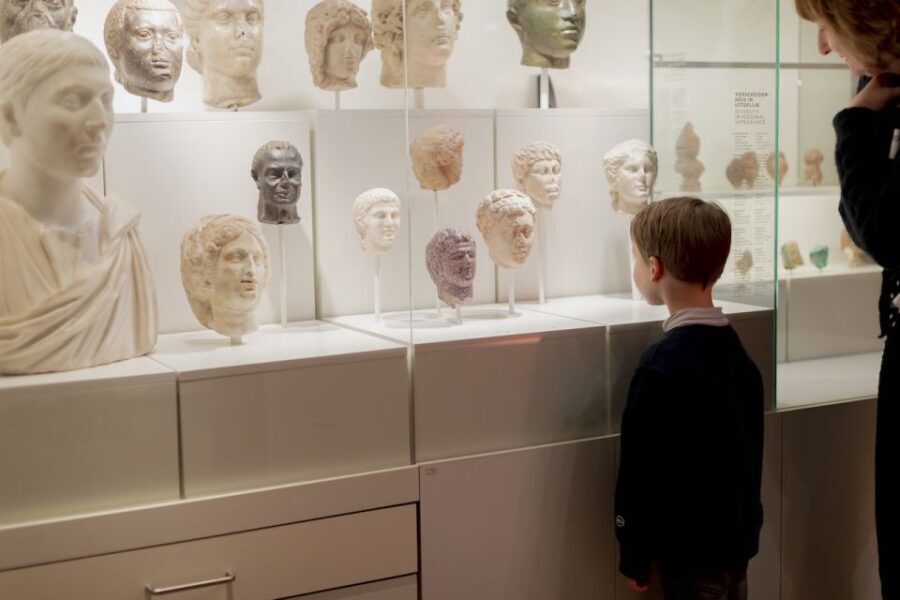
One of the most unique experiences here is the attic with plaster casts from the Greek and Roman era. It’s the kind of room you don’t see in many museums, and it changes your relationship to the collection. Plaster casts are not the same as the original sculptures. But they’re powerful because they show how people learned from classical art—through copying, studying, and teaching.
This experience also includes an audioguide for the plaster collections, which is a useful detail. When you have audio context, it’s easier to understand why plaster casts mattered historically and how they shaped education and taste. Even if you only listen for a few minutes, it can help you see what you’re looking at instead of treating it as just another display.
How to make it work for you: don’t try to treat the plaster cast room like a checklist. Slow down and look for the learning angle—how the copies communicate form, proportion, and style. That changes the attic from a novelty to a meaningful part of the museum’s story about curiosity and knowledge-making.
Egyptian hieroglyphs, Sudanese collections, and the ancient-to-modern story
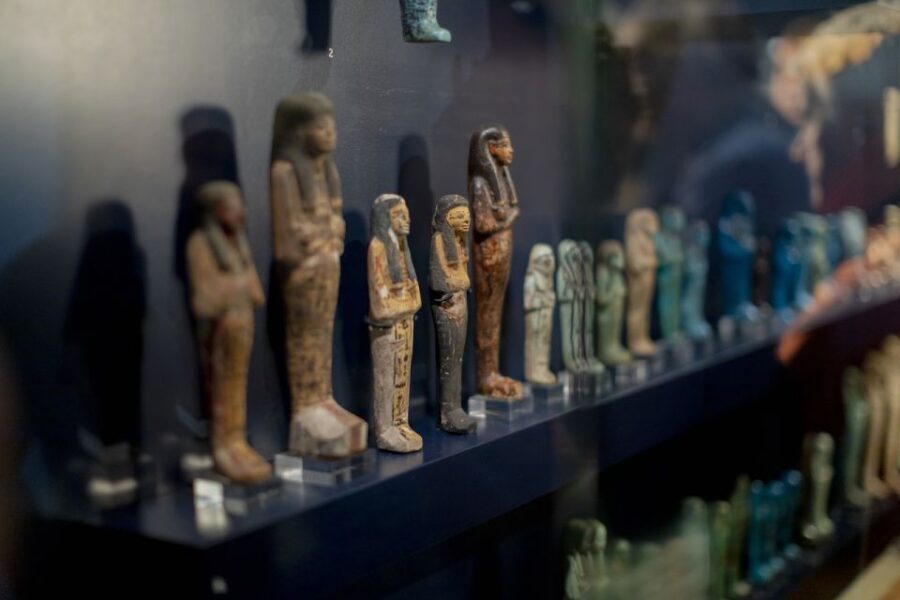
The museum also guides you into ancient worlds beyond Europe. The Ancient Egyptian and Sudanese collections are a key highlight, and they fit the overall theme well: humans preserving meaning across time. Egyptian hieroglyphs aren’t just symbols; they represent a writing system tied to power, religion, record-keeping, and storytelling.
The good part is that this doesn’t feel like an isolated detour. It’s connected to the museum’s bigger argument about how people learn. Writing is the bridge. Objects are the proof. And the museum’s interpretation puts those pieces in conversation with more modern forms of collecting, publishing, and historical study.
If you’re worried this could feel like too much to absorb, here’s a simpler way to approach it. Choose one thing you want to understand emotionally: how the museum frames ancient individuals and ideas. Then let everything else support that. You’ll still enjoy the details, but you won’t feel like you’re drowning in labels.
Also, the examples matter. When you see hieroglyphs alongside pottery, glass, manuscripts, and later atlases, the museum’s theme clicks. You start to notice how knowledge systems vary by culture while serving similar human needs: record, trade, teach, and remember.
You can also read our reviews of more historical tours in Amsterdam






Temporary exhibition: Face to Face mummy portraits (what to look for)
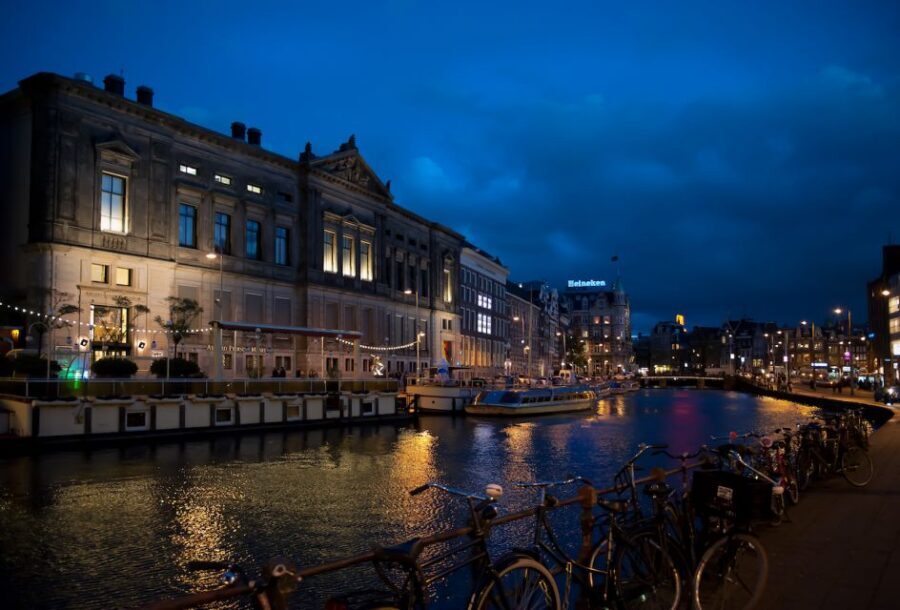
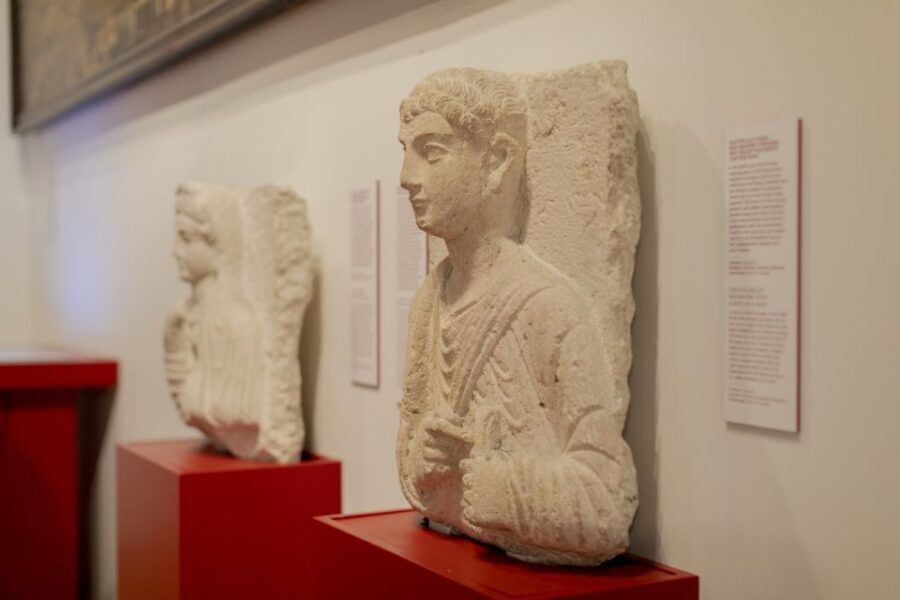
From 6 October to 25 February, Allard Pierson hosts Face to Face: The People Behind Mummy Portraits. This is the first exhibition about ancient Egyptian mummy portraits in the Netherlands, and it brings major international works into the mix.
What I like about this temporary show is the way it shifts from objects to people. Mummy portraits—also called Fayum portraits—were made during the Roman period in Egypt, from the 1st to the 4th century AD. These portraits were painted on wooden panels and placed over the faces of mummified individuals. That means you’re looking at faces, not just artifacts. The exhibition gathers about 38 portraits from all over the world, which keeps it from feeling like a small side display.
The show also explains the people behind the portraits, not only the portrayed individuals. It includes the creators, descendants, followers, collectors, archaeologists, and researchers who shaped what survives and what gets studied. That angle matters because it turns the exhibit into a chain of custody story. Who made the portrait? Who preserved it? Who found it? Who decided it was worth showing later?
If you go, here’s what to pay attention to:
- Look for the painted expression and the sense of individuality.
- Then read how the exhibition frames the life around the art, including the roles of collectors and archaeologists.
That combination helps you move beyond fascination and into understanding.
How long to plan and how to pace your visit without rushing
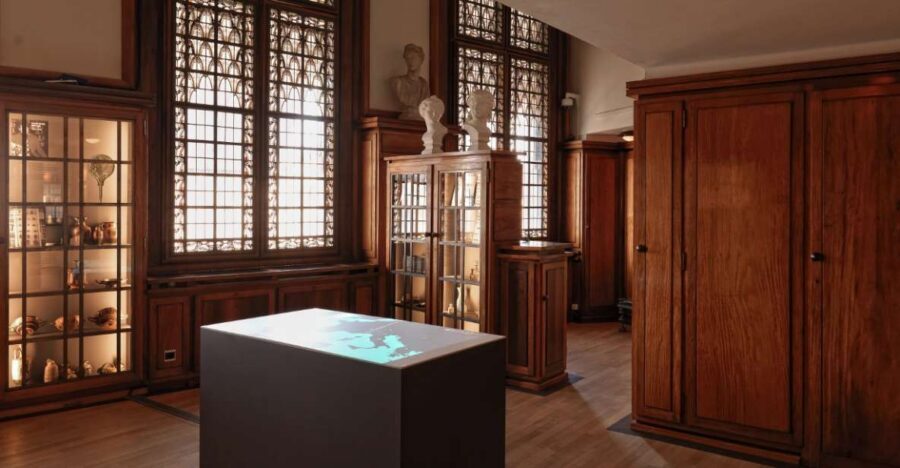
Your ticket is valid for 1 day, and that flexibility is important. Allard Pierson isn’t set up like a strict timed route where you’ll miss everything if you go left instead of right. You can do a quick visit if you’re short on time, then come back with a deeper focus later.
But because the collection spans several areas—book history, maps, plaster casts, and ancient Egyptian and Sudanese materials—I recommend a strategy. Don’t try to cover every room equally. Pick two “anchors” for your visit:
- One anchor in the information world (books or maps)
- One anchor in the ancient world (plaster casts or Egypt/Sudan)
Then let the rest be supportive. If you’re also seeing Face to Face during the exhibition dates, plan extra time. Temporary shows usually take longer than you expect because the labels and context matter.
If you’re the type who likes quiet time with objects, you’ll do well here. If you’re the type who wants to sprint from room to room, you might feel underwhelmed. The museum rewards attention, not speed.
Price and value: is an $18 ticket a good deal?
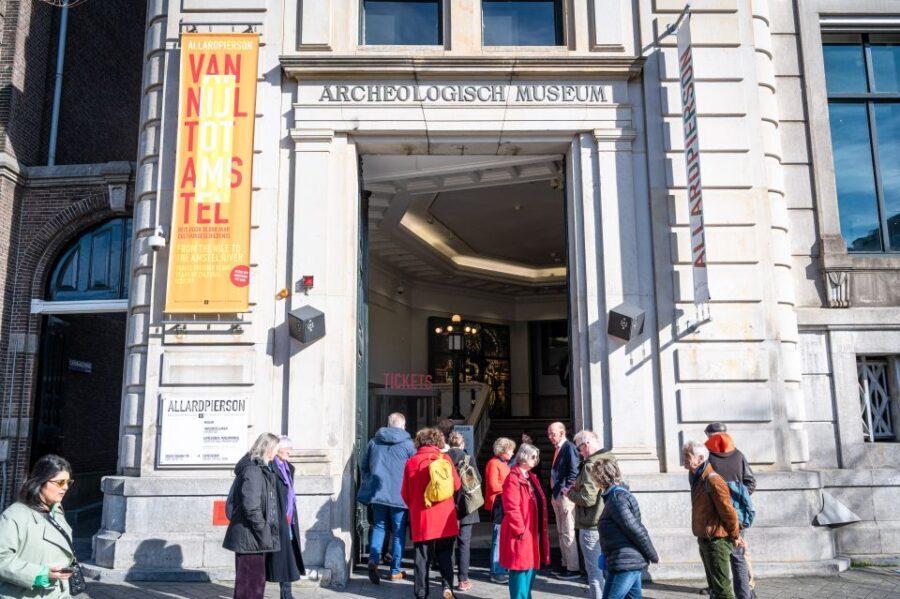
The ticket is listed at $18 per person, and I think the value is strongest when you use what’s included. Your entry gets you access to the permanent exhibitions and the temporary exhibition while it’s running. You also have access to the museum shop and cafe, which is a small but real benefit if you want to reset during the day.
The biggest value question is whether you’ll actually use the museum’s strengths. If you like maps, books, and the physical side of knowledge (manuscripts, atlases, production), then $18 feels fair because those are the museum’s core themes. If you’re only interested in one narrow category, the museum could feel like it spreads your time across multiple fields.
The overall rating—4.1 based on 13 reviews—suggests most people find it worth their time. Still, one lower note points to a key fit issue: this is a museum you’d enjoy most if you’re new to museum visits on these themes. Translation: it’s accessible, but it’s not trying to be a graduate seminar for specialists.
My advice: if you can afford one museum day while in Amsterdam, this ticket is a solid pick. It gives you variety without feeling random.
Who should buy this ticket (and who might want a different plan)
This ticket is ideal if you enjoy any of the following:
- you like maps, atlases, and the practical side of world understanding
- you enjoy book history and how cities build their identities around printing and learning
- you’re curious about how ancient civilizations are interpreted later through collecting and study
- you want one museum day that mixes Europe and the ancient Mediterranean in one visit
It’s also a good choice for families and mixed-interest groups because you can separate your visit into different lanes. One person can focus on maps and books; another can focus on Egypt or mummy portraits; then you regroup for the plaster casts attic where the experience becomes visual and easy to talk about.
It may be less satisfying if you’re looking for a museum focused heavily on a single discipline. The collection is broad by design—archaeology, cartography, book history, church history, zoology and more. If you already know every highlight in depth, you might want to pair this with another targeted museum outing so the day feels purposeful.
A practical note on language, help, and comfort
The host or greeter is listed as English, and the experience is offered in English. There’s also wheelchair accessibility, so you can plan without worrying about basic access.
One small comfort benefit: because the museum includes access to a shop and cafe, you can take a break inside the same ticket ecosystem. That matters in a city like Amsterdam where “one more stop” can turn into “I need a snack right now.”
Should you book the Allard Pierson heritage ticket?
Book it if you want a museum day that connects stories—how writing grew, how people mapped the world, and how classical art got taught through plaster casts. The Face to Face mummy portraits exhibition (6 October to 25 February) is a strong bonus if you’re traveling during those months, because it puts real human faces at the center.
Skip or rethink if you’re expecting a museum that’s laser-focused on only one narrow specialty. This place is designed for curiosity across multiple fields, and that breadth is a plus for many visitors and a drawback for a few.
If you’re even a little interested in maps, books, and ancient objects with explanations that link the past to later collecting, I’d say it’s a smart use of a one-day ticket in Amsterdam.
FAQ
Where is the Allard Pierson museum ticket valid?
The experience is in Amsterdam, in North Holland, Netherlands.
What’s included with the entry ticket?
Your ticket includes entry to the permanent and temporary exhibitions, access to the museum shop and cafe, and an audioguide for the plaster collections.
How long is the ticket valid?
The ticket is valid for 1 day (starting times depend on availability).
Is the temporary exhibition included?
Yes. The temporary exhibition is included, running from 6 October to 25 February.
Is it available in English?
Yes. The experience is offered in English, including the host or greeter.
Is the museum wheelchair accessible?
Yes, it is wheelchair accessible.