REVIEW · AMSTERDAM
Anne Frank and the Jewish History of Amsterdam Private Tour
Book on Viator →Operated by Bespoke Amsterdam Experiences · Bookable on Viator
Amsterdam hits you in the street-level details. This private 3-hour walk threads living Jewish sites, WWII resistance, and major memorials into one sensible route, ending at the Anne Frank House. I especially like how the tour moves from places of faith to places of fear, instead of treating history like a set of photo stops.
I love the practical pacing: you get short walks, frequent context, and an included warm-up with apple pie and coffee or tea. Guides such as Chris and Kayleigh are called out for patient explanations and for making the story feel connected to Amsterdam, not just to 1940s headlines. One possible drawback: a lot of the time is outside and the subject matter is heavy, so dress for weather and expect a solemn mood at the memorials.
In This Review
- Key things to know before you go
- Why This Jewish History Walk Feels Like a City Tour
- Portugese Synagogue: Starting With a Site Still in Use
- Jewish Historical Museum and Four Synagogues in One Place
- Dokwerker and Hortus Botanicus: War Stories Near Everyday Amsterdam
- Wertheimpark Memorial Walk and the Namenmonument
- Plantage Canals, ARTIS Zoo, and Hiding in Plain Sight
- Westerkerk Bells, Dam Square, and the Anne Frank Viewline
- Anne Frank House: Tickets When Available, VR When Not
- Price and Practical Value for $95.58
- Should You Book This Private Anne Frank and Jewish History Tour
- FAQ
- How long is the Anne Frank and Jewish History of Amsterdam private tour?
- Is this a private tour or a group tour?
- How much walking is involved?
- What language is the tour offered in?
- Is the Anne Frank House visit included?
- What if Anne Frank House tickets are sold out?
- Are admissions included for the synagogues and museums along the route?
- Is the Holocaust Namenmonument included?
- Is there any food included?
Key things to know before you go
- Portugese Synagogue as your first stop: a beautiful building still in use by the Jewish community, so you start with present-day continuity.
- Multiple synagogues in one museum: the Jewish Historical Museum gives you context by showing four synagogues in the same complex.
- WWII resistance storytelling: the Dokwerker stop centers on the February strike against Nazi occupation in 1941.
- Memorials that name and locate: Wertheimpark and the Holocaust Namenmonument help you understand scale and place, not just dates.
- Anne’s visual connection: the Westerkerk carillon and tower angle are tied to what Anne could see from her hiding place.
- Anne Frank House access plan: you either get tickets (when you book far enough ahead) or you’ll use the included VR alternative if tickets are sold out.
Why This Jewish History Walk Feels Like a City Tour
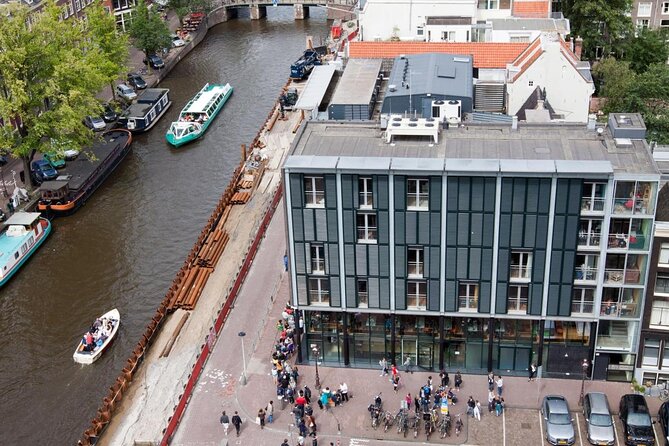
This isn’t just a “see the sights” route. You’ll move through Amsterdam neighborhoods and landmarks while your guide keeps the focus on how Jewish life, persecution, and resistance played out in real streets and real buildings. The private format matters here. With your own group, you can ask questions as you go and set the pace without everyone getting shuffled along.
It also helps that the walk isn’t long in distance—about 2 kilometers (1.5 miles). The time adds up because several stops are brief but meaningful: you’re stopping to read a plaque, absorb a viewpoint, and connect it to what happened in the city.
Finally, you get a built-in reset. That included apple pie break (paired with coffee or tea) is more than a snack. It’s a human pause during a topic that can otherwise feel relentless. If you’re traveling in colder months, this warm stop is worth its weight in stroopwafels.
You can also read our reviews of more private tours in Amsterdam


Portugese Synagogue: Starting With a Site Still in Use

You begin next to the Portugese Synagogue, one of Amsterdam’s most striking synagogue buildings. The tour starts here for a reason: it sets a tone of continuity. Even though you’ll be covering WWII, you’re not starting in tragedy. You’re starting with a place that still matters to the Jewish community today.
Your guide will explain the museum function of the synagogue while you stand outside and orient yourself. This is a helpful way to get your bearings fast. And because the synagogue is such a landmark, it becomes an easy reference point for later stops tied to neighborhood life.
One practical note: admission is not included for the Portugese Synagogue stop. If you want to go inside, you may need to pay separately. The good news is that the tour is designed so you still learn a lot from the exterior and the surrounding context.
Jewish Historical Museum and Four Synagogues in One Place
From the museum area, you’ll move nearby the Jewish Historical Museum, where you can view four synagogues within the museum complex. Even if you don’t enter additional rooms, the tour framing helps you understand why multiple synagogues mattered to community life and identity.
This stop works well because it gives you structure. Jewish history in Amsterdam isn’t a single story with a single location—it’s a network of communities and traditions. Seeing four synagogues as a set helps your brain organize what you’re learning.
Admission for the Jewish Historical Museum isn’t included. So if you want the full museum experience beyond the tour’s time at the site, budget for entry. If you’re the type who likes to look up details afterward, you’ll probably enjoy paying for deeper access here.
Dokwerker and Hortus Botanicus: War Stories Near Everyday Amsterdam
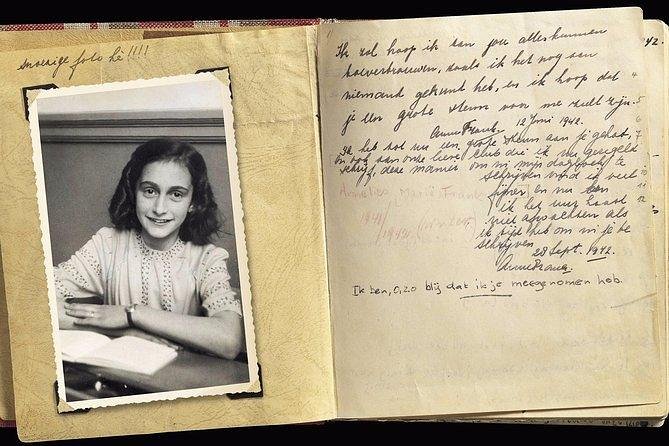
After the museum stops, you’ll hear the story at Dokwerker, tied to the February strike against Nazi occupation in 1941. This is a key pivot point. You move from cultural and communal life into resistance and the mechanics of occupation. The fact that the story sits in Amsterdam (not in some distant abstract lesson) makes it feel immediate.
Then, you pass Hortus Botanicus, Amsterdam’s botanical garden area. The tour keeps this light enough to breathe but not so light that it loses meaning. A botanic garden may not sound like WWII geography, yet it’s a way of reminding you that the city’s daily life continued even as the world around it changed.
Both of these moments add variety to the tour. Dokwerker gives you tension. Hortus Botanicus gives you pause, a chance to reset your eyes and listen again when the history turns heavier.
Wertheimpark Memorial Walk and the Namenmonument
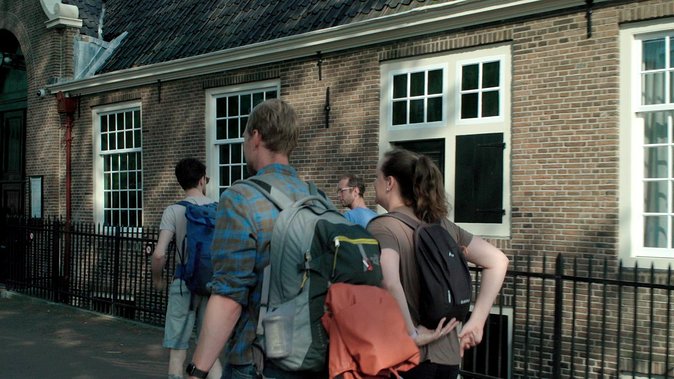
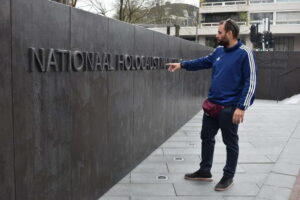
If you remember only one part of this tour, make it the memorial sequence. You’ll take a Holocaust Memorial Walk in Wertheimpark, and then you’ll enter the Holocaust Namenmonument, where more than 100,000 names of Jews who didn’t survive the Holocaust are written on the walls.
These two stops do different jobs. Wertheimpark helps you situate remembrance in a public space—something you can reach and stand within. The Namenmonument is where the scale becomes personal. A list of names changes how you think about numbers. It’s not statistics anymore; it’s presence, repeated.
This is also where you’ll feel the emotional weight in your body, not just in your head. Multiple guides are praised for handling the subject with care and room for questions, which matters a lot here. If you’re the type who tends to take things in silently, that’s okay. A good guide will keep the focus on respect and clarity.
You can also read our reviews of more historical tours in Amsterdam




Plantage Canals, ARTIS Zoo, and Hiding in Plain Sight
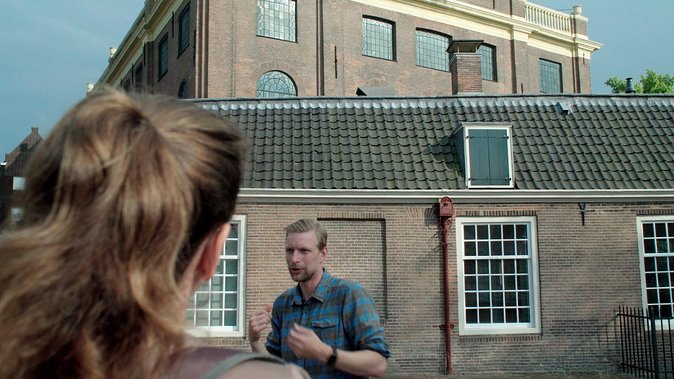
Next you’ll wander through Plantage & the East, a neighborhood area known for its canals and atmosphere. Even though it’s not a “WWII only” zone, it’s exactly the point. The story didn’t take place in a museum exhibit. It took place alongside daily life.
Along the way, you pass the Hortus Botanicus again, keeping that garden landmark in your mental map. That might sound small, but it helps you understand how these sites relate within the city.
Then comes ARTIS Amsterdam Royal Zoo. The tour connects the zoo to stories of people hiding there. This is one of the more surprising turns in the itinerary: a familiar tourist place becomes part of the resistance and survival story. It changes your view of ordinary spaces, which is kind of the whole lesson of Amsterdam’s WWII history.
Admission isn’t included for the zoo stop, so don’t assume you can freely enter. The tour’s time is designed to teach you what you need without requiring an extra ticket at every stop.
Westerkerk Bells, Dam Square, and the Anne Frank Viewline
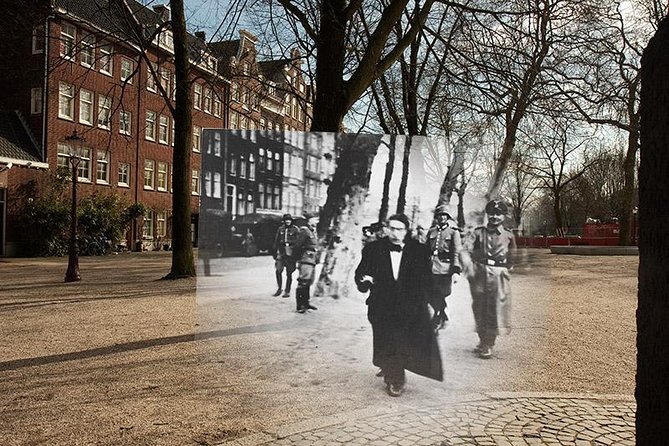
As you move toward the center, you’ll pass Dam Square and see the Royal Palace and the Nieuwe Kerk area. It’s a quick orientation moment—heart-of-city landmarks that anchor you, especially if you’re seeing Amsterdam for the first time.
Then you’ll walk around the Westerkerk. This is one of the most meaningful “sight-to-story” connections on the route. The tower and carillon are tied to what Anne could see while hiding. Your guide will also point out that the carillon plays every 15 minutes, which adds a strange, unforgettable rhythm to the walk.
The tour often keeps this portion from becoming too heavy by mixing in city details—what you’re looking at, why it’s there, how it fits together. Guides like Inbal and Guido are mentioned as strong at explaining both Jewish history and the broader city context, so you come away with facts and a sense of place.
Admission isn’t included for the Westerkerk stop, but the connection to the Anne Frank House makes it worth slowing down anyway.
Anne Frank House: Tickets When Available, VR When Not
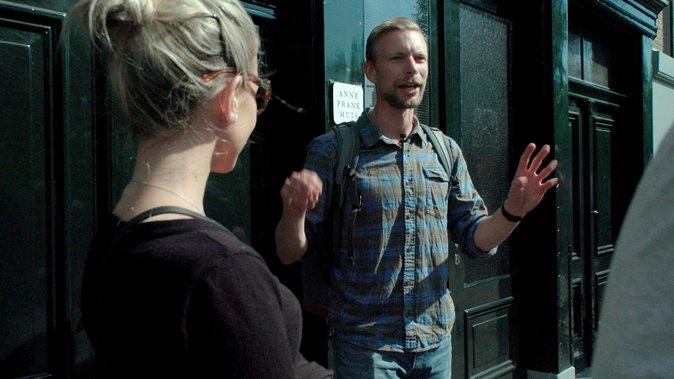
The tour brings you to the Anne Frank House area and starts with what you can see from the outside. Your guide explains the relationship between the secret annex, the local neighborhood, and the nearby Westerkerk. That outside orientation helps you understand what you’ll be looking at once you’re inside the museum.
Then comes the big access moment. If you book at least 7 weeks in advance, you may secure tickets to visit the Anne Frank House. If tickets are no longer available, you’ll still get an included alternative: a virtual reality simulation inside the price.
This “plan A / plan B” is one of the reasons this tour has such strong practical value. You’re not stuck with a sold-out disappointment. You’re still able to experience the house story in a structured way.
One more tip: the tour is built so that you’re guided to the Anne Frank House, and then you have time to experience the museum. If you want to take it slowly, this format works. If you tend to rush, you’ll want to remember that this museum is meant to be read, not just scanned.
Price and Practical Value for $95.58
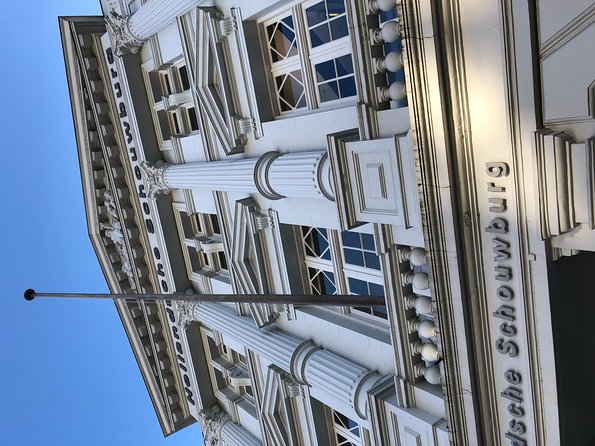
At $95.58 per person for about 3 hours, this sits in the midrange for a private history tour in Amsterdam. The big value driver is the combination of:
- a true private format (only your group)
- a guide who ties stops together instead of listing facts
- included access for the Anne Frank House (either tickets or the VR option)
- an included apple pie and coffee or tea
- optional tram support if you want to reduce walking time
Not everything is included, though. Several stops list admission as not included: the Portugese Synagogue, the Jewish Historical Museum, and ARTIS. That means the real cost can rise if you decide to enter those sites beyond what the tour covers.
Still, you’re paying for structure. For topics like WWII and Jewish history in Amsterdam, structure helps you avoid the common trap of collecting random facts. Here, you get a route that builds from community life to occupation to remembrance—without losing the thread of Amsterdam itself.
Should You Book This Private Anne Frank and Jewish History Tour
Book it if you want more than a single famous site. This tour is designed to connect Anne Frank to the city around her: synagogues you can still recognize, neighborhoods you can walk through, and memorials that make the story harder to forget once you’ve left.
It’s also a great match if you like a guide who can answer questions on the spot. The private setup is built for that, and the included pie break makes it feel human rather than purely academic.
Consider other options if you’re trying to minimize emotional intensity. This route includes memorial spaces and a heavy WWII theme, and most of it happens outside. If that sounds like too much in one go, you might split your time and do either the memorials or the Anne Frank House day separately.
FAQ
How long is the Anne Frank and Jewish History of Amsterdam private tour?
It’s about 3 hours.
Is this a private tour or a group tour?
It’s private. Only your group participates.
How much walking is involved?
You’ll walk about 2 kilometers (1.5 miles) total.
What language is the tour offered in?
The tour is offered in English.
Is the Anne Frank House visit included?
Yes. Tickets to the Anne Frank House are included, with help purchasing subject to availability.
What if Anne Frank House tickets are sold out?
If tickets are not available, a virtual reality alternative is included in the price.
Are admissions included for the synagogues and museums along the route?
No. Entry/admission is not included for the Portugese Synagogue and the Jewish Historical Museum (Jewish Historical Museum admission is listed as not included).
Is the Holocaust Namenmonument included?
Yes. Entry to the Holocaust Namenmonument is listed as free on the route.
Is there any food included?
Yes. The tour includes one of Amsterdam’s best apple pies with coffee or tea.