REVIEW · AMSTERDAM
Amsterdam City Center & History – Exclusive Guided Walking Tour
Book on Viator →Operated by Babylon Tours Amsterdam · Bookable on Viator
Amsterdam on foot hits different. You’ll cover a lot without feeling rushed. This 2.5-hour guided walking route strings together famous sights and the quieter details that explain how the city actually worked—religion, trade, tax, money, and ships—all in one continuous walk.
I especially like two things about it. First, it’s structured like a story: from St. Nicholas Basilica and the Schreierstoren (Tower of Tears) to the mercantile streets of Zeedijk and Nieuwmarkt. Second, you get a real chance to think like a local because the stops point out what to notice—canal design, old gate buildings, and how neighborhoods and faith shaped architecture.
One thing to keep in mind: it’s a walking tour with lots of short stops. Some places are not included inside, and security or time can limit interiors—so if you want a long museum visit, plan that separately.
In This Review
- Key highlights before you set off
- Why this 2.5-hour walking tour fits Amsterdam perfectly
- St. Nicholas Basilica to Schreierstoren: faith, control, and goodbye-by-ship
- Zeedijk and Nieuwmarkt: old sea defenses and the city’s shopping heart
- Trippenhuis, Oost-Indisch Huis, and the canal-era power story
- Zuiderkerk, Rembrandt’s house area, and the Stopera stop: Protestant Amsterdam and big civic buildings
- Huis aan de Drie Grachten and Begijnhof: architecture tricks and quiet courtyard life
- Dam Square to Herengracht to Anne Frank House: center-stage Amsterdam
- Bloemgracht gables, Karthuizerhof hofje, and Noorderkerk’s cross-shaped plan
- Papeneiland: ending with a canal corner and apple-pie symbolism
- Price and value: is $62.48 a good deal?
- Should you book this guided walking tour?
- FAQ
- What’s the duration of the Amsterdam City Center & History walking tour?
- How much does the tour cost?
- Is the tour offered in English?
- Is admission included for every stop?
- Where do I meet for the tour?
- Where does the tour end?
- Will the tour run in bad weather?
- Do I need to bring a mobile phone number?
- Are there any restrictions on bags during the tour?
- Is this tour private?
Key highlights before you set off
- An “insider” feel: the route is packed with local-context explanations, plus solid follow-up ideas for what to do after.
- Real guide talent: people have praised guides by name, including Anita, Diana, and Pedro.
- Most stops are quick and mostly free to look at: you’ll get great photo-and-notice time without constant paid entries.
- A classic Amsterdam arc: church-to-trade-to-canal-mansions-to-quiet courtyards, then the historic center.
- Built for weather and changing routes: it runs rain or shine, with an alternative route if national celebrations affect the path.
- Easy, scenic finish: you end at Papeneiland, a canal-corner spot known for an old-school apple pie stop.
Why this 2.5-hour walking tour fits Amsterdam perfectly
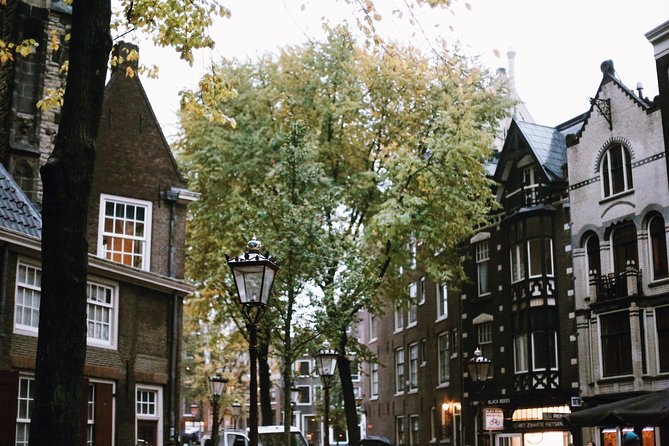
Amsterdam is made for walking, but it’s also easy to get lost in a loop of canals and pretty façades. This tour helps you connect dots fast. You start in the historic core area near Prins Hendrikkade 73, then move through a chain of landmarks that explain the city’s identity.
The pace is practical: each stop is brief, typically around 5–10 minutes, which is great when you want context without spending half a day in one place. And because it runs rain or shine, you’re not at the mercy of the weather if you’re only in town for a couple days.
You’ll also finish somewhere worth lingering. Ending at Papeneiland (Prinsengracht 2) gives you a natural “last walk” moment—perfect for regrouping, grabbing a snack, and planning your next neighborhood.
You can also read our reviews of more walking tours in Amsterdam



St. Nicholas Basilica to Schreierstoren: faith, control, and goodbye-by-ship
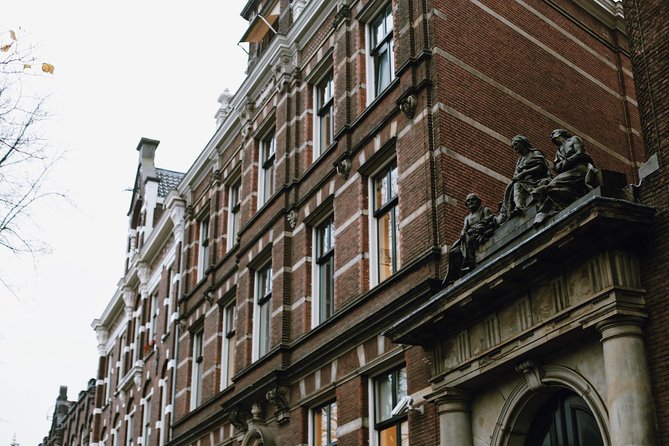
You begin at St. Nicholas Basilica, Amsterdam’s main Roman Catholic church. The story here matters. This church was built in the late 1800s after centuries when Catholic practice faced restrictions. That historical push-and-pull shaped what you see today: a striking blend of architectural styles that reflects the city’s changing religious landscape.
From there you head to Schreierstoren—the Tower of Tears. It’s a medieval structure tied to an emotional scene: women bidding farewell to loved ones departing by ship. Even if you only spend a short moment looking up, it’s the kind of detail that makes a city feel real. Amsterdam isn’t only canals and commerce; it’s also departure, separation, and daily life.
What to watch for on this stretch: look for how Amsterdam’s religious and trading worlds overlap. The city’s waterfront and ship routes shaped ordinary routines, not just grand history.
Zeedijk and Nieuwmarkt: old sea defenses and the city’s shopping heart
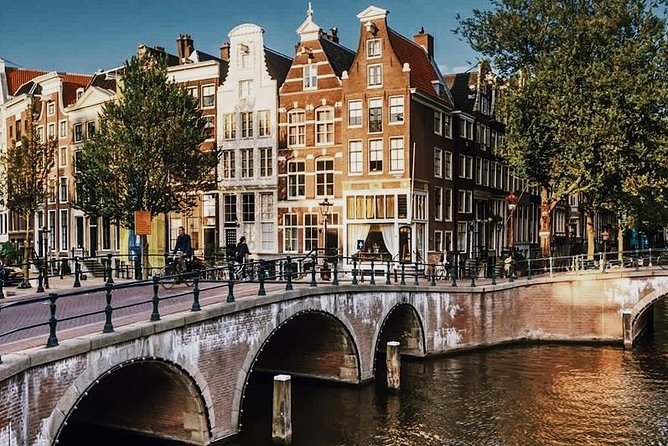
Next comes Zeedijk, one of Amsterdam’s oldest streets. It used to function as a sea dike holding back the waters of the IJ. That’s a reminder that this city was literally engineered to survive water—and that engineering shaped where people built, walked, and traded.
A highlight here is the Kolksluis lock bridge area, one of the prettiest lock-bridge views you’ll get on this route. It’s compact, photo-friendly, and very “Amsterdam in one frame”: canals, structure, and motion.
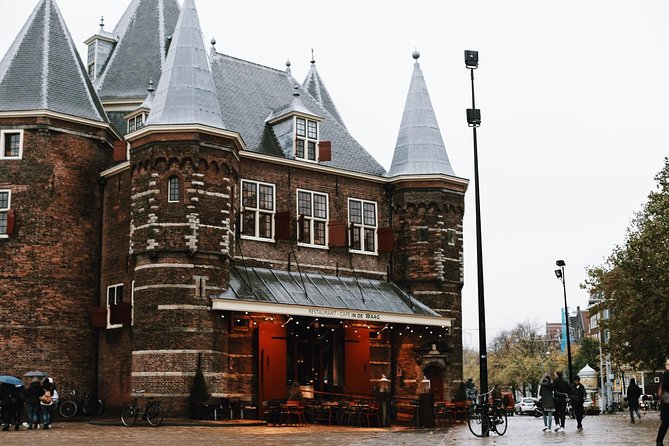
Then you move to Nieuwmarkt, in the old city center. This square has long been a meeting point for commerce and social life, dating back to the 1600s when its location just inside the old city gate made it convenient for shoppers and traders bringing fresh produce. In other words, this wasn’t a random plaza—it was a funnel for everyday exchange.
You’ll also see De Waag nearby. This 15th-century building is one of the oldest remaining non-religious structures in Amsterdam. It began as a city gate tied to the old walls, and it later served multiple roles: guildhall, museum, and fire station. That reuse is a big part of why older Amsterdam buildings feel layered, not frozen.
Possible drawback on this section: because several stops are exterior-focused and quick, you won’t get a long-form “lecture” moment at each square. If you’re the kind of traveler who wants a deep historical talk at every site, you’ll need to ask your guide specific questions as you walk.
Trippenhuis, Oost-Indisch Huis, and the canal-era power story
As you move toward the canal neighborhoods, the tour shifts from street-level life to wealth and empire. You’ll see the Trippenhuis, often described as one of Amsterdam’s grandest 17th-century mansions. It used to belong to the wealthy Trip family, and it’s a great counterpoint to what you see almost across the way.
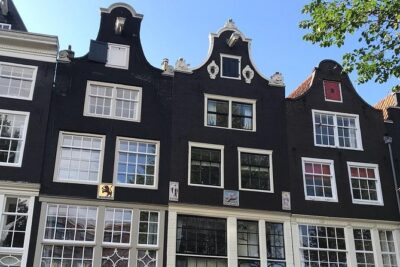
That contrast matters because of what comes next: the Kleine Trippenhuis, known for being extremely narrow. The explanation here is practical and very Amsterdam—land taxes pushed owners to build tall, narrow buildings to fit within limits. You can almost read the tax policy in the façade.
Then the tour takes you to Oost-Indisch Huis, the Dutch East India Company’s headquarters courtyard. This is tied to a major global storyline: it’s described as the birthplace of the world’s first multinational corporation. Even without going inside, the stop gives you a sense of how trade didn’t just bring wealth—it built institutions and helped define the modern idea of corporate power.
How this helps you as a visitor: when you later wander on your own, you’ll start noticing which canal homes were tied to shipping, banking, governance, or craft. That’s the real payoff of getting the economic context early.
Zuiderkerk, Rembrandt’s house area, and the Stopera stop: Protestant Amsterdam and big civic buildings
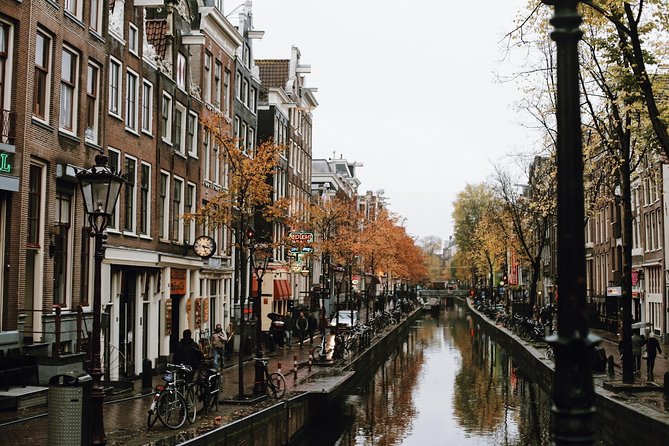
Next up is Zuiderkerk, Amsterdam’s first purpose-built Protestant church. It was designed by Hendrick de Keyser, and its tower is one of the defining landmarks in the area. This spot adds balance to the earlier Catholic story: the city didn’t just change faith quietly—it built new shapes into the skyline.
After that you’ll reach the area connected to Museum Het Rembrandthuis, Rembrandt’s former home and studio. The tour frames what matters: he lived and worked there for nearly 20 years. Just as important, the admission is not included—so you’re basically getting the place and the context, not automatic entry.
Then you head to the Stopera, the building complex that houses both the city hall and the Dutch National Opera and Ballet. It took at least 60 years to build. That long timeline is a quiet reminder: major civic and cultural buildings were multi-generation projects, not quick upgrades.
Smart move for your day: if Rembrandt is a priority, check whether you want to add an entry visit separately after the walk. The tour primes you, then you decide how deep to go.
You can also read our reviews of more guided tours in Amsterdam




Huis aan de Drie Grachten and Begijnhof: architecture tricks and quiet courtyard life
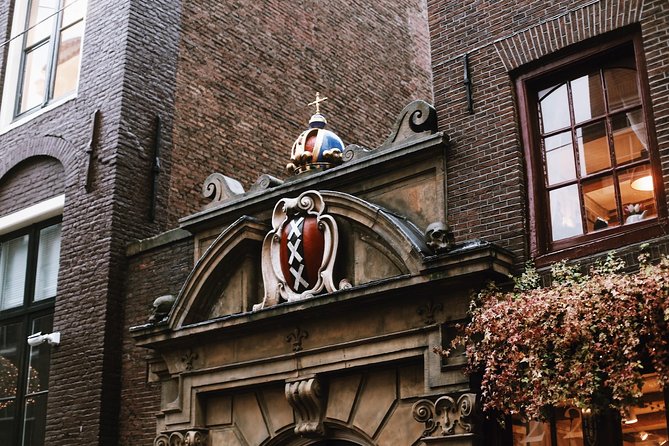
The route also includes Huis Aan De Drie Grachten, a rare 17th-century canal house located at the junction of three canals. The key detail is simple and visual: its façades face three directions. It’s the kind of building that makes you appreciate how Amsterdam canal planning created opportunities for interesting, unusual designs.
Then you step into the calm of Begijnhof—a medieval courtyard once home to devout women known as Beguines. This part of the walk is emotionally different from the big squares. It feels sheltered and slow, and it includes one of Amsterdam’s oldest wooden houses. Even if you only spend a few minutes, it’s the reset button in a day of landmarks.
Why I think this stop is valuable: Amsterdam can feel nonstop. A courtyard like Begijnhof gives you a breather and helps you understand that the city had everyday pockets of safety and routine, not only public spectacle.
Dam Square to Herengracht to Anne Frank House: center-stage Amsterdam
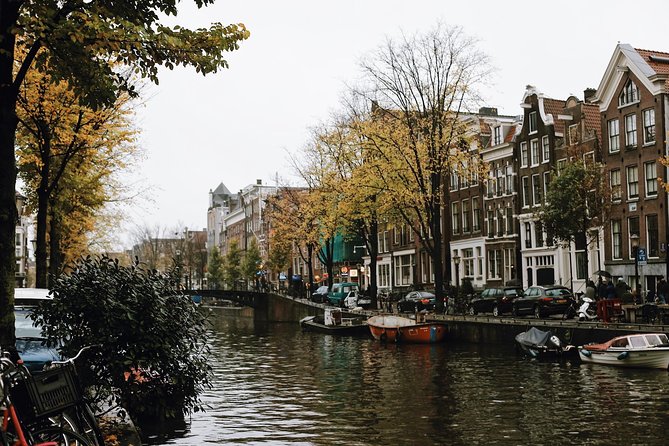
At Dam Square, you’re in the historic heart of Amsterdam, framed by the Royal Palace, the 15th-century New Church, and the National Monument to WWII victims. This isn’t just a photo stop. The square is designed to concentrate national memory and civic power in one place.
From there you’ll look toward Herengracht, focusing on what’s often called the Golden Bend. This is where you’ll see the richest and most ornate canal mansions from the Dutch Golden Age. It’s easy to think these were just decorative—so here’s what to notice instead: the mansions represent a time when trade, finance, and status hardened into visible architecture.
Then you pause near Anne Frank House. The tour keeps the experience respectful by positioning it as an exterior moment, with reminders of the WWII context. Next door rises the Westerkerk, including Amsterdam’s tallest church tower. It’s a sobering juxtaposition: beauty and sorrow in the same skyline.
Practical note: because some attractions can restrict access and the tour is time-based, don’t count on deep inside time here. If an interior visit matters most to you, plan that separately.
Bloemgracht gables, Karthuizerhof hofje, and Noorderkerk’s cross-shaped plan

You’ll also take in De Drie Hendricken at Bloemgracht 87–91, where you can look up for quirky gable stones. These carvings include allegories and trade emblems. It’s one of those “you’ll miss it if you don’t look up” Amsterdam moments—and a guide makes the difference between passing by and actually understanding what you’re seeing.
Then comes Coöperatieve Vereniging Karthuizerhof, noted as the largest hofje in Amsterdam. Hofjes are courtyard complexes tied to community support, and this one was built as almshouses around a tranquil courtyard for the city’s poor and elderly. So again, the tour balances the wealth story with how Amsterdam supported people during harder times.
Next is Noorderkerk, a 17th-century Protestant church built for the Jordaan district. It has a cross-shaped floor plan tied to Reformation ideals. From outside, the architecture might seem simple. But with the explanation, it becomes a window into how worship philosophy shaped building design.
Papeneiland: ending with a canal corner and apple-pie symbolism
Finally, the tour ends at Papeneiland, described as one of Amsterdam’s prettiest canal corners. The stop centers on Het Papeneiland, a brown café dating to 1642, said to serve some of the best apple pie in town.
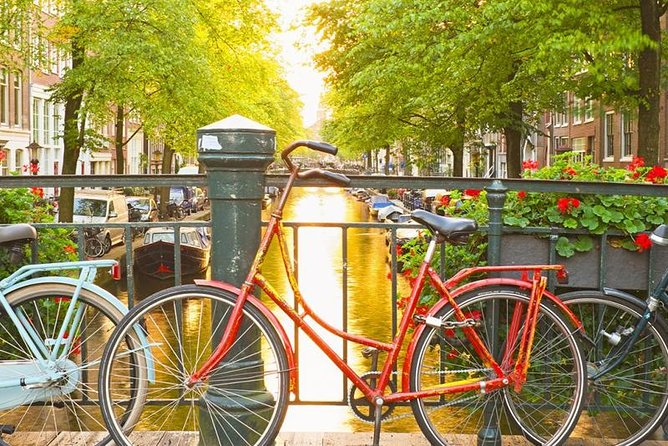
Even if you don’t buy anything right away, I like ending here because it feels like a reward. You finish surrounded by the kind of canal rhythm that makes Amsterdam such a satisfying walking city.
If you want to stretch the day: after the tour, I’d use the end point to wander outward by neighborhood. You’ll already have the city’s “why this is here” story in your head.
Price and value: is $62.48 a good deal?
At $62.48 per person for about 2.5 hours, you’re paying for more than the walk. You’re paying for an organized route through key areas, short-context stops, and a guide who helps you see patterns instead of collecting random sights.
Here’s what makes it feel like good value:
- Many highlights are free to view (you get time at major buildings and squares without stacking entry tickets).
- You cover a wide geographic slice of central Amsterdam rather than bouncing around by yourself.
- The tour is built to run rain or shine, which matters in a city where weather can change fast.
One caution: since several attractions do not include admission inside, your final experience depends on whether you choose to add paid entries afterward. If you’re expecting every major stop to turn into a museum visit, you’ll want to plan ahead.
Also, you can upgrade for more personal attention (and there are group/option notes). If you’re traveling as a couple or small group and want undivided focus, that upgrade can be worth it.
Should you book this guided walking tour?
I’d book it if:
- You’re in Amsterdam for a short window and want a high-quality overview early in your trip.
- You care about how history shaped architecture and street life, not just what things look like.
- You’d rather learn the city’s “logic” on a guided walk, then explore freely afterward.
I’d think twice if:
- You want long interior visits at multiple museums/churches in one day.
- You’re sensitive to walking and standing for several hours, even at a moderate pace with frequent stops.
If you’re on the fence, my practical advice is simple: treat this as your foundation. Do it early, then build your remaining days around the streets and themes your guide points out—churches, trade buildings, courtyard life, or the stories behind the canal houses. That’s how you get the most out of Amsterdam without feeling overwhelmed.
FAQ
What’s the duration of the Amsterdam City Center & History walking tour?
It’s about 2 hours 30 minutes.
How much does the tour cost?
The price listed is $62.48 per person.
Is the tour offered in English?
Yes, it’s offered in English.
Is admission included for every stop?
Not always. Some stops note admission tickets are free, while others list admission as not included.
Where do I meet for the tour?
You start at Prins Hendrikkade 73, 1012 AD Amsterdam.
Where does the tour end?
The tour ends at Papeneiland, Prinsengracht 2, 1015 DV Amsterdam.
Will the tour run in bad weather?
Yes. The tour runs in all weather conditions, rain or shine.
Do I need to bring a mobile phone number?
Yes. The experience notes that you must provide a mobile phone number (including country code).
Are there any restrictions on bags during the tour?
Yes. No large bags or suitcases are allowed.
Is this tour private?
It’s listed as private, with only your group participating. The notes also mention that the guide being exclusively for you does not apply if you choose the semi-private option.