REVIEW · AMSTERDAM
Amsterdam: Anne Frank and Jewish Quarter Walking Tour (TOP RATED)
Book on Viator →Operated by Trigger Tours · Bookable on Viator
This walking tour packs big meaning into a focused city loop. It follows the Anne Frank thread through the Jewish Quarter, from synagogues to memorials, with time for context instead of just photos. I especially like the capped group size—when the number stays around 15, the guide can actually keep the pace human.
Two things I really value here: the route hits multiple key Holocaust-era landmarks (not just one site), and the tour ends with a clear sense of where the story fits in the modern city. One drawback to factor in: it’s not a substitute for the Anne Frank House itself, since this walk is centered on the broader Jewish Quarter sites and memorials.
In This Review
- Key things that make this tour worth your time
- Hitting the Jewish Quarter: what this 2-hour walk is really about
- Meeting at Amstel 51C and using the mobile ticket
- Small group size (15 max): why this matters for a heavy subject
- The Portuguese Synagogue stop: starting with Dutch Golden Age context
- Auschwitz Monument: remembering deportation with no detours
- Verzetsmuseum Amsterdam: learning how resistance happened
- Hollandsche Schouwburg: where deportation moved through
- De Plantage and the Spinoza Monument: connecting story to place
- Dam Square and Royal Palace: the modern ending that changes your perspective
- Nieuwmarkt as the closing story beat
- What to wear, bring, and expect on walking days
- Is it worth $33.26? Value for what you actually get
- Who should book this tour (and who might skip it)
- Should you book this Anne Frank and Jewish Quarter walking tour?
- FAQ
- How long is the Amsterdam Anne Frank and Jewish Quarter walking tour?
- What is the price per person?
- How many people are on the tour?
- What language is the tour offered in?
- Where does the tour start?
- Does the tour include hotel pickup?
- Is admission included for the stops?
- Is this tour dependent on weather?
- What is the cancellation window for a full refund?
Key things that make this tour worth your time

- Up to 15 people keeps the experience personal and easy to ask questions
- A tight 2-hour loop gives you history without turning your day into a marathon
- Memorials and synagogues are spread across the area, so you get the full geographic story
- Many stops list free admission, so you’re less likely to face surprise fees
- Final Dam Square and Royal Palace walk helps you connect past to present
- Guides with strong storytelling, including names like James, Guido, Aaron, Maria, and Andrea, have earned top marks
Hitting the Jewish Quarter: what this 2-hour walk is really about
If you’re coming to Amsterdam for Anne Frank, you’re probably doing two things: seeing key locations and trying to understand how the city’s Jewish community moved through the Dutch capital—then shattered under Nazi occupation. This tour is built for the second part. It’s not a long museum day. It’s a street-level story with brief, meaningful stops that add up.
I like that the pacing stays around 10 minutes per stop, which means you get a new chapter fairly often. It also means you’re not stuck standing in one place for ages. You’ll do a lot of walking through the heart of the area, and the guide keeps pointing out what to notice as you go.
Price-wise, it’s $33.26 per person for about two hours, with a small-group format and a mobile ticket. In practical terms, you’re paying for guidance across several major sites, not just a single admission entry.
You can also read our reviews of more walking tours in Amsterdam



Meeting at Amstel 51C and using the mobile ticket
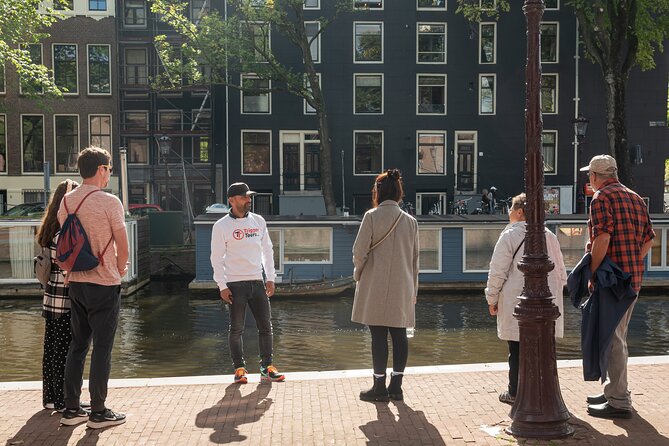
The meeting point is Amstel 51C (1018 EJ), and the tour ends back there. That matters because you’re not dealing with complicated transit after you finish. It’s also helpful for day planning: you can line up your next activity without crossing the city at the end.
You’ll get a mobile ticket, which usually makes check-in straightforward. The tour also offers pickup from select city center hotels, which is a nice option if you don’t want to fight tram and foot traffic right before the tour begins.
A small but real tip: since this is an outside-heavy walking format, wear shoes that handle uneven sidewalks. Also, bring layers—one past group note called out how chilly it can feel during the walk.
Small group size (15 max): why this matters for a heavy subject
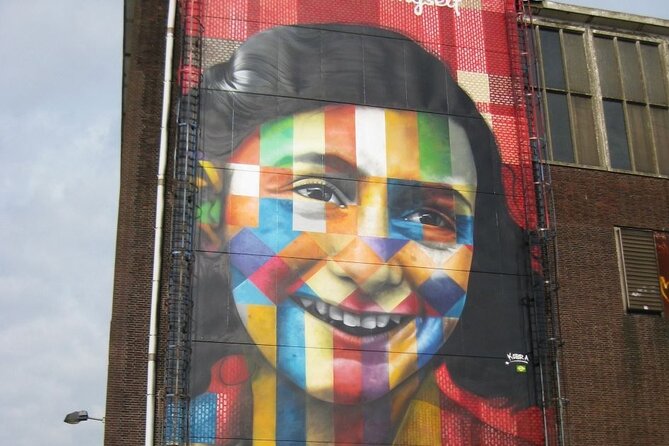
Cap at 15 travelers isn’t just a comfort perk. It changes the feel of the tour. With fewer people, the guide can:
- keep the flow of the story more coherent
- adjust the pace if someone needs to pause
- handle questions without shutting them down
Several guides have been praised by name in past experiences—James, Guido, Aaron, Maria, and Andrea show up repeatedly. And what people seem to love most is how they bring the sites to life with careful storytelling, including emotional moments without turning them into a comedy or a lecture.
For you, this is important because the subject matter is serious. You’ll learn about deportations and resistance, and the tone can be intense. A small group helps keep it respectful and easier to process.
The Portuguese Synagogue stop: starting with Dutch Golden Age context
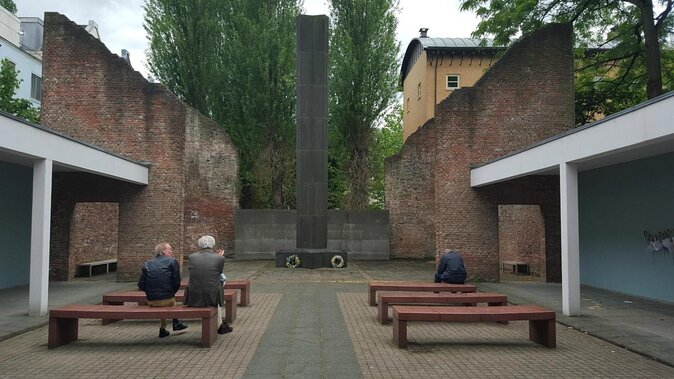
The first stop is the Portuguese Synagogue, with the tour briefing on the Jewish community in Amsterdam—especially the Sephardic community. The guide explains how that community was among the largest and wealthiest in Europe during the Dutch Golden Age, and how their large synagogue reflected their status.
This stop has two advantages for your understanding:
- It doesn’t start in tragedy. You get roots—community life before catastrophe.
- The building is both a working place of worship and a well-known historic site, so you’re not studying the past from a distance.
The tour info also lists free admission for this stop. Still, I’d treat it like a real religious site: be ready to follow basic visitor etiquette (quiet voices, respectful behavior, and careful photo timing).
Auschwitz Monument: remembering deportation with no detours
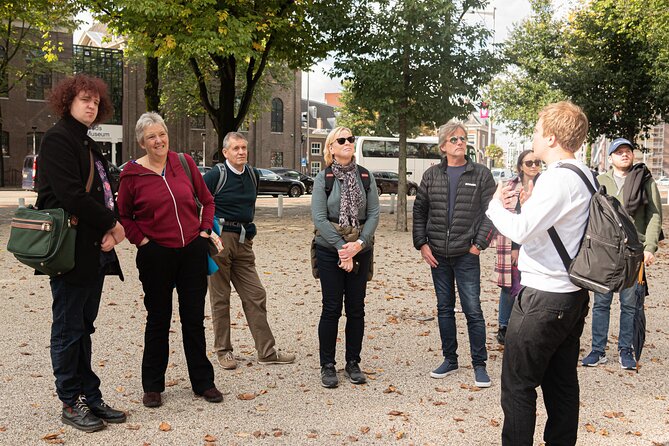
Next is the Auschwitz Monument, where the focus shifts directly to Jewish deportation. This is one of those moments where the guide’s job is to connect what you’re seeing to the larger system that made deportations possible.
The practical benefit of placing this stop after the synagogue context is that the story has contrast: community life first, then how that world was targeted and erased. The tour info lists free admission here too, so you’re not juggling extra tickets while you’re trying to absorb the meaning.
If you’re sensitive to heavy topics, this is the part where you might want a quiet minute. The tour is short enough that you won’t feel trapped, but it does go there.
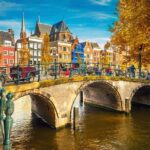





Verzetsmuseum Amsterdam: learning how resistance happened
After the deportation memorial, you move to Verzetsmuseum Amsterdam, focused on Jewish resistance. The tour treats resistance as something real and varied—not just a concept.
This matters because many people leave Amsterdam with the picture of the Holocaust as only victimhood and loss. A resistance stop changes that frame. It helps you understand that even under occupation, people found ways to resist, survive, and preserve agency.
As with other stops, the tour lists free admission, so you’re spending time reading the room and listening to the guide instead of paying extra fees to access information.
Hollandsche Schouwburg: where deportation moved through
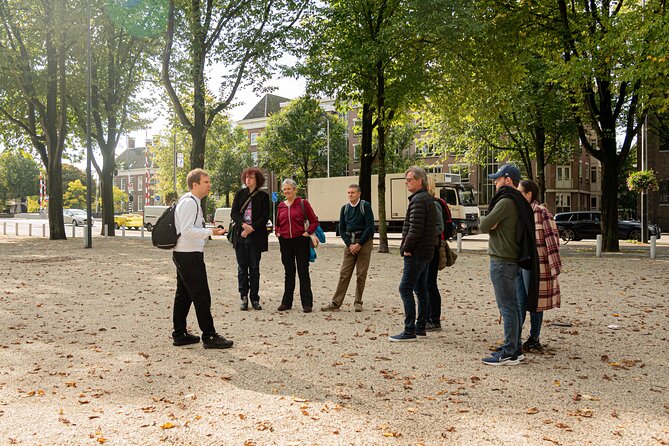
The next key location is Hollandsche Schouwburg, where the tour explains deportation camps. This stop is heavy, and it’s placed in the itinerary at the moment when your understanding has shifted from broader history into the machinery of persecution.
One thing I appreciate about this structure is that the walk doesn’t only jump between landmarks. The stops create a rough timeline: community context → deportation focus → resistance → the brutal infrastructure behind deportations.
Again, free admission is listed in the tour info. That helps keep the experience focused. You’re there for the meaning, not for a shopping list of ticket upgrades.
De Plantage and the Spinoza Monument: connecting story to place
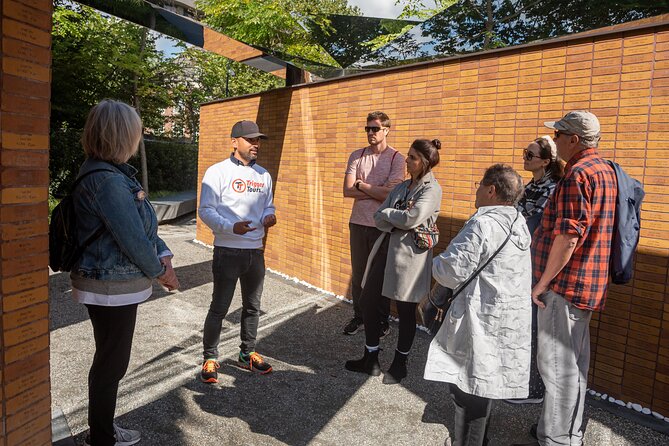
After the major memorial stops, the route turns toward De Plantage, showing you the area and sharing its history. This is more than a scenic break. It’s where you learn that the Jewish Quarter wasn’t only a set of events. It was neighborhoods, streets, daily routines, and a physical map of where communities lived.
Then you’ll see the Spinoza Monument. The guide uses this stop to talk about Spinoza, giving you a human thread beyond the WWII timeline. Even though the subject matter gets dark, this kind of moment helps your brain reset and process.
Why I like these placements: they keep the tour from feeling like a string of sad signs with no breathing room. You still carry the weight of what you learned, but you’re also reminded that culture and ideas mattered long before and long after.
Dam Square and Royal Palace: the modern ending that changes your perspective
The itinerary includes a walk to Dam Square and the Royal Palace. This part works as a mental bridge. You’ve spent time on WWII sites, and now you’re standing in one of Amsterdam’s most famous public squares—seeing how the city continues around the history.
This isn’t just sightseeing padding. It can help you understand the contrast between lived city life and the historical forces that interrupted it. It also gives you a recognizable landmark finish, which makes it easier to keep the story anchored after you leave the tour.
If you’re short on time, this ending is also practical. You can transition from the emotional content of the walk into a more normal sightseeing loop in the center.
Nieuwmarkt as the closing story beat
The final stop is Nieuwmarkt, where the guide adds more of the Anne Frank story and then finishes the tour. The timing is short, so it’s not the kind of stop that needs you to rush through ticket lines. It’s more like a last chapter that ties the broader Jewish Quarter history back to the Anne Frank thread.
The tour info lists admission ticket not included for this stop. That usually means there isn’t a timed entry you’re supposed to hold in your schedule. Still, keep an eye out if there’s anything specific you’re expected to pay for on-site—your ticket won’t magically cover everything unless the tour states otherwise.
What to wear, bring, and expect on walking days
This is a walking tour, and most of it happens outdoors. One past group note specifically called out that it can be very chilly, so plan for weather that matches real Amsterdam street conditions, not postcard weather.
Practical checklist:
- comfortable walking shoes
- a warm layer (even if it looks mild earlier)
- water (there’s no hint of included breaks beyond the short stop times)
- your mobile ticket ready on your phone
Also, the experience is described as requiring good weather. If the weather is poor, you’ll be offered a different date or a full refund. That’s the kind of flexibility I like when I’m booking an outdoor walking route.
Is it worth $33.26? Value for what you actually get
At $33.26 for about two hours, you’re buying three things:
- A guided route through several high-impact sites (synagogue, memorials, and neighborhood context)
- Short stop explanations that build a bigger story rather than isolated facts
- A small group format that keeps the experience from turning into background noise
Many parts also list free admission, so you’re not paying extra again and again just to access each location.
The value question becomes personal: if you only want the Anne Frank House building itself, you may still need that separate visit. But if you want the wider context that makes Anne Frank’s story land harder—and makes the Jewish Quarter make more sense—this is one of the most practical add-ons you can book.
Who should book this tour (and who might skip it)
This tour is a great fit if:
- you want Anne Frank context beyond a single museum visit
- you like walking routes with short, clear stops
- you prefer small groups and a guide who can keep the pace human
- you’re okay with a serious, emotional WWII narrative
You might think twice if:
- you’re hoping for a long, detailed museum-style experience
- you’re expecting to enter the Anne Frank House as part of the tour (this is framed as a broader alternative, not the house visit itself)
- you struggle with Holocaust subject matter and want a lighter introduction
Should you book this Anne Frank and Jewish Quarter walking tour?
I’d book it if you’re aiming to understand Amsterdam’s Jewish Quarter as a place with a before-and-after story. The itinerary is built to move logically—from community roots to deportation and resistance, then back to neighborhood geography and modern landmarks.
Skip it if your only priority is the Anne Frank House visit itself. This tour is for context, not a replacement.
If you do book, aim to wear warm clothes and treat the memorial stops with extra calm. You’ll get more from the tour when you slow down for a minute at the heavier sites and let the guide’s framing do its job.
FAQ
How long is the Amsterdam Anne Frank and Jewish Quarter walking tour?
It runs for about 2 hours.
What is the price per person?
The price listed is $33.26 per person.
How many people are on the tour?
The tour has a maximum group size of 15 travelers.
What language is the tour offered in?
It is offered in English.
Where does the tour start?
The meeting point is Amstel 51C, 1018 EJ Amsterdam.
Does the tour include hotel pickup?
Yes, there is pickup available from select city center hotels.
Is admission included for the stops?
For several stops, the tour lists admission as free. For the Nieuwmarkt stop, the information says admission ticket is not included.
Is this tour dependent on weather?
Yes. The experience requires good weather. If it’s canceled due to poor weather, you’ll be offered a different date or a full refund.
What is the cancellation window for a full refund?
You can cancel up to 24 hours in advance for a full refund, based on the local start time.