REVIEW · AMSTERDAM
Amsterdam: Guided Red Light District and City Walking Tour
Book on Viator →Operated by Trigger Tours · Bookable on Viator
Adult streets, explained with context.
This 2-hour guided walk through Amsterdam’s Red Light District turns a quick wander into an orderly lesson on history, laws, and city life—with landmark stops that sit right inside the area’s streetscape.
What I like most is the way the guide work feels personal, not lecture-y. With names like Ben, Max, and Pedro showing up in standout feedback, you’ll get the kind of storytelling that keeps the walk moving and the point clear.
One consideration: this tour is not shy about the adult side of the neighborhood. If that subject matter makes you uncomfortable, you may want to skip it and choose a more general city walk instead.
In This Review
- Key Highlights You’ll Actually Notice
- Where the Walk Starts: Geldersekade and a 2-Hour Rhythm
- Red Light District History, Laws, and the Human Stories Behind It
- Dam and Amsterdam’s Wooden-Pole Foundations: Seeing the City Built on Trees
- Pub The Ape (Int Aepjen): Why a 1540 Wooden Building Still Survives
- Waag: A City-Gate Relic Turned Guild Headquarters
- The Smallest House of Amsterdam and the VOC Storage Angle
- Condomerie Since 1987: A Modern Business in an Old Neighborhood
- Guides Make the Walk: Humor, Professionalism, and the Names You’ll Hear
- Price and Value: Getting $35.44 Worth of Context in Two Hours
- Who This Tour Suits Best (and Who Should Think Twice)
- Should You Book This Amsterdam Red Light District Walking Tour?
- FAQ
- How long is the Amsterdam Red Light District walking tour?
- What is the price per person?
- Where do you meet for the tour?
- Is the tour offered in English?
- How big is the group?
- What is included, and what is not?
- Do I need a paper ticket?
- Is it recommended for people with limited mobility?
- Are service animals allowed?
- Can I cancel for a refund?
Key Highlights You’ll Actually Notice
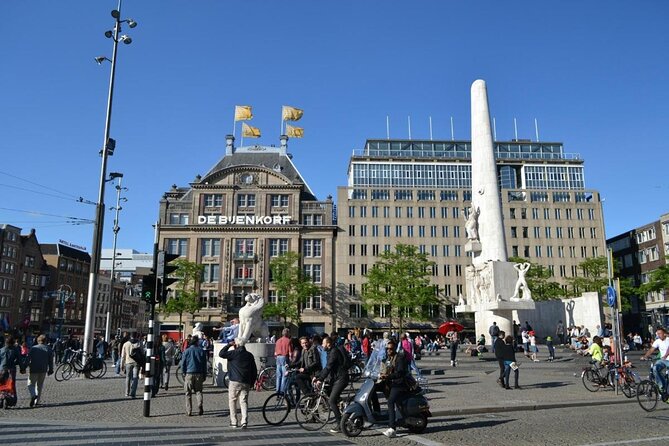
- Small group size (up to 15): easier questions and less crowd crush on tight streets
- Old-town anchors inside the District: Dam-area building stories, Waag, and the smallest house
- Very specific stops: Pub The Ape (wood buildings) and Condomerie (since 1987)
- Multiple start times: good for planning around light and your energy level
- Licensed local guides: usually strong pacing and clear explanations of how this area works
Where the Walk Starts: Geldersekade and a 2-Hour Rhythm
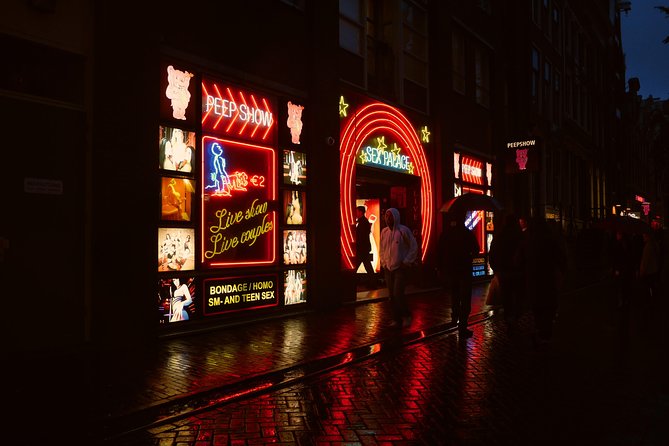
You meet at Geldersekade 2, 1012 BH Amsterdam, and the tour ends back near the same spot. It runs about 2 hours, which is a sweet spot for getting oriented without draining your whole day.
This is a group experience with a maximum of 15 people, so you’re not stuck in a giant mob. It’s also offered in English, and you get a mobile ticket, which makes life easier when you’re juggling transit, tickets, and finding the meeting point.
The pace is built for walking on foot, and that means there’s no long seated break baked in. If you have limited mobility, it’s not recommended, so this is one to rethink if walking stretches are a challenge. On the plus side, service animals are allowed, and it’s near public transportation, so you can plug it into a normal sightseeing route without a big detour.
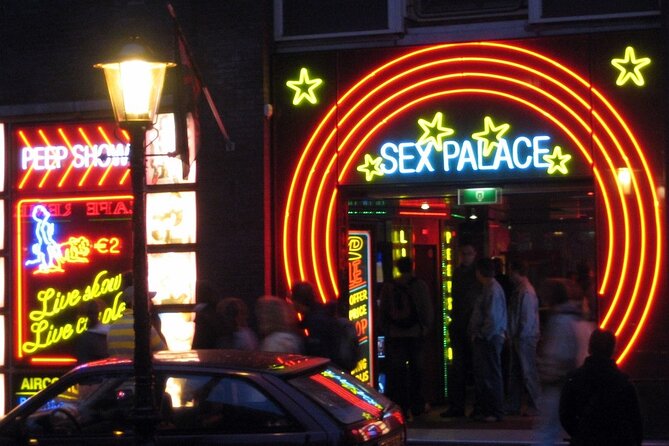
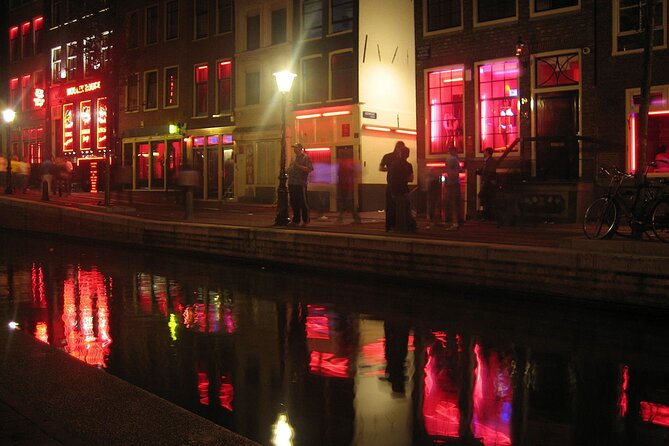
And yes, you can pick among multiple start times, which matters here more than in many tours. Evening starts can change how the city feels as you move through streets and cross toward the wider views.
You can also read our reviews of more walking tours in Amsterdam



Red Light District History, Laws, and the Human Stories Behind It
The core of this walk is context. You don’t just pass buildings and move on. You get history and the current situation of the Red Light District explained in a way that helps the neighborhood make sense.
A big part of the value is how the tour ties the area to Amsterdam’s broader life—trade, the port, and the way city rules evolve. One guide (Ben) is specifically praised for connecting history to how the profession started with merchants and shipmates arriving at the port, which adds a layer most casual strolls miss.
Another strong theme in the feedback is the guide’s tone. Multiple guides are praised for being friendly and respectful while still covering the adult topics clearly. That balance is important: the Red Light District is public space, but it’s also sensitive. When it’s done well, you leave with a calmer, clearer mental picture of how Amsterdam handles the area.
On the other hand, there’s at least one unhappy note about a guide being rude and disrespectful, including inappropriate comments. You can’t predict that in advance. Still, it’s a good reminder to trust your instincts. If someone’s tone crosses your comfort line, say something right away and request help from the provider.
Dam and Amsterdam’s Wooden-Pole Foundations: Seeing the City Built on Trees
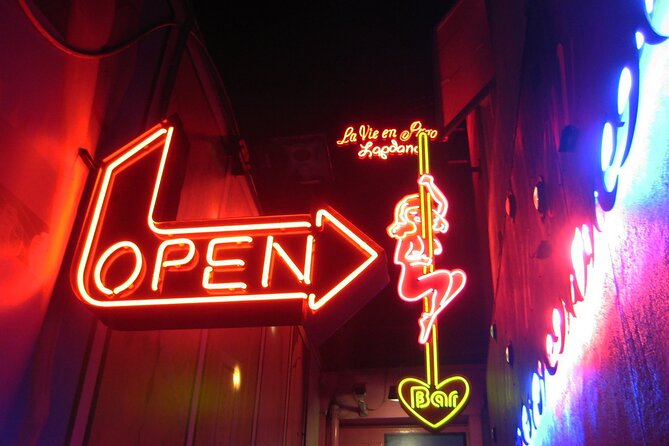
One of the most fascinating stops is tied to the way Amsterdam physically stands up. You’ll hear the story behind buildings being supported by wooden poles fixed into layers beneath the city, because the ground is made up of fen and clay, with a sandy layer deeper down (around 11 meters).
That might sound like pure engineering trivia, but it’s actually a key to understanding Amsterdam’s look. When you walk among narrow streets and old structures, this foundation story explains why the city feels the way it does—solid on the surface, supported by a system underneath.
From there, the walk also frames this area as part of the Old Town, which means you’re not only learning about the Red Light District, you’re learning about Amsterdam before it became famous for anything flashy. The idea is: the Red Light District sits inside a city that has always been shaped by practical building solutions, trade, and long timelines.
If you like connecting architecture to history, this part is the kind of stop that makes the tour feel more grounded than a simple “what you see is what it is” stroll.
Pub The Ape (Int Aepjen): Why a 1540 Wooden Building Still Survives
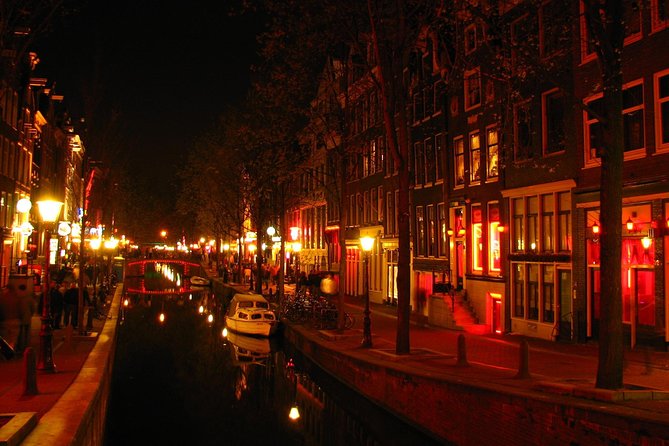
Next comes Pub The Ape, also known in Dutch as Int Aepjen. It was built around 1540, and it’s described as one of only two remaining wooden buildings in Amsterdam.
This matters because you’ll also learn what happened in the past: after a major fire in 1452, the government shifted policies so buildings would use brick facades. So when you stand in front of a surviving wooden structure, you’re looking at a historical exception that survived big changes in building rules.
It’s an excellent stop for two reasons. First, it keeps the walk grounded in real places you can photograph and imagine living in. Second, it connects the District’s present-day street life to older Amsterdam, where fires, regulations, and construction choices shaped entire neighborhoods.
Even if you never step inside, you’ll leave with a stronger sense of why the streets here feel distinct compared to other tourist zones.
Waag: A City-Gate Relic Turned Guild Headquarters
The walk then points you to the Waag, which used to be one of Amsterdam’s city gates and a piece of the defensive wall. It was built around the 1400s and is described as the second oldest building in Amsterdam.
At different moments in time, it shifted roles. After its days as part of city defense, it became a place where guilds and craftsman organizations operated—situated within the Waag and around the square.
That’s a helpful stop for modern travelers because it links the word “historic” to something specific: the same building changed function as the city changed. You’re not just hearing about age; you’re seeing how Amsterdam re-used space as commerce and governance evolved.
If you care about architecture, this is one of the stops where the tour’s structure pays off. It gives you a reason to look up, not just around.
You can also read our reviews of more guided tours in Amsterdam


The Smallest House of Amsterdam and the VOC Storage Angle
Another standout is the smallest house of Amsterdam, built around the 1700s. The tour explains that it first served as storage for the VOC trading company, and later it was lived in for a long time.
This is the kind of story that makes a neighborhood feel human. Storage for global trade sounds big and distant. But a tiny building used for the practical needs of commerce turns that world into something you can picture on the street.
And because it’s the smallest house, it also works as a mental counterweight. You’ll see huge-scale thinking in Amsterdam’s trade history, then immediately come back down to the reality of how space was used when people and businesses had to function in tight quarters.
Condomerie Since 1987: A Modern Business in an Old Neighborhood
If you’ve come to Amsterdam expecting contradictions, this stop delivers. The walk includes the Condomerie, described as the world’s first condom shop specializing in condoms, located here since 1987.
The practical detail you’ll hear is that you can even find customized sizes and special types. That’s not just trivia. It shows how Amsterdam’s Red Light District doesn’t operate only through old traditions. It also adapts to modern consumer needs and open commerce within a controlled, regulated framework.
And that’s why this stop fits the tour’s purpose. The neighborhood isn’t portrayed as frozen in time. It’s presented as something shaped by shifting rules, shifting markets, and evolving attitudes.
Guides Make the Walk: Humor, Professionalism, and the Names You’ll Hear
A walking tour lives or dies on the guide. This one is built around licensed leadership and local expertise, and the feedback gives you a clear pattern: when the guide is good, the tour feels like you’re with a person who knows how to explain the city without turning it into a lecture.
Several guides are repeatedly singled out in strong terms: Ari is praised for being informative and personable, Ben for history and for making the walk engaging (with specific mention of coffee-shop culture alongside the Red Light District), Angel for being easy to understand, and Pedro for solid history and District knowledge.
You’ll also see references to guides using humor while staying on track. One person even describes it as a more playful topic mix, while still focused on how the neighborhood came to be where it is today. That matters because the Red Light District can be emotionally charged. A good guide helps you keep your footing.
Still, that one negative report about an extremely rude guide is worth treating seriously. Here’s my practical advice: if you feel uncomfortable, address it immediately with the provider. Don’t try to “tough it out” on sensitive topics.
Price and Value: Getting $35.44 Worth of Context in Two Hours
At $35.44 per person for roughly two hours, the value mostly comes from what’s included. You’re paying for a licensed guide and a local guide, which is the real expense in a walking tour. You’re also getting multiple stops that connect history, architecture, and the District’s place in Amsterdam’s rules and culture.
Also note: the tour content includes places where admission is free at least for the initial segment, which helps you avoid surprise add-on costs mid-walk. Food and drinks are not included, so plan on grabbing a snack or drink before or after if you want one.
Is it worth it if you could just walk on your own? Maybe. But context is the point here. If you want a guided structure that gives you the why behind what you’re seeing—wooden foundation engineering, Waag’s gate-to-guild shift, and what Condomerie represents as modern commerce—this price is easier to justify.
Who This Tour Suits Best (and Who Should Think Twice)
This experience fits best when you want a guided explanation of the Red Light District that goes beyond surface-level sightseeing. It’s a good match for people who like:
- History tied to buildings, like Waag and Pub The Ape
- Rules and culture, explained in plain terms
- A walk that helps you get your bearings fast in a complex neighborhood
It’s also a decent pick if you prefer tours that stay relatively tight. Max group size is 15, and the format is English and mobile-ticket friendly.
Think twice if:
- You have limited mobility, because it’s specifically noted as not recommended
- You’re easily uncomfortable with frank adult subject matter
- You need a strictly family-friendly environment
If you’re unsure, consider picking a start time that matches your comfort level—some people like the later timing because the city’s light changes as the walk continues.
Should You Book This Amsterdam Red Light District Walking Tour?
I’d book it if your main goal is to understand Amsterdam’s Red Light District through history, architecture, and how the city frames the area. The strongest reason is the range of stops: wood-building survival at Pub The Ape, gate-and-guild history at Waag, the tiny VOC-related house story, and the Condomerie as proof the neighborhood keeps adapting.
I’d skip it if adult themes make you tense or if walking for about two hours is hard for you. And if you’re booking with a tight schedule, you can still benefit from the fact that you choose from multiple start times, including options that may offer better evening atmosphere.
If you decide to go, keep one simple rule: follow your comfort level. Amsterdam is real life, not a script. A tour guide should help you feel informed—not pressured.
FAQ
How long is the Amsterdam Red Light District walking tour?
It runs about 2 hours (approx.).
What is the price per person?
The price is $35.44 per person.
Where do you meet for the tour?
The meeting point is Geldersekade 2, 1012 BH Amsterdam, Netherlands.
Is the tour offered in English?
Yes, it is offered in English.
How big is the group?
The tour has a maximum of 15 travelers.
What is included, and what is not?
Included: a licensed guide and a local guide. Not included: food and drinks.
Do I need a paper ticket?
No. You receive a mobile ticket.
Is it recommended for people with limited mobility?
It is not recommended for travelers with limited mobility.
Are service animals allowed?
Yes, service animals are allowed.
Can I cancel for a refund?
Yes. You can cancel up to 24 hours in advance for a full refund.
If you want, tell me what time of year and your preferred starting time (morning vs evening). I can help you choose the best option based on the route’s street-and-light vibe.