REVIEW · AMSTERDAM
Small Group Walking Tour – Hello Amsterdam
Book on Viator →Operated by Who Is Amsterdam Tours · Bookable on Viator
Two hours, and Amsterdam clicks into place. This small-group walking tour strings together the city’s most useful reference points, from Dam Square to the canal belt and on to the Westerkerk area. I especially like the game-based facts that keep things moving (and make culture feel less like a lecture), plus the walk format that lets you learn without being stuck in one spot.
One thing to consider: this is a steady city-center walk that works best in good weather, so bring shoes you can stand in and a light rain layer just in case.
In This Review
- Key things that make Hello Amsterdam worth your time
- Why this 2-hour Amsterdam walk is a smart first step
- The route from National Monument to Homomonument (stop by stop)
- Dam Square & Damstraat: the city’s center of gravity
- Beurs van Berlage: Amsterdam’s trading roots in brick and stone
- Damrak: fast facts near the Red Light District
- Haarlemmersluis: the canal-belt gateway and the bicycle lens
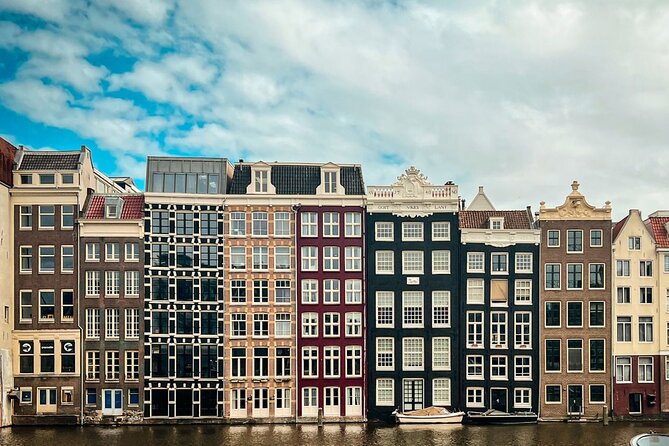
- Singel: the dancing houses along a calm canal scene
- Torensluis: UNESCO canal belt story plus a harder chapter
- Emperor’s Canal (Keizersgracht): family, identity, and what shapes Dutch life
- Westerkerk area, Gay Monument, and the Anne Frank connection
- The price and what you’re really buying for $35.07
- What to wear, bring, and plan around (so the walk feels easy)
- Which guide style you’re likely to get (and why it matters)
- Best for first-timers, couples, and anyone who hates “wasted time”
- Should you book Hello Amsterdam?
- FAQ
- How long is the Hello Amsterdam walking tour?
- Where does the tour start?
- Where does the tour end?
- What language is the tour offered in?
- How big is the group?
- Is there an admission fee during the tour?
- Are service animals allowed?
- What happens if the weather is poor?
- How much does it cost?
Key things that make Hello Amsterdam worth your time
- Max 15 people keeps it social but still personal with your guide
- Orientation-first route: you’ll see the Dam Square anchor and end near major sights
- Short stops mean less “standing around,” more quick context and views
- Culture games on Damrak turn Amsterdam questions into easy, fun learning
- Canal-belt viewpoints plus bike culture help you understand what makes the city tick
Why this 2-hour Amsterdam walk is a smart first step
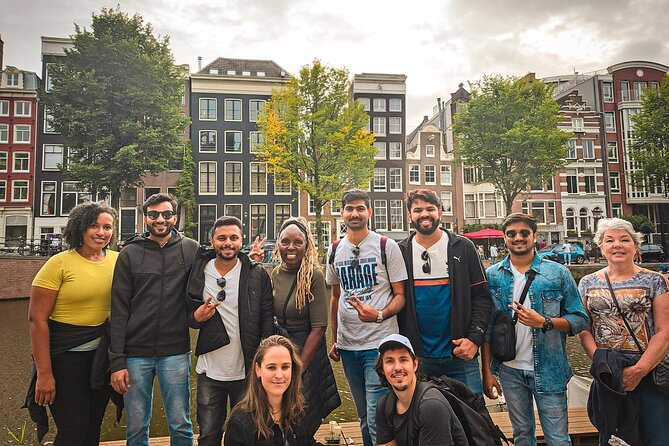
If you’re new to Amsterdam, the hardest part is figuring out how everything connects. Streets and canals can look similar fast, and it’s easy to spend a day bouncing between highlights without really learning the layout. This tour solves that with a tight route and fast explanations.
You start where most people should start: Dam Square, the big central knot of history and modern life. From there, the walk gradually pulls you toward the areas that define Amsterdam’s look and feel, including the canal belt and the neighborhoods that show how the city balances old wealth, daily routines, and complicated history.
The pace is also practical. At roughly 2 hours, you get enough information to navigate on your own afterward, without burning half a day. And because the group stays small (up to 15), you’ll usually feel like you can ask questions instead of watching the guide from the back.
The biggest win is how the tour teaches you the city’s “why,” not just the “what.” You’ll hear stories that connect architecture, trade, daily habits, and social attitudes. Even if you only remember a few points, those pieces help you read the city later—on canals, at cafés, and when you decide where to go next.
You can also read our reviews of more walking tours in Amsterdam



The route from National Monument to Homomonument (stop by stop)
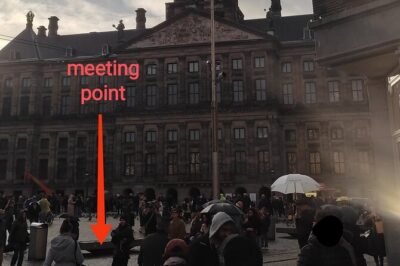
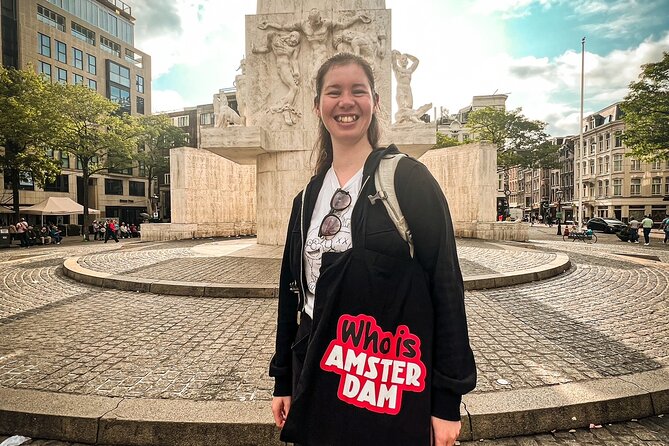
The tour runs from 10:00 am, beginning at the National Monument on Dam Square (Dam, 1012 JS). It ends at the Homomonument near Westermarkt (1016 DW), about a 2-minute walk from the Anne Frank House area and right near the Westerkerk area.
Here’s what you can expect as you move through the center.
Dam Square & Damstraat: the city’s center of gravity
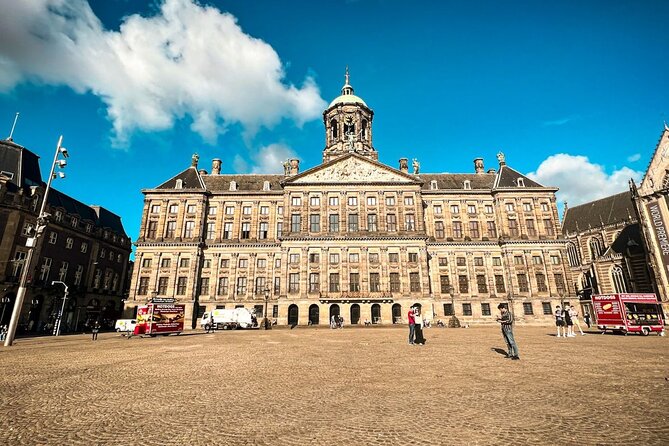
You’ll gather at the National Monument and take in Dam Square, plus the nearby stretch called Damstraat. This is where Amsterdam’s major landmarks sit close together—easy to spot even if you’re not sure of the history yet.
What makes this stop useful is that it gives you a mental map right away. The guide ties the square to the Royal Palace, the National Monument, and the nearby New Church, so you start learning how Amsterdam’s important sites relate to each other physically. You also get oriented around a key walking baseline: if you can picture where Dam Square sits, the rest of the center gets less confusing.
Beurs van Berlage: Amsterdam’s trading roots in brick and stone
Next you’ll stop at the Beurs van Berlage, the building tied to the city’s stock exchange history. This is one of those Amsterdam moments where the architecture isn’t just pretty—it signals what the city valued and traded in.
The guide’s focus here is practical context: Amsterdam rose to power through commerce, and this building is a symbol of that shift. If you’ve ever wondered why Amsterdam’s Golden Age story is all about trade and finance, this stop gives you a clear visual anchor.
Damrak: fast facts near the Red Light District
At Damrak, just steps from the Red Light District, the tour shifts from monuments to questions about everyday culture. You’ll play a true-or-false game designed so you don’t need any prior knowledge.
The point isn’t to quiz you like a classroom. It’s to help you see Amsterdam through the lens of social norms—how tolerance gets practiced, what visitors often misunderstand, and how coffeeshop culture fits into the wider picture. You’ll also be looking at the surrounding dancing houses along the way, which makes the learning feel less abstract.
A small consideration here: this area can feel visually busy, especially at peak times. If you’re sensitive to crowds, keep your expectations flexible and don’t plan to linger for long outside the tour’s pacing.






Haarlemmersluis: the canal-belt gateway and the bicycle lens
You’ll head to Haarlemmersluis, where the views help you appreciate why Amsterdam’s canal belt matters. This stop is built around a simple but powerful idea: Amsterdam is a bike city, and you feel that in how people move, not just in how it looks.
The guide uses that viewpoint to highlight the bike culture basics—like the sense that there are more bikes than people. It’s a fun way to learn, and it also changes how you walk afterward. Once you start noticing bike parking, bike lanes, and the speed of riders, Amsterdam’s rhythm clicks.
Singel: the dancing houses along a calm canal scene
At Singel, the tour leans into one of Amsterdam’s most photogenic details: the dancing houses. These tilted canal-side buildings get explained with a blend of history and story, so you’re not just snapping pictures—you’re understanding why they’re so distinctive.
This stop works well as a breather. The canal view naturally slows you down. It’s also a good moment to check your bearings visually: canals create their own “grid,” and Singel helps you see that structure.
Torensluis: UNESCO canal belt story plus a harder chapter
Next comes Torensluis, tied to Amsterdam’s UNESCO canal belt and the story behind how these waterways formed. The guide also turns to a difficult subject: Amsterdam’s past of slavery.
This is the part of the tour that keeps it from being only postcard Amsterdam. The intention is to hold both realities at once: the canals can look graceful while the city’s wealth also connects to exploitation. If you want a tour that acknowledges the whole picture rather than skating over it, this stop matters.
Emperor’s Canal (Keizersgracht): family, identity, and what shapes Dutch life
At Keizersgracht, the tour shifts again—from buildings to people. You’ll hear about Dutch family dynamics and a specific reference point: Dutch kids being recognized by UNICEF in 2017 as among the happiest in the world.
Whether you take that fact at face value or just use it as a jumping-off point, it gives you a different way to understand the Netherlands. Instead of thinking only about canals and commerce, the tour encourages you to notice how culture translates into daily life and family routines.
Westerkerk area, Gay Monument, and the Anne Frank connection
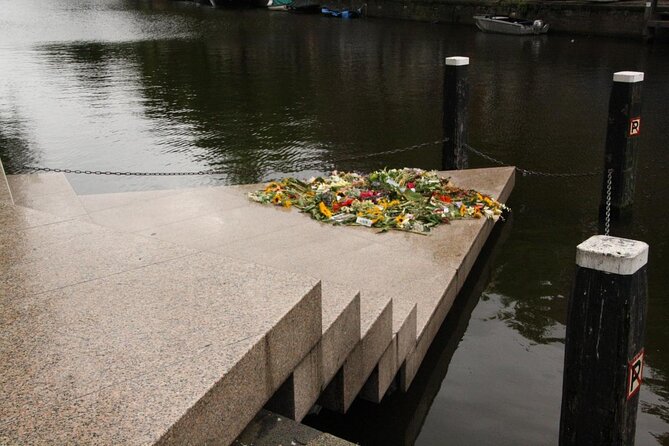
The final stop is at Westerkerk, tying together the area around the Anne Frank House and the Gay Monument. The guide focuses on Amsterdam’s “live and let live” mentality and the broader theme of acceptance.
This works as a strong ending because it’s not just about one landmark. It’s about how Amsterdam portrays diversity in public space. You end right where many people want to go next anyway, which means the tour doesn’t strand you miles away from your next plans.
The price and what you’re really buying for $35.07
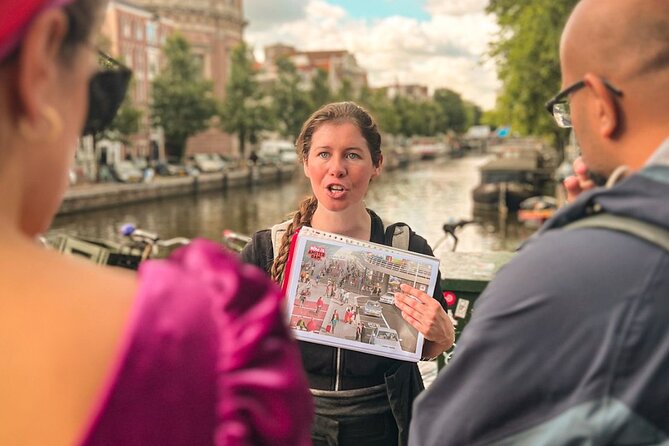
At $35.07 per person (about 2 hours), you’re not paying for museum entry. You’re paying for a guided walking route plus interpretation that helps you understand what you’re looking at.
Here’s the value logic I like:
- You get multiple landmark lenses in one go: political center (Dam Square), finance (Beurs van Berlage), culture questions (Damrak), canal architecture (Singel and nearby), and the “city with a conscience” portion (Torensluis).
- You avoid the typical new-visitor trap: spending hours searching for context without guidance.
- The group size stays small, which often makes Q&A feel possible instead of rushed.
Also worth noting: the stops are presented in a way that doesn’t require paid admissions. That keeps your budget predictable.
What to wear, bring, and plan around (so the walk feels easy)
Even if the tour is only around 2 hours, the comfort details matter. Amsterdam center streets can be uneven, and you’ll be out walking at a city pace.
I recommend:
- Comfortable walking shoes you’ve already tested
- A light layer for wind off the canals
- A charged phone for photos and navigation after the tour
- If you’re traveling with anyone who gets tired fast, consider that you’ll have short stops but still keep moving between them
The tour also depends on good weather. If the day looks questionable, assume you might need a flexible mindset.
Which guide style you’re likely to get (and why it matters)
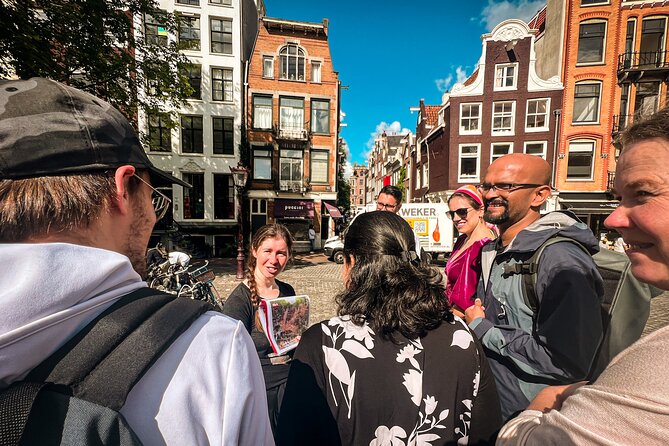
One of the most praised parts of this tour is the guide’s energy and delivery. Names that have been highlighted include Dani/Danni, Jonas, and Adam, and the common thread is interactive teaching.
Some guides add games and quick prompts that keep a small group engaged without turning it into a school exercise. Others lean more on storytelling with useful side notes—practical suggestions for where to eat or shop after you finish.
Even if your guide’s style differs, the format is built to keep you involved, not just listening. With a small group, you’re more likely to feel like a participant.
Best for first-timers, couples, and anyone who hates “wasted time”
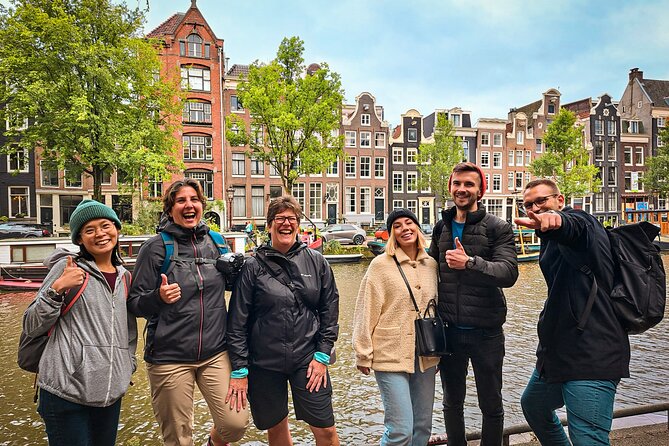
This is especially a good match if:
- You’re visiting Amsterdam for the first time and want a fast mental map
- You prefer walking and short explanations over long museum sessions
- You want a guided route that still leaves you time to wander afterward
- You like light, interactive learning (games) more than straight lecturing
It may be less ideal if:
- You want a deep, slow history-focused experience that takes hours per neighborhood
- You plan to arrive with very little walking tolerance
- You’re hoping for a quiet tour—this area is central Amsterdam, so it’s active
Should you book Hello Amsterdam?
Yes, if your goal is to get oriented fast and learn Amsterdam’s big themes in a short, friendly walk. The combination of key landmarks, canal-and-bike context, and culturally aware storytelling makes it a strong “first day” option.
If you hate walking or you’re traveling on a day with uncertain weather, you might wait for a steadier forecast. But when conditions are right, this is a good-value way to start your Amsterdam trip with clarity, not confusion.
FAQ
How long is the Hello Amsterdam walking tour?
It’s about 2 hours.
Where does the tour start?
It starts at the National Monument on Dam Square, Dam, 1012 JS Amsterdam.
Where does the tour end?
It ends at the Homomonument at Westermarkt, 1016 DW Amsterdam, a short walk from the Anne Frank House area and near the Westerkerk.
What language is the tour offered in?
The tour is offered in English.
How big is the group?
The maximum group size is 15 travelers.
Is there an admission fee during the tour?
Admission tickets are listed as free for the stops included.
Are service animals allowed?
Yes, service animals are allowed.
What happens if the weather is poor?
The experience requires good weather. If it’s canceled due to poor weather, you’ll be offered a different date or a full refund.
How much does it cost?
The price is $35.07 per person.