REVIEW · AMSTERDAM
Amsterdam private city walking experience with a local
Book on Viator →Operated by Guidance Travel · Bookable on Viator
Amsterdam can feel like a maze of canals and bicycles. This private walk gives you a smart route through the center, with a local voice that ties each place to what Amsterdam became and why it matters.
I especially like the tight, well-paced route (about 2 hours) that still covers major stops. I also like that the tour stays highly practical, with a guide who can adjust the walk and answer questions, plus helpful extras like maps/pictures and small local tastings in at least one review.
One thing to consider: with stops capped at around 15 minutes each (and a longer 30 minutes at Nieuwmarkt), you’ll want to treat this as orientation and context—not a slow, sit-down museum day.
In This Review
- Key points that make this tour worth your time
- Why This Private Walk Works So Well in Amsterdam
- The Route: A City Map You Can Actually Use Later
- Beursplein: From Fishing Ground to Trading Power
- Dam Square and the Royal Palace: The Center of Formation and Conflict
- Begijnhof Courtyard: Quiet Streets, Big Ideas About Tolerance
- House on the Three Canals and the Bicycle Bridge Idea
- Nieuwmarkt: Waag, Guild Power, and the Dancing Houses
- Zeedijk: How Chinatown Changed From Fear to Favorite
- Centraal Station: Architecture Plus the Logic of a Transportation Hub
- What You’ll Feel From the Guide: Friendly, Structured, and Adaptable
- Price and Value: When $180.62 Per Group Makes Sense
- Who This Walking Tour Suits Best
- Quick Tips So You Enjoy the Full 2 Hours
- Should You Book This Amsterdam Private City Walking Experience?
- FAQ
- How long is the Amsterdam private walking experience?
- What’s the group size for this private tour?
- Where does the tour start and end?
- What language is the tour offered in?
- Do I need to buy admission tickets for the stops?
- Can I bring a service animal?
Key points that make this tour worth your time
- Private group up to 12: you move together and your guide can steer the conversation.
- A focused 2 to 2.5 hour loop: you get a lot of city meaning without wasting time.
- Landmarks plus quiet corners: big squares and stations, plus the calm of Begijnhof.
- Free-entry stops along the way: every listed stop is marked admission-ticket free.
- Local-guided storytelling: the guide style comes through as friendly, structured, and question-friendly.
Why This Private Walk Works So Well in Amsterdam
Amsterdam is built to confuse you in a charming way. Canals bend, streets rename themselves, and every brick wall seems to have a backstory. This experience is built for clarity: you walk a compact route and your guide turns each stop into a piece of the larger puzzle.
The big value here is not just seeing famous spots. It’s understanding the city’s logic. Where did Amsterdam’s wealth come from? Why do certain places feel formal, and others feel private? What changed after wars, after migration waves, and after neighborhoods evolved? You’ll get answers while you’re still looking at the buildings and streets—not after.
Because it’s a private tour for your group (up to 12), you don’t have that “everybody keep up” energy. You can ask questions, and the guide can adjust to what you care about—history and architecture are a common focus, but the route supports other interests too.
You can also read our reviews of more walking tours in Amsterdam



The Route: A City Map You Can Actually Use Later
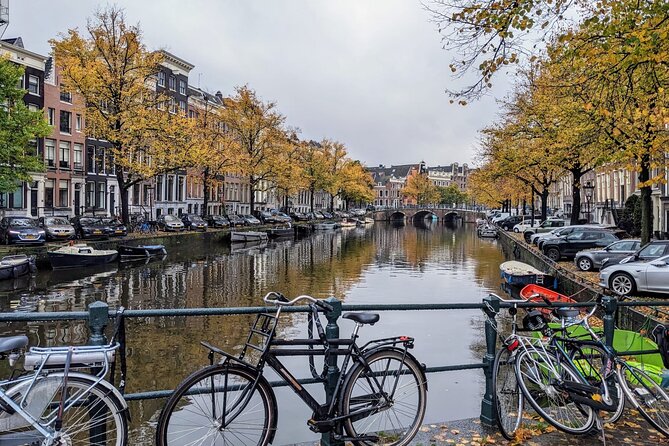
You’re starting and ending at Beursplein (1012 JW Amsterdam), and the tour is designed as a loop you can later retrace on your own. Expect to walk between seven main stops, with short orientation-style time at each:
- Beursplein (about 15 minutes)
- Dam Square (about 15 minutes)
- Begijnhof (about 15 minutes)
- House on the Three Canals (about 15 minutes)
- Nieuwmarkt (about 30 minutes)
- Zeedijk (about 15 minutes)
- Centraal Station (about 15 minutes)
That timing matters. It means you’ll leave with a mental map of the center, not just photo memories. If you’re visiting for one or two days, this is the kind of first-walk experience that helps everything click faster.
Also, you’ll want to know the tour is offered in English, with a mobile ticket and the meeting point is near public transportation. That makes it easier to plug into your day without complicated logistics.
Beursplein: From Fishing Ground to Trading Power
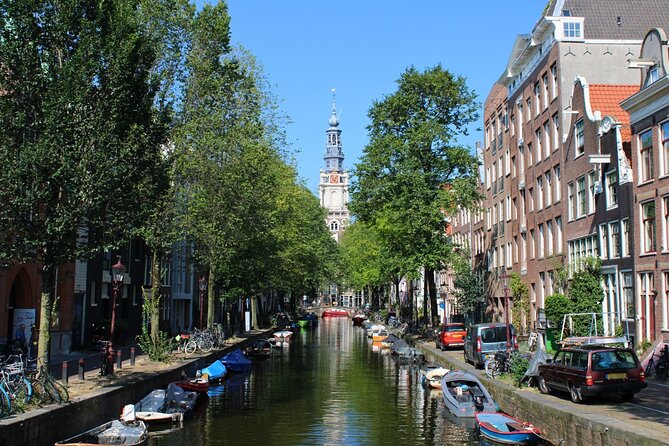
Your first stop is Beursplein, a place that’s easy to miss if you’re just rushing toward the canals. But it’s a good starting point because it explains the city’s name and origins in a way that connects to money and global trade.
Amsterdam’s rise wasn’t accidental. This stop frames how a small fishing village environment grew into a commercial center in the 1600s. Once you hear that story, you’ll start noticing patterns around you: the kinds of buildings that appear near major routes, the way streets funnel movement, and why certain squares matter beyond their views.
If you like when guides explain the “why” behind geography, this is a strong opener. You’re setting up context before you hit the more dramatic landmark scenes later.
Dam Square and the Royal Palace: The Center of Formation and Conflict
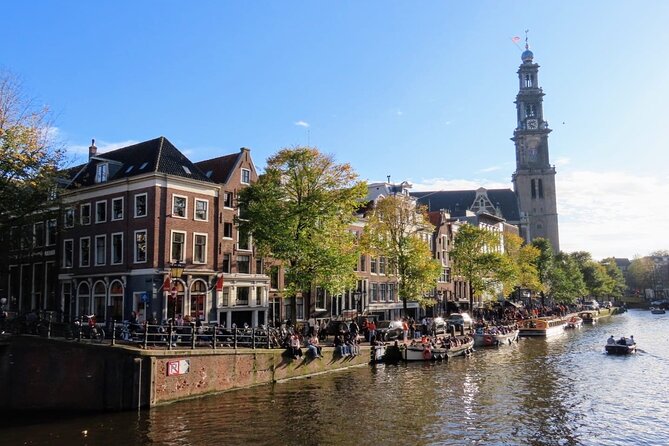
Next comes Dam Square, one of those places that always feels busy, even when you’re only passing through it. The tour focuses on what Dam Square represents in Amsterdam’s formation—plus the significance of the Royal Palace on the Dam.
Then comes a more sobering thread: Dam Square’s role during the Second World War. That’s useful because it prevents the center from becoming a postcard. You get a reminder that monumental places are also places where modern history played out.
Practical takeaway: Dam Square is a great photo stop, but it can also feel like information overload if you don’t have a framework. A short, guided explanation helps you see the square as a political and civic stage, not just an open space with grand buildings.
Begijnhof Courtyard: Quiet Streets, Big Ideas About Tolerance
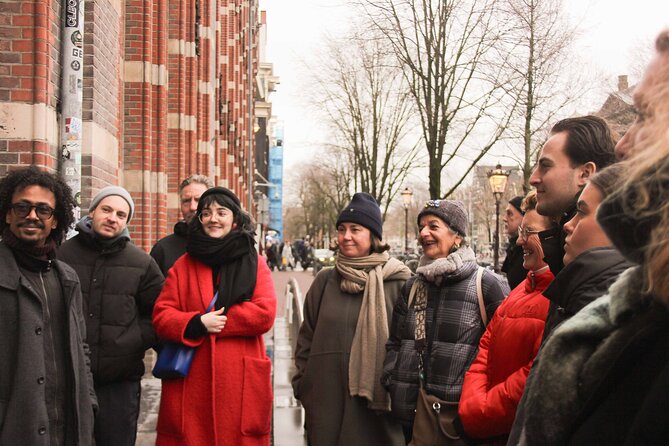
One of my favorite things about walking tours in Europe is when the loud part of the city suddenly gives way to a calm pocket. Begijnhof is exactly that kind of stop.
The guide focuses on Begijnhof’s religious past and how this courtyard became a window into Amsterdam’s tolerance. You’re not just hearing abstract claims—you’re seeing the physical enclosure: a quiet, protected environment that feels removed from the heavy street life around it.
This stop also includes views of one of the oldest houses in Amsterdam, along with one of the two wooden cottages. Even if you don’t get lost in the details, the effect is the same: you start understanding why some places in Amsterdam feel intentionally sheltered.
Best moment to enjoy this: slow down. Let the courtyard reset your pace before you move back into busier streets.
You can also read our reviews of more city tours in Amsterdam




House on the Three Canals and the Bicycle Bridge Idea
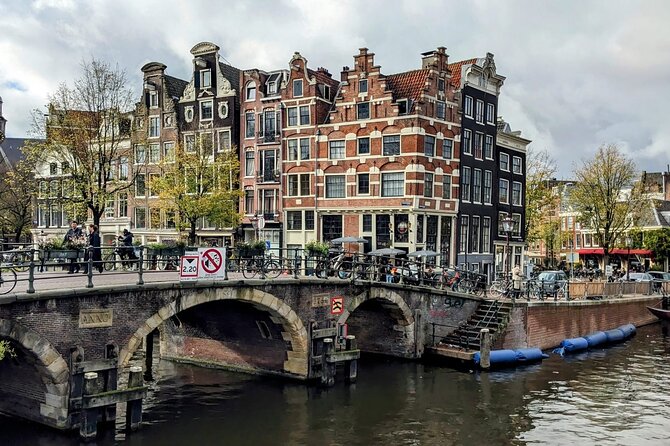
At the House on the Three Canals, you’ll get a visual lesson that’s very Amsterdam: space is tight, and clever design solves problems that would look impossible elsewhere.
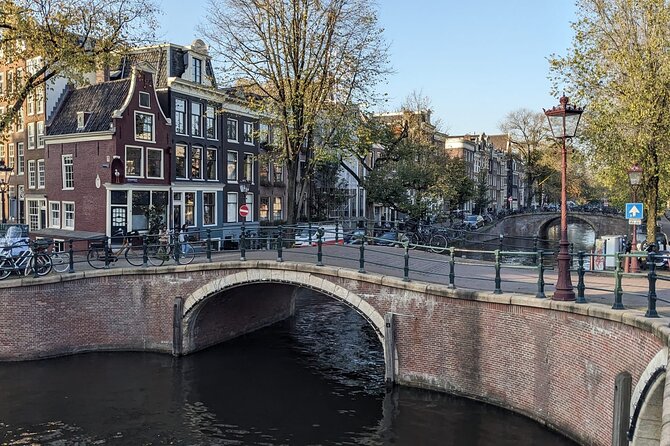
The tour explains the house’s unusual placement—on three canals—and ties it to local ideas like the bicycle bridge. This is one of those stops where architecture and daily life overlap. You’ll likely walk away thinking about how infrastructure and city design shaped everyday movement long before “mobility” became a modern buzzword.
If you’re into design, engineering, or just the odd logic of canal-city planning, this is a memorable break in the itinerary. It’s not just a “look at this building” stop; it connects the building to how people move.
Nieuwmarkt: Waag, Guild Power, and the Dancing Houses
Nieuwmarkt is the itinerary’s longer stop at about 30 minutes, and it earns that time. This area is a strong example of how Amsterdam blends commerce, craft, and street-level identity.
You’ll learn about the Waag, one of the old city gates that later became a guild hall. The key point here is what guilds meant in Amsterdam: trade wasn’t just a job, it was structure. Guild power shaped training, quality control, and who could participate in certain types of work. Once you understand that, you can read the city more like a system than a backdrop.
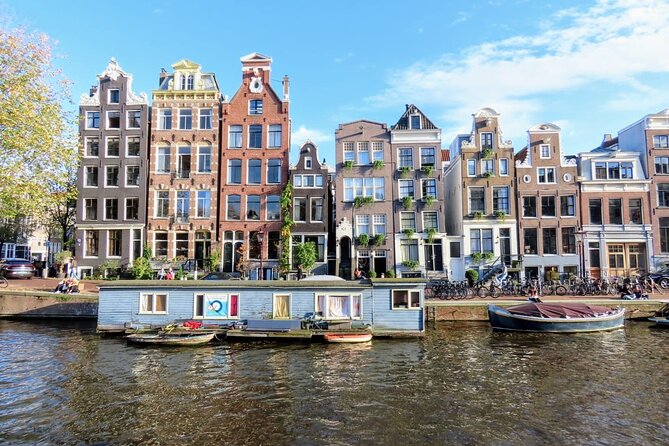
Then there are the “dancing houses.” Even if you don’t leave with a technical explanation, you’ll probably leave with a sharper eye for the visual drama of the street-facing canal houses and why some structures look like they’re leaning or shifting.
This stop is also where the tour tends to feel more layered. You get city power, architecture quirks, and the sense that Amsterdam used to protect trades in very physical ways.
Zeedijk: How Chinatown Changed From Fear to Favorite
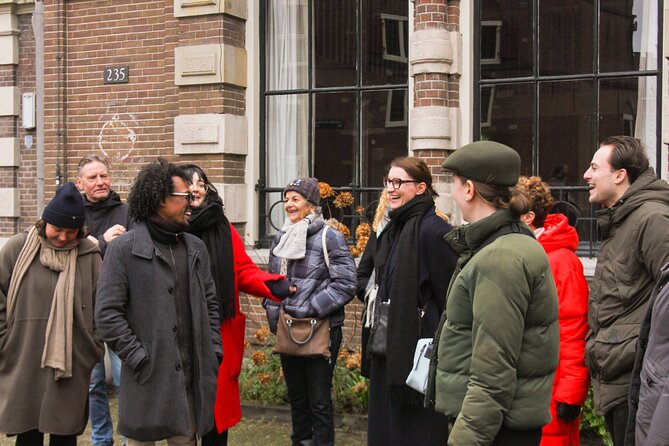
Zeedijk is where the story shifts from old-city structures to social history you can still feel in the street today.
The tour explains Chinatown’s connection to a period when this part of Amsterdam was seen as more dangerous—especially during the 1970s. Then it tracks the decline of that reputation and how the street transformed into a go-to spot for many Amsterdammers.
That kind of “then and now” framing is valuable because it reminds you that neighborhoods don’t freeze in time. They’re shaped by economics, migration, policing, stereotypes, and community change. You walk the street with a context lens, so you’re not only looking for signs—you’re noticing how urban identity evolves.
Practical tip: if you’re planning a snack or quick meal later, Zeedijk is a good candidate area after the tour.
Centraal Station: Architecture Plus the Logic of a Transportation Hub
You finish at Centraal Station, and it’s a strong closer. The building is a headline in itself, but the tour also explains why its location mattered for centuries: transportation hubs become symbols of connection and prosperity.
You’ll learn to look past the obvious photo angles and see the station as infrastructure with history. Even your timing works here. Ending near a major transit point makes it easy to keep exploring afterward without backtracking.
If you’re the kind of traveler who cares about how cities function, this last stop ties the whole walk together. You started at a trading-related area (Beursplein), moved through civic and religious sites (Dam Square, Begijnhof), looked at guild-era architecture (Nieuwmarkt), and ended at a place designed to move people efficiently (Centraal Station).
What You’ll Feel From the Guide: Friendly, Structured, and Adaptable
Several reviews point to the same overall vibe: the guide experience is professional, fun, and personal. The guide name that shows up again and again is Manouk.
Here’s what that means for you in practice:
- The walk is organized and structured, with history placed into context with what’s around you right then.
- You’ll have space to ask questions, including during a solo visit—one reviewer noted it felt like chatting with an old friend rather than joining a stiff group experience.
- Manouk is described as adapting to interests, especially history and architecture, and staying prepared with supporting tools like maps and pictures.
- At least one review mentions little local edible treats, which can be a nice way to break the “stand and listen” rhythm on a walking tour.
Is that stuff required? No. But it’s a good sign you’re not buying a generic route script. You’re buying a guided experience that aims to connect city facts with real human city life.
Price and Value: When $180.62 Per Group Makes Sense
The price is $180.62 per group for up to 12 people, for about 2 hours.
Here’s the practical value math:
- If you’re a duo, you’re effectively paying about $90 per person.
- If you’re a family of four, it drops to about $45 per person.
- For a group near the full size limit, it becomes much closer to a “split-the-cost” deal.
So the tour can be great value when you’re traveling with others, or when you want a more intimate pace than a large group bus tour. It’s also good if you want your guide to answer questions, because the private format usually makes that easier.
One more value angle: every listed stop is marked as admission-ticket free. You’re not paying extra entry fees along the way, so the experience is easier to budget.
Who This Walking Tour Suits Best
This is a strong choice if:
- You want a first or second-day orientation in Amsterdam’s center.
- You care about how places connect—commerce, government, religion, craft, and city change.
- You prefer walking with guidance rather than picking through guidebooks alone.
- You want a calm-but-informed pace, not a sprint.
It may be less ideal if:
- You want a long, slow museum-style visit at a single site. This tour’s strength is breadth, with short stops and walking-focused context.
Most people can participate, and service animals are allowed. If you’re sensitive to walking time, plan comfortable shoes and a realistic pace—about 2 to 2.5 hours of walking between key points.
Quick Tips So You Enjoy the Full 2 Hours
- Bring layers. One review mentions it being very cold during the tour, so weather can matter more than usual.
- Wear shoes you can walk in for an extended stretch. This is a city-center loop, and you’ll keep moving between stops.
- If you have a theme you care about—architecture, Jewish history nearby, war history, or how neighborhoods change—say it early. The guide’s style includes adapting to your interests.
- If you like taking photos, use the stops like checkpoints. The tour time is short, so decide what you want a picture of, then listen for the point that explains it.
Should You Book This Amsterdam Private City Walking Experience?
If you want a guided “connect-the-dots” walk through Amsterdam’s center, this is an easy yes. You’re paying for a route that stays compact, includes both famous landmarks and calmer courtyard space, and gives you context you’ll actually use while you wander the city after.
I’d book it if:
- you’re traveling with friends or family and want the private format,
- you want help understanding the city beyond canals and selfies,
- you like guided structure but still want friendly conversation (the reviews around Manouk point strongly in that direction).
I’d think twice only if you prefer long stays in one place or you dislike walking for around 2 hours. Otherwise, this tour is a smart way to start Amsterdam with a clear sense of what you’re seeing and why it happened.
FAQ
How long is the Amsterdam private walking experience?
It runs about 2 hours, with a typical range of 2 to 2.5 hours.
What’s the group size for this private tour?
It’s private, with your group only participating, and the group size can be up to 12 people.
Where does the tour start and end?
The tour starts at Beursplein, 1012 JW Amsterdam and ends back at the meeting point.
What language is the tour offered in?
The tour is offered in English.
Do I need to buy admission tickets for the stops?
The stops listed on the route are marked as admission ticket free.
Can I bring a service animal?
Yes, service animals are allowed.