REVIEW · AMSTERDAM
Amsterdam Small-Group Walking Tour
Book on GetYourGuide →Operated by Guides and Tours · Bookable on GetYourGuide
Amsterdam explains itself on foot. This small-group walk uses tight-center streets and big stories to make the city click fast. I like how the guide style stays fun and human, with humor that keeps the facts from turning into a lecture, like Ilyan’s dry, foreshadowing approach.
You’ll also get two things most self-guided walks miss: context and contrasts. You’ll connect the Dutch Golden Age to the city’s more complicated side—Red Light District evolution, prostitution, drug policy, and even the Nazi occupation and Anne Frank—so the places make emotional sense, not just postcard sense.
One trade-off: you’re walking for about 2.5 hours, with photo stops and cobbled streets. It’s listed as wheelchair accessible, but the notes also say it’s not suitable for people with mobility impairments—so if you’re in that situation, check with the operator before you book.
In This Review
- Key things I’d focus on before you go
- Entering Amsterdam via Beursplein: where the tour starts with purpose
- Dam Square and the city’s power story in 10 focused minutes
- Nieuwe Kerk and the Royal Palace: quick photo stops that still teach
- Zeedijk and Nieuwmarkt: where markets meet the darker Amsterdam stories
- Jewish Cultural District, Zuiderkerk, and Begijnhof: layers you only see with a guide
- Amsterdam Flower Market and Muntplein: ending with color and orientation
- Guides matter: the difference between facts and a city you understand
- Price and value: why about $20 can feel like more than it costs
- Who this Amsterdam walking tour suits best
- After the tour: how to keep exploring without wasting time
- Should you book this Amsterdam Small-Group Walking Tour?
- FAQ
- How long is the Amsterdam small-group walking tour?
- Where does the tour start and end?
- What is the group size?
- Which languages are offered for the tour?
- Is it wheelchair accessible?
- What’s included in the price?
Key things I’d focus on before you go
- Small group (max 10) keeps the pace relaxed and questions actually get answered.
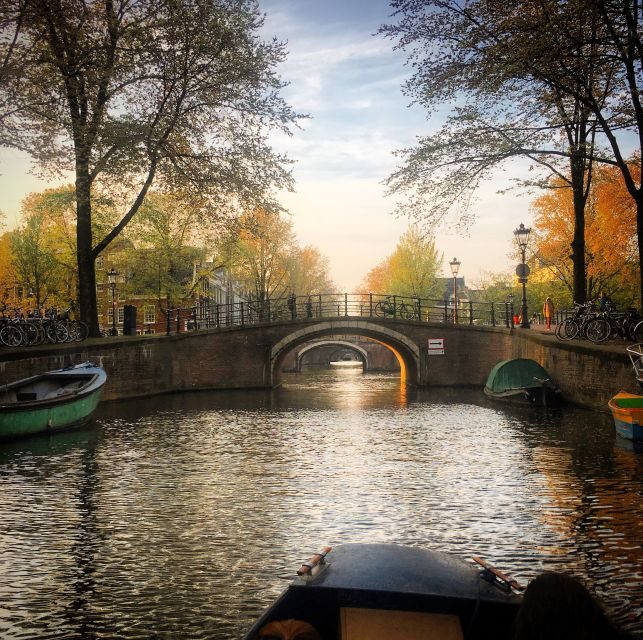
- A “whole-city” story arc connects trade, tolerance, controversy, and 20th-century history.
- Major landmarks plus quieter lanes means you see icons without losing the lived-in feel.
- Built-in photo breaks at key spots like the Nieuwe Kerk and Royal Palace.
- Practical local tips help you keep exploring after the tour without wasting time guessing.
Entering Amsterdam via Beursplein: where the tour starts with purpose
Most first-time Amsterdam tours dump you into the obvious sights. This one starts at Beursplein 1, the kind of square you pass through if you’re heading somewhere else. The guide meets you outside Cafe Bistro near the bull figure, with a blue umbrella or an Amsterdam Guides & Tours sign. That matters because it’s easy to get turned around in the center, especially when you’re juggling canal names, tram lines, and bike lanes.
From there, you work your way through Beursplein itself for a short guided section (about 20 minutes). This is a smart move. You’re not yet exhausted, so the guide can set the big picture: Amsterdam didn’t become Amsterdam overnight. It grew from a muddy settlement into a trading hub during the Golden Age, pulling merchants, artists, and ambitious people from across the world. Once that story lands, everything you see later feels less random.
One small practical tip: wear shoes you trust. The walking is manageable, but Amsterdam’s streets can be slippery and uneven, and you’ll be out there long enough to notice your footwear choice.
You can also read our reviews of more walking tours in Amsterdam



Dam Square and the city’s power story in 10 focused minutes
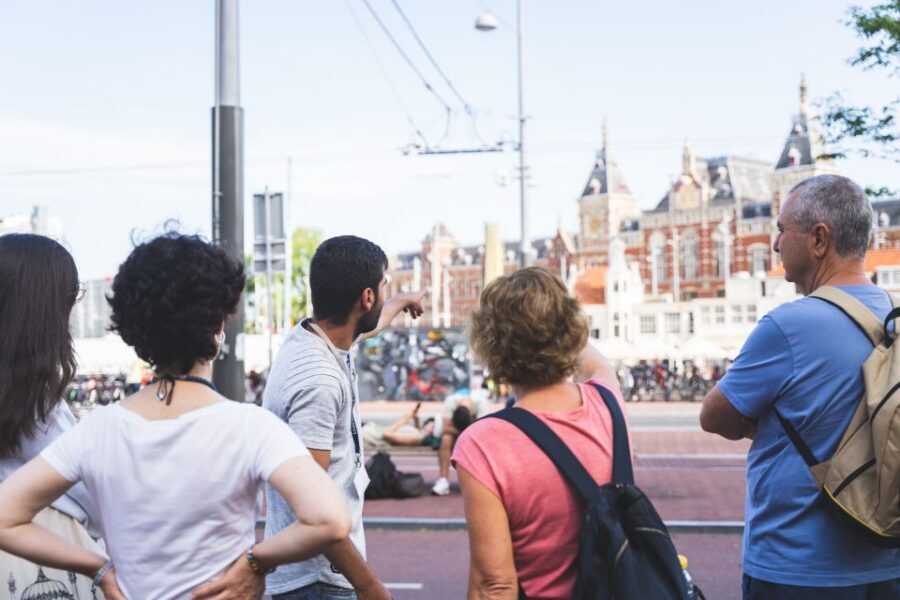
Next is Dam Square, usually the first place people think of when they say Amsterdam. Here, the difference is how the guide frames it. Instead of only pointing at the buildings, you’re shown how power and wealth played out in the public spaces—so Dam Square becomes a stage, not just a background.
This stop is short (about 10 minutes), which is part of the value. You get the orientation without losing the tour’s momentum. If you’re the type who likes to pause and read every plaque, you might wish this section ran longer—but for a 2.5-hour introduction, the pacing keeps the story moving.
Also, Dam Square is busy. Your guide will help you decide what’s worth stopping for versus what you can safely circle later on your own.
Nieuwe Kerk and the Royal Palace: quick photo stops that still teach
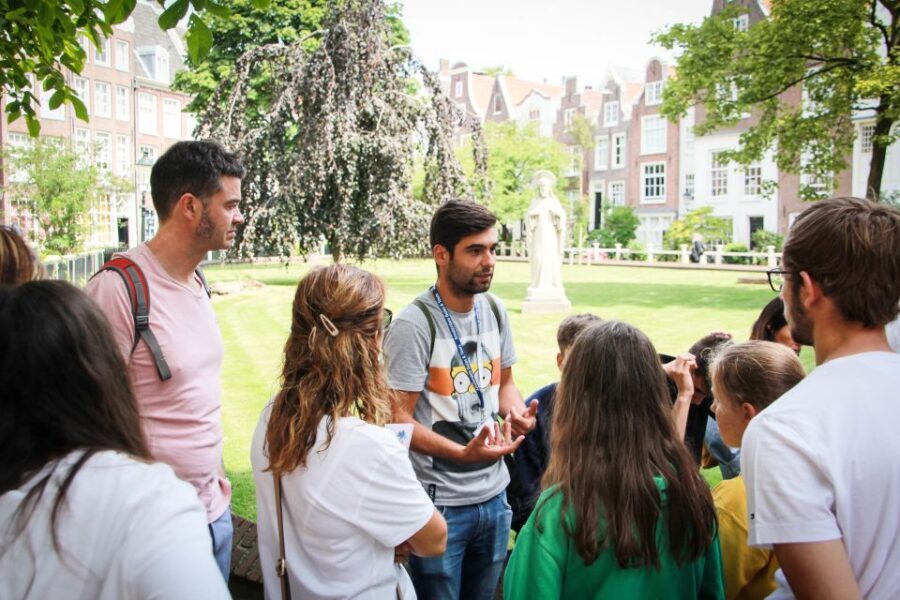
You’ll swing by Nieuwe Kerk (New Church) and the Royal Palace. Both are photo stops of about 5 minutes each, and that’s exactly how you should treat them: a snapshot chance with an explanation, not a full deep-reads session.
Nieuwe Kerk is useful because it sits inside Amsterdam’s long religious and civic timeline, and the guide can connect that to the broader theme of how the city shaped culture over centuries. The Royal Palace works as a contrast point: wealth and authority, right in the middle of the everyday crowd.
Here’s the drawback to know: because these are quick stops, you won’t get unlimited time to wander around the edges for perfect angles. If you care about photos, keep your camera ready and move with the group when your guide signals.
Zeedijk and Nieuwmarkt: where markets meet the darker Amsterdam stories
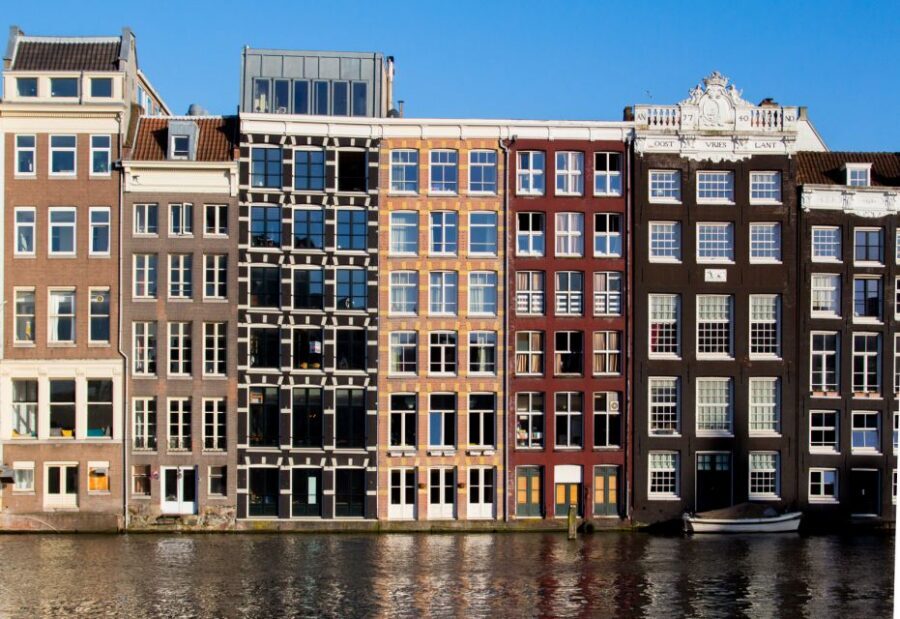
After the landmark zone, the tour shifts into the kind of streets that feel more lived-in: Zeedijk Street and then Nieuwmarkt Square (about 10 minutes and 15 minutes, respectively). These are strong choices for an introduction because they show Amsterdam as more than monuments.
Zeedijk is often where visitors notice the city’s layered atmosphere. The guide uses that energy to bring in tougher themes—the Red Light District’s evolution, prostitution, and the way Amsterdam’s liberal approach developed over time. That doesn’t mean the tour is sensational. The value is that it turns what looks like a tourist magnet into a historical pattern with policy and human context behind it.
Nieuwmarkt adds another dimension: the feeling of a neighborhood square, plus the sense that different communities have shaped the city’s daily life. You also start moving toward the Jewish Cultural District, and the guide’s story work becomes more emotional here.
If you’d rather keep your first day lighter, this is the moment you’ll decide whether you’re comfortable with frank history. The tour doesn’t dodge it—and that’s also why it’s memorable.
Jewish Cultural District, Zuiderkerk, and Begijnhof: layers you only see with a guide

The tour spends time in the Jewish Cultural District (around 10 minutes). This is one of the most important parts of the walk because it connects the city’s cultural identity to the darker chapters of the 20th century, including the Nazi occupation and the story of Anne Frank. Even if you already know the basics, a guided walk through the area helps your brain map history onto real places, streets, and community geography.
Then you hit Zuiderkerk for a photo stop (about 5 minutes). It’s not long, but churches in this city act like time markers. A guide can point out the role they played in a society where life, trade, and belief kept overlapping.
Finally comes Begijnhof (about 20 minutes). This is where the tour gives you a breather. Begijnhof is quieter than the surrounding streets, and that shift in atmosphere is part of what makes this walk work. The guide uses that calm to explain how communities lived side-by-side in Amsterdam, not just how the city looked on its busiest squares.
One practical consideration: Begijnhof and similar enclosed areas can feel colder or dimmer if the weather is gray. If you’re visiting in winter, dress for wind and be ready for those quick weather swings.





Amsterdam Flower Market and Muntplein: ending with color and orientation
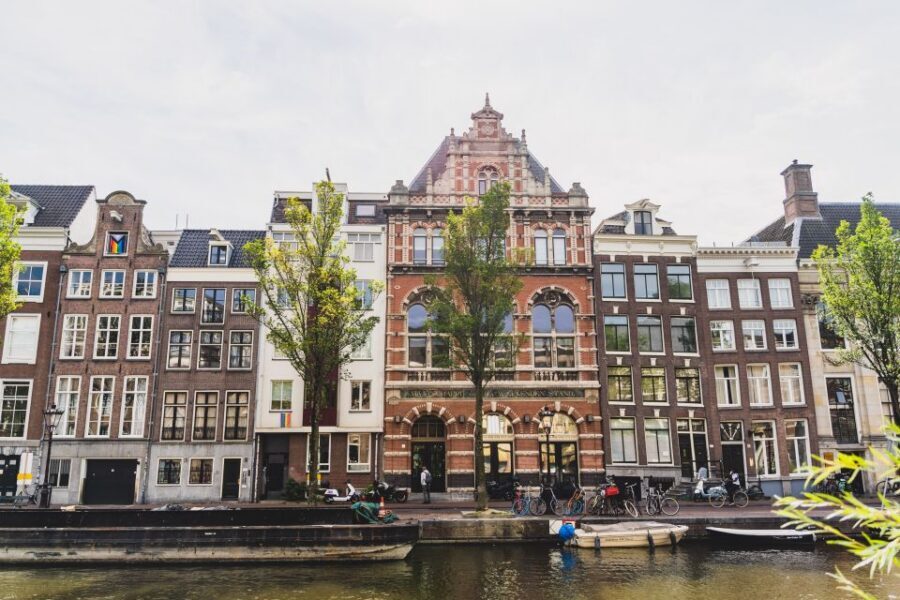
You finish with a visit to the Amsterdam Flower Market for about 20 minutes. This part is valuable even if you’re not buying. You get to see how Amsterdam turns a market tradition into a cultural rhythm—color, motion, and a reminder that the city’s identity isn’t only built from history books.
Then there’s a photo stop at Muntplein (about 5 minutes). Think of it as a way to tie up the walk visually—another anchor point so you can orient yourself later when you’re comparing canal routes and deciding where to go next.
After that, you return to Beursplein 1. The point isn’t just finishing. It’s leaving with a mental map and a sense of cause-and-effect: why the city looks the way it does, why certain areas feel the way they do, and how Amsterdam’s reputation for tolerance has both bright and complicated roots.
Guides matter: the difference between facts and a city you understand
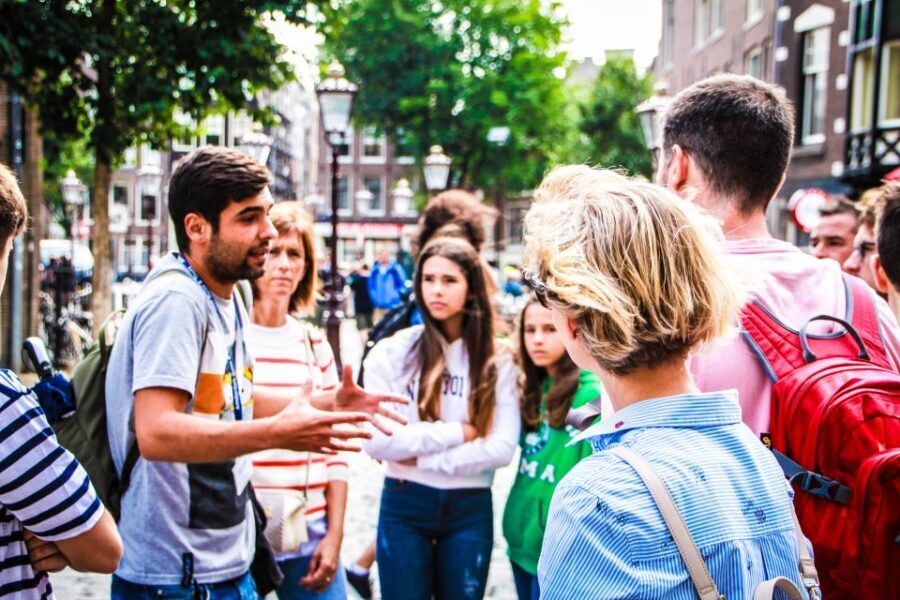
A big reason this tour earns such strong feedback is the guide approach. Many people highlight how smoothly the stories connect, and how a bit of humor keeps the walk from feeling heavy—David praised Ilyan’s dry sense of humor and foreshadowing, and Rob is repeatedly mentioned for adding entertainment without rushing people. Guides like Laura and Claire get called out for being friendly and for answering questions in a way that keeps you engaged.
What I think this means for you: you’re not only collecting facts. You’re learning how Amsterdam thinks. When a guide can explain why the city became influential during the Golden Age—and then pivot to policy, suffering, and moral complexity—you leave with a framework that makes your later museum time and canal wandering far easier.
A few tours also include small comforts during the walk. Rob, for example, has been known to steer people to a café break so everyone can warm up. And when the weather is icy, guides like Toni keep things moving safely without making it feel like you’re being pushed.
Price and value: why about $20 can feel like more than it costs
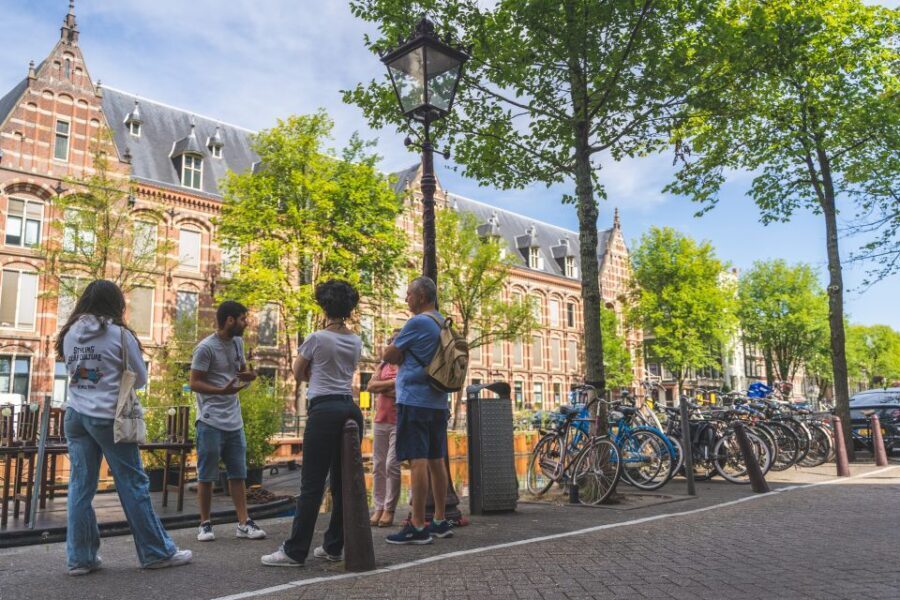
At about $20 per person for roughly 2.5 hours, you’re paying for three high-value things:
First, you’re paying for structure. Amsterdam is easy to get wrong on day one. A guide gives you a logical route and a story sequence, so your time doesn’t evaporate into guesswork.
Second, you’re paying for interpretation. Yes, you could read about the Dutch Golden Age and Red Light District history. But on the street, you see how those stories attach to architecture and geography. That’s the difference between “knowing stuff” and understanding the city.
Third, you’re paying for a human Q&A. The group stays small (up to 10 participants), so you can ask practical questions and get tailored tips. People mention time for questions and unhurried pacing, with free time to explore certain areas where you might not want to follow every second of the route.
You should note what isn’t included: food and drinks, and entrance fees. The good news is that your guide can recommend places to eat, and you can build your day around those suggestions.
Who this Amsterdam walking tour suits best

This is ideal if:
- it’s your first day in Amsterdam and you want orientation fast
- you like your city history with real human stakes, not just dates
- you want to see famous sights and understand how neighborhoods got shaped
It may not be ideal if:
- you hate any frank discussion of prostitution and drug policy topics (the tour includes these themes)
- you strongly prefer strictly light, family-friendly storytelling
- you need step-free, low-distance access (the notes include both “wheelchair accessible” and “not suitable for people with mobility impairments,” so you’ll want to verify)
If you’re traveling solo, couples, or small groups, the small format helps you feel like you’re with a guide, not blended into a crowd.
After the tour: how to keep exploring without wasting time
Once you’re back near Beursplein, you should use what you learned to plan smarter. The tour’s final goal is confidence: you should feel ready to pick a direction and wander canals, choose a museum, or spend an afternoon in areas like the Jordaan District where cafés and boutiques make strolling easy.
Here’s a simple way to use this day effectively:
- Pick one “big ticket” museum for later, and let your day-one walk handle the city’s background.
- Use the canal neighborhoods and squares you saw as reference points when you choose your next tram or walking loop.
- If you liked the Jewish Cultural District portion, don’t stop at the first stop—use the guide’s framing to decide what else you want to learn.
Should you book this Amsterdam Small-Group Walking Tour?
If you want a fast, story-driven introduction to Amsterdam that connects the Golden Age, the Red Light District’s history, and the city’s 20th-century reality in a way that helps you navigate afterward, then yes—this is a strong booking.
Book it especially if you’re short on time and want your first day to feel coherent, not chaotic. Skip it (or at least verify details) if mobility is a concern for you, or if you prefer a tour that avoids adult and controversial historical topics.
If you do book, show up with comfortable shoes, a drink ready, and an open mind. This walk works best when you let the city’s contradictions be part of the lesson.
FAQ
How long is the Amsterdam small-group walking tour?
It lasts about 2.5 hours (the tour length is approximate).
Where does the tour start and end?
It starts and ends at Beursplein 1. The guide waits in front of Cafe Bistro, next to the bull figure, with a blue umbrella or a logo tag.
What is the group size?
The group is limited to 10 participants.
Which languages are offered for the tour?
The live guide offers Spanish and English.
Is it wheelchair accessible?
The activity lists it as wheelchair accessible, but it also notes it is not suitable for people with mobility impairments. If you need step-free access, it’s worth checking directly with the provider before booking.
What’s included in the price?
You get the 2.5-hour guided walking tour with local tips and a small-group format. Food, drinks, and any museum or attraction entrance fees are not included.