REVIEW · AMSTERDAM
Bruges bus tour from Amsterdam
Book on Viator →Operated by Buendía · Bookable on Viator
A day trip to Bruges without the stress. This Bruges bus tour from Amsterdam is built for people who want medieval streets, smart explanations, and an easy round-trip ride in one go. I like the Spanish-speaking guide part most, especially the way they tie each quick stop to a real story, from Begijnhof women in 1245 to legends on the bridges. I also really appreciate that the tour stacks in photo-worthy spots plus practical city tips, and it includes exclusive discounts at select places.
One thing to be aware of: the schedule is full, and several stops are brief (often about 5–10 minutes), so the day moves fast. If you want slow, deep wandering, you’ll probably need more time on your own.
Still, if you’re okay with a structured day and you bring comfortable shoes, this is an efficient way to see a lot of Bruges without getting lost—or spending your whole day on trains and timing.
In This Review
- Key points to know before you go
- Why Bruges works so well as a day trip from Amsterdam
- De Ruijterkade morning: meeting point, mobile ticket, and getting ready
- First stop at Bargeplein: restroom time and the rhythm of the day
- Minnewater Lake and the Begijnhof: Bruges romance and a women-led world
- Chocolalino: artisan chocolate tasting (and how to judge it)
- Beer stories on Walplein and the medieval houses of Stoofstraat
- Saint John’s Hospital and the Church of Our Lady: medieval care and art cues
- Gruuthusemuseum, St Bonifacius Bridge, and Rozenhoedkaai: power and legends in view
- Tanners Square (Huidenvettersplein) and Burg Square: what money and work looked like
- The Markt and your 2-hour free time: where to eat, what to buy, and how to not feel rushed
- Discounts, tickets, and what you’re really paying for
- Headphones and radio guides in Bruges: the small thing that can save your sanity
- Punctuality and guide quality: what you can expect from the way this runs
- Who this Bruges day trip suits best (and who should skip it)
- Should you book this Bruges bus tour from Amsterdam?
- FAQ
- What time does the Bruges bus tour from Amsterdam start?
- How long is the day trip?
- Is the guide Spanish-speaking?
- What is included in the price?
- Do I need headphones for the tour in Bruges?
- How much free time do I get in Bruges?
- Can I cancel and get a full refund?
- Are meals included?
Key points to know before you go
- Spanish guide + local pointers that help you connect the buildings to what shaped Bruges.
- Short, timed walking stops that keep momentum, with a built-in chance to roam later.
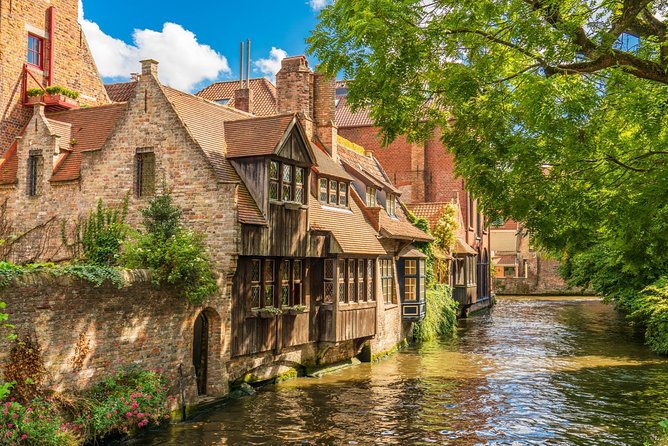
- Photo magnets throughout: canals, the bridge views, and the big “Muelle de las rosas” area.
- Artisan chocolate at Chocolalino, with tips to spot handmade versus industrial bars.
- Radio-headset rules in Bruges, with options if you don’t have wired headphones.
- Two-hour free time near the center, right when you’ll want it most.
Why Bruges works so well as a day trip from Amsterdam
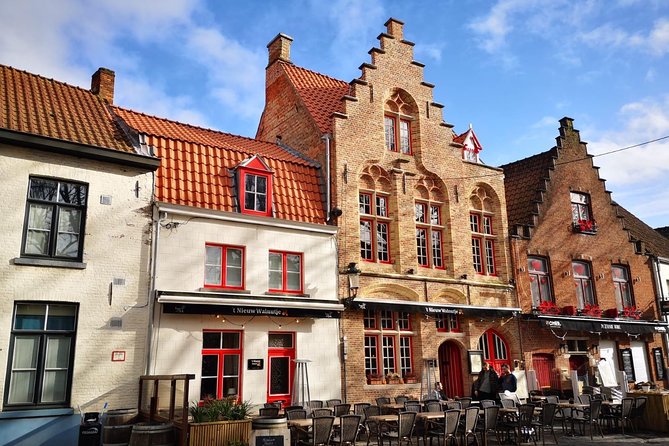
Bruges has that storybook pull: cobblestones, old brick-and-stone buildings, and canal views that feel like they’re straight out of a postcard. The trick is getting there and back without burning your whole day on logistics, and that’s where this tour is practical. You start early (8:30am), and you get an air-conditioned bus round trip so you’re not doing train transfers or figuring out local schedules.
The other big advantage is the pacing. Instead of spending hours trying to decide what matters, you get a guided route that hits the city’s most recognizable sights and the “why it’s famous” context behind them. And because the stops are mostly outside, you can keep moving without losing time to long ticket lines.
You can also read our reviews of more tours and experiences in Amsterdam.


De Ruijterkade morning: meeting point, mobile ticket, and getting ready
The meeting point is De Ruijterkade 151, 1011 AC Amsterdam, and the start time is 8:30am. You’ll use a mobile ticket, so have it ready on your phone before you board. Since you’re spending most of the day on the go, I’d treat this like a full day outing: water, snacks for later (since food isn’t included), and shoes you can handle on cobblestones.
Also, check your headphone situation early. In Bruges, Belgian regulations sometimes require radio guides, and the tour can provide options if you don’t have them. More on that below, but the practical takeaway is simple: don’t wait until you’re already on the bus to figure it out.
First stop at Bargeplein: restroom time and the rhythm of the day
In Bruges, the bus drops you at Bargeplein (Katelijnparking). Right away you get a brief window—about 10 minutes—for a restroom break. The guide explains exactly when you should return to the bus, which matters because the rest of the day is a sequence of short, timed stops.
This is a tour where the timing is part of the value. You’re not just being “taken to places”; you’re getting a run of key scenes in a logical order, then a longer free block later so you can breathe and explore at your own pace.
Minnewater Lake and the Begijnhof: Bruges romance and a women-led world
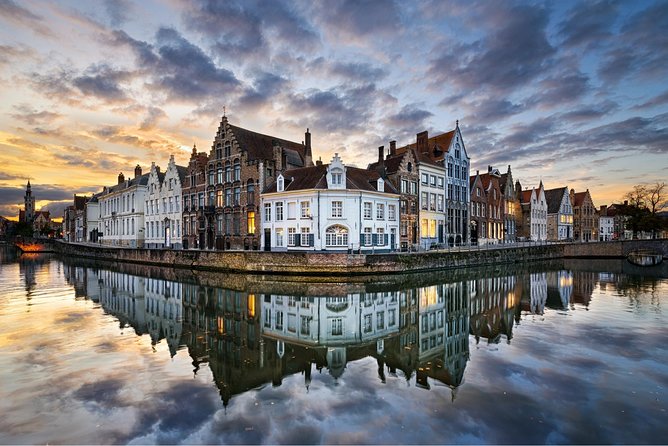
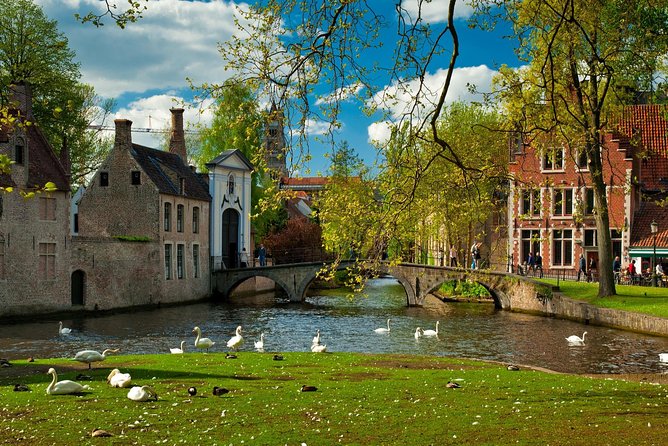
Your first sightseeing moments are calm and scenic. You’ll stop at Minnewater Lake, also known as the Lake of Love. Even with only a few minutes here, it’s a strong opener because the lake gives you a quick sense of Bruges’ canal-city vibe. The guide also ties it to a love story and uses the setting to explain how the city developed.
Next comes the Begijnhof (Beguinario), founded in 1245. This isn’t just a pretty courtyard break. It’s a window into a women-led religious community, and the guide’s job here is to make the place feel specific rather than generic. If you like history that connects to real people, this stop usually hits harder than you’d expect for a “quick visit.”
Chocolalino: artisan chocolate tasting (and how to judge it)
Bruges is famous for chocolate, but what makes this stop useful is the way it’s framed. At Chocolalino, you’ll have a chance to taste artisan chocolates. The guide also explains what’s going on behind the scenes—how to distinguish handmade from more industrial chocolate.
What I’d watch for: this is not a half-day chocolate museum. It’s a short tasting stop (about 8 minutes), so if chocolate is your main goal, use this stop to learn the “how to spot it” checklist. Then during your later free time, you’ll know what to look for when you buy bars.

Beer stories on Walplein and the medieval houses of Stoofstraat
Two quick street stops follow, but they’re not random. At Walplein, the guide explains the history of Bruges beer. Even if you don’t plan on drinking, beer history here is a cultural lens: it ties local life to trade, brewing, and the rhythms of a medieval city.
Then you move to Stoofstraat, where the guide teaches you how to identify original medieval houses. This is one of those “small but useful” moments. Once you know the signs, you start noticing details everywhere—door shapes, building cues, and how the city’s older fabric still shows through.
Between these stops and the next photo moment, you’ll also get time to shoot pictures from a small bridge. The tour doesn’t linger, but it gives you a chance to grab a view before you move on.
Saint John’s Hospital and the Church of Our Lady: medieval care and art cues
At Saint John’s Hospital, the tour shifts into how everyday systems worked long ago—specifically, how medieval health care was organized. You get about 8 minutes, which means you’re not touring every room, but you are learning the idea behind the hospital’s role in the community.
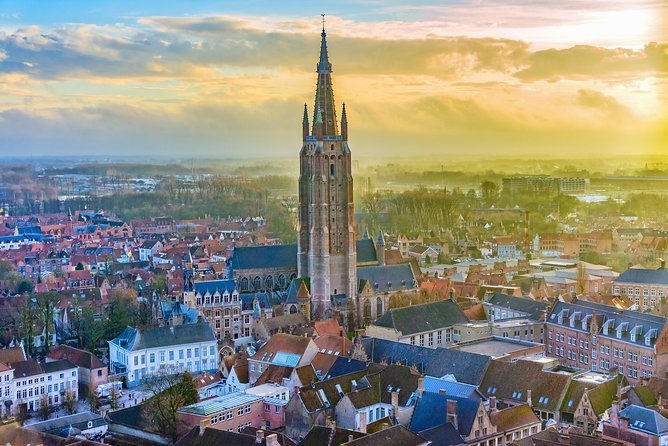
Then comes Onze-Lieve-Vrouwekerk (Church of Our Lady), where you see things from outside and hear the guide’s highlights—especially a white marble sculpture of the Virgin and Child by Michelangelo found inside the church. You won’t be scanning details on your own at that moment, but you’ll know what to look for if you revisit later, and you’ll understand why the church matters.
Gruuthusemuseum, St Bonifacius Bridge, and Rozenhoedkaai: power and legends in view
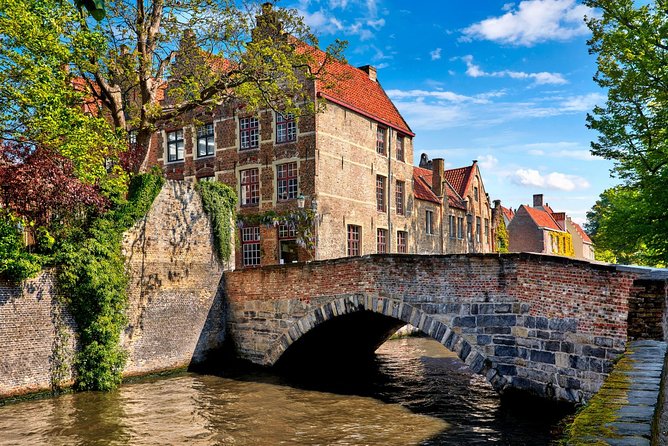
The next sequence is perfect if you like “meaning behind the postcard.” At Gruuthusemuseum, you’ll be met by stories about the powerful family connected to Bruges in the 17th and 18th centuries. The stop is short, but the context helps you understand why these places look the way they do.
After that, St Bonifacius Bridge is where legend takes over. The guide explains the bridge’s story, and you get time for photos. Then you hit the area that’s often treated like Bruges’ signature canal photo: Rozenhoedkaai. Here the guide gives history around the “Muelle de las rosas” area, and you’ll have time to take pictures.
If you’re traveling with a camera or just a phone you care about, this stretch is the best place to slow down and frame shots—because later, you’ll be busy with free time.
Tanners Square (Huidenvettersplein) and Burg Square: what money and work looked like
At Huidenvettersplein (Tanners Square), the tour explains how tanners worked in medieval Bruges. It’s a reminder that this city wasn’t only art and romance. It was trades, labor, and real production—tanning is a great example of a craft that shaped the built environment.
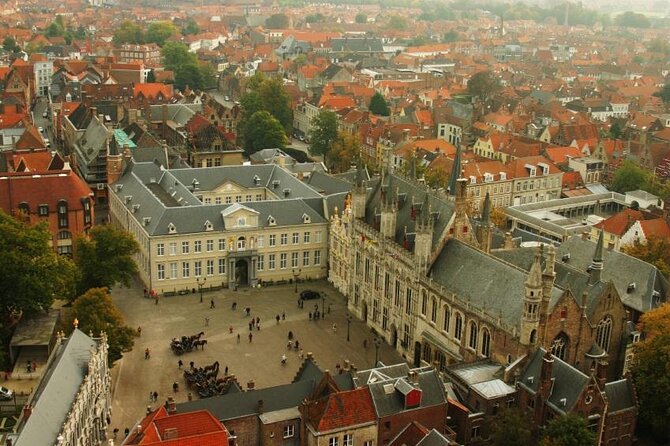
Then you arrive at Burg Square, one of the key civic spaces. Around you are the Gothic town hall, the old courthouse, and the Basilica of the Holy Blood. Even if you don’t go inside, you’ll come away understanding how authority and identity were displayed in the city center.
The Markt and your 2-hour free time: where to eat, what to buy, and how to not feel rushed
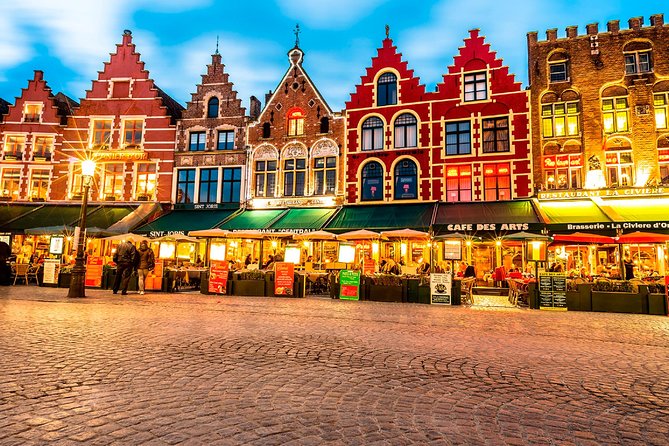
Your last guided segment ends at The Markt (Grote Markt). The guide explains what’s around the square and gives practical advice—especially where to eat and where to shop for traditional chocolate. Most importantly, the guide reminds you when and where to meet the bus for the ride back.
Then you get about 2 hours of free time in Bruges (timing can shift depending on traffic and how your group is moving). This is the part I’d actually plan around. Use it to:
- pick one or two areas you liked most during the guided route
- buy chocolate while you’re still in the center
- linger near the canals for photos you want in better light
If you try to do everything in one go during those two hours, you’ll feel hurried. The smart play is choosing a small loop and spending your time walking slowly within it.
Discounts, tickets, and what you’re really paying for
This tour costs $77.02 per person and includes a round-trip air-conditioned bus, a professional Spanish-speaking guide, plus a guided tour of Bruges. It also includes city recommendations and exclusive discounts at select shops, restaurants, and attractions.
That “discount” piece matters more than it sounds. If you buy chocolate, snacks, or do one or two extra stops, discounts can offset part of the price. The other value is the guide’s sequencing. When stops are timed tightly, you don’t waste time wandering in the wrong direction or trying to connect sights yourself.
What’s not included is food and drink, so budget for lunch on your own. The good news is the guide will point you toward places to eat, which saves you from guessing while you’re tired and hungry.
Headphones and radio guides in Bruges: the small thing that can save your sanity
Bruges sometimes requires radio guides with headphones due to tourist regulation. The tour supports the system, and you can use your own headphones if they fit the connection: 3.5 mm wired and not wireless. If you don’t have them, the tour offers headphones for €1.
This is one of those details that doesn’t look important until you’re standing in a crowded street and missing what the guide is saying. Pack wired earbuds just in case, and you’ll be set.
Punctuality and guide quality: what you can expect from the way this runs
The experience is built around keeping the day moving smoothly. In prior departures, guides such as Blanca, Pau, Paul, Lorena, Eduardo, Anabel, and Marta de Cadiz have been involved, and drivers named Michael and Adrián have been credited for safe, professional transport. The overall pattern is: friendly guidance, clear explanations, and directions to help you not get turned around.
One more practical note: the itinerary is flexible. If your guide thinks it’s better for your group, the tour can vary slightly. That flexibility is often a good sign in a city like Bruges, where traffic and crowds can affect timing.
Who this Bruges day trip suits best (and who should skip it)
This tour is a strong fit if you:
- want a guided intro to Bruges without planning train times
- like learning stories tied to specific landmarks
- enjoy a mix of guided walking plus free time
- can handle a long day with short stops
It’s less ideal if you:
- need very slow pacing or lots of unstructured exploring
- have reduced mobility (the tour notes it’s not recommended)
- expect a full museum-style visit at every stop (many sights are covered from outside, with explanations built in)
If you’re bringing young kids, note that children under 2 years must ride in a safety seat on the bus, and you’ll need to bring the chair.
Should you book this Bruges bus tour from Amsterdam?
If you want Bruges highlights in one day, this is a solid pick. The price is reasonable for what you get: round-trip bus comfort, a Spanish guide, and a structured route that hits canals, civic squares, churches, and trade stories, plus about two hours to roam.
I’d book if your goal is to see the “big Bruges” without working out logistics. I’d think twice if you’re the type who wants to linger for half an hour at each spot or you get stressed by tight timing.
If you decide to go, do yourself a favor: bring wired headphones, wear comfy shoes, and pick a simple plan for the free-time block so you leave with photos and chocolate—not just tired legs.
FAQ
What time does the Bruges bus tour from Amsterdam start?
It starts at 8:30am from De Ruijterkade 151, 1011 AC Amsterdam.
How long is the day trip?
The duration is listed as 12 hours (approx.), depending on traffic and group pace.
Is the guide Spanish-speaking?
Yes. The tour includes a professional guide in Spanish.
What is included in the price?
You get round-trip transport by air-conditioned bus, a guided tour of Bruges, and city recommendations. You also have exclusive discounts at select places.
Do I need headphones for the tour in Bruges?
Sometimes. Belgian regulations can require a radio system. If you have 3.5 mm wired headphones you can use them, and if not, headphones are available for €1.
How much free time do I get in Bruges?
You get about 2 hours of free time (timing can vary with traffic and the group).
Can I cancel and get a full refund?
Yes. You can cancel up to 24 hours in advance for a full refund.
Are meals included?
No. Food and drink aren’t included, but the guide will be happy to point you to good places to eat.