REVIEW · AMSTERDAM
Amsterdam City Center Guided Walking Tour Semi-Private 12ppl Max
Book on Viator →Operated by Babylon Tours Amsterdam · Bookable on Viator
Amsterdam clicks when you walk it with a guide. This semi-private Amsterdam city center tour is paced for real questions, with a max of 12 people and lots of bridge-and-street time. I like that you cover major landmarks on foot without feeling herded along, and you also get guidance on what to look for next.
Two things I really like: the tour makes frequent stops for photos and observations, and it ends with tailored tips so you can steer your remaining days yourself. Even if you only have a short stay, you get a map-in-your-head version of Amsterdam, not just a checklist.
One consideration: this is a walking tour with cobblestones and bridges, and it’s not recommended if you have walking disabilities or use a wheelchair. If your legs need frequent breaks, plan for slower moments and extra water.
In This Review
- Key highlights you’ll feel right away
- A 2.5-hour highlights route that still feels personal
- St. Nicholas Basilica and the Tower of Tears: where Amsterdam’s rules changed
- Zeedijk and Nieuwmarkt: dikes, markets, and the city gate at De Waag
- A small reality check
- Trippenhuis and Oost-Indisch Huis: narrow ambitions and world trade
- Churches, canals, and the city’s big institutions
- Begijnhof and Dam Square: calm courts next to big power
- Golden Bend on Herengracht to the Anne Frank area
- De Drie Hendricken and Rembrandtplein: the details you’ll want to keep noticing
- Jordaan-side church spotting to Papeneiland’s apple-pie finish
- Price, timing, and value of a $59.28 semi-private walk
- Who this tour suits best (and who should skip it)
- Should you book this semi-private Amsterdam highlights walk?
- FAQ
- How long is the Amsterdam City Center Guided Walking Tour?
- What group size is this tour?
- What language is the tour in?
- Does the tour run in bad weather?
- What’s included in the tour price?
- Are admission tickets included for every stop?
- Where do I meet and where does it end?
- Is hotel pickup or drop-off included?
- Do I need to provide a mobile phone number?
- Can I cancel for a full refund?
Key highlights you’ll feel right away
- Max 12 people keeps the vibe personal and question-friendly
- Photo-stop pacing so you’re not sprinting through the good parts
- Bridge-to-bridge city center route built around Amsterdam’s transformation over centuries
- Landmark variety from churches and gates to canal houses and hofjes
- Most stops are outside viewing due to security and access limits
- Ends at Papeneiland for a sweet, local-feeling finale
A 2.5-hour highlights route that still feels personal
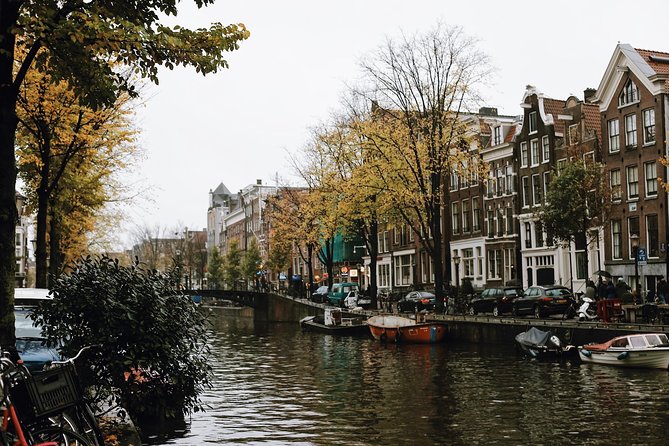
This tour is built for people who want Amsterdam’s big scenes fast, but still want context. In about 2 hours 30 minutes, you move through the city center on foot, including across bridges and down cobblestone lanes. It’s not a museum crawl; it’s a walk where buildings, streets, and even street names start to make sense.
The semi-private cap matters. With up to 12 people, you’re less likely to get lost in the crowd, and the guide can actually respond to your questions. That’s a big deal in Amsterdam, where you can spend hours just wandering and end up with great photos but no clear thread.
You’ll also notice how the tour is structured around themes: Amsterdam’s shift from a water-bound fishing area into a major trade and cultural city. The route stitches together religious and civic landmarks, then layers in the shapes of power—guilds, trade companies, and city governance. You’ll leave with a clearer sense of where neighborhoods begin and why the canals look the way they do.
You can also read our reviews of more walking tours in Amsterdam



St. Nicholas Basilica and the Tower of Tears: where Amsterdam’s rules changed
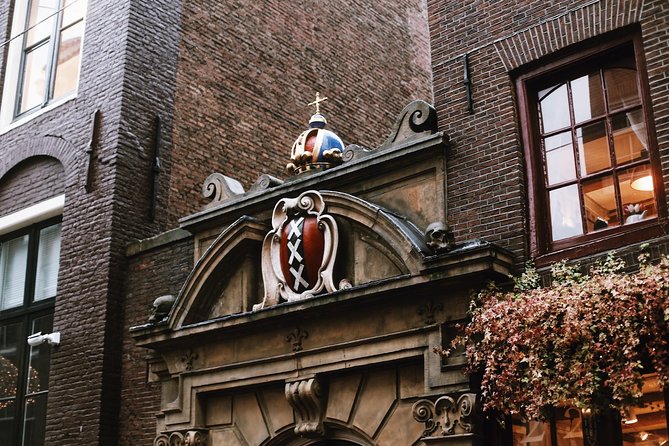
You start at the Basilica of Saint Nicholas at Prins Hendrikkade 73, right in the heart of the city center. The guide takes you to Amsterdam’s primary Roman Catholic church, built in the late 19th century after centuries of prohibition. That contrast—what was restricted for so long, then suddenly allowed—gives you an early theme for the whole walk: Amsterdam changes its mind when politics and society shift.
From there, you head to the Schreierstoren, also called the Weeping Tower. It’s a medieval structure where women bid farewell to loved ones departing by ship. This is one of those moments where you’ll get a story that makes the stone feel personal. It’s also a nice breather in the schedule, since the stop is short and focused.
What to watch for: don’t treat these as isolated sights. The tour’s job is to connect them. A Catholic basilica from the 1800s makes a good starting point, but the Weeping Tower helps you see the older rhythm of life—movement, departure, and the emotional cost of trade and travel.
Zeedijk and Nieuwmarkt: dikes, markets, and the city gate at De Waag
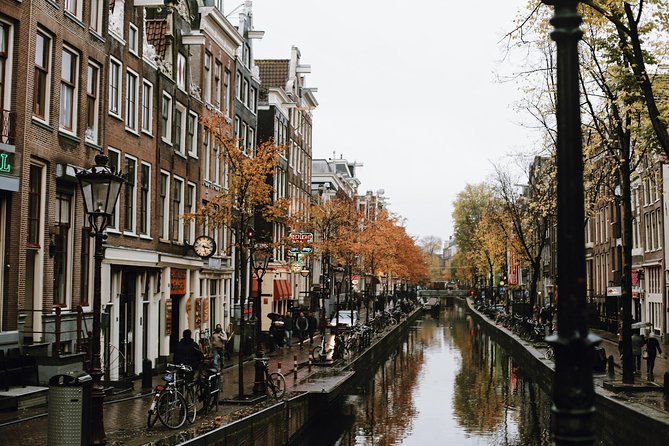
Next comes Zeedijk, one of the city’s oldest streets. The guide frames it as a former sea dike that held back water from the IJ. Even if you’re not an engineering nerd, this is a practical reminder: Amsterdam literally built itself around water control, and you can still feel that history in the layout.
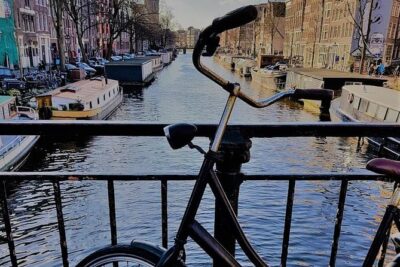
At the Kolksluis, you’ll see one of Amsterdam’s picturesque lock bridges. This part is easy to enjoy because it’s visual and slow enough for photos. It’s also a good time to look around: the guide’s explanation helps you see why locks and bridges aren’t just scenery—they’re part of the city’s survival.
Then you move into Nieuwmarkt, the old city center’s lively market square. Since the square sits just inside the old city gate, it became a convenient meeting point for traders and shoppers looking for fresh produce. That “where people passed through and stopped” idea is a key concept in Amsterdam. Many great places feel lively because they were practical before they were pretty.
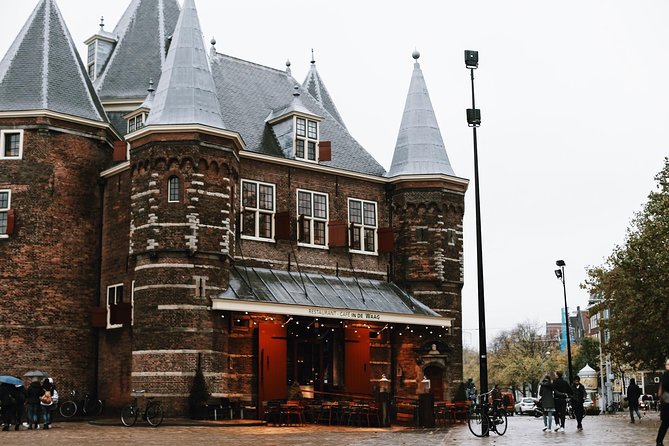
From Nieuwmarkt, you also see De Waag (the “Waag”), a 15th-century building. It started as a city gate and was part of Amsterdam’s walls, but the function changed over time: guildhall, museum, firestation, and more. The takeaway here is simple: buildings in Amsterdam often survive by reinventing themselves.
A small reality check
Not every stop is about going inside. Some locations are view-only on this kind of walk, and the tour notes that increased security at many attractions can limit interior access. So treat the tour as the story behind what you can see, not a guaranteed ticketed visit.
Trippenhuis and Oost-Indisch Huis: narrow ambitions and world trade
One of the most fun sections is where the architecture starts telling you how people got by. The tour shows both the Trippenhuis and the Klein Trippenhuis. The Trippenhuis is described as Amsterdam’s widest home, spanning an enormous 22 meters. Across the way sits the Klein Trippenhuis, one of the narrowest houses.
Why does that matter? Because the city’s design was shaped by economics. The guide links these narrow buildings to land taxes that encouraged tall, narrow architecture. So when you look up at those façades, you’re not just admiring shapes—you’re seeing policy in stone.
Right after that, you step toward the Oost-Indisch Huis, the Dutch East India Company’s headquarters courtyard. This is where the tour makes a strong point about global trade: it’s described as the birthplace of the world’s first multinational corporation. Even if you don’t remember every detail, that framing helps you understand why Amsterdam became so important. It wasn’t only ships and canals; it was organization, investment, and influence.
You then see the Kleine Trippenhuis again as part of the sequence, which gives you a chance to compare perspectives and really spot the shape cues that explain the “narrow” story.
You can also read our reviews of more guided tours in Amsterdam



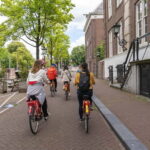
Churches, canals, and the city’s big institutions
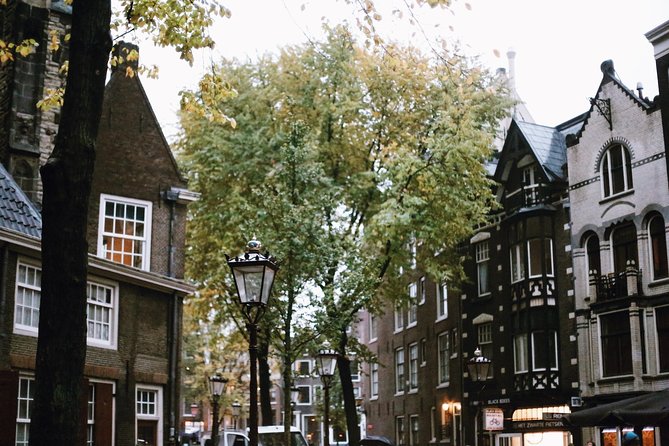
As the walk shifts south and west, you’ll cover a mix of religious, civic, and cultural buildings. You’ll see Amsterdam’s first purpose-built Protestant church, the Zuiderkerk, designed by Hendrick de Keyser. The description calls its elegant tower one of Amsterdam’s defining landmarks. This stop is short, but it works because the guide usually points out how religious architecture changed with the Protestant Reformation.
Then you pass Museum Het Rembrandthuis, where Rembrandt lived and worked between 1639 and 1656. The tour is careful here: you’re not led to treat it like a full museum visit, but you do get the connection between a specific place and a specific era in Amsterdam’s artistic life. It’s also a useful stop if you want to decide later whether to add a ticketed museum on your own.
Next up is the National Opera & Ballet complex, often called the Stopera. The tour notes that construction took at least 60 years and that it houses both the city hall and the Dutch National Opera and Ballet. This stop is a reminder that Amsterdam keeps mixing functions in impressive ways. Civic life and culture share space here, and you’ll get that contrast on the street.
You also see the Huis Aan De Drie Grachten, a rare 17th-century canal house at the junction of three canals. That “facing in three directions” detail is the kind of fact you’ll remember while you’re walking, because it explains why the façade feels unusual even at a quick glance.
Begijnhof and Dam Square: calm courts next to big power
A standout pause is Begijnhof, described as one of the oldest hofjes, or almshouses in Amsterdam. The guide explains it as a group of houses around a secluded courtyard and garden, historically for the Beguines—unmarried women living together under vows of chastity. Today it’s also the site of two churches.
This stop matters because it changes the tempo. After the busier streets and iconic canal lines, Begijnhof gives you a quiet, enclosed feeling, and that’s exactly what makes Amsterdam memorable. Even if you’re not a history buff, you’ll feel the difference in space and atmosphere.
Then you move to Dam Square, one of Amsterdam’s most well-known public squares. The tour highlights major landmarks around it: the Royal Place, New Church, and the National Monument. Dam Square is often busy, so your best move is to stay present while the guide talks and let the stories anchor where you’re standing.
If you want a practical “next day” advantage, Dam Square is a great reference point. When you’re later figuring out where to eat or how to move, knowing the square’s key buildings makes your choices easier.
Golden Bend on Herengracht to the Anne Frank area
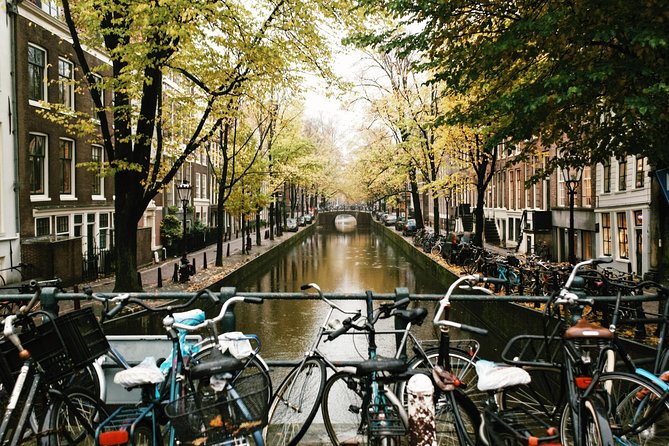
From Dam Square, the tour heads to Herengracht, focusing on what it calls the Golden Bend. Here you’ll see canal mansions from the Dutch Golden Age line the waterway. The guide’s goal is to help you read the canal as a social map. Rich houses aren’t random decoration—they’re the visible outcomes of trade wealth and city status.
Then you reach the Anne Frank House area. The tour keeps it outside, pausing where the young diarist hid during WWII. Next door, you’ll also see the Westerkerk, noted here as having the tallest church tower in Amsterdam. This stop is brief, but it’s powerful because it’s tied to a real address and a real place in the city’s story.
The key advice: don’t rush this part for photos. Give yourself a moment to absorb what’s around you—brick, canals, and street corners—because that contrast is often what makes the story stick.
De Drie Hendricken and Rembrandtplein: the details you’ll want to keep noticing
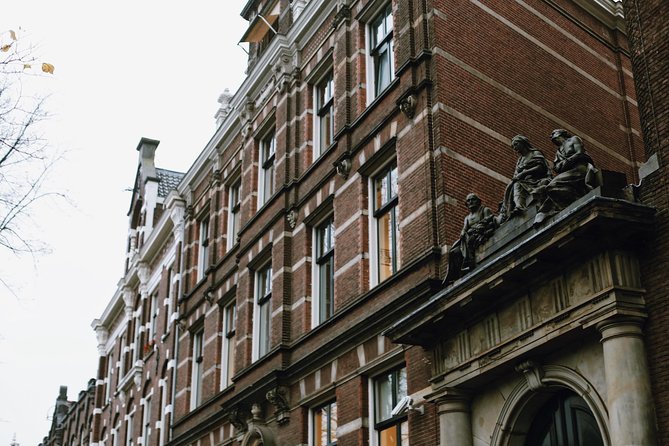
As you walk, the guide points out quirky gable stones at De Drie Hendricken aan de Bloemgracht 87–91, carved with allegories and trade emblems. These are the kinds of decorations you could easily miss on your own. On a guided walk, you learn where to look, so Amsterdam starts rewarding your attention.
Then the tour moves through Rembrandtplein. The guide connects the square to Rembrandt’s name and points out a bronze-cast representation of The Night Watch, displayed as part of the celebration of the artist’s 400th birthday in 2006. This is a fun stop because it’s both art history and a real landmark you can navigate by later.
If you’re wondering how this helps your own day: Rembrandtplein is one of the most useful places to know. After the tour, you can use it as a pin for food, transit, and nearby streets.
Jordaan-side church spotting to Papeneiland’s apple-pie finish
You end the tour’s “sights” section with Noorderkerk, a 17th-century Protestant church built for the Jordaan district. The tour notes its unusual cross-shaped floor plan and ties it to Reformation worship ideals. This is another quick stop that trains your eye: you begin to see how religious design reflected new ways of thinking.
Finally, you reach the Papeneiland area at Prinsengracht 2, where the tour ends. The tour calls it one of Amsterdam’s prettiest canal corners and mentions Het Papeneiland, a brown café from 1642 said to serve the best apple pie in town. Even if you don’t stop for pie, the ending spot feels like a reward—quiet water-side beauty after a nonstop run of iconic architecture.
This is also a smart ending point because it’s easy to extend your walk on your own afterward. If you want more canals, you’re already in the right zone.
Price, timing, and value of a $59.28 semi-private walk
At $59.28 per person, you’re paying for a focused guide, a semi-private group size, and a route that hits a lot of big names in one go. The value depends on how you travel.
If you like structure, this price is fair because you don’t spend half your time figuring out what’s next. You also get practical takeaways: the tour promises tailored tips for the rest of your time in Amsterdam, which can save you money and time later on ticketed stops and planning.
If you’re the type who loves pure wandering, you might feel tempted to skip a guided walk. But on a city like Amsterdam, a guide helps you connect the dots fast—why a street existed as a dike, why a building changed jobs, and why the canals became so tied to power.
Booking timing also hints at demand. This tour is commonly reserved about 51 days in advance, which tells me it’s a popular way to start a visit. If your dates are tight, booking earlier usually helps.
One more value angle: the tour runs rain or shine. Weather in Amsterdam doesn’t ask permission, and a tour that still runs keeps your sightseeing day from collapsing.
Who this tour suits best (and who should skip it)
This tour is a good match if you:
- Want a concentrated city center overview in 2.5 hours
- Prefer a small group with room for questions
- Like walking bridges and reading landmarks as story clues
- Plan to do more exploring after, using the guide’s tips
It’s not a great fit if you:
- Need wheelchair-friendly access or have serious walking limitations
- Strongly prefer long ticketed interior visits at each stop (this route is mostly about what you see along the way)
It’s also worth knowing the tour route can change due to national celebrations, with an alternative route offered so you can still see the highlights. When that happens, refunds or discounts aren’t provided, so it’s better to treat it as “keep moving” sightseeing rather than a guaranteed exact sequence.
Should you book this semi-private Amsterdam highlights walk?
Yes, if you want your first taste of Amsterdam to come with context and direction. The combo of max 12 people, frequent stop-and-look moments, and a route that mixes churches, gates, canals, and trade history makes this a strong early-visit choice.
Skip it if you’re not into walking cobblestones and bridges, or if you’re expecting every stop to be an inside visit with guaranteed tickets. For most people, though, this hits a sweet spot: a practical overview that helps you move through the rest of the city with less guesswork and more confidence.
FAQ
How long is the Amsterdam City Center Guided Walking Tour?
It runs for about 2 hours 30 minutes.
What group size is this tour?
It is a semi-private tour with a maximum of 12 travelers.
What language is the tour in?
The tour is offered in English.
Does the tour run in bad weather?
Yes, the tour will run rain or shine.
What’s included in the tour price?
Included items are the semi-private walking tour, a professional tour guide, the stated duration, and a mobile ticket.
Are admission tickets included for every stop?
Some stops are marked as free (for example, St. Nicholas Basilica), while others are marked as not included. The tour also notes that some attractions may not be accessible from the inside due to security measures.
Where do I meet and where does it end?
You meet at the Basilica of Saint Nicholas (Prins Hendrikkade 73, 1012 AE Amsterdam) and end at The Papeneiland (Prinsengracht 2, 1015 DV Amsterdam).
Is hotel pickup or drop-off included?
No. It does not include hotel pickup or drop-off. The tour suggests using Uber or a taxi.
Do I need to provide a mobile phone number?
Yes. You’re required to provide your mobile phone number including country code.
Can I cancel for a full refund?
Yes. You can cancel up to 24 hours in advance for a full refund.