REVIEW · AMSTERDAM
Amsterdam: Coffee Shops Walking Tour
Book on GetYourGuide →Operated by Trigger Tours · Bookable on GetYourGuide
Red lights and coffee shops can sound like a weird mix. In Amsterdam, though, it’s the way the city explains its own rules.
What I like most is how this walk ties cannabis culture to the politics around it, not just the practical part of where to go. I also like that you start right in the Red Light District and move through streets, alleys, and canals with a local guide who can connect what you’re seeing to why the Netherlands runs things the way it does.
One possible drawback: this is a walking tour focused on sex-and-drug-adjacent history and the current reality of the area, so it’s not for everyone’s comfort level—and it isn’t suitable for people with mobility impairments.
In This Review
- Key Highlights You’ll Actually Remember
- Starting in the Red Light District: Why the Tour Begins Where It Does
- Meeting Point at Barbizon Palace Hotel: How the 2 Hours Really Work
- The Streets, Canals, and the Smallest Alley Moment
- Coffee Shop Culture Explained: What You’ll Learn Before You Go In
- Prix d’Ami and the World’s Biggest Coffee Shop Moment
- Seeing the World’s First Coffee Shop: A Turning Point Story
- Hidden Landmarks, Street Art, and Local Markets Along the Way
- Sex Work, Liberal Laws, and the Human Reality Behind the Windows
- What the Best Guides Do: Clear Answers in English, German, or Dutch
- Price and Value: Is $106 for Two Hours Fair?
- Who Should Book This Tour (and Who Might Want Another Option)
- Should You Book This Amsterdam Coffee Shops Walking Tour?
- FAQ
- How long is the Amsterdam Coffee Shops Walking Tour?
- Where do I meet the guide?
- What languages is the tour offered in?
- Are German tours available every day?
- Is food or drinks included?
- Is this a private tour or a group tour?
- Is the tour suitable for people with mobility impairments?
- Can I cancel for a refund?
Key Highlights You’ll Actually Remember
- Red Light District start with context about prostitution laws and today’s challenges for sex workers
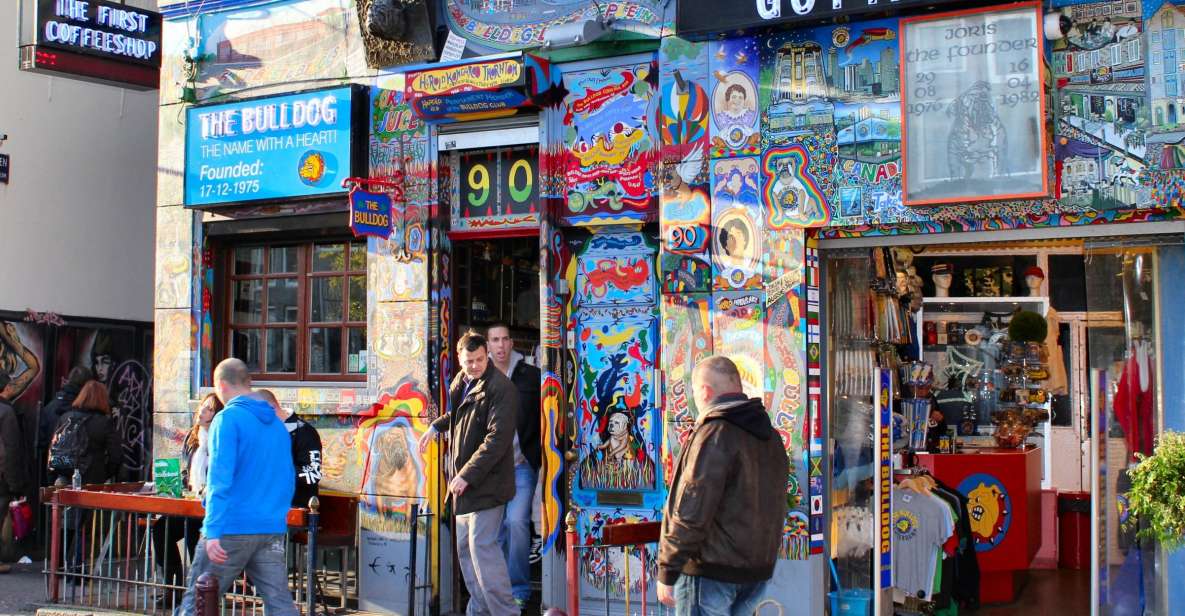
- Prix d’Ami stop for the world’s biggest coffee shop experience
- Small-alley moment as you walk down Amsterdam’s smallest alleyway
- World’s first coffee shop seen as a turning point in the soft-drug model
- Street art and market time mixed into the walk so you’re not stuck on one topic
- Guides who answer questions and keep explanations clear in a short, 2-hour format
Starting in the Red Light District: Why the Tour Begins Where It Does
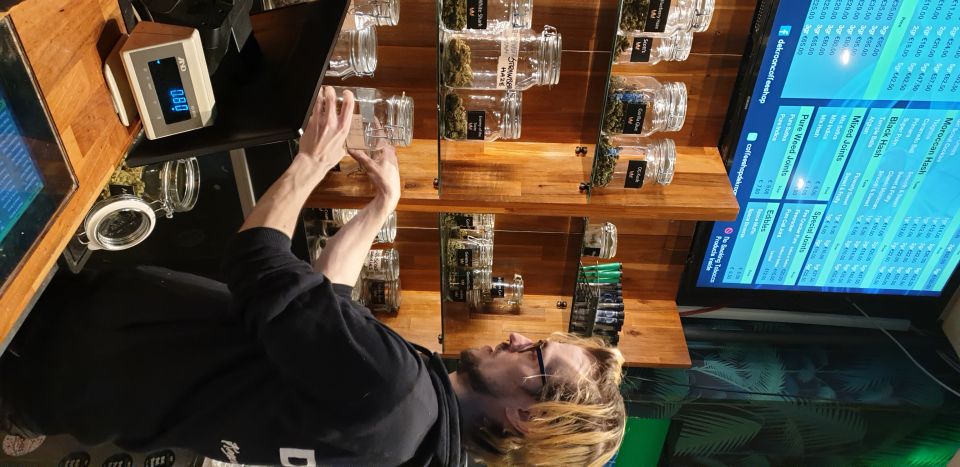
The tour kicks off in the heart of Amsterdam’s Red Light District, near the place where you’ll immediately notice the famous red-lit windows and the dense network of streets and canals. That choice matters, because you’re not learning cannabis culture in a vacuum. You’re learning it in the same neighborhoods where the city has long debated what should be legal, regulated, and allowed.
Your guide’s job here is interpretation. You’ll hear commentary about how attitudes evolved and how legalization of prostitution works in practice, including challenges sex workers face today. That gives the tour a grounded tone, rather than turning it into a one-note party stroll.
You also get a better sense of Amsterdam’s famous liberal approach without needing to guess at the meaning of what you see. The city’s rules are the story, and the streets are the stage.
You can also read our reviews of more walking tours in Amsterdam


Meeting Point at Barbizon Palace Hotel: How the 2 Hours Really Work
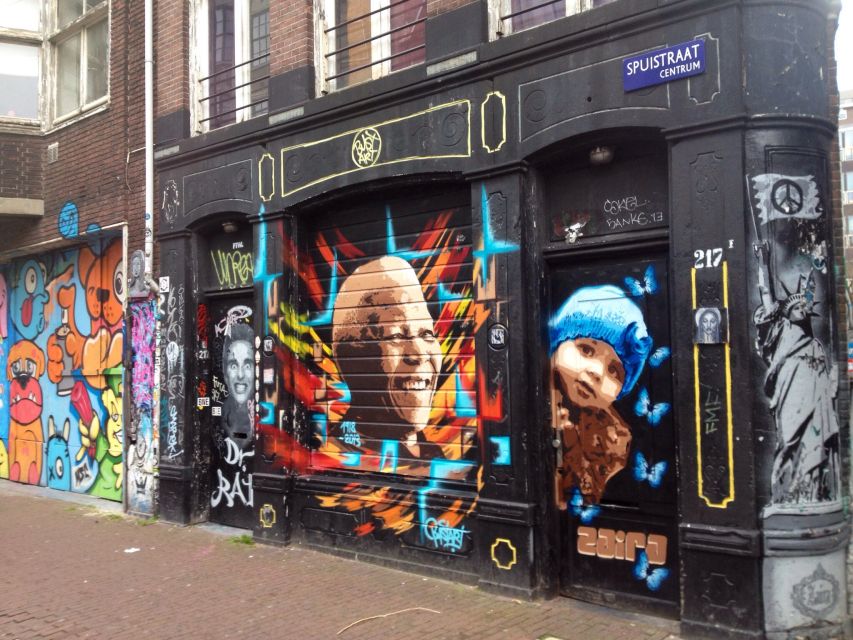
You meet in front of the Barbizon Palace Hotel NH Collection entrance. That’s central, easy to find, and helpful if you’re combining the tour with other Red Light District sights afterward.
Because the tour lasts two hours, the pace is intentionally tight. You’ll cover multiple areas and ideas without the long gaps you sometimes get on longer walking tours. If you like focused tours that leave you time for your next stop (dinner, a canal ride, a museum), this timing fits.
One practical note: you should expect a walking tour format. Wear shoes you’re comfortable in for cobblestones and uneven pavement. And if rain hits—as it sometimes does—you’ll still be moving through the neighborhood, so bring a light layer you can handle outdoors.
The Streets, Canals, and the Smallest Alley Moment
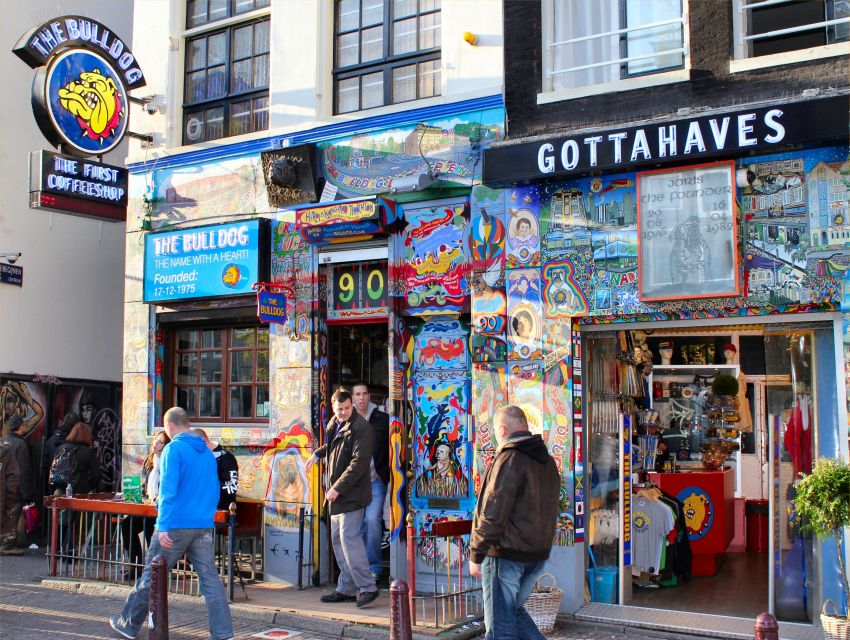
A big part of what makes Amsterdam feel like Amsterdam is the geometry: narrow lanes, long canal views, and buildings that seem to lean into each other. As you walk, your guide points out streets and alleys that define the neighborhood’s character.
One standout stop is the chance to walk down the smallest alleyway in Amsterdam. It’s short, but it changes your perspective fast. Instead of seeing the Red Light District from a distance, you feel the scale—how small passages carry foot traffic, conversation, and city life right next to the iconic windows.
You’ll also spend time moving along canals and through side streets where the neighborhood doesn’t look like a postcard. This matters for value: you’re not just collecting names of places. You’re learning how the city’s layout shapes daily reality and policy enforcement.
Coffee Shop Culture Explained: What You’ll Learn Before You Go In
This tour isn’t marketed as a quick caffeine crawl. It’s a culture and history walk centered on Amsterdam’s coffee shops and the laws that helped produce them.
Your guide explains the cannabis culture of Amsterdam and how the legalization of soft drugs took shape over time. That’s useful because it helps you understand why coffee shops exist in the way they do—rather than treating them like a tourist attraction with no backstory.
You’ll also hear about current, sometimes strange Dutch laws on drugs. The point isn’t to memorize policy jargon. The point is to make the rules feel real, so your experience in Amsterdam doesn’t hinge on rumors or social media.
And yes, you’re walking through the same broader area where the sex-work debate has been visible for years. Connecting these topics keeps the tour honest: this isn’t just fun facts. It’s how Amsterdam manages controversial topics in public spaces.
Prix d’Ami and the World’s Biggest Coffee Shop Moment
One of the most eye-catching highlights is the stop at Prix d’Ami, described as the world’s biggest coffee shop. Even if you already know the name, seeing it in person can feel like a “right, this is real” moment. It’s not just a shop; it’s a sign of scale—how Amsterdam built infrastructure around its soft-drug model.
Why this stop is valuable for you: it gives you a sense of how regulation, tourism, and local acceptance interact. Coffee shops in Amsterdam aren’t hidden. They’re part of the city’s functioning, and that’s exactly what the tour tries to explain.
There’s also a practical side. After you’ve heard the policy context, stepping into a major coffee shop location helps you connect theory to the street-level experience. You’ll understand why Amsterdam draws so many visitors looking for coffee shops, but also why there’s an ongoing conversation about boundaries and enforcement.
You can also read our reviews of more shopping tours in Amsterdam





Seeing the World’s First Coffee Shop: A Turning Point Story
The tour also includes the chance to see the world’s first coffee shop. This is one of those details that sounds like trivia until your guide frames it as a turning point.
Here’s what you should take away: Amsterdam’s coffee shop culture didn’t appear overnight. It developed as a response to how the Netherlands approached soft drugs and public order. Watching the “origin” location in the context of today’s city streets helps you read Amsterdam like a timeline.
This is also where a good local guide makes the difference. You’re not just walking past a landmark—you’re getting explanation for why the city changed its approach and how it decided to keep things regulated instead of treating them as either fully forbidden or fully unstructured.
If you’re the kind of person who likes understanding systems, this part will feel like the heart of the tour.
Hidden Landmarks, Street Art, and Local Markets Along the Way
The tour keeps moving beyond coffee shops and policy talk. You’ll stop at hidden gems like historic landmarks, street art, and local markets.
This matters because Amsterdam can be emotionally heavy in the Red Light District. Your brain can get stuck on just one theme. Adding street art and markets balances your mental load and gives you a “live city” feeling rather than a scripted attraction loop.
You also get more than sightseeing. Your guide shares unique culture and politics context as you go. That’s the kind of information that usually takes hours of wandering to find on your own—and it’s often missing from quick, generic tours.
If you want Amsterdam to feel like a place you learned from, not just photos you collected, this blend helps.
Sex Work, Liberal Laws, and the Human Reality Behind the Windows
Let’s address the part that makes some people uneasy: the Red Light District isn’t just a backdrop. The tour includes commentary about the legalization of prostitution and the challenges sex workers face today.
That’s a crucial balance. It acknowledges that the neighborhood is shaped by policy decisions, but it also recognizes that legal frameworks don’t erase real-world hardship.
As you walk past the red-lit windows and hear the context, you’ll get a clearer picture of how Amsterdam draws a line between visibility and protection, between regulation and compassion. You’ll also better understand why the area is so debated—by locals, by lawmakers, and by visitors.
If you’re hoping for only comedy and nightlife energy, you may find this tone a bit more serious than expected. If you want the city explained accurately, it’s one of the tour’s strongest points.
What the Best Guides Do: Clear Answers in English, German, or Dutch
A lot of walking tours succeed or fail on the guide. Here, the praise is consistent: guides like Maurice and Gavin are specifically called out for being excellent and for leaving no questions unanswered.
That tells you something important. You can ask how the Dutch system works, why coffee shops look the way they do, or what the politics behind it are. And you’re likely to get straight answers rather than canned speeches.
Language-wise, you can expect live guiding in Dutch, English, or German. One timing note: on Mondays and Tuesdays, German-language tours aren’t available. If German is your preference, plan around that.
Also, the format is private group. That usually means you’re not swallowed by a huge crowd. It’s easier to keep a conversation going and get answers that fit your questions instead of waiting for a group to catch up.
Price and Value: Is $106 for Two Hours Fair?
The price is listed as $106 per person for a two-hour walking tour. On the surface, that can feel steep for a walk. But value isn’t only distance—it’s time, interpretation, and access to a knowledgeable local.
Here’s where this tour justifies the cost for the right traveler:
- You’re covering a high-interest zone (Red Light District) plus major coffee shop landmarks like Prix d’Ami
- You’re getting policy context about cannabis culture and Dutch drug laws, not just sightseeing
- You’re getting a guide who can explain connections between legal frameworks and street-level realities
If you’re the type who would otherwise spend your evening googling rules and trying to connect dots, paying for a guide can save mental effort. Two hours is also efficient: you can still fit other activities into your day instead of losing half a day to research.
If your goal is purely casual strolling with no interest in policy or the sex-work context, you may feel the price is more than you want to spend. But if you want Amsterdam explained with context, $106 can feel like a fair trade.
Who Should Book This Tour (and Who Might Want Another Option)
This is a great fit for you if:
- You want Amsterdam through local eyes, with commentary that connects what you see to why it works
- You’re interested in how cannabis culture and Dutch drug policy intersect with everyday life
- You’re comfortable visiting sensitive areas while keeping a respectful, curious mindset
You might want to skip it if:
- You have mobility impairments (it’s not suitable for wheelchair or reduced mobility)
- You want a purely light nightlife experience with minimal discussion of sex work and drug laws
- You expect long stops inside coffee shops as the main event
It’s also a smart pick for first-time visitors who feel overwhelmed by Amsterdam’s reputation. With a guide, you can ask questions instead of guessing what’s real and what’s hype.
Should You Book This Amsterdam Coffee Shops Walking Tour?
Book it if you want a tight, thoughtful introduction to Amsterdam’s coffee shop culture and the law-and-society conversation behind it. The big draw is that you’re not only seeing famous coffee shop landmarks like Prix d’Ami and the world’s first coffee shop—you’re getting context while walking the Red Light District streets and canals.
Skip it if policy talk and the Red Light District setting don’t match your comfort level, or if walking for two hours won’t work for your body. For the right traveler, though, it’s a practical way to make sense of a city that refuses to be simplified.
FAQ
How long is the Amsterdam Coffee Shops Walking Tour?
It lasts 2 hours.
Where do I meet the guide?
Meet the guide in front of the Barbizon Palace Hotel NH Collection entrance.
What languages is the tour offered in?
The live tour guide speaks Dutch, English, or German.
Are German tours available every day?
No. On Mondays and Tuesdays, tours in German are not available.
Is food or drinks included?
No. Food and drinks are not included.
Is this a private tour or a group tour?
It’s described as a private group option (private or group tour with a local guide is listed in the inclusions).
Is the tour suitable for people with mobility impairments?
No. It is not suitable for people with mobility impairments.
Can I cancel for a refund?
Yes. Free cancellation is available up to 24 hours in advance for a full refund.