REVIEW · AMSTERDAM
Amsterdam Highlights Walking Tour: Small Group Experience
Book on Viator →Operated by WOW Tours Amsterdam · Bookable on Viator
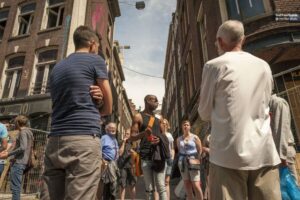
Amsterdam can feel like a maze at first. This small-group highlights walk helps you read the city, from Dam Square to canals and de Wallen. I like the small group size (max 12) because the pace feels human, and I really value the guide’s storytelling style—people like Sean, David, and John Jenland show up in the reviews with serious city know-how and a friendly way of answering questions. One thing to consider: this is a walking tour, so you’ll want comfortable shoes, and it depends on good weather.
You’ll start at Bistro Berlage (Beursplein) and spend about 2.5 hours getting your bearings the easy way: the guide leads, you don’t have to navigate, and you go on streets where cars don’t rule. Along the route you’ll cover the city’s sweep—from Amstel origins to the Golden Age—and you’ll also get practical add-ons like bar and food recommendations to use later.
If you’re short on time but want more than postcard stops, this fits well. If you hate history talk or you prefer to wander completely on your own with zero structure, you might find the schedule a bit tight.
In This Review
- Key Points You’ll Appreciate
- Why This Amsterdam Highlights Walk Works (Even If You Only Have One Afternoon)
- Meeting at Beursplein and Getting Oriented Fast
- Dam Square to Old-Center Stories: Seeing Amsterdam’s Core Without Getting Lost
- Royal Palace and the Power of the Golden Age (Without Needing a Ticket)
- Nieuwmarkt and the Jewish Quarter Threads You’ll Actually Notice
- Canals, Kalverstraat Shopping, and the Gabled-House Look
- Begijnhof Courtyard and Hidden-Church Quiet Moments
- Amsterdam Museum Area and Old City Gates: The City’s Boundaries in Plain Sight
- Jordaan Optional Detour: If You Want Shops and Art Streets West
- Into de Wallen: How the Red Light District Walk Stays Respectful
- Westerkerk Finish and Planning the Rest of Your Day
- Price and Value Check: Is $36.28 Worth It?
- Who This Tour Fits Best (and Who Might Skip It)
- Small Details That Matter: Pace, Questions, and a Guide With Personality
- Should You Book This Amsterdam Walking Tour?
- FAQ
- How long is the Amsterdam highlights walking tour?
- Where does the tour start and where does it end?
- Is the tour in English and is it a small group?
- Is the Royal Palace ticket included?
- What if the weather is bad?
- Is free cancellation available?
Key Points You’ll Appreciate
- Max 12 people keeps the vibe conversational instead of lecture-mode.
- English-speaking local guides like Sean and David focus on how the city grew, not just what you’re looking at.
- Route choices avoid cars, so the walk feels like a real neighborhood stroll.
- You’ll see major landmarks and also quieter corners, with optional add-ons if you ask early.
- The tour includes a respectful walkthrough of de Wallen, with guidance on what not to do.
- You finish with time left to keep exploring—use the guide’s food and bar tips right away.
Why This Amsterdam Highlights Walk Works (Even If You Only Have One Afternoon)
Amsterdam has a way of making you feel clever—until you realize you’ve been walking in circles. This tour is built for the moment right after you arrive, when you want context fast. You’ll learn what to notice as you walk: canal layout, architecture patterns, and why certain neighborhoods developed the way they did.
I also like that it’s not just “stand here, look there.” The guide connects places to themes: how Amsterdam reclaimed land, how trade shaped power, and how culture shows up in doors, bridges, and courtyards. That’s why many people leave feeling like they can finally place what they’re seeing.
And yes, you’ll cover famous names. But the payoff is that you understand the why behind them—so the city stops being a checklist and starts becoming a map you can use.
You can also read our reviews of more walking tours in Amsterdam



Meeting at Beursplein and Getting Oriented Fast
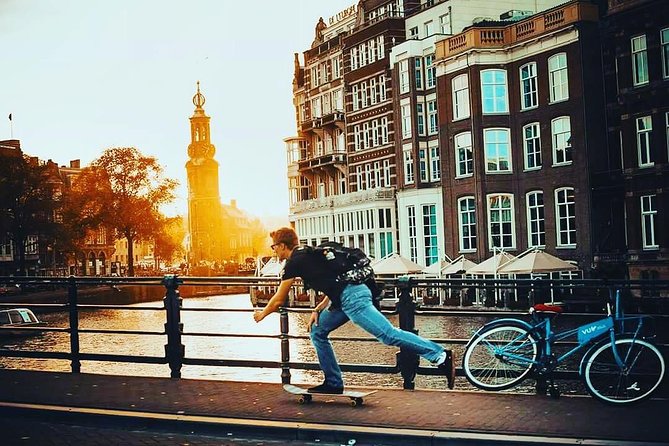
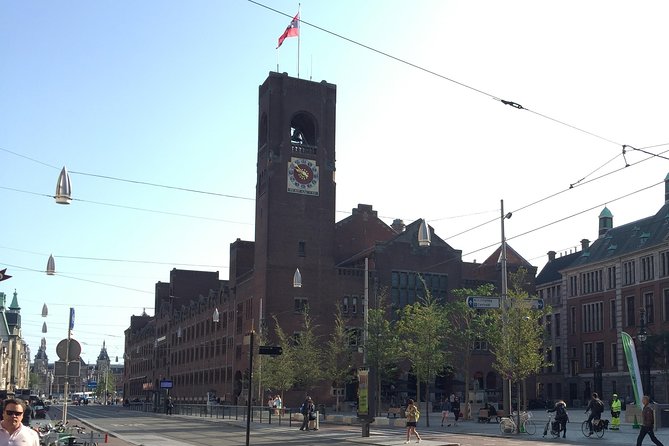
The tour starts at the meeting point by Bistro Berlage (Beursplein 1), where you’ll likely spend a short bit getting organized before heading toward the historic center. The simplicity matters. You arrive, you join the group, and you start moving.
From there, expect a steady rhythm rather than constant rushing. The tour is timed for about 2 hours 30 minutes, which is long enough to connect multiple districts, but short enough to keep your energy for later.
If you’re arriving by transit, the location is convenient. Plus, you get a mobile ticket, which is handy in a city where you’ll be using your phone anyway.
Dam Square to Old-Center Stories: Seeing Amsterdam’s Core Without Getting Lost
You’ll pass through Dam Square, which is basically the center of the center. It’s a great place to start “reading” Amsterdam because it forces you to think about what the city decided to build around power and public life.
At Dam Square, the guide doesn’t just point at buildings. You’ll hear how the city grew from its early beginnings tied to the Amstel River to the era when Amsterdam became a major trading powerhouse. That big-picture framing pays off later when you see canals and merchant-era architecture.
Then you move on through the historic fabric—streets and corridors that cars don’t dominate. That’s one of the practical advantages of a walking tour here. You’re not stuck crossing wide roads or fighting pedestrian traffic at every turn. You get to slow down enough to notice the details that make Amsterdam feel like Amsterdam.
Royal Palace and the Power of the Golden Age (Without Needing a Ticket)
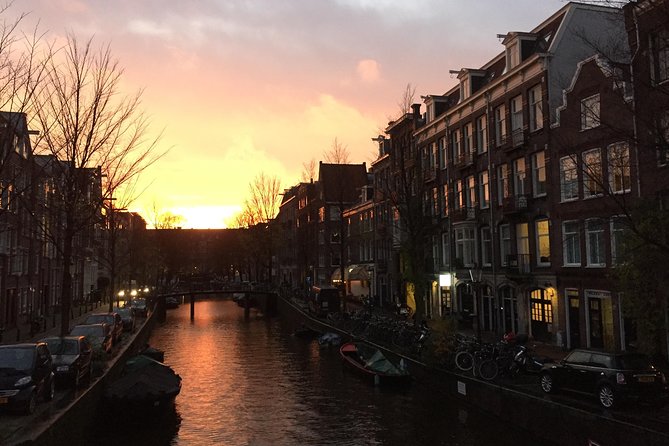
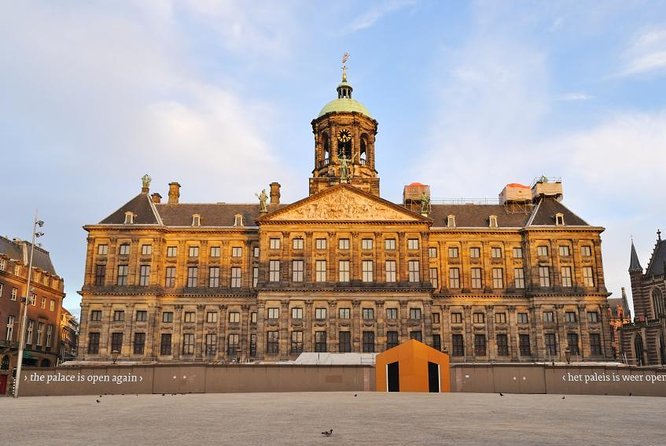
You’ll encounter the Royal Palace Amsterdam on the route. It’s described as often being positioned toward the end of the walking section, and you’ll hear history and why it matters in the city’s story.
Important practical note: admission is not included for the palace. So treat this stop as “learn and look,” not “fully tour inside.” If your interests run architectural and ceremonial—this is still worth the time. You get the context, then you can decide on your own whether to pay for a closer visit later.
This stop also helps you understand how Amsterdam shifted from commerce and civic influence into official representation. It’s an easy way to connect the idea of wealth with the look of the buildings.
Nieuwmarkt and the Jewish Quarter Threads You’ll Actually Notice
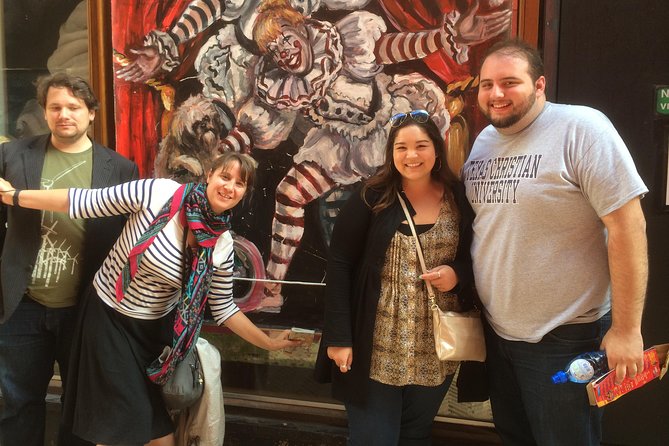
One of the best parts of this tour is where it goes east toward Nieuwmarkt. This area sits right in the middle of downtown, and it helps you see how Amsterdam’s growth wasn’t one-note.
The guide points out the area’s expanding history and connects it to the Jewish district nearby. You’ll hear about historic links tied to Jewish immigration. The value here is that the guide helps you interpret what you’re seeing on foot—rather than treating the neighborhood like a blur of shops.
Even if you’re not the type who plans museum hours, this kind of neighborhood context makes your later independent strolls better. You start noticing which streets feel “arranged for community,” and which ones feel more like trade and movement.






Canals, Kalverstraat Shopping, and the Gabled-House Look

Amsterdam’s charm isn’t only about canals—it’s also about the way buildings line up and how streets funnel you from one scene to the next. On this walk, you’ll get that feel.
You’ll see preserved 17th-century gabled houses, plus calm canal views dotted with traditional houseboats. And you’ll pass along Kalverstraat, Amsterdam’s well-known shopping street. It’s a practical inclusion: it anchors you in how the city functions today, not just how it looked centuries ago.
This matters because it prevents the tour from becoming a history-only loop. You get a foot on the past, then you step right into the present. By the time you reach the later districts, you’re not just watching architecture—you’re understanding how people still use these spaces.
Begijnhof Courtyard and Hidden-Church Quiet Moments
The Begijnhof courtyard is one of those places that feels like a pause button. The tour includes it (with the idea of a hidden church inside the courtyard), which means you get a break from the main street noise and a glimpse of how Amsterdam created spaces for reflection and community life.
If you like “small scale” history—courtyards, religious spaces, and old city enclaves—this stop is likely to be a highlight. It’s also a relief after the more public areas. You see that Amsterdam has layers, even in the most central districts.
Amsterdam Museum Area and Old City Gates: The City’s Boundaries in Plain Sight
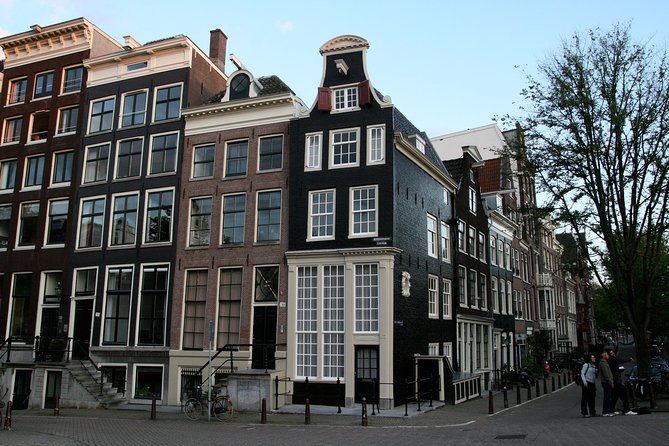
You’ll also pass old city gates and reach areas tied to the Amsterdam Museum zone. This part works well because it shows you Amsterdam wasn’t always open and limitless. There were boundaries, there were transitions, and there was a logic to where the city allowed growth.
Even if you don’t go into any museum here, you’ll leave with a clearer understanding of why certain areas feel like “threshold zones.” Then, when you later walk past gates or older street alignments, you’ll recognize the pattern instead of guessing.
Jordaan Optional Detour: If You Want Shops and Art Streets West
There’s an optional element depending on what you request at the start. On nicer days, some guides go west of the city center to the Jordaan area.
Jordaan is known for its art galleries, specialty shops, and restaurants. If your style is “wander with purpose,” this is a great add-on. If you’re more focused on monuments and don’t care about browsing, you can skip it.
The key here is your flexibility at the start of the tour. Ask early if you want that westward stop, since it affects the route.
Into de Wallen: How the Red Light District Walk Stays Respectful
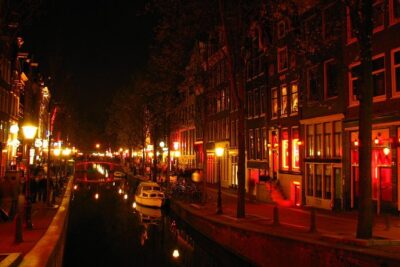
Yes, you’ll walk through de Wallen, Amsterdam’s Red Light District area (also referred to as a district with more than one red light). The tour description makes it clear that it’s not there for spectacle.
You get basic information about the workers and guidance on how to behave. You also won’t be stopping in ways that interfere with what’s going on there. That matters for two reasons: respect and safety. You’re seeing a real district that functions as part of the city today, not a theme park.
If your comfort level is low with sex-industry topics in a public setting, you may want to weigh whether this part fits you. Still, the structure here is meant to keep things straightforward and considerate.
Westerkerk Finish and Planning the Rest of Your Day
You’ll end with a finish near Westerkerk with plenty of time left to keep exploring. The official ending point is listed as the Nieuwmarkt market area, so in practice, plan on wrapping up around the central east side and then heading out from there.
Either way, the timing is smart. You’re not leaving the tour at dinner time. You’ll have time for a canal walk on your own, a quick bite, or a longer look at one of the stops you liked most.
This is also where you’ll want to use the guide’s recommendations. Many guides include personalized tips for bars and eateries, which is one of the most practical reasons to book an intro walk in the first place. If you’re jet-lagged or hungry, you’ll be glad you don’t have to guess.
Price and Value Check: Is $36.28 Worth It?
At about $36.28 per person for roughly 2.5 hours, this is priced like a solid intro experience. It’s not a bargain-tour price. But it’s also not a fancy guided private tour cost.
Here’s why it can still feel like good value:
- You’re paying for an organized route that covers multiple districts without you mapping it yourself.
- You’re paying for context—history, culture, and architecture—so the city becomes easier to navigate after the walk.
- You’re getting something beyond sightseeing: guidance on where to eat and drink.
- The group stays small (max 12), which many people find makes it feel more personal.
If you would otherwise spend money on hop-on/hop-off transport just to “get oriented,” this can be a better use of your time. You’re also getting to walk where cars can’t, which is part of what makes Amsterdam feel walkable in the first place.
Who This Tour Fits Best (and Who Might Skip It)
This tour is a good fit if you:
- want a first-day or first-afternoon orientation to central Amsterdam
- enjoy history that’s tied to what you see on the street
- like asking questions while walking (guides such as Sean, David, and John Jenland come across as chat-friendly)
- want practical recommendations for food and drinks
It might be less ideal if you:
- dislike structured routes and prefer full wandering time
- want only museum-quality stops with longer visits inside buildings
- would rather avoid the Red Light District area entirely
A nice bonus: the tour has a reputation for being adaptable. Some guides reportedly adjust based on the group’s interests, so if you’re excited about architecture, trade history, or neighborhood layout, you can steer the conversation.
Small Details That Matter: Pace, Questions, and a Guide With Personality
The most repeated praise in the experiences is the guide’s ability to connect story to place. Several named guides—Sean, David, John Jenland—are described as easy-going and thorough, with a teacher-like way of explaining how the city formed.
I also like that the pace is described as easy and well managed. Two and a half hours can feel like a lot in any city, but if the guide knows when to slow down for questions, you enjoy the walk instead of bracing for it.
One delightful recurring detail: some guides bring a small dog along. That won’t change the facts or the route, but it does signal a tour that feels human and relaxed.
Should You Book This Amsterdam Walking Tour?
If you’re visiting Amsterdam for the first time and want your bearings fast, I’d book this. It gives you a useful spine: Dam Square and the central core, east-side history around Nieuwmarkt, canal views and gabled houses, a courtyard moment at Begijnhof, and a real-world walkthrough approach to de Wallen. Then you leave with time to explore on your own.
If you’re already an Amsterdam pro or you’re traveling with a very short attention span, you might prefer a shorter walk focused on one district. But for most people, this is a smart intro that helps you turn random street scenes into something you understand.
If you do book, do two things: wear comfortable shoes, and ask at the start whether you can add the Jordaan or canal-area optional request. It’s one of the easiest ways to tailor the day to your interests.
FAQ
How long is the Amsterdam highlights walking tour?
It lasts about 2.5 hours.
Where does the tour start and where does it end?
The tour starts at Bistro Berlage, Beursplein 1, Amsterdam. It ends at Nieuwmarkt market, Nieuwmarkt 4, Amsterdam.
Is the tour in English and is it a small group?
Yes, it’s offered in English. The group size is capped at a maximum of 12 travelers.
Is the Royal Palace ticket included?
No. The Royal Palace Amsterdam stop notes that admission is not included.
What if the weather is bad?
This experience requires good weather. If it’s canceled due to poor weather, you’ll be offered a different date or a full refund.
Is free cancellation available?
Yes. You can cancel up to 24 hours in advance for a full refund.