800 years of Amsterdam, with jokes. On this 2-hour walk, you get a focused route through the canal belt that turns big dates into everyday street-level stories. The guide’s humor is the secret sauce, with dry wit and the occasional pun to keep the timeline moving.
I especially like the small-group feel. With a limit of 10 people, you can ask questions and steer the conversation toward what you’re curious about, not just what fits a script. One thing to plan for: you’ll be doing steady walking over a central area of town, so it’s not a good match if you use a wheelchair, have mobility limits, or need frequent long breaks.
In This Review
- Key highlights worth your attention
- The tour’s real goal: make 800 years feel small
- Meeting at Those Dam Boat Guys and how the route works
- From the Red Light District to Oude Zijde: history on the edge of everyday life
- VOC era to Zuiderkerk: trade, power, and why the city looks the way it does
- Waterlooplein Market, Stopera, and the city’s public spaces
- Groenburgwal, Binnenstad, and Spui Square: how canals become your map
- Begijnhof and Amsterdam Museum area: private courtyards with public meaning
- Ending at Dam Square: your launch point for the next hours
- Price and value: why $32 can make sense for first-time Amsterdam
- Who this tour fits best (and who should consider alternatives)
- What to bring (so you enjoy the whole 2 hours)
- Should you book this Amsterdam history-with-humor walk?
- FAQ
- Where is the meeting point for the walking tour?
- How long is the Amsterdam history walk?
- What language is the guide speaking?
- How large is the group?
- Is food included, or can I buy drinks during the tour?
- What’s the tour’s age and mobility suitability?
Key highlights worth your attention
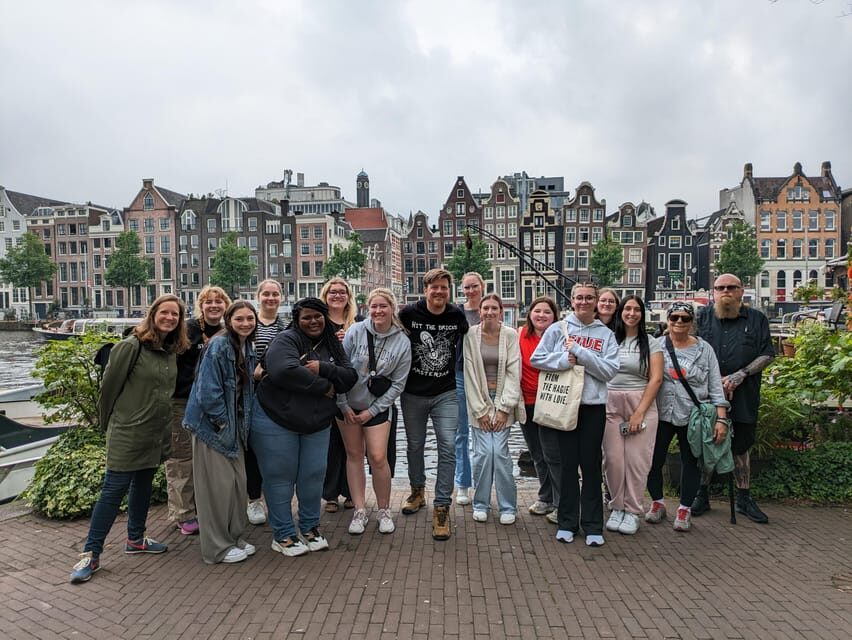
- Axel-style storytelling: review feedback repeatedly calls out sharp humor plus clear English delivery
- 800 years, kept practical: you’re not stuck in a museum; you’re reading the city as you go
- Canal belt focus: courtyards, streets, and canals in a tight loop near the center
- Landmarks with context: stops range from the VOC era to the Begijnhof and Dam Square
- Built-in food and fun tips: you finish with recommendations tailored to what you want to do next
- Ends where you want to continue: the tour concludes at Dam Square for easy onward travel
The tour’s real goal: make 800 years feel small
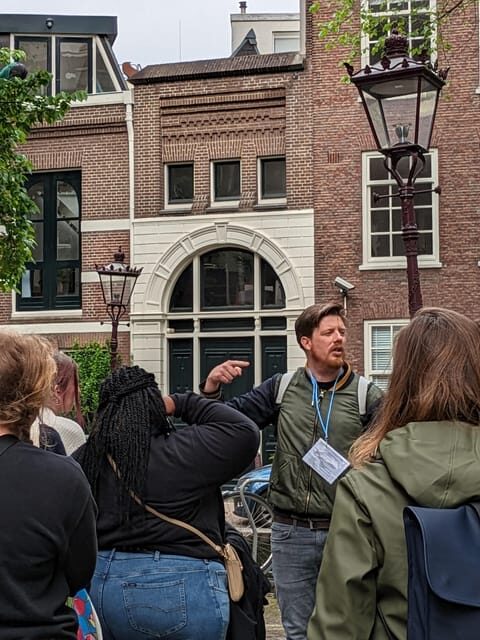
Amsterdam can feel like a collage: canals, churches, old facades, and neighborhoods with very different vibes. This tour’s job is to connect it all into one story line—about how centuries of trade, religion, civic life, and politics shaped Dutch culture. You get the history as you walk, not as a lecture you’ll forget the moment you sit down.
The humor matters more than it sounds. When the guide jokes while explaining why a street or building exists, your brain keeps the facts in place. You also get a sense that Amsterdam is not a set of postcard views—it’s a place people argued, worked, gambled, worshipped, and built over and over again.
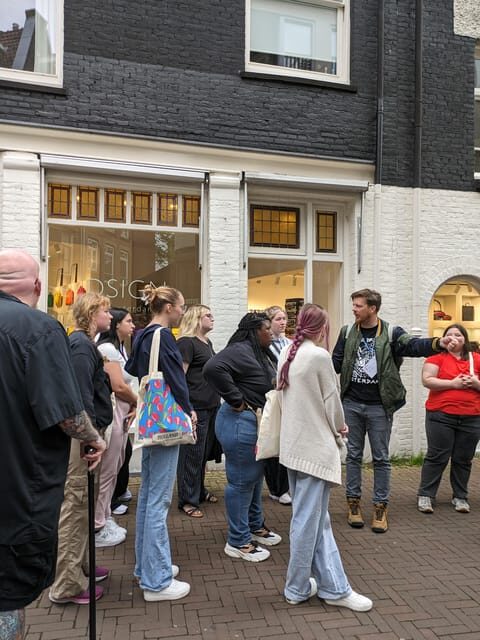
It also helps that the group is limited to 10. That size keeps things lively but still allows the guide to respond when you ask a question that’s not on a fixed checklist.
You can also read our reviews of more historical tours in Amsterdam



Meeting at Those Dam Boat Guys and how the route works
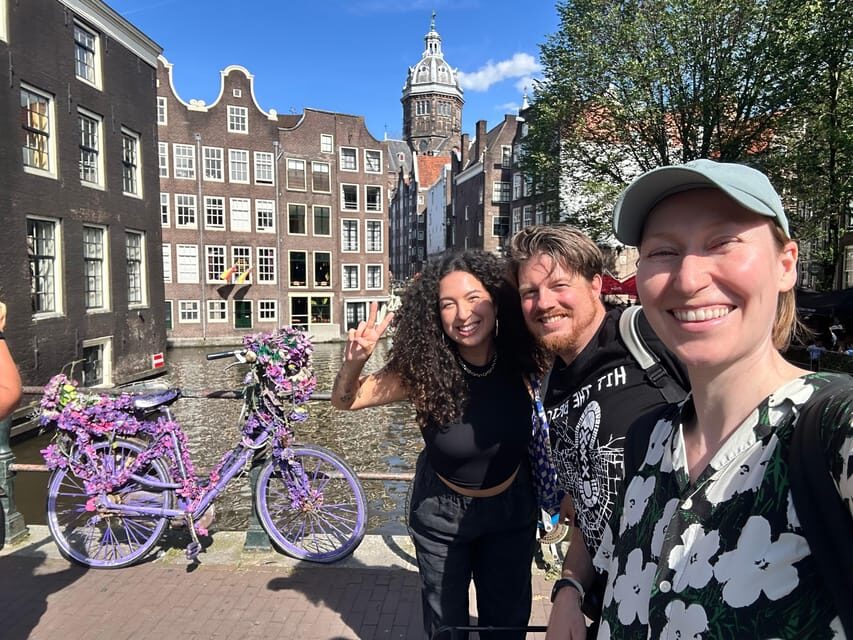
You meet at the office of Those Dam Boat Guys. That’s smart because the boat tours also start from the same area, so tell the staff you’re there for the walking tour to avoid mix-ups.
From there, the walk stays in the central core around the canal belt. You’re not crisscrossing the whole city for 2 hours. Instead, you’re moving through a sequence of recognizable districts and landmarks, with short guided moments and quick photo breaks when needed.
One practical note: you’ll want comfortable shoes and weather-appropriate clothing. This is outdoors walking for the full time, and the route is mostly in a narrow central area. If your energy level is low or your pace is slow, you’ll still likely enjoy it, but you should set expectations that it’s not a sit-down tour.
From the Red Light District to Oude Zijde: history on the edge of everyday life
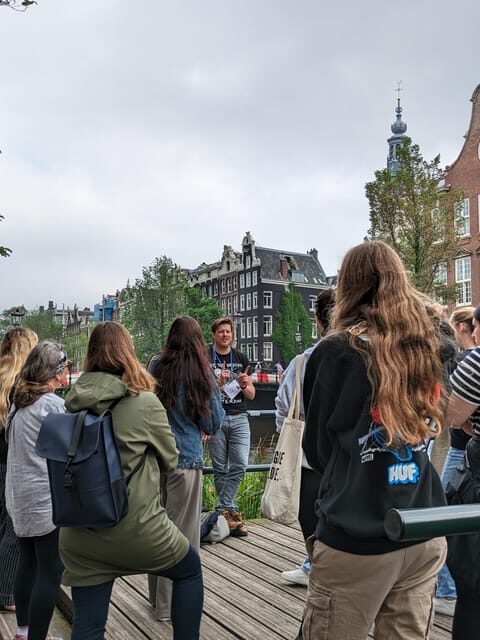
The tour starts with a quick pass through the Red Light District. This stop is brief, but it’s useful because it sets the tone: Amsterdam’s history includes tension, regulation, and shifting attitudes, not just paintings and canals. You’ll get context for why certain areas developed the way they did, without turning the walk into a spectacle.
Next comes Burgwallen Oude Zijde, which is where the old-city texture starts to matter. Here, you’re in a maze of narrow streets and historic surroundings, so the guide can point out how the layout and architecture reflect centuries of living and commerce. It’s the kind of place where you might otherwise wander past details without knowing what they mean.
What I like about keeping these stops close together is how it helps you understand Amsterdam as a whole system. Entertainment, business, religion, and law overlap in the same compact streets, so you stop thinking in neat categories.
VOC era to Zuiderkerk: trade, power, and why the city looks the way it does
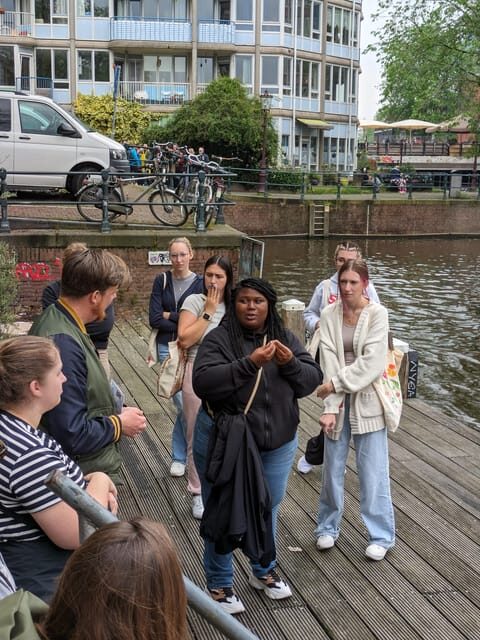
A highlight in the schedule is the VOC / Dutch East India Company section. Even if you’ve heard the basics before, this stop is about connecting the dots: trade wealth, global reach, and how that era influenced local culture and institutions. It’s one of the fastest ways to understand why Amsterdam became such a magnet for money and ideas.
Then you move toward Zuiderkerk, another short guided segment. Churches in Amsterdam are not just religious buildings; they’re also landmarks of civic identity and community priorities. This stop helps you read the city’s spiritual side as part of its social structure, not as decoration.
If you like history that explains cause and effect—why a place became important, and how that importance left marks—this part of the walk delivers. It’s short, but it gives you handles you can use later when you explore on your own.
Waterlooplein Market, Stopera, and the city’s public spaces
You’ll pass Waterlooplein Market, with minimal time spent there, but it’s a good pause point for thinking about how markets keep city life moving. Markets are where residents and visitors collide, and they often reflect economic shifts over time. Even a quick look can help you notice the practical side of Amsterdam’s history.
Next is Stopera, where the guide connects civic buildings to the way governance and public life evolved. This is a small stop, but it works well because Amsterdam’s story is never only about wealth and foreign trade. It’s also about institutions—who made decisions, and how that shaped daily life.
I like this mid-walk mix because it prevents the tour from getting stuck in one theme. You’re not only chasing old buildings. You’re also learning how modern city structure grows out of older priorities.






Groenburgwal, Binnenstad, and Spui Square: how canals become your map
Photo time comes at Groenburgwal. This short segment is about using the canal environment like a visual guide. Amsterdam’s canals are not just pretty—they’re part of how the city functions and how neighborhoods connect.
Then you get small guided moments in Binnenstad, Amsterdam and at Spui Square. These stops are where the guide helps you connect the city’s geography to the stories you’ve heard so far. You start noticing patterns: how people likely moved, where commerce would cluster, and why certain areas gained importance.
If you’re the kind of traveler who loves to walk with a mental map, these segments are genuinely helpful. You finish the tour with a better sense of where you are and why things are laid out the way they are, which makes your free exploration easier.
Begijnhof and Amsterdam Museum area: private courtyards with public meaning
The tour includes a visit to Begijnhof, with a guided explanation. This is one of the stops that can feel like a time capsule because Begijnhof-style courtyards carry a quiet, enclosed atmosphere compared with the surrounding streets. The value here is how the guide ties that calm setting to social history—how communities organized themselves, supported one another, and carved out safe internal spaces.
After that, you move toward the Amsterdam Museum area for a short guided segment. The museum itself isn’t necessarily the point of this tour, but the stop helps you understand what the museum would be trying to show you: how Amsterdam’s layers of life—economic, social, and cultural—built into the city you’re standing in now.
A helpful expectation to set: entrance fees aren’t included. If you want to go inside a museum or ticketed attraction later, you’ll be able to plan that as a follow-up, not as part of the tour time.
Ending at Dam Square: your launch point for the next hours
You end at Dam Square, with a final short guided moment before you’re released to continue. That’s a smart finishing point because it’s central and connected—tram, metro, taxi, or just walking, depending on your energy and what you want to see next.
Dam Square also works emotionally. After 800 years of story, you stand in one of the places that still acts like a focal point for the city. It gives your brain a reset: history in motion, then a practical place to regroup.
Price and value: why $32 can make sense for first-time Amsterdam
At $32 per person for a 2-hour small-group walk, you’re paying for a guide’s time, a tight route, and interpretation you can’t easily replicate from a self-guided map. The biggest value isn’t any single landmark; it’s the combination of landmarks plus context plus humor.
You also get something people often forget to price in: the guide’s local recommendations. The tour is designed to end with suggestions for what to eat and drink and what to do next based on your interests. That’s useful because Amsterdam choices can feel overwhelming the first day, and it saves time figuring out where to go.
This tour is also well-sized. Two hours is long enough to get a storyline, but short enough that it doesn’t swallow your whole day. If you’re doing other plans—canal cruise, day trips, or museum time—this can slot in cleanly as a history primer.
Who this tour fits best (and who should consider alternatives)
This experience is a strong fit if you want first-time orientation and you like your history with wit. It’s also a good choice if you’re curious about how different parts of the city connect—trade and policy, private courtyards and public squares, old churches and modern civic life.
It’s not suitable for everyone. It’s not a match for children under 9, wheelchair users, people with mobility impairments, hearing-impaired visitors, or people over 95. There are also clear rules: no alcohol or drugs, and no bachelor or bachelorette party groups.
If you fall into a mobility category that needs accessibility support, check other tour formats with less walking before you commit. For everyone else, the reviews highlight that the walk stays manageable physically, while still covering a lot of ground in the center.
What to bring (so you enjoy the whole 2 hours)
Bring comfortable shoes and a camera if you like canal photos. Add a water bottle, especially in warmer months, since you’ll be outside walking for the full duration.
If the weather looks changeable, dress like it might. The tour keeps moving, so you’ll want layers you can adjust quickly.
Should you book this Amsterdam history-with-humor walk?
Yes, if you want a guided story that helps you understand why Amsterdam looks the way it does, without spending your whole day in museums. The strongest reason to book is the mix: tight route, local tips, and a guide style that keeps you engaged—Axel’s humor and excellent English come up again and again.
Skip it if you need step-free access or if a continuous walking tour in the city center is hard for you. Also, if you’re only interested in one tiny theme, you may find the route moves across several topics quickly.
FAQ
Where is the meeting point for the walking tour?
You meet at the office of Those Dam Boat Guys. Since the boat tours also start there, tell the staff you’re joining the WALKING tour to avoid confusion.
How long is the Amsterdam history walk?
The tour lasts 2 hours.
What language is the guide speaking?
The live guide speaks English.
How large is the group?
The group is limited to 10 participants.
Is food included, or can I buy drinks during the tour?
Food and drinks are not included.
What’s the tour’s age and mobility suitability?
It is not suitable for children under 9, wheelchair users, people with mobility impairments, hearing-impaired people, and people over 95.