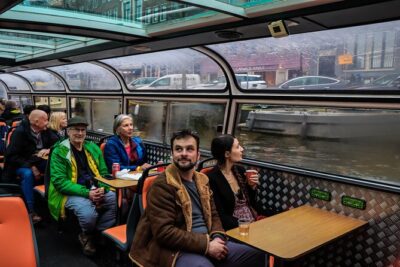
REVIEW · AMSTERDAM
Amsterdam: Treasure Hunt Walking Tour “A Secret Sender”
Book on GetYourGuide →Operated by Mystery City · Bookable on GetYourGuide
Paper maps, secret locks, and Amsterdam on foot.
This city-center treasure hunt turns famous spots into a moving puzzle trail, with challenges tied to Amsterdam’s stories and a mystery you solve as you go.
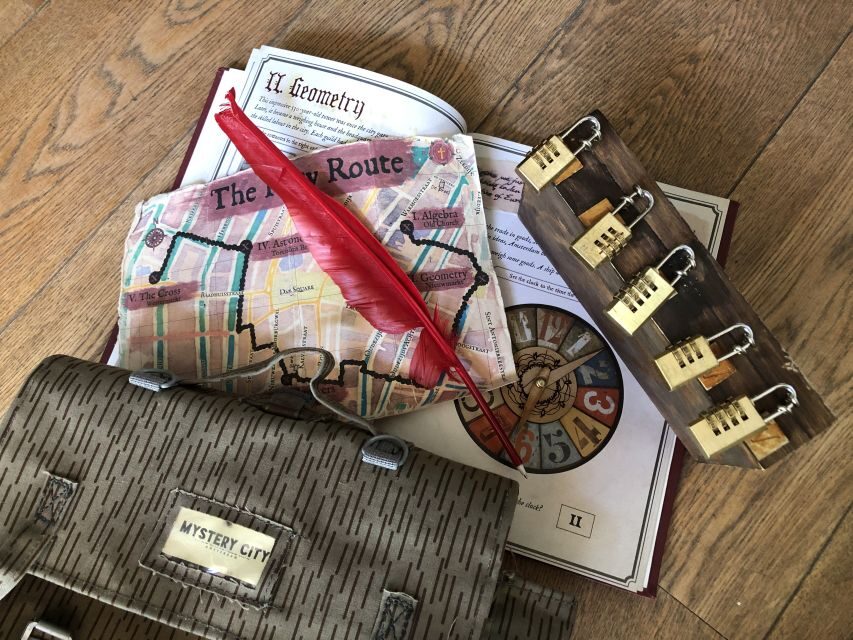
I especially like that you get a real activity kit at Mystery City Games, not just a route. Your backpack includes a treasure map, a locked treasure box, and a book of puzzles, so you can focus on the game instead of figuring everything out on the fly.
One thing to plan for: it’s a lot of walking between stops, and the pace can easily stretch past the scheduled 2 hours. Also, part of the route goes through Amsterdam’s Red Light District, so it helps to be comfortable with that environment.
In This Review
- Key things to know before you go
- Two hours of clues across Amsterdam’s city center
- Mystery City Games: picking up your puzzle backpack
- Nieuwmarkt Square: the game’s first foothold
- Oude Kerk: learning through the Golden Age angle
- Torensluis Bridge: a classic Amsterdam setting for tricky clues
- Sint Luciënsteeg: where small streets change the pace
- Westerkerk: finishing strong and solving the mystery
- Walking practicalities: distance, pace, and how to stay comfortable
- The Red Light District segment: what it means for your comfort
- Price and value: is $29 a good deal?
- Who should choose A Secret Sender?
- Should you book this treasure hunt?
- FAQ
- How long is the Amsterdam Treasure Hunt game?
- Where do I meet for A Secret Sender?
- What is included with my booking?
- Is this activity private?
- Is it suitable for children?
- Does the route go through the Red Light District?
- What should I bring and wear?
Key things to know before you go

- A locked treasure box with multiple locks you open by solving challenges at each stop
- A puzzle book plus a map designed to guide you through the city center in a game format
- Five top city locations spread out enough that you’ll see more than one main area
- Golden Age Amsterdam stories woven into the challenges
- Stops for drinks, photos, and local specialties are marked on your treasure map
- Private group play means you won’t get mixed into someone else’s game
Two hours of clues across Amsterdam’s city center
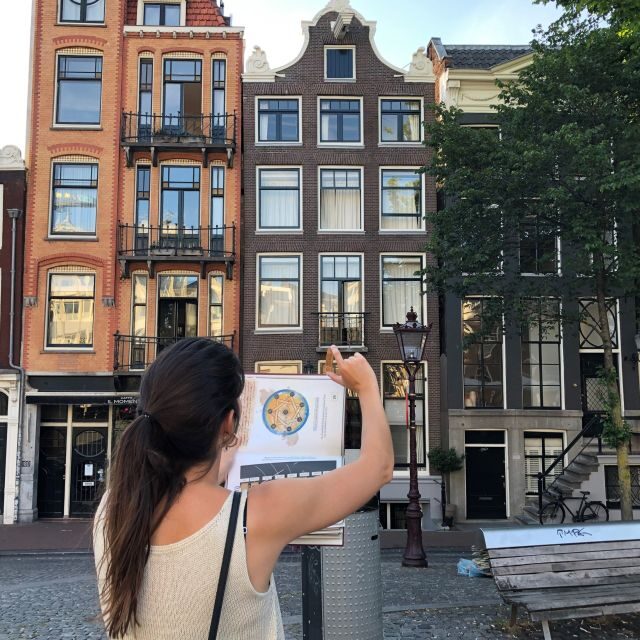
“A Secret Sender” is built like a choose-your-own adventure, except the choices are simple: follow the treasure map, solve the clue, and move to the next lock. The goal is to figure out the real identity of one famous person connected to a secret society.
What makes this work well in Amsterdam is the pacing. You’re not racing from one photo stop to another. The game gives you time at each point (about twenty minutes), then encourages you to slow down and enjoy the surrounding area. That matters in a city where even a short walk can turn into a good detour.
The other big win: you’re actively noticing details. The challenges are designed to make you pay attention to what’s in front of you—signs, hidden references, and the kind of small things you’d usually skip if you were just sightseeing on autopilot.
You can also read our reviews of more walking tours in Amsterdam



Mystery City Games: picking up your puzzle backpack
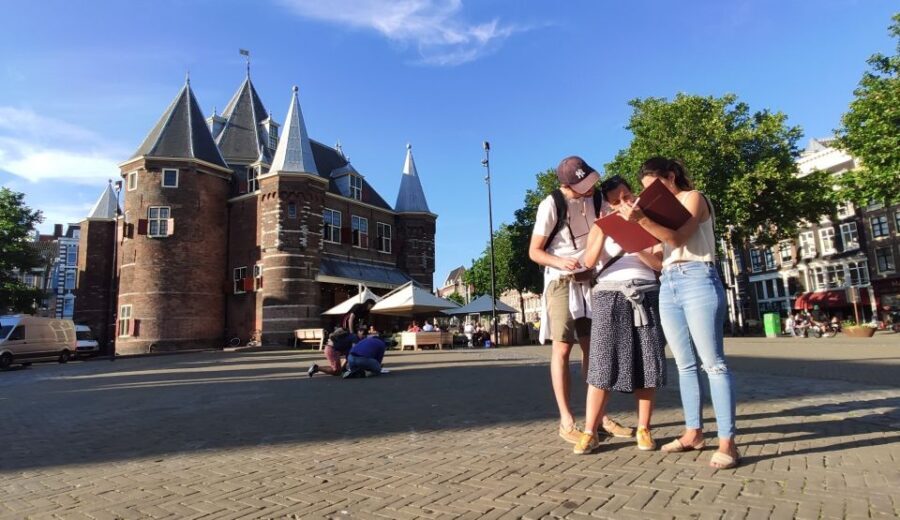
You start at Mystery City Games (Zwanenburgwal 178, 1011 JH Amsterdam). Look for the Mystery City Games sign. From there, you pick up a backpack filled with the materials you’ll need for the whole game.
Inside is the core setup:
- a treasure map
- a locked treasure box (the centerpiece of the mystery)
- a book of puzzles (where the clues are said to be left)
- “magical tools” as part of the kit
I like how this changes the feel of walking through Amsterdam. Instead of trying to remember what you read online, you’re following a story. The map also points you toward good places to pause for drinks, photos, and local specialties, which is useful if you’re trying to balance sightseeing with real breaks.
Also, this is private group play. You play with your own group, and if other groups are out at the same time, they play separately. That keeps your experience from feeling like you’re competing for attention with strangers.
Nieuwmarkt Square: the game’s first foothold
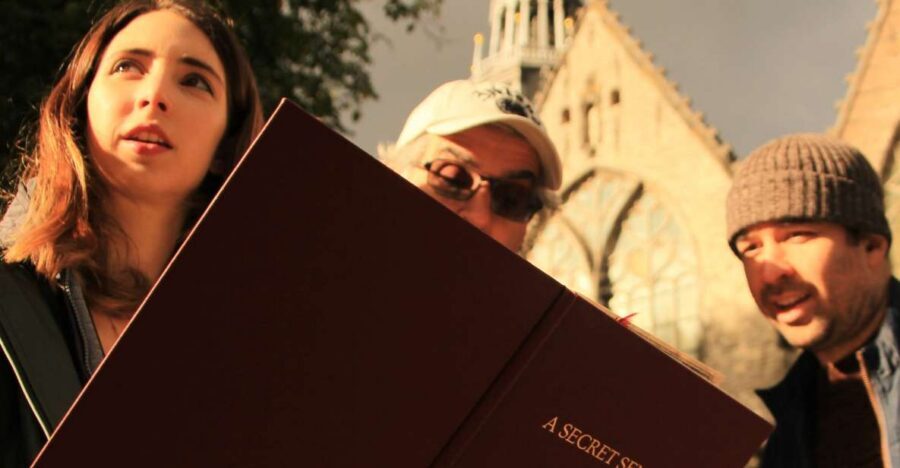
Your first scheduled stop is Nieuwmarkt Square, and you’ll spend about twenty minutes there. This is where the game sets the rhythm: read the clue, look for the detail the challenge is pointing toward, and take the next step toward opening one of the treasure box locks.
Why this first stop is smart: it gets you moving fast while you’re still fresh. If you’re the type who likes to get your bearings early, this works. You’ll also be surrounded by plenty of “normal city life,” so it feels less like you’re walking into a staged attraction.
What to watch out for is energy management. The game timeline assumes you’re taking the challenges seriously, not sprinting. If you rush the first clue, you’ll likely end up slowed down later when you try to catch up on logic and map-reading.
Oude Kerk: learning through the Golden Age angle
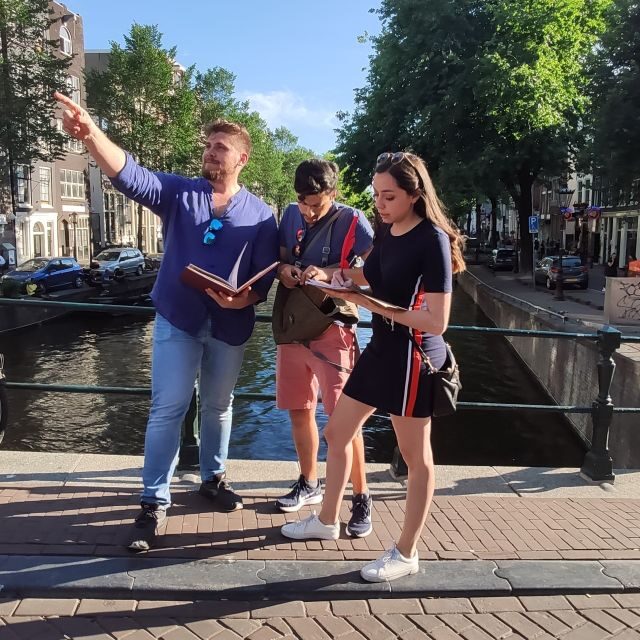
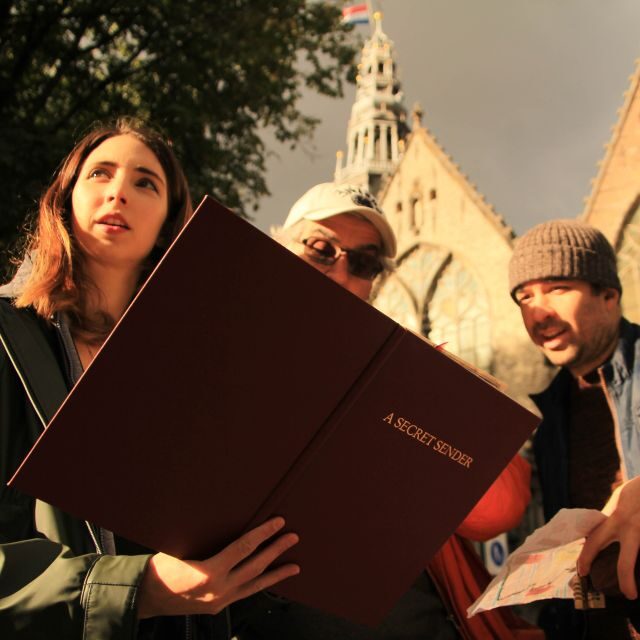
Next is Oude Kerk, another twenty-minute stop. Here, the game shifts from getting oriented to building context. You’ll learn about Golden Age Amsterdam and solve a challenge tied to that story.
This is one of the best parts of the experience if you normally find history tours too passive. Instead of listening for long stretches, you’re doing something with the information. The puzzle pushes you to notice what matters, then turns that noticing into progress toward opening the treasure box.
A small practical note: churches and historic sites tend to have their own flow rules, so give yourself a calm margin for moving and reading. Your game time is limited per stop, and you’ll enjoy it more if you’re not constantly checking your watch.
Torensluis Bridge: a classic Amsterdam setting for tricky clues
Then you head to Torensluis Bridge for another twenty minutes. Bridges are a nice choice for a puzzle stage because they force you to look at the scene from a slightly different angle and connect the dots between what you see and what the clue is asking for.
This stop is also where you may feel the “treasure hunt logic” kick in. The challenges are designed to reward careful attention, and based on the experience level described by prior players, some of the riddles can be legitimately tricky. If you like brainy scavenger hunts, you’ll probably have fun here. If you prefer quick wins, you might want to keep your group’s role split simple: one person reads, one person searches, one person maps.
Also, this is where comfortable shoes pay off. Even when the scheduled stops are timed similarly, your actual walking time between them can add up quickly in central Amsterdam.






Sint Luciënsteeg: where small streets change the pace
Your next stop is Sint Luciënsteeg. This is an alley-type street name, and the game’s challenge format fits that kind of location. You’re meant to slow down enough to notice details you might miss when you’re just walking past.
This is one of those segments that can feel like it’s taking longer than the clock says. That’s not a flaw. The game is nudging you to actually look around, not just transit. If you like Amsterdam for the side streets and the unexpected views you find between the big landmarks, you’ll probably enjoy this part a lot.
It also helps to bring a patient mindset. Some puzzles aren’t solved by speed; they’re solved by trying the clue a second way, or by seeing what you didn’t register the first time. Give yourself permission to be a little methodical here.
Westerkerk: finishing strong and solving the mystery
The final scheduled visit is Westerkerk, again about twenty minutes. By now, you’ve likely opened some locks on the treasure box (or at least you understand how each clue maps to a lock). This last stop is where the game starts to feel like momentum.
This is also where you connect the story pieces. The central mission is to uncover the identity of the famous member the secret society is pointing you toward. The map and the clue book guide you through that process across the five locations, and your final challenge should bring everything together.
If you want the most satisfying finish, don’t treat the last lock like a checkbox. Take a moment to re-read what the clue is actually asking, then open the final part of the treasure box logic in the same careful way you did at the earlier stops.
Walking practicalities: distance, pace, and how to stay comfortable
Even though the game is set for 2 hours, it’s wise to treat that as a baseline, not a promise. One of the most repeated practical notes from real experience is that the walking between sites can be more than you expect, and it’s easy to stretch the time when you stop for photos, snacks, or just because the city is doing its thing.
Here’s how I’d plan your day around that:
- Wear comfortable shoes. This is the one must-bring item you’ve been given, and it’s the difference between fun and fatigue.
- Keep your expectations flexible. If you’re the type who likes to linger, plan for a longer outing.
- Pace your group. If only one person is driving the puzzle-solving while others are just following, the game can feel slower than it needs to be.
Rain matters too. The game says to come prepared if the weather turns, so bring a rain layer or umbrella strategy that won’t ruin your grip on paper map and puzzle pages.
The Red Light District segment: what it means for your comfort
Part of the game goes through the Red Light District. That doesn’t mean it’s designed to be shocking or unsafe, but it does mean you should be mentally ready for a specific kind of street atmosphere.
If your group is sensitive to that setting, you can still play the game. The key is how you move through it: stay with your group, keep the focus on reading and solving the clue steps, and don’t treat it like a wander-and-explore free-for-all.
This detail is worth taking seriously because it’s the one part of the route that isn’t just “historic city wandering.” If you already know you’re uncomfortable in that area, you might choose a different Amsterdam activity.
Price and value: is $29 a good deal?
At $29 per person for a roughly two-hour game, the value comes from what you’re buying, not the sticker price. You’re paying for a packaged experience that includes the puzzle materials and a structured route to five notable city-center stops, plus a narrative reason to walk through the city instead of just hopping between sights.
You also get a built-in excuse to take breaks. The treasure map indicates spots for drinks, photos, and local specialties, which can turn the walk into a more complete experience instead of a short sprint.
The best value shows up if you like problem-solving. If you want a pure photo-and-go sightseeing loop, this might feel like extra thinking. If you enjoy learning through doing—reading, noticing, and solving—this is the kind of activity that can feel worth its cost quickly.
Finally, private group play adds value if you’re visiting as a small group and want to move together without blending into a larger tour rhythm.
Who should choose A Secret Sender?
This game is designed for adults, but it’s suitable for children 7+ when they play with their parents. It’s not recommended for solo play, which makes sense: puzzle games are more fun when someone can bounce ideas off you in real time.
You’ll also want to consider accessibility needs. The experience is listed as wheelchair accessible, but it’s not suitable for visually impaired people, so if eyesight access is a key requirement for your group, plan a different option.
If you’re traveling with friends who like stories, riddles, and a bit of challenge, this works especially well. If you’re visiting Amsterdam and want a way to see the city center while doing something active, you’ll likely enjoy the structure.
Should you book this treasure hunt?
Book A Secret Sender if you want a fun, low-pressure way to explore central Amsterdam and you like puzzles more than lectures. The locked treasure box concept gives the whole walk a payoff, and the five stop route keeps you from feeling like you’re wandering without direction.
Skip it if your main goal is quick sightseeing with minimal walking and minimal thinking. The route covers enough ground that you should plan for a longer outing than the scheduled 2 hours, and the Red Light District segment may not fit everyone’s comfort level.
If you’re on the fence, my advice is simple: choose it when your group enjoys “notice something, then solve something” travel. That’s where the experience earns its keep.
FAQ
How long is the Amsterdam Treasure Hunt game?
The game lasts about 2 hours.
Where do I meet for A Secret Sender?
Meet at Mystery City Games, Zwanenburgwal 178, 1011 JH Amsterdam. Look for the Mystery City Games sign.
What is included with my booking?
You receive a backpack with a treasure map, a locked treasure box, a book of puzzles, and magical tools.
Is this activity private?
Yes. All bookings are private, and you play with your own group. If there are other people at the same time, they play separately.
Is it suitable for children?
The game is designed for adults, but it can work for children 7+ when they play with their parents. It is not suitable for children under 6.
Does the route go through the Red Light District?
Yes, part of the game goes through the Red Light District.
What should I bring and wear?
Wear comfortable shoes. If it’s raining, come prepared.