REVIEW · AMSTERDAM
Historical Walking Tour, private with local Dutch guide
Book on Viator →Operated by Artsy Tours · Bookable on Viator
One good stroll and Amsterdam starts to click. This private 2-hour walking tour takes you through medieval leftovers, Golden Age canals, and everyday neighborhoods with a local Dutch guide who has lived in the city for 25 years. You’ll also feel the tour has a point: get your bearings fast without turning Amsterdam into a checklist.
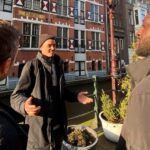
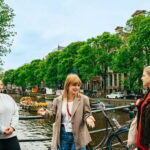
What I like most is the way it’s built for first-time orientation. The route covers early city defenses and trade powerhouses, then shifts into the famous canal ring and the Jordaan neighborhood, so you understand what you’re seeing as you walk. My second favorite part is the personal touch—Anna’s humor and ability to tailor stops made it feel more like an informed conversation than a script.
The main thing to think about is physical comfort. This is not a laid-back sit-down tour, and the experience is not recommended if you have trouble walking and standing for about 2 hours, and mobility aids aren’t available.
In This Review
- Key highlights at a glance
- First impressions: what this tour gets right
- Meet at the Schreiertower and set the tone
- Stop 1: Weeping Tower and Amsterdam’s medieval origin
- Stop 2: Zeedijk and why it acted like a dike
- Stop 3: The Waag and the city’s defensive logic
- Stop 4: Oostindisch Huis and the spice-trade power story
- Stop 5: Het Kleinste Huis and Amsterdam’s sense of scale
- Stop 6: Dam Square, from market heart to monuments
- Stop 7: The Canal Ring (Grachtengordel) and the Golden Age logic
- Stop 8: Jordaan for brown cafés, boutiques, and local vibe
- Stop 9: Westerkerk and the local-loved landmark finish
- Why the private format makes this tour worth it
- What to expect on the ground (and what to bring)
- Who this tour suits best
- Should you book this Amsterdam historical walking tour?
- FAQ
- How long is the historical walking tour in Amsterdam?
- Is the tour private?
- What is the price per person?
- What language is the tour offered in?
- Where do you meet and where does it end?
- Are admissions included for the stops?
- Is bottled water included?
- Is this tour suitable for people with mobility issues?
- Can I get a full refund if plans change?
Key highlights at a glance
- Local guide with 25 years in Amsterdam, bringing street-level context to every stop
- Private tour for only your group, so you can ask questions and shift pacing
- Mostly quick, focused stops that work well even if you’re jet-lagged
- Golden Age canal ring plus Jordaan for both landmark views and real neighborhood flavor
- Service animals allowed and you’ll stay near major sights for easy follow-up
- All fees included, with admission tickets listed as free at the stops
First impressions: what this tour gets right
Amsterdam can feel like it’s made of layers. You step outside and suddenly you’re surrounded by canals, gables, bridges, and bikes—all of it moving fast. This historical walking tour is designed to slow that down for you, just enough to understand how the city became the city you came to see.
I liked that the guide work feels practical, not academic. You’re not just hearing dates. You’re getting explanations tied to what’s in front of you: why a tower is where it is, why a street once mattered for water control, and why a gate or warehouse signaled power. That approach matters on your first day because your brain starts forming connections instead of collecting facts.
You’re also starting and ending in smart locations. The meeting point puts you near the historic core, and the tour finishes near the Anne Frank House area and Westerkerk church—handy if you’re planning your afternoon route.
You can also read our reviews of more walking tours in Amsterdam



Meet at the Schreiertower and set the tone
You meet at Café the Schreiertower on Prins Hendrikkade, a medieval-style starting point that frames the whole experience. It’s a good choice because it keeps you grounded in the oldest layers of the city right away, before you jump into the famous postcard streets.
The tour runs for around 2 hours and stays in English, which makes it easier to relax into the storytelling. And because it’s private, you don’t have to worry about matching your pace to strangers. If your group wants to linger for a photo or ask one more question, you’re not getting steamrolled by the calendar.
If you tend to arrive to a new city with jet lag or a slightly foggy start, I can see why people treat this as a first-day walk. You come away with a mental map, plus a sense of what kind of Amsterdam you want to explore next.
Stop 1: Weeping Tower and Amsterdam’s medieval origin
The tour begins at the Weeping Tower (Schreiertoren). This is one of Amsterdam’s rare remnants from the Middle Ages, so it’s a clean way to start thinking about “before the canals were famous.” The guide uses the tower to talk about the origins of Amsterdam—why the settlement formed, what the early city guarded, and how the landscape shaped life.
For you, the value here is simple. You’re training your eyes for the rest of the walk. When you later see defensive features in the streets and buildings, you’ll recognize the pattern instead of just admiring the scenery.
This is also a quick stop, so it doesn’t bog down the morning. You get a foundation, then move on.
Stop 2: Zeedijk and why it acted like a dike
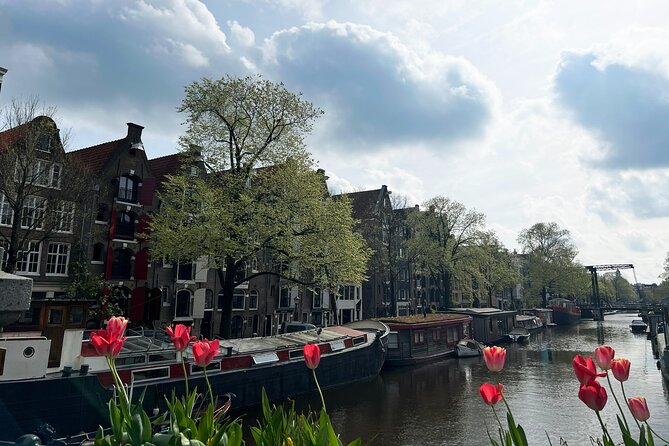
Next comes Zeedijk, one of Amsterdam’s oldest streets. The big idea: this wasn’t just a street. It functioned as a dike with locks, protecting the city from flooding.
That’s more than a fun fact. It changes how you picture Amsterdam’s geography. You start understanding that canals and water management aren’t “background.” They’re part of the city’s identity, trade routes, and growth story. Even if you’ve seen photos of Amsterdam, this kind of explanation helps you connect the city’s physical design to its survival.
In a tour like this, the best moments are often the short ones. This is one of them.
Stop 3: The Waag and the city’s defensive logic
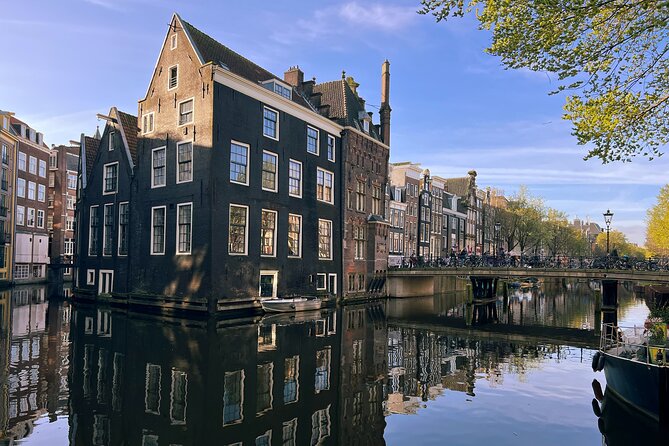
At The Waag (a medieval city gate), you get another piece of the defense-and-control puzzle. This gate used to be part of a defensive wall and mote system. Even if you only glimpse the structure briefly, you learn to “read” what you’re looking at.
Here’s the practical takeaway for you: when Amsterdam’s later wealth shows up through canals and merchant buildings, it’s easier to see that wealth as something built on earlier protection and organization. The city wasn’t just lucky; it developed systems.
You can also read our reviews of more guided tours in Amsterdam



Stop 4: Oostindisch Huis and the spice-trade power story
Then you reach Oostindisch Huis, tied to the Dutch East India Company, founded in 1602. This stop is where Amsterdam’s global reach enters the conversation. You learn about the spice trade and also about how the modern corporation and stock market concept took shape.
If you like history that connects past and present, this is a standout. It’s not only about what spices were traded—it’s about the financial machinery that allowed distant goods, risk, and investment to work. For your trip, that means Amsterdam’s “merchant” reputation isn’t just a vibe. It’s a structural story.
And it’s timed well. It’s short enough to keep you moving, but substantial enough that you leave with a real sense of why Amsterdam became what it became.
Stop 5: Het Kleinste Huis and Amsterdam’s sense of scale
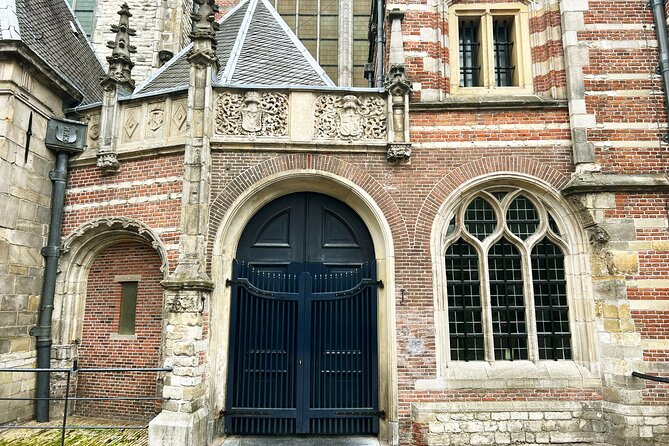
Het Kleinste Huis—Amsterdam’s smallest house—shows up with a reminder that city life has always included tight spaces and quirky details. It stood next to a gate decorated with the city’s famous crest and other symbolic decorations.
This stop works because it adds texture. After bigger ideas like defense and trade, this brings you back to human scale: how people lived, how the city filled in space, and how symbolism and architecture showed civic identity.
It’s also the kind of stop where you’ll remember the photo more than the facts, which is often how good tours stick.
Stop 6: Dam Square, from market heart to monuments
Dam Square is the old market square—the heart of the city—with the Royal Palace and a national Second World War monument at present.
This is your “center of gravity” stop. The square is busy and historically layered, and the guide helps you see it as more than a place to pass through. You get a sense of how a market heart turns into a civic symbol, and how twentieth-century memory sits alongside centuries of commerce.
For first-time visitors, this is the moment your mental map locks in: you stop thinking of Amsterdam as scattered sights and start seeing it as a system built around key spaces.
Stop 7: The Canal Ring (Grachtengordel) and the Golden Age logic
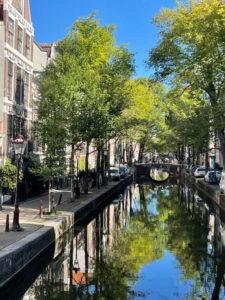
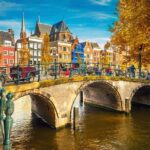
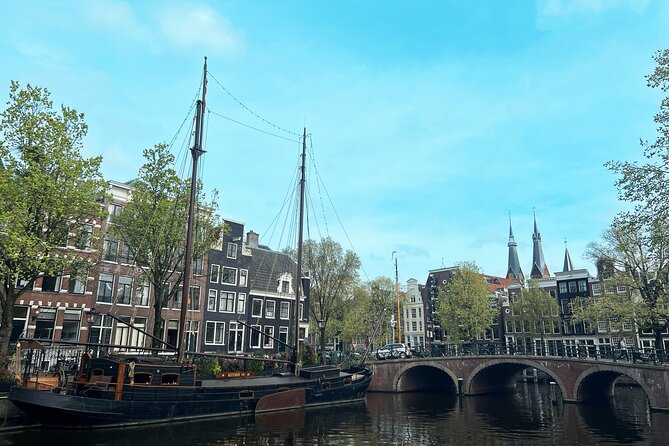
Then you move into the Canal Ring district (Grachtengordel). This is where you see the finest canal houses in northern baroque style, plus houseboats that reflect how canals stay part of everyday life.
The value here is interpretation. It’s easy to look at canal houses and just admire the looks. The guide’s framing helps you understand that the ring was built for wealthy merchants during the Golden Age, so those buildings weren’t only decorative—they were social signals and economic statements.
Practical note: canal-ring areas are also where you’ll see bikes everywhere. The guide’s pacing and routing help you navigate that without feeling stressed. If your group is used to walking tours in other European cities, you’ll still appreciate that Amsterdam’s bike flow adds a different rhythm.
Stop 8: Jordaan for brown cafés, boutiques, and local vibe
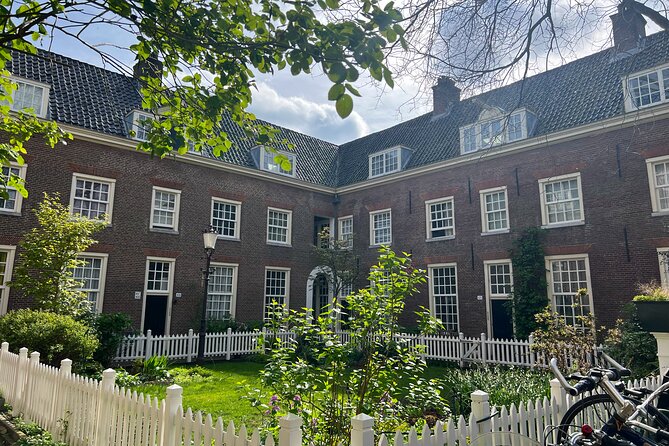
Next is the Jordaan, a popular and charming neighborhood known for picturesque streets, traditional brown cafés, and unique boutiques.
This stop matters because it shifts from “big history” to lived-in Amsterdam. You’ll still get historical context, but the point is to show you how the city feels when it’s not performing for tourists. Jordaan is the kind of place where you’ll want to wander afterward, grab a drink, or start planning the next day around cafés and small shops.
It’s also a smart move late in the walk. By the time you reach Jordaan, you’ve already learned the city’s big story. Now you can recognize how those stories show up in streets and everyday hangouts.
Stop 9: Westerkerk and the local-loved landmark finish
The final stop is Westerkerk, a Dutch Protestant church known for its stylish design and iconic spire. The guide frames it as a landmark loved by locals, not just visitors.
Finishing here is a strong choice because it gives you a clean end point with a recognizable silhouette. You’ll also be close to major sightseeing lines for the afternoon—especially if you want to pair your walk with nearby experiences around the Anne Frank House area.
As a closing note, the “last stop” energy is often where tours either drag or land well. Here it feels like a satisfying wrap: you leave with a landmark in your head, plus a sense of direction for the rest of your day.
Why the private format makes this tour worth it
At $96.02 per person, you’re paying for two things that matter in Amsterdam: a tight route and a guide who can shape the walk to your group. Private doesn’t automatically mean better, but in this case it helps for three reasons.
First, the tour is about understanding. When you can ask questions in the moment, you get answers that match what you’re noticing. Second, you can control pacing without feeling guilty. Third, your guide can personalize your route elements—something you’ll feel during the storytelling.
In the feedback I’m taking cues from, Anna’s ability to connect with different personalities shows up again and again. People talk about her humor and confidence, plus how she made time for snack stops along the way and wrapped with ideas for exploring beyond the tour. That combination—history plus real guidance—is what makes the private format feel like value, not just a higher price tag.
What to expect on the ground (and what to bring)
This is a walking tour with about 2 hours on your feet. Most stops are short, and the overall flow is smooth: medieval remnants, water control history, trade power, civic squares, the canal ring, and a neighborhood shift into Jordaan, finishing at Westerkerk.
You should plan for city-street walking and the local pace of Amsterdam—especially bikes around canal areas. Wear comfortable shoes and dress for the weather. Bottled water isn’t included, so if you tend to get thirsty during walks, grab a bottle before you start or plan to buy one nearby.
Also, if you travel with a service animal, the experience allows service animals, so you can expect it to be workable for that situation.
Who this tour suits best
This tour fits you if you want your first Amsterdam days to feel organized. It’s also great if you like history that connects to how cities function—water control, trade, civic spaces—rather than only looking at buildings as objects.
I’d especially recommend it if:
- You’re on a short trip and want a fast “mental map” of the city
- You enjoy architecture and want context for what you’re seeing
- You like asking questions and getting answers that match your interests
- You want an experience led by a long-time local
It’s not the best fit if your group needs mobility accommodations or if you have trouble walking and standing for around 2 hours.
Should you book this Amsterdam historical walking tour?
If your goal is to get oriented and understand why Amsterdam looks the way it does, this is a strong yes. The route hits the essentials—medieval origins, water defense logic, trade power, Dam Square, the Canal Ring, and Jordaan—then lands at Westerkerk where you can keep exploring.
You might skip it if you want a mostly “photo stop” sightseeing day with minimal walking, or if mobility is a concern for your group. But for most people arriving in Amsterdam and wanting to feel grounded quickly, this tour offers clear value: private attention, strong local storytelling, and a practical route that sets you up for the rest of your trip.
FAQ
How long is the historical walking tour in Amsterdam?
It runs for about 2 hours.
Is the tour private?
Yes. It is a private tour/activity, and only your group participates.
What is the price per person?
The price listed is $96.02 per person.
What language is the tour offered in?
The tour is offered in English.
Where do you meet and where does it end?
You meet at Café the Schreiertower on Prins Hendrikkade 95, Amsterdam. The tour ends near Westerkerk on Prinsengracht 279, close to the Anne Frank House and Westerkerk church.
Are admissions included for the stops?
Yes. The stops include admission tickets listed as free, and all fees and taxes are included.
Is bottled water included?
No. Bottled water is not included.
Is this tour suitable for people with mobility issues?
It is not recommended for participants who have trouble walking and standing for 2 hours, and mobility aids are not available. Service animals are allowed.
Can I get a full refund if plans change?
Yes, you can cancel up to 24 hours in advance of the experience for a full refund.