REVIEW · AMSTERDAM
Red Light District Tour – It’s History & It’s Future
Book on Viator →Bookable on Viator
Red lights mean stories, not just spectacle. This small-group night tour is interesting because it explains how the district got here and where it might go next, with a guide who stresses respect for the people who work there. I also like that you do not just hover around the neon blocks—you move through nearby landmarks like Nieuwmarkt and the Old Church for a bigger sense of how Amsterdam changed. One possible drawback: you may have a bit of early group chatting before the walking starts.
I think the value is strong for a $60.15 outing that runs about 2 hours and keeps the group tight (max 10). You get a mobile ticket, plus local recommendations, and the guide language support is listed as English with options including Spanish, Italian, and Dutch. Just note that some sights may require admission on your own, so plan a little extra.
The route starts at Café the Schreiertower on Prins Hendrikkade 95 and ends near Beurs van Berlage. It’s also easy to reach by public transportation, and service animals are allowed—so you can focus on the walk instead of logistics.
In This Review
- Key things you’ll notice on this night walk
- Why a Red Light District tour at 8 pm helps your brain
- Meeting at Café the Schreiertower and ending near Beurs van Berlage
- How the tour handles the sensitive part without making it awkward
- Stop-by-stop: from Weeping Tower to the Red Light District
- Weeping Tower (with you-take-on-your-own admission)
- St. Nicholas Basilica (free and quietly significant)
- Zeedijk (historic street, tricky past, then change)
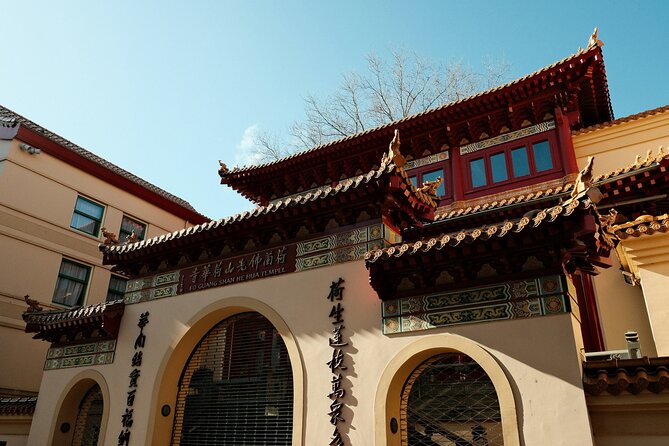
- Fo Guang Shan He Hua Temple (short stop, free time, peaceful reset)
- Nieuwmarkt (markets, squares, and city energy)
- The Red Light District (the main topic, but not the whole story)
- Oude Kerk (another historic reset)
- Condomerie and Beurs van Berlage: two stops you won’t forget
- Condomerie (free, funny, and educational)
- Beurs van Berlage (architectural “why this city matters” ending)
- Price and “what you’ll really spend” on the night
- Who should book this Red Light District history and future tour
- Quick call: should you book it?
- FAQ
- What is the duration of the Red Light District Tour – It’s History & It’s Future?
- How much does the tour cost?
- Where does the tour start and end?
- What time does the tour run?
- Is the tour offered in English?
- Do I need admission tickets for the stops?
- Is free cancellation available?
Key things you’ll notice on this night walk
- A respectful, practical approach: you get guidance on how to act in the Red Light District so the whole experience stays human.
- Small group, night pace: max 10 people, roughly 2 hours, starting at 8:00 pm.
- More than neon: churches, markets, and even a Buddhist temple keep the story from getting stuck in one lane.
- A street history thread: you hear how areas like Zeedijk and the market around Nieuwmarkt evolved through tough times and reinvention.
- A very odd-but-on-topic shop stop: the Condomerie mixes public health with humor (and it’s free to enter).
- A fitting architectural finish: Beurs van Berlage closes the loop with a major landmark turned into a cultural venue.
Why a Red Light District tour at 8 pm helps your brain
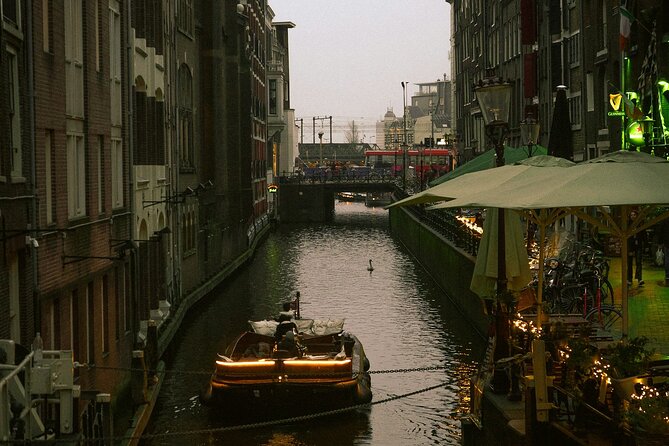
Amsterdam’s Red Light District is loud at any hour. But at night, the streets make more sense. The light, the pace, and the mix of visitors all push you to notice details—the kind you miss in daylight, when everything looks like it’s just open for business.
This tour is built for that evening rhythm. You start at 8:00 pm, when the city feels like itself: quick, lived-in, and slightly chaotic in a way that still has rules. And because the group is limited to 10 travelers, you’re not stuck waiting while a crowd funnels through narrow sidewalks.
The biggest reason I like doing this kind of tour at night is how it changes your perspective. You’re not just staring at the lights. You’re learning how the area functions socially and economically, and how Amsterdam’s attitude has shifted over time. The guide helps you see it as part of a larger city story, not a single attraction you can check off.
You can also read our reviews of more historical tours in Amsterdam

Meeting at Café the Schreiertower and ending near Beurs van Berlage
Your walk begins at Café the Schreiertower, Prins Hendrikkade 95 (close to the center of the action), and it ends near Beurs van Berlage. The itinerary is designed so you keep moving instead of zigzagging randomly across town.
That matters because Amsterdam’s best neighborhoods aren’t big on long detours. In roughly 2 hours, you’ll cover a compact set of stops that range from religious buildings and historic squares to the Red Light District itself. The ending point is also handy: Beurs van Berlage sits right where it’s easy to continue your evening on foot or with public transit.
You’ll also receive a mobile ticket, and confirmation is provided at booking. Since the tour includes local recommendations, you’re not just paying for a “walk and stop.” You’re getting pointers on how to keep the rest of your Amsterdam night coherent after the group splits.
How the tour handles the sensitive part without making it awkward
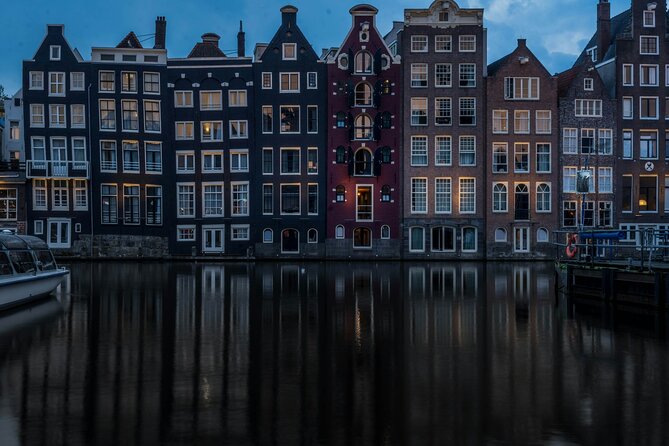
The Red Light District can feel awkward fast—especially if you’re unsure what’s okay to do and what’s not. I like that this tour tackles that head-on, before you spend time near the window-lined streets.
The guide’s job here is not just facts. It’s also etiquette. The tone is about respect and making sure the workers aren’t treated like props for photos. And because the group is small, you can actually hear the instructions and understand why they matter.
There’s a practical side too: the guide can point out what to look at, what to avoid, and where to keep your distance. That’s a big difference from wandering on your own with your phone held up like a shield.
One thing to consider: one review-style comment that I’d take seriously is that the start can include some extra chatting before you really get moving. If you’re the type who hates waiting, show up a bit early, get settled, and then use the first minutes to get oriented.
Stop-by-stop: from Weeping Tower to the Red Light District
This walk is more balanced than you might expect from the name alone. Yes, you’ll see the Red Light District. But you build context first, so the windows and side streets don’t feel like a disconnected shock.
Weeping Tower (with you-take-on-your-own admission)
You kick things off at the Weeping Tower, described as a haunting symbol tied to Amsterdam’s past. The key practical point: the stop lists admission ticket not included, so it’s one of the places where you may need to pay separately.
Even if you don’t go deep into details, this first stop sets the mood. It’s a reminder that the city’s story includes suffering, loss, and turning points—not just nightlife.




St. Nicholas Basilica (free and quietly significant)
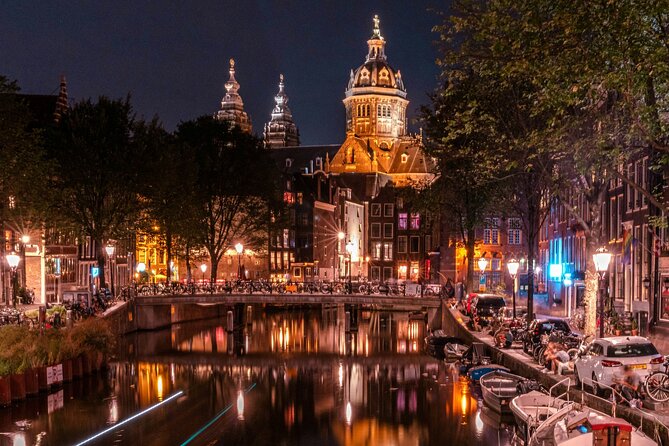
Next is St. Nicholas Basilica, dedicated to the patron saint of seafarers. The stop is 15 minutes and admission is free.
This is a smart placement. It shifts the frame from street culture to Amsterdam’s historical identity as a city shaped by waterways and trade. You’ll spend time with architecture and a sense of spiritual life, which makes the later Red Light District section feel less random.
Zeedijk (historic street, tricky past, then change)
Then you stroll through Zeedijk, one of those central streets where the past keeps peeking through storefronts. This stop is 15 minutes and free.
You’ll hear how Zeedijk changed over time, including a reference to a 1970s epidemic period that shaped its reputation before the area became more resilient and re-energized. Whether you personally like history or not, this context matters because it explains why “red light” isn’t the only layer Amsterdam wears.
Also, this part of the route is where you may notice nearby Chinatown vibes. Even without a formal Chinatown stop, the area can feel like it’s blending cultures and crowds—which is very Amsterdam.
Fo Guang Shan He Hua Temple (short stop, free time, peaceful reset)
A quick break comes at the He Hua Temple (Fo Guang Shan). This is a 5-minute stop and lists admission ticket not included.
It’s brief, but it works. You go from street-level intensity into a calmer setting. If you want an eye-opener moment, it’s the kind of contrast that helps your brain file the whole tour under meaning instead of just entertainment.
Nieuwmarkt (markets, squares, and city energy)
You then head to Nieuwmarkt, a lively square area where you get a taste of day-to-day Amsterdam life. The stop is 15 minutes and free.
This is where I like the pacing. You’re not just watching the Red Light District. You’re learning the broader neighborhood ecosystem—historic landmark energy, shopping streets, and the kind of crowd mix you only get in a central square.
The Red Light District (the main topic, but not the whole story)
Now you’re at the big one: the Red Light District section. This stop is 30 minutes and free.
This is where the guide’s respect-focused approach pays off. You’re guided through what you’re seeing, what it represents, and how Amsterdam’s attitude has been shaped by social debate over the years. You’ll notice the street rhythm: signage, neon, bars, and the constant flow of people. The difference is that you’re not just looking—you’re understanding.
Practical note: you’ll want to keep your phone away for long moments. If you’re photographing, follow the guide’s lead and be considerate. The goal here is to see people as people, not content.
Oude Kerk (another historic reset)
You finish with Oude Kerk (Old Church), an 800-year-old landmark. This stop is 10 minutes and admission ticket not included.
It’s a fitting closure for a night that starts with a symbolic tower and ends with a massive piece of Amsterdam’s early religious architecture. Even if you only spend a short time here, it reinforces that Amsterdam is older than the nightlife—and the city’s identity has always been contested, debated, and reshaped.
Condomerie and Beurs van Berlage: two stops you won’t forget
Two of the most memorable parts of this tour are also a bit surprising.
Condomerie (free, funny, and educational)
You visit Condomerie, described as the world’s first condom specialty shop. This stop is 5 minutes and free.
If you expect a totally serious history lecture, this is a curveball—in a good way. The shop’s point is public health, framed with humor and education. For a tour about the Red Light District, it’s actually a relevant connection: the area brings sex work and sexual health into the public conversation, whether people want to talk about it or not.
You’ll walk through the displays quickly, but it’s the kind of stop that makes you think differently when the group moves back out onto the street.
Beurs van Berlage (architectural “why this city matters” ending)
The tour ends near Beurs van Berlage, a former stock exchange now used for events, exhibitions, and concerts. This stop is 15 minutes and free.
If you like buildings, this is a strong finish. It’s not just a pretty façade—it’s a major architectural statement, and the building’s current use gives you a modern reason to care. You’re leaving the Red Light District with a sense of Amsterdam as a place where finance, culture, and public debate all overlap.
Price and “what you’ll really spend” on the night
The tour costs $60.15 per person, and it’s roughly 2 hours. For central Amsterdam at night with a max-10 group and a guide included, I see this as good value—especially because the route includes multiple landmark stops rather than just one district segment.
That said, here’s what you should keep in mind so there are no surprises:
- Some stops list admission ticket not included (notably Weeping Tower, He Hua Temple, and Oude Kerk).
- Alcoholic beverages are 5–10 euros and 18+ only.
- Optional extras like coffee/tea (5–10 euros), soda/pop (2–5 euros), and snacks run 5–15 euros.
- Dinner and lunch are not included and are priced broadly (20–50 euros), plus brunch 20–40 euros.
My advice: treat the tour fee as the core cost, then budget a small buffer for any church or tower entry you decide to take. For drinks and snacks, you can decide on the fly—there’s no need to spend big just to stay comfortable.
Also, the tour is commonly booked well ahead (an average booking window is listed), which usually means it’s popular for a reason: the format works.
Who should book this Red Light District history and future tour
This fits best if you want more than a spectacle.
Book it if:
- You like history that connects streets to real change over time.
- You want a guide who emphasizes respect in sensitive zones.
- You want a compact walking loop that uses your Amsterdam time efficiently at night.
- You prefer smaller groups and a guide who can keep information clear.
You might choose something else if:
- You hate starting with any extra talking before you move.
- You’re only interested in nightlife, not the social or historical context.
- You’re not comfortable walking through an area that many people find intense.
Good news: the tour notes that most travelers can participate and that service animals are allowed, which makes it easier to plan without guessing.
Quick call: should you book it?
I’d book this tour if you want to understand the Red Light District as part of Amsterdam’s evolving city story—then wrap that understanding with churches, a temple, market energy, and an architectural finish at Beurs van Berlage.
You’re paying for more than sight-seeing. You’re paying for context, a respectful tone, and a route that keeps you moving past the stereotypes.
If you do book, come ready for walking and plan a little extra for any admissions marked not included. That’s the only real homework.
FAQ
What is the duration of the Red Light District Tour – It’s History & It’s Future?
It lasts approximately 2 hours.
How much does the tour cost?
The price is $60.15 per person.
Where does the tour start and end?
It starts at Café the Schreiertower, Prins Hendrikkade 95, 1012 AE Amsterdam, and ends at Beurs van Berlage, Damrak 243, 1012 ZJ Amsterdam.
What time does the tour run?
The start time is 8:00 pm.
Is the tour offered in English?
Yes. The tour is offered in English, and the guide is listed as available in English/Spanish/Italian/Dutch.
Do I need admission tickets for the stops?
Some stops list admission tickets as not included, including Weeping Tower, Fo Guang Shan He Hua Temple, and Oude Kerk. Other listed stops are free, including St. Nicholas Basilica, Zeedijk, Nieuwmarkt, Red Light District, Condomerie, and Beurs van Berlage.
Is free cancellation available?
Yes. You can cancel for a full refund up to 24 hours before the experience’s start time.