REVIEW · AMSTERDAM
LGBTQI+ History Tour of Amsterdam
Book on Viator →Operated by Special Amsterdam Tours · Bookable on Viator
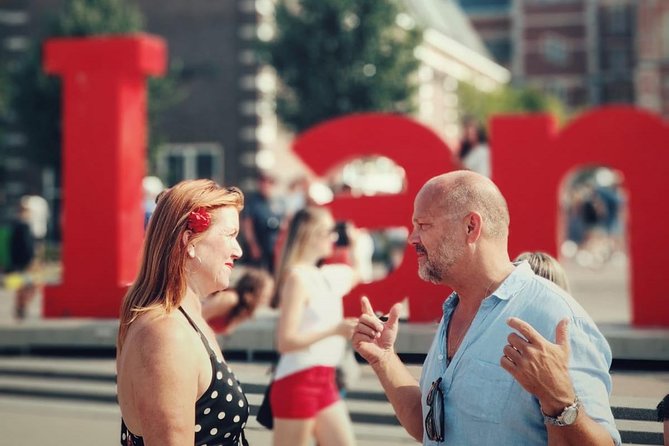
A queer walk you can follow city-block by city-block. This 2-hour Amsterdam tour tracks LGBTQI+ history from the Gay Monument to the oldest gay-bar area, led by Henk, a longtime witness to the movement. I love the small group size (up to 15) because you get real Q&A, and I also like the way the route connects street corners to major milestones in visibility and rights.
One drawback to plan for: it’s mostly outdoors walking in the center of Amsterdam, so good shoes and water matter, and the stories can cover heavy topics.
In This Review
- Key points before you go
- Meet Henk and the small-group style
- From Westermarkt to Dam Square: a clear 2-hour plan
- Gay Monument: why remembrance is part of the route
- Dam Square and the Royal Palace angle you won’t have time to tour
- Canals and 17th-century planning: what to notice as you walk
- Red Light District walk: leather-street context with Q&A space
- China Town and Bet van Beeren: ending with a living landmark
- Price and value at about $42.33
- Practical tips: wear, plan, and handle emotional history
- Should you book this LGBTQI+ history tour in Amsterdam?
- FAQ
- How long is the LGBTQI+ History Tour of Amsterdam?
- Where does the tour start and end?
- What time does the tour begin?
- Is the tour in English?
- How big is the group?
- What tickets are included?
- Is water provided?
- What should I wear?
- Are straight allies welcome?
- What if the weather is bad?
Key points before you go
- Henk’s lived perspective on Amsterdam’s earliest gay-rights movement adds depth you won’t get from facts-only tours
- Up to 15 people keeps the pace human and makes questions easy
- Tickets are included at key stops (Gay Monument, plus the Dam Square stop), while the Royal Palace visit is not included
- You walk real neighborhoods: 17th-century canal areas, Dam Square, the Red Light District, and the Zeedijk finish
- Allies are welcome in a tour framed for understanding, not just sightseeing
- You end at Bet van Beeren in the Zeedijk area, where history meets a working nightlife scene
Meet Henk and the small-group style
This tour works because the guide, Henk, brings more than dates. He’s described as someone who lived through the beginning of the gay movement in Amsterdam, so his storytelling has that rare mix of history and lived context.
The small group size (a max of 15) changes how it feels. Instead of rushing everyone past each spot, you get time to ask questions as you walk. That matters on a topic like LGBTQI+ history, where people often want the story behind the symbolism—why a monument exists, or how an address became a community reference point.
You’ll also notice the tour is framed to welcome straight allies, not just insiders. Expect the emphasis to be on respectful understanding and how public space shifted over time—sometimes slowly, sometimes painfully.
You can also read our reviews of more historical tours in Amsterdam


From Westermarkt to Dam Square: a clear 2-hour plan
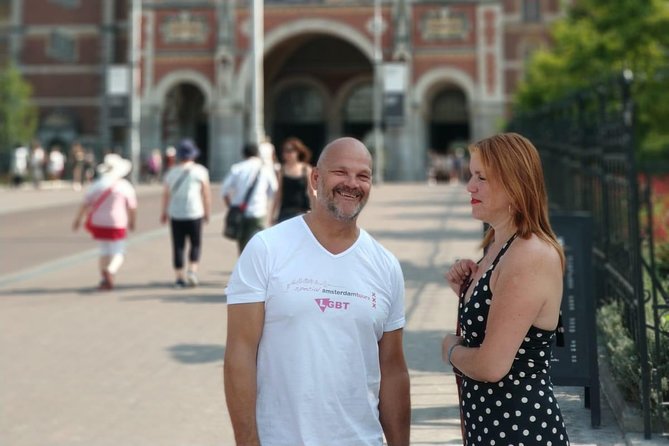
The tour starts at Westermarkt 2L (1016 DW Amsterdam) at 11:00 am. You finish at Café ’t Mandje, Zeedijk 63 (1012 AS Amsterdam), a walking distance from Central Station. The route is designed for a compact time window—about two hours—so you’re not stuck commuting across the whole city.
You’ll be on foot through central Amsterdam, moving between big “this matters” landmarks and the canal-side streets around them. If you like getting your bearings fast, this is one of the better ways to do it: you’re learning why certain places became important while you’re still learning how the center is laid out.
If you’re sensitive to crowds, this tour’s group size helps. If you’re sensitive to serious topics, come ready for that too. The framing includes past persecution and also the AIDS-era losses that shaped community life and advocacy.
Gay Monument: why remembrance is part of the route
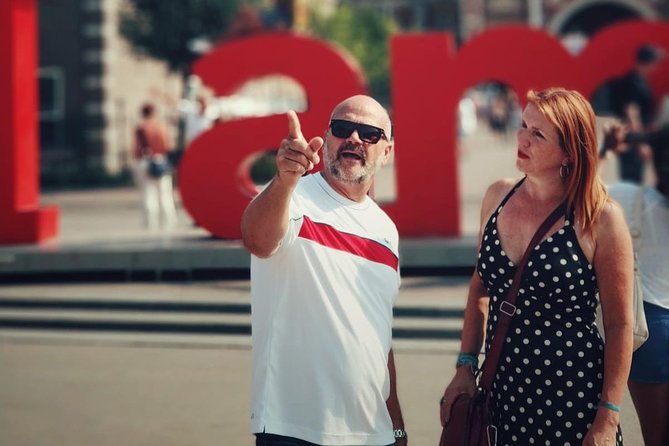
The tour begins at the Gay Monument, a starting point for gay victims in past, present, and future. This is more than a photo stop. The guide explains how the Netherlands came to have what’s described as the first monument in the world for this purpose—meaning you’re standing at a place designed to keep memory public.
What I like about starting here is that it sets the emotional and historical tone early. You’re not starting with nightlife or stereotypes; you’re starting with the idea that civil rights travel with consequences. The story helps you understand why later Amsterdam landmarks aren’t random—they’re part of a longer fight for visibility and safety.
There’s also an included admission ticket at this first stop. So you can spend time without having to hunt for extra costs or last-minute logistics.
Dam Square and the Royal Palace angle you won’t have time to tour
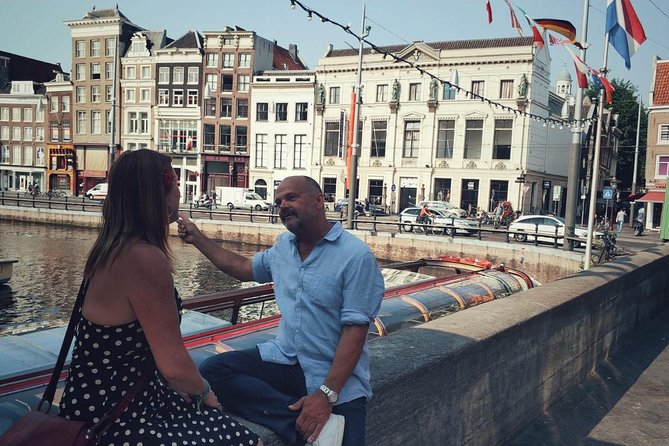
After the Gay Monument, you walk along canals toward Dam Square. The route is built around the way history clings to place names and street layouts. You’ll get the “why it’s here” story while also learning how Amsterdam’s older urban design shaped where communities could gather.
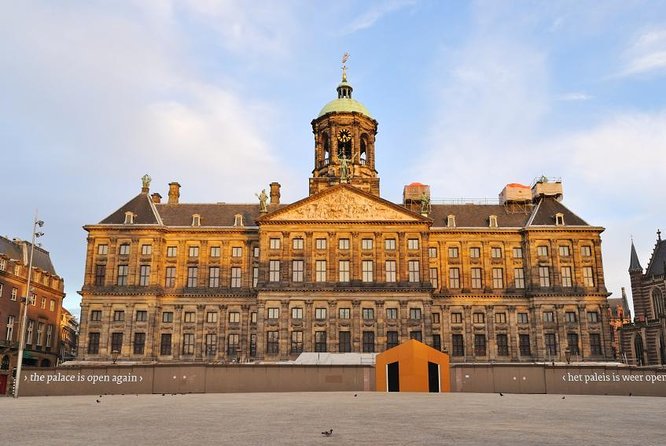
Dam Square is treated as the central stage of the city—what happens here, and how LGBT-related events and realities show up in the same public space. There’s an admission ticket included for this stop, but the bigger takeaway is the interpretation: the square isn’t just a landmark; it’s a place where power, politics, and visibility overlap.
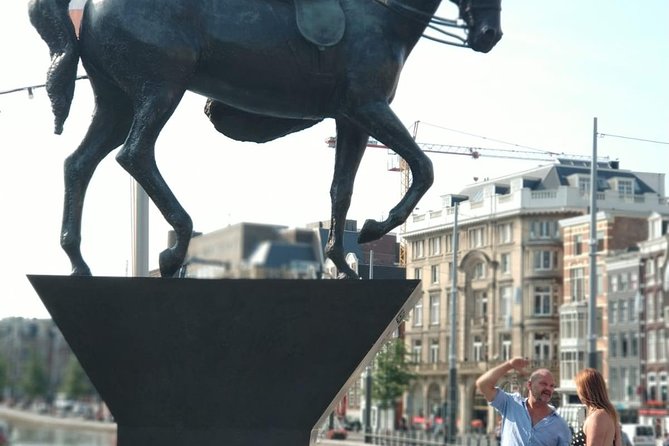
At Royal Palace Amsterdam, you’ll hear the origin story tied to Dam Square and what it has to do with gay life in the 17th century. You won’t have time to go inside the palace on this tour, and that visit isn’t included. The practical value is that you still get the context fast—then you can decide later if you want to plan a separate palace visit when you have more time.
Canals and 17th-century planning: what to notice as you walk
One of the most practical parts of this tour is how it teaches you to look at Amsterdam as a designed city, not just a pretty one. As you head toward Dam Square, you’ll hear how the area around Dam Square connects to 17th-century city planning—described as the first example of city planning in the world.
You don’t need to be an architecture person to appreciate this. The guide’s approach turns canal-side buildings and street patterns into cues for understanding social life. Where people lived, where movement went, and where public attention gathered all shaped the possibilities for identity, community, and activism.
This is also where the canal walking becomes useful even if you’ve seen canals before. Instead of just admiring them, you’re learning to read the city like a map of public history.
If you’re short on time in Amsterdam, this is the kind of detail that helps your other sightseeing make more sense later.





Red Light District walk: leather-street context with Q&A space

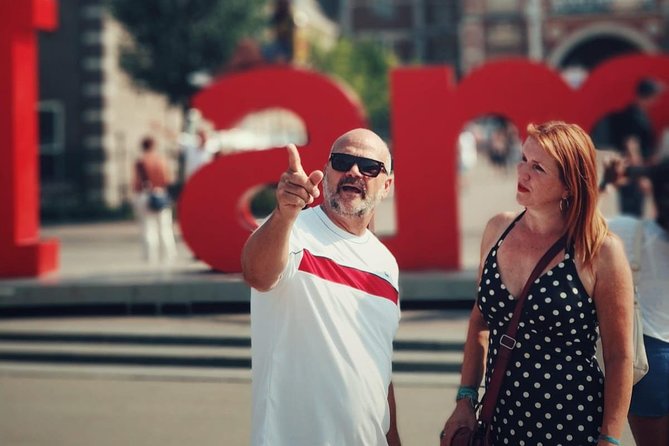
As you continue, the tour moves into the Red Light District area. You’ll hear about the district’s texture and its associated lore, including the leather street of Amsterdam. If you have questions about how the city managed, ignored, or policed different kinds of expression over time, this is where the guide can answer them in plain language.
A fair heads-up: the Red Light District stop changes the tone. It’s not a lecture about politics only. It’s grounded in the reality of how commerce and visibility intertwined in specific neighborhoods.
That said, the tour’s format gives you control. If you want details, you can ask. If you’d rather keep moving, you can stay focused on the route and the historical meaning rather than the sensational parts.
Come with respectful curiosity. The best experience here comes when you treat the stories as part of social history, not just an atmosphere.
China Town and Bet van Beeren: ending with a living landmark
The tour then shifts to the China Town area—described as once the roughest street in Amsterdam. In other words, you’re not only seeing pretty streets; you’re tracing how reputation, risk, and survival shaped community spaces.
This stop includes the story of the oldest gay bar in Amsterdam, and you end at the bar of Bet van Beeren. Ending here is smart. You leave with a historical story and then land at a place that still functions as part of city life.
Even better, the guide can help you make sense of what you’re looking at. Some experiences include a chance to meet or connect with current people keeping a venue alive, so the ending can feel less like a museum stop and more like a bridge to the present.
If you want the next step after the walk, this ending location is practical. You’re in the Zeedijk area, so you can keep exploring without needing to backtrack.
Price and value at about $42.33
At $42.33 per person for about two hours, the value comes from three places: guide quality, included admissions, and efficiency.
First, you’re not paying for a “read signs and leave” walk. You’re paying for a guide with personal connection to the movement plus the ability to connect personal stories to public milestones.
Second, the admission ticket(s) at the Gay Monument and the Dam Square stop help your overall spend. Royal Palace context is included as interpretation, but that palace visit itself isn’t part of the tour package—so you’re not paying for something you don’t use.
Third, the schedule is tight but not rushed. You cover multiple key locations in central Amsterdam in one go, and because the group is small, you’re more likely to get the questions answered that matter to you.
If you’re deciding between a quick city “highlights” walk and a theme-based tour, this one usually wins for travelers who care about how a place really changes over time.
Practical tips: wear, plan, and handle emotional history
Bring walking shoes and your own water. The tour is short on paper, but it’s still a walking tour in central Amsterdam. You’ll also want a light layer, because weather can swing fast near the canals.
Good weather is required for this experience. If it gets canceled because conditions aren’t right, you should expect either an alternative date or a full refund.
Also plan your mindset. This is LGBTQI+ history, which includes oppression and loss, not just progress stories. If that topic might hit hard, give yourself a little breathing room after the tour—walk it off slowly, grab coffee, and let the story settle.
Should you book this LGBTQI+ history tour in Amsterdam?
Yes—if you want a smarter way to see central Amsterdam and you care about how LGBTQI+ rights took shape in real streets, real neighborhoods, and real public spaces.
Book it especially if:
- you like small-group history with time for questions
- you want a guide with lived connection to the movement, not just textbook facts
- you’re planning a short stay and want multiple key locations in about two hours
Skip it or consider your approach if:
- you strongly dislike hearing about persecution or the AIDS-era losses tied to activism
- you need a fully relaxed, feel-good walk with zero heavy context
If you’re visiting soon, note that it’s commonly booked about a month in advance. If you have a specific date in mind, lock it in early and you’ll start your Amsterdam trip with a deeper, more human view.
FAQ
How long is the LGBTQI+ History Tour of Amsterdam?
It runs for about 2 hours (approximately), with a route through central Amsterdam.
Where does the tour start and end?
It starts at Westermarkt 2L, 1016 DW Amsterdam, and ends at Café ’t Mandje, Zeedijk 63, 1012 AS Amsterdam.
What time does the tour begin?
The start time listed is 11:00 am.
Is the tour in English?
Yes, the tour is offered in English.
How big is the group?
The tour has a maximum of 15 travelers.
What tickets are included?
Admission tickets are included for the Gay Monument stop and for the Dam Square stop. The Royal Palace is discussed but not visited, and its admission is not included.
Is water provided?
No. Bring your own water.
What should I wear?
Wear walking shoes, since it’s a walking tour.
Are straight allies welcome?
Yes. Straight allies are warmly welcomed.
What if the weather is bad?
The experience requires good weather. If it’s canceled due to poor weather, you’ll be offered a different date or a full refund.