REVIEW · AMSTERDAM
Amsterdam: Private Pedicab Historical Sightseeing Tour
Book on GetYourGuide →Operated by Bram de Haan Events · Bookable on GetYourGuide
Pedicabs turn Amsterdam into a moving story. In just two hours, you glide past the city’s key historic areas in a private pedicab, with a local guide turning street corners into context you can actually use.
I love that the route isn’t random. You get a tight sweep from Dam Square through the 17th-century canal district, the Jewish Quarter, and Museum sights, with lots of time to look, ask questions, and take photos. A small drawback: there’s no food or drinks on this tour, and on colder days you’ll want more than just a blanket if you run cold.
In This Review
- Key things that make this Amsterdam pedicab tour special
- Why a private pedicab works so well in Amsterdam’s old center
- Route at a glance: from Dam Square to Museumplein
- Dam Square: the start point for Amsterdam’s big story
- Zeedijk and Nieuwmarkt: dikes, an old city gate, and early storefront life
- Montelbaanstoren and the Oude Waal lookout
- The Jewish Quarter: synagogues, the 102,000-brick monument, and diamond-era canal houses
- Hermitage area and the Amstel: water views that make the city feel real
- The 17th-century canal district loop: merchant houses in half circles
- Museumplein and the Rijksmuseum tunnel stop
- Price and value: what $230 gets you for two hours
- When to book and how to pace your day
- Who this tour suits best (and who should consider alternatives)
- Should you book this Amsterdam pedicab historical tour?
- FAQ
- Where does the tour start and how do pickups work?
- How long is the Amsterdam private pedicab tour?
- Is this a private tour?
- What neighborhoods and sights will you see?
- What language is the live guide?
- What’s included in the price?
- Are food and drinks included?
- What should you bring for the tour?
- Is the pedicab suitable for everyone by weight?
- Can you choose where the tour ends?
Key things that make this Amsterdam pedicab tour special
- Private, street-level access through lanes and areas that feel made for bikes and pedestrians, not buses
- Dam Square to Museumplein in 2 hours, so you get orientation fast without a long day
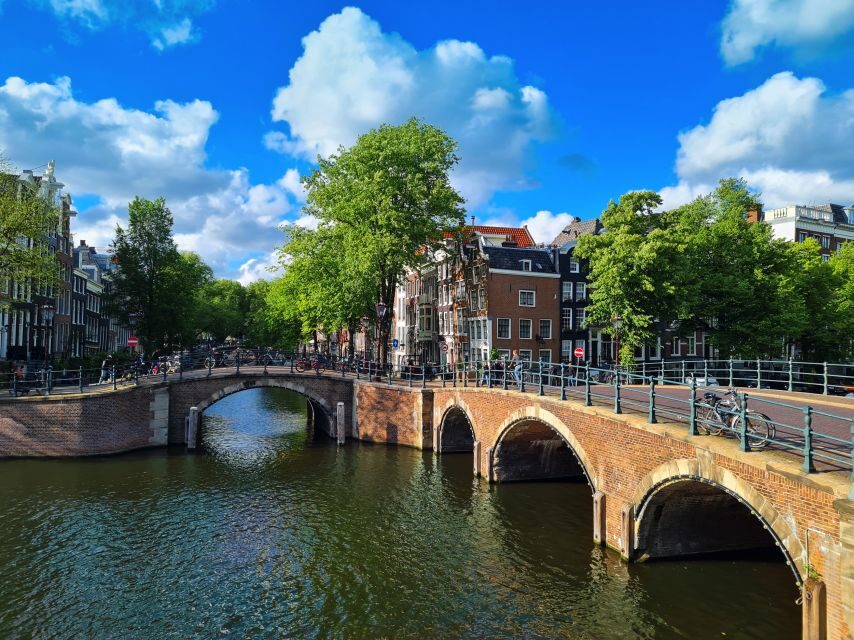
- Amstel views and bridge spotting, including a classic Amstel panorama and the Skinny Bridge look
- Jewish Quarter stops with clear, grounded explanation, including the monument with 102 thousand bricks
- Bram’s map-and-photo style guidance, which helps the city’s timeline click into place
Why a private pedicab works so well in Amsterdam’s old center
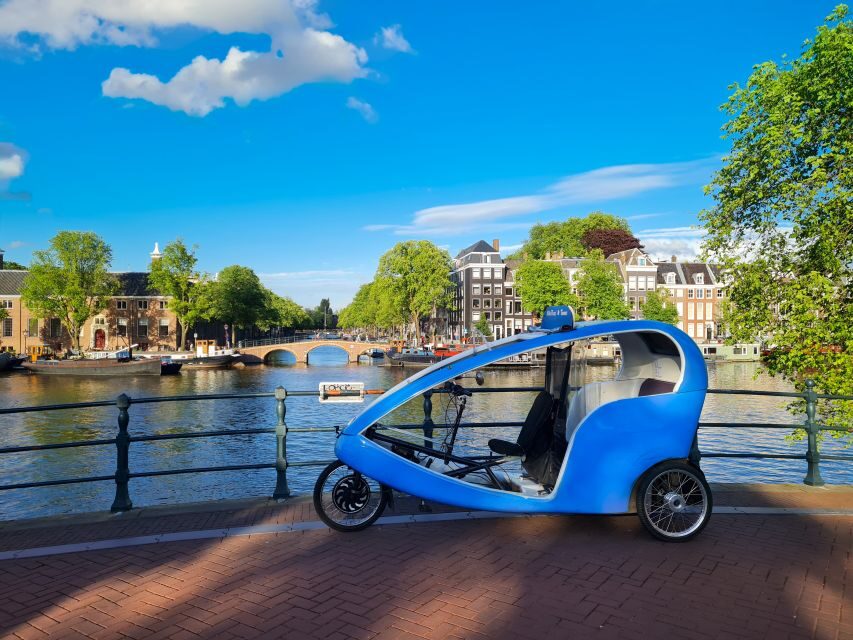
Amsterdam can feel like a puzzle. Streets twist, canal houses lean at different angles, and big landmarks pop up just long enough for you to miss the meaning. A pedicab solves that in a very practical way: you move slowly, sit comfortably, and can actually process what you’re seeing.
This is also a tour format that fits real travel needs. It’s private, which means you can go at your pace—especially if you don’t want to rush between stops. People with limited walking ability often find this kind of transport makes the city feel accessible without turning the day into a checklist.
And you’ll learn the city as you ride. The guide is local and explains what you’re seeing as it relates to Amsterdam’s growth: where the city started, how the canal district formed, and how different communities shaped neighborhoods over time. The result is that the sights aren’t just pretty—they feel connected.
One more plus: because the pedicab can take you through smaller streets, you can glimpse sides of Amsterdam that you’d otherwise glide past from a canal boat or a crowded tram.
You can also read our reviews of more private tours in Amsterdam


Route at a glance: from Dam Square to Museumplein
Your tour begins at Dam Square, described as the birthplace point of the city—where Amsterdam started to evolve. From there, the ride follows a logical loop through older districts: first the historic core, then the drier, defensive-era edges of early Amsterdam, then the Jewish Quarter, and finally the Museum Square area.
You’ll also see classic canal-area geometry. The canal district around the old center has that ring-like shape you can recognize on a map. During the ride, you get the sense of how the canals shaped movement, wealth, and building style over centuries.
The final stop is Museum Square (Museumplein), where you’re positioned near the major museums of the Netherlands—especially the Rijksmuseum and Van Gogh Museum—and you’ll even drive through the Rijksmuseum tunnel area for a closer look at the space.
If you have a preference for where to end, you can set a desired finish location ahead of time. That’s a nice detail when you’re trying to line up dinner, a museum time slot, or a return to your hotel without extra planning.
Dam Square: the start point for Amsterdam’s big story

Dam Square is more than a postcard. It’s where you’re meant to understand the city’s beginning and how power and public life gathered in one place.
Expect a guided walkthrough that connects major landmarks you’ll see clustered around the square, including the Royal Palace, the New Church, and the National Monument. The way these buildings relate matters, because Dam Square isn’t only about architecture—it’s about the city’s role as a political and cultural center.
This is a smart opening stop. It gives you a reference point for everything that comes next. After Dam Square, when you move into older streets and the canal ring, you’ll know what you’re looking at rather than just seeing it.
Zeedijk and Nieuwmarkt: dikes, an old city gate, and early storefront life
From Dam Square, the ride shifts toward Zeedijk. Today it’s simply a street, but the guide explains its older purpose: it used to be tied to dikes that helped protect the city. That detail changes how you read the canal-era city plan—you start noticing how water management shaped daily life.
You’ll also spot references that hint at what’s nearby. There’s a glimpse of Chinatown from down the street, but you’ll keep your main focus on the historic logic behind the neighborhood.
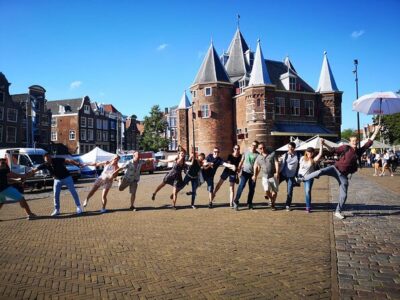
Next comes Nieuwmarkt. This is where the tour becomes especially visual: you’ll see the 15th-century city gate standing right in the middle of the square. The guide uses this kind of landmark as a pivot point for the story of the city—how Amsterdam evolved from a walled-protection mindset into a trade-and-canal economy that drew more people and built more structures.
If you like your history tied to objects you can point at, this stop delivers.
Montelbaanstoren and the Oude Waal lookout
After Nieuwmarkt, you’ll reach Montelbaanstoren, an old watch and defense tower. This isn’t just a quick exterior photo. The explanation frames the tower as part of an early 16th-century defensive line as the city expanded.
From there, the ride includes a lookout over the oude Waal. If you’re used to thinking of Amsterdam canals as purely scenic, this section helps correct that. You’ll see how houseboats and 17th-century canal houses sit together as part of the city’s long relationship with water, housing, and commerce.
This is also a great moment for pictures. You get a view with enough structure in it—lined-up houses, waterway perspective—that your photos won’t all come out as generic skyline shots.
You can also read our reviews of more historical tours in Amsterdam





The Jewish Quarter: synagogues, the 102,000-brick monument, and diamond-era canal houses
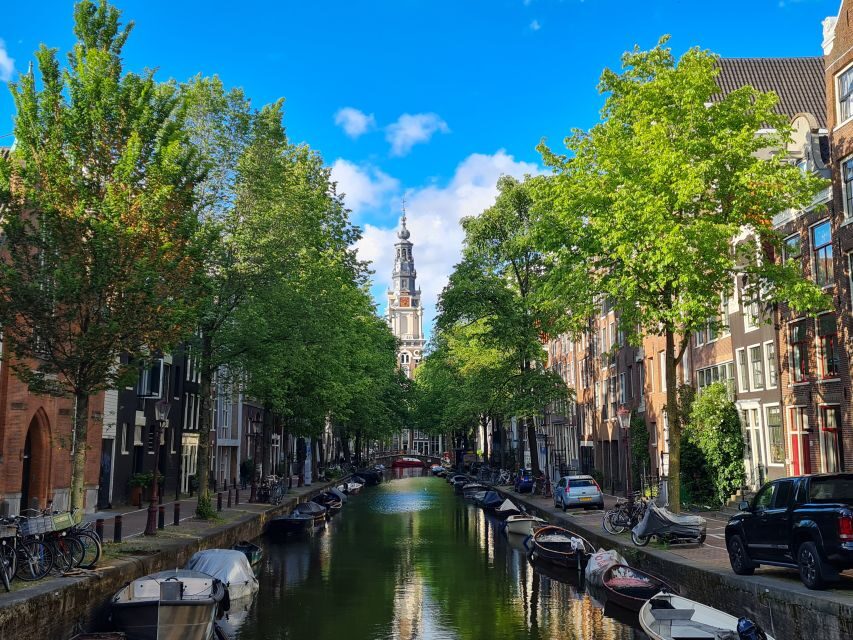
This is one of the strongest parts of the tour. It’s also the most emotionally heavy, which is exactly why the guidance matters.
You’ll visit the Jewish Quarter highlights, starting with the first synagogue Jewish people were allowed to build in Western Europe over 350 years ago. The tour also points out the Portuguese synagogue nearby.
Right in the area, you’ll see the Holocaust name monument with 102 thousand bricks carrying the names of Dutch Jewish victims of the Second World War. It’s a stop that many people remember because it’s specific, not vague. The guide’s job here is to keep the context clear while you’re standing in the exact place where those stories are being acknowledged.
Opposite the monument, you’ll see a row of older 17th-century canal houses tied to Sephardic immigrants who were successful in the diamond business. This detail connects tragedy, community resilience, and economic history—so the neighborhood doesn’t get reduced to one chapter only.
If you’re the type of traveler who likes to understand how neighborhoods actually functioned, not just what they look like today, this section is worth your attention span.
Hermitage area and the Amstel: water views that make the city feel real
The tour includes a stop near the Hermitage, housed in a huge 17th-century widowhouse. Even if you don’t go inside, the explanation helps you understand why the building’s identity matters, because it ties a civic institution to Amsterdam’s older domestic and social structures.
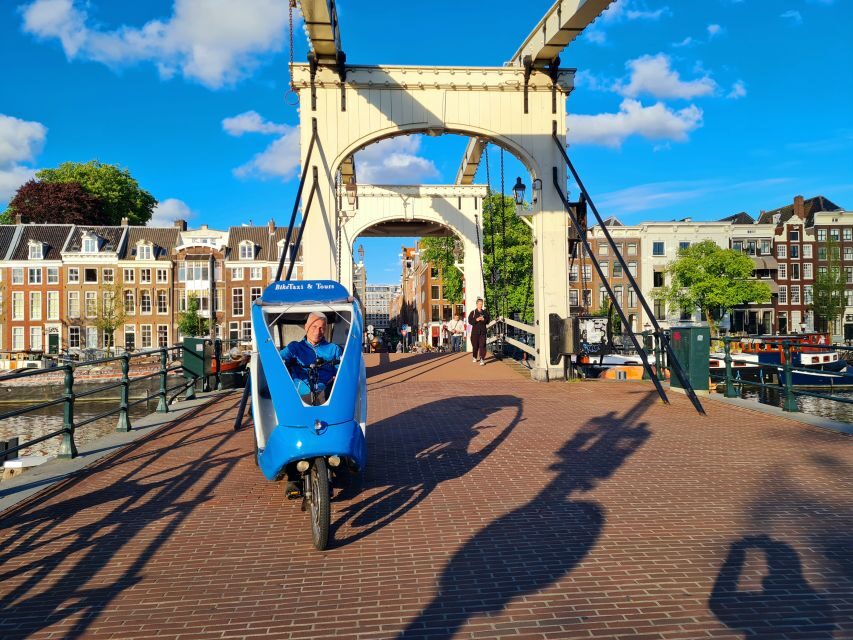
From there, the route leads you toward the Skinny Bridge, one of Amsterdam’s iconic bridges, known for how it lights up at night. Even if your timing is daylight, the guide points out what makes the design memorable—and why the bridge works as a photo subject even when everything else feels busy.
Then you get panoramic views of the canalised Amstel river. The Amstel is the main and widest canal in Amsterdam, and the tour uses this section to connect geography to history. When you can see how wide the waterway is, it’s easier to understand why boats, trade, and canal-side wealth mattered so much.
And yes, the ride includes bridge spotting along the way. The highlights list 7 bridges as part of the experience, and you’ll notice the city’s repeated water crossings as a theme, not just random architecture.
The 17th-century canal district loop: merchant houses in half circles
After the Jewish Quarter and Amstel views, you’ll head into the 17th-century canal district around the old center. The tour frames this area as a pattern you can recognize on a map: canal rings that form half circles around the core.
Here’s what I think makes this part click for you. You’ll see the typical canal houses—homes of merchants who built wealth into their architecture—and the guide explains that while they share similarities, each canal house is slightly different. That matters because it signals how building eras, styles, and owners changed over time.
Instead of “pretty buildings, period,” you start to notice differences. And once you can notice differences, you can recognize why Amsterdam looks like it does, even when you’re not standing in front of a major landmark.
If you’re visiting for the first time, this canal district segment helps you orient your mental map. If you’ve been in Amsterdam before, it can still sharpen your understanding of where wealth sat and how it shaped the street-level look.
Museumplein and the Rijksmuseum tunnel stop
The tour finishes in Museum Square (Museumplein), a large green open space built in the 19th century and home to some of the Netherlands’ biggest museum names—especially Rijksmuseum and Van Gogh Museum.
You’ll drive through the Rijksmuseum tunnel and make a stop right in the middle of the square. This is a good final move because it shifts the mood from narrow lanes and historic corners to a wide-open civic space.
Practical payoff: this stop is useful even if you don’t plan to enter museums that day. Museumplein gives you breathing room and a clear location anchor. It’s also an easy place to plan your next step—grab a coffee nearby, walk toward a museum you want, or head back to your hotel without feeling lost.
Price and value: what $230 gets you for two hours
At $230 per group up to 2, this isn’t a low-cost activity. But it does line up with the format: private guide, hotel pickup and drop-off, and a pedicab ride that takes you through areas where buses and cars don’t fit as neatly.
Here’s how I judge value on a tour like this:
- Time efficiency: Two hours is enough to hit major districts without sprinting across the city. For first-timers, that’s a big deal.
- Guide quality: Multiple bookings highlight the guide’s preparation and depth, including use of visual aids like maps and photos. That turns the tour from a ride into an education.
- Comfort features: You get a blanket for cold weather, plus the whole pedicab setup is designed for sitting and looking—not standing in crowds.
- Logistics saved: Pickup and drop-off means you don’t spend your energy figuring out transport between neighborhoods.
If you’re traveling with one other person, you get most of the value from the private dynamic. If you’re solo, check whether it’s still a good fit for your budget, but the “up to 2” pricing structure suggests it’s tailored for couples or friends.
Also note what’s not included: food and drinks. Plan a meal before or after. This keeps the tour focused on sights, but it means you should manage your own stamina.
When to book and how to pace your day
Because the route includes outdoor street time and bridge and lookout stops, timing matters. If it’s cold or rainy, the blanket helps, and the pedicab’s seated comfort can make even short chilly moments feel easier.
Also, this tour works well early in your Amsterdam stay. It helps you understand the city layout fast: where the old core sits, how the canal ring wraps around it, and where the museum area connects to the rest of your day.
If you want more time, you can ask about extending. One booking mentioned extending from the standard duration to three hours with the guide. That suggests the experience can stretch when you have extra questions or want a slower pace.
Who this tour suits best (and who should consider alternatives)
This is ideal if you want:
- A first-time orientation that still covers real historic neighborhoods
- A way to see the city without long walking stretches
- A private, guided explanation that connects landmarks to stories and timelines
- A comfortable way to take photos from key viewpoints like the Amstel and the Skinny Bridge area
It’s also a good fit if your priority is understanding the city rather than ticking off every museum inside.
One suitability note matters: the tour has a maximum combined passenger weight of 200 kg, and it states it’s not suitable for people over 220 lbs (100 kg). If you’re in doubt, confirm your details before booking.
Should you book this Amsterdam pedicab historical tour?
I’d book it if you want a guided, high-meaning sweep through Amsterdam’s key historic zones in a compact time window. The mix—Dam Square, dike-era streets near Zeedijk, Nieuwmarkt with its city gate, the Montelbaanstoren defense-tower context, and then the Jewish Quarter with its synagogues and the 102 thousand-brick monument—gives you a balanced view of what Amsterdam has been.
You’ll especially like it if you value a guide who brings the city’s timeline down to street level, using tools like maps and photos to help you place everything you’re seeing. And if comfort matters, the blanket plus the pedicab format make it a lot less exhausting than long walking tours.
Skip it if you’re hungry and want meals included, or if you need a longer day with many museum entrances. This tour is built for moving and understanding, not for food breaks and indoor stops.
FAQ
Where does the tour start and how do pickups work?
The tour starts at Dam Square. Pickup is included from your hotel, and you should wait outside in front of the hotel.
How long is the Amsterdam private pedicab tour?
The tour duration is 2 hours.
Is this a private tour?
Yes. It’s a private group tour, priced per group up to 2 people.
What neighborhoods and sights will you see?
You’ll cover Amsterdam’s historical old centre, the 17th-century canal district, the Jewish Quarter, a glimpse related to Chinatown, and the Museum Quarter area around Museumplein.
What language is the live guide?
The live tour guide speaks English, Dutch, and German.
What’s included in the price?
Included items are hotel pickup and drop-off, a blanket for cold weather, and an in-depth explanation of the sights.
Are food and drinks included?
No. Food and drinks are not included.
What should you bring for the tour?
Bring warm clothing.
Is the pedicab suitable for everyone by weight?
The maximum combined passenger weight is 200 kg, and it’s stated as not suitable for people over 220 lbs (100 kg).
Can you choose where the tour ends?
Yes. You can set your desired finish location in advance.