REVIEW · AMSTERDAM
Historical tour of Amsterdam with Italian guide
Book on Viator →Operated by AmsterdamViaggi · Bookable on Viator
A first stroll through Amsterdam can feel like a quiz you didn’t study for. This tour helps you get your bearings fast with an Italian guide and a tight route packed with stories—from merchant-era Amsterdam to the Second World War. I especially liked the amount of real local context you get along the way, and the way the guide turns landmarks into something you actually understand, not just see.
You’ll also come away with a clear sense of how daily life, religion, trade, and politics shaped the city’s streets. That’s made easier by the mother-tongue Italian guiding, which keeps explanations clear and smooth. The only real drawback is that the tour is a lot of ground in a 3.5-hour walk, so comfortable shoes matter.
If you want to walk through the big sights at a history pace without buying multiple tickets mid-tour, this is a smart way to do it. Just note that museum entry is not included for stops like Anne Frank House and the Van Gogh Museum.
In This Review
- Key takeaways before you go
- The value of an Italian historical walking tour in Amsterdam
- Where the tour starts and why the timing works
- The route: a guided story from Singel to Museumplein
- Flower Market area and a quick taste of Amsterdam’s style
- Anne Frank House frontage: what you see matters (and what you don’t)
- Dam, Singel, and the city’s political pulse
- Spice Customs House and the era of trade
- Red light district streets: context without turning it into a circus
- The Jordaan: a feel for Amsterdam beyond the center
- Leidseplein, the university square, and a lively mid-tour reset
- Vondelpark and Museumplein: nature and culture without confusion
- Van Gogh Museum exterior focus: why that can be smart
- Guides matter more than you think
- What to wear and how to pace yourself
- Who this tour is best for
- What you may miss (so you can plan better)
- Should you book this Amsterdam historical tour?
- FAQ
- How long is the Amsterdam historical tour?
- What’s the tour price per person?
- Is museum entrance included?
- Where does the tour start?
- Where does the tour end?
- What language is the guide?
- Is there a group size limit?
- Is this tour ticketed and how do I access it?
- Does weather affect the tour?
Key takeaways before you go
- Italian mother-tongue explanations that keep the story easy to follow
- A first-time Amsterdam route with Dam, canals, Vondelpark, and Museumplein tied together
- Anne Frank House and Van Gogh Museum exterior focus (entrance fees excluded)
- Small-group feel with a maximum of 50 people
- Ends at Museumplein so you can choose museum visits right after
- Good-weather dependent (bring a backup plan for drizzle)
The value of an Italian historical walking tour in Amsterdam
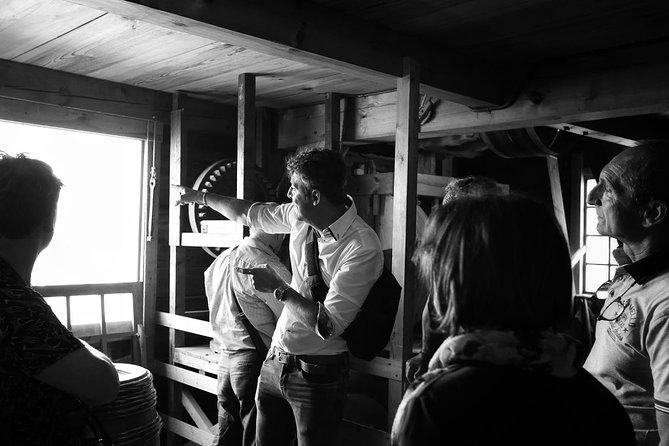
For a city like Amsterdam, a walking tour isn’t just sightseeing—it’s orientation. You’re dealing with canals that look similar, street names that repeat nearby, and neighborhoods that change vibe block by block. What I like about this particular tour is that it doesn’t treat the city like a postcard collection. It connects places you’d otherwise bump into randomly.
The Italian mother-tongue guiding is a big deal here. In a city where you’ll often hear English, French, Spanish, or a mix, having guidance delivered in a single native language keeps the thread of history intact. It makes it easier to ask questions, too—especially when you’re curious about why a street is shaped a certain way or why a building carries a specific nickname.
Price matters, so here’s the practical way to think about it: at about $28.81 per person, you’re paying for a trained guide covering a route that includes major central areas and well-known landmarks. Since museum entrances aren’t included, you’re not paying for ticket costs—you’re paying for interpretation, direction, and the “why” behind what you’re seeing.
And the schedule is friendly. It runs long enough to be satisfying (about 3 hours 30 minutes) but ends at Museumplein around 1:30 pm, which is great for your own museum choices afterward.
You can also read our reviews of more guided tours in Amsterdam


Where the tour starts and why the timing works
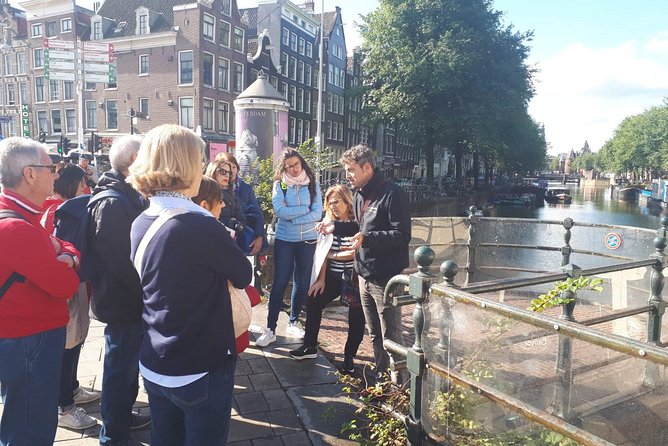
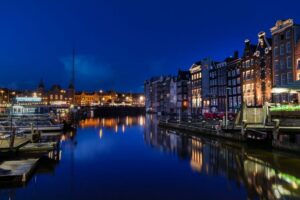
The meeting point is Park Plaza Victoria Amsterdam, Damrak 1-5. That’s a convenient start area because you’re already in the core visitor zone with lots of transit options nearby. You don’t feel like you’re crossing the city just to begin.
The tour ends at Museumplein (1071 Amsterdam). This is a clever move. Museumplein is where the “big hitters” cluster—Van Gogh Museum, Rijksmuseum, and more. Since entrances are not included, ending here gives you control: if you want to go straight into Van Gogh Museum, or you’d rather swap for another option, you can do it without losing time.
Also, the tour is set for a window of 10:00 am to 1:30 pm (Mon–Sun). That means you’re not starting too early, and you’re not stuck in the afternoon when lines can feel more intense. If your goal is to maximize a limited number of sightseeing hours, this timing works.
The route: a guided story from Singel to Museumplein
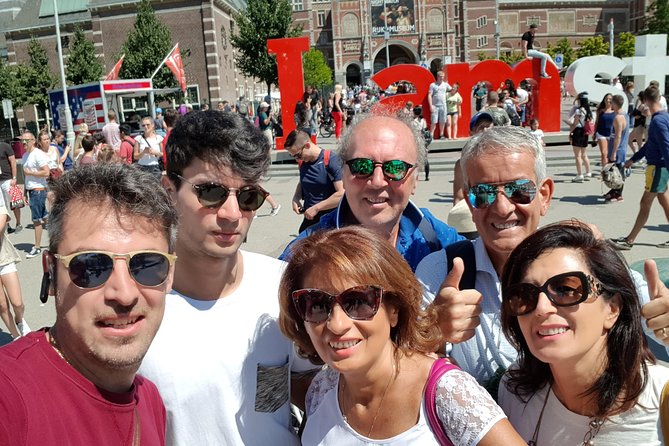
This tour is structured like a guided walk through different Amsterdam eras and themes. You’ll move through central streets and key neighborhoods, with the stops spaced so you’re not stuck standing around for too long.
Even if you’re not a “history person,” the way the route is built helps. It pairs each major sight with context—trade, religion, war, and everyday customs. You see famous locations, but you also learn what shaped them.
Here’s how the story lands as you go.
Flower Market area and a quick taste of Amsterdam’s style
One of the first stops is the Residence Flower Market area, with about 20 minutes there. You’re not spending all your time shopping. Instead, you’re stepping into a classic Amsterdam scene early, which helps you read the city with fresh eyes.
Even if you’ve visited flower markets before, Amsterdam’s situation is different because of how the canals and trading history influenced what’s “on display” in the city center. Think of this as a visual warm-up: you’re training your eye for the kinds of scenes Amsterdam repeats—markets, warehouses, and canal-linked commerce.
If it’s busy when you arrive, it’s still worth going. Flower Market moments are short here, and that’s a good thing—if you linger, the rest of the tour becomes harder to enjoy.
Anne Frank House frontage: what you see matters (and what you don’t)
You’ll pass by Anne Frank’s House and learn why it matters, with a short stop of about 5 minutes. Entrance is not included, so you’re not doing the full museum experience in this tour.
But that doesn’t make the stop less important. For many visitors, the Anne Frank name is known, but the surrounding context can feel abstract until someone gives you a clear framework: why Amsterdam became part of that story, how the city was affected, and what this location represents. You’re essentially getting the “meaning layer” before deciding if you want to invest time in an entrance ticket separately.
If you’re the type who needs to see every detail at the site, plan to come back later. If you prefer to keep moving and build context first, this works well as an introduction that doesn’t swallow your whole afternoon.
You can also read our reviews of more historical tours in Amsterdam





Dam, Singel, and the city’s political pulse
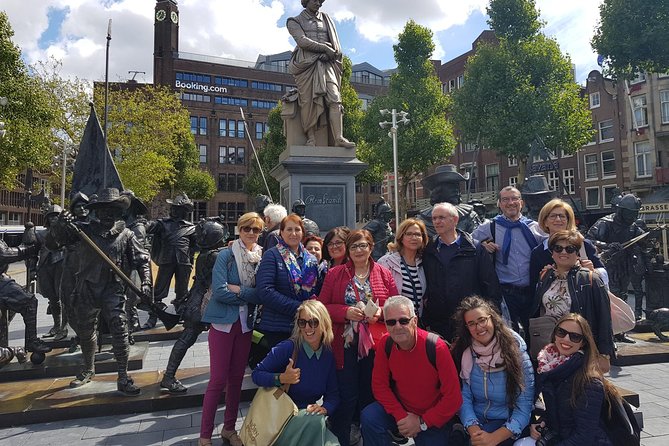
The route includes stops and passes through major central stretches like Dam Square and Singel. These are not random names on a map. They’re Amsterdam’s “how power and people meet” places.
What you’ll likely appreciate is how these areas connect to the bigger themes the guide is using—religious conflict, the evolution of governance, and the city’s role as a trading center. Amsterdam’s layout can look purely decorative at first glance, but once you know the logic, it becomes easier to read the city like a plan.
A practical note: these central zones can be crowded. The tour’s structure helps because you’re not wandering alone. You follow the guide’s pacing, and you get the key viewpoints without wasting time hunting for them.
Spice Customs House and the era of trade
You’ll also hear about the spice customs house and king’s warehouses along the route. This is where Amsterdam starts to feel less like a scenic city and more like a working commercial machine.
Customs and warehouses explain a lot about Amsterdam’s personality. The city grew rich by moving goods, taxing goods, and storing goods—then turning that infrastructure into jobs, neighborhoods, and political leverage. Once you understand trade, the architecture and the canal locations make more sense.
Even if you don’t remember every detail, you’ll leave with a “trade lens.” It’s the easiest way to start making sense of why Amsterdam looks the way it does.
Red light district streets: context without turning it into a circus
The itinerary includes the first red light district area. This stop is short and framed historically and culturally, not like a late-night entertainment recommendation.
The value here is context. Amsterdam can be mysterious, and some districts get reduced to headlines. A guide helps you place what you’re seeing into the city’s longer story—how law, economy, and social change shaped what exists today.
If you’d rather avoid anything that might feel intense, you still shouldn’t be blindsided. The tour is guided and time-limited in this section. You’ll keep moving.
The Jordaan: a feel for Amsterdam beyond the center
You’ll pass through the Joordan area (spelled in the itinerary as Joordan). This neighborhood is famous for its atmosphere, and the route uses it as a bridge between the grand central sites and the calmer, more everyday city feel.
What makes this part useful is how the guide likely connects it to the idea of living like an Amsterdammer. It’s not just a “pretty neighborhood” stop; it’s about how people occupy streets and how the city rhythm differs from tourist-only zones.
If you want photo moments, you’ll find plenty. Just keep your focus on the walking pace—the tour isn’t designed to turn into a photo marathon.
Leidseplein, the university square, and a lively mid-tour reset
The itinerary includes Leidseplein and the university square area, plus a stop near Hard Rock Café. This is a good mid-to-late part of the walk because the city’s energy changes here.
Leidseplein can feel like a hub—people, movement, and a sense that Amsterdam has modern layers stacked on top of older roots. It also gives you a natural break from the “deep history” sections. When the tour includes both formal landmarks and everyday city life, you get a more honest picture.
Practical tip: if you need snacks or a drink, this is a smart zone to do it because you’re closer to popular streets and shops.
Vondelpark and Museumplein: nature and culture without confusion
One of the biggest highlights is Vondelpark. You’ll visit while passing through on the way, so you’re not doing an hour-long park hike. Still, even a short look at Vondelpark matters because it’s part of Amsterdam’s self-image: the city makes room for green space inside a dense urban grid.
Then you reach Museumplein, the museum square zone. This area is ideal for ending the tour because it concentrates major cultural sites in one walkable place.
Van Gogh Museum exterior focus: why that can be smart
The itinerary includes Van Gogh Museum (entrance excluded). Not having entry can sound like a minus until you think about how tours work.
A short stop is enough for orientation. It helps you understand where the museum sits in the larger story of the city’s cultural identity. Then you can decide if you want to spend your own time inside when you’re not on a strict group schedule.
If you do choose to go in, arrive with a plan. Even with your own ticket, a museum can eat hours—so it’s better to go when your expectations are clear.
Guides matter more than you think
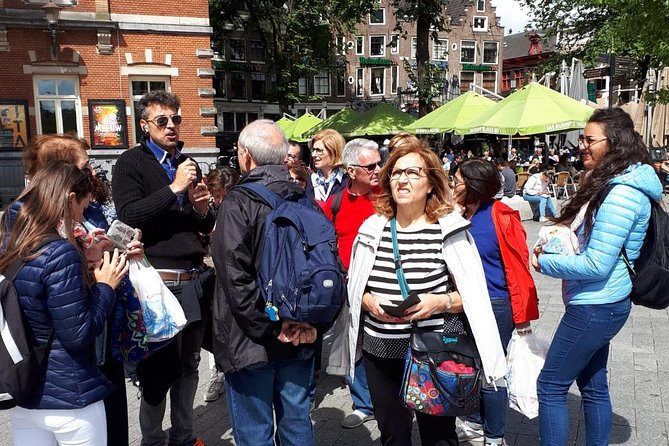
This tour runs with an Italian guide, and the reviews highlight professionalism, friendliness, and lots of information. Two guide names pop up in the feedback: Fabio and Lara.
From that kind of feedback, the main practical takeaway for you is simple: choose a tour where the guide’s job is to explain, not just escort. The route is loaded with moving parts—canal-side history, war-related context, and cultural districts. Without an engaging guide, it could become a blur of names. With a strong guide, it becomes a clear narrative.
Also, the group limit—up to 50 people—helps. It doesn’t guarantee a small group, but it reduces the odds of feeling lost in a crowd.
What to wear and how to pace yourself
This is a walking history tour. So plan like you’re walking most of the morning.
- Wear comfortable shoes since Amsterdam surfaces can be uneven and you’re moving between neighborhoods.
- Bring a light layer even in warm months; canal-area wind can surprise you.
- Keep a water bottle or plan to buy water around Leidseplein/Hards Rock area timing.
One more point: the tour requires good weather. If rain hits, it can be rescheduled or refunded (you’ll be offered a different date or full refund if it’s canceled due to poor weather). In other words, it’s not a “tour rain or shine” situation.
Who this tour is best for
This tour is a strong fit if you:
- are visiting Amsterdam for the first time and want a guided overview route
- like history but prefer it connected to places you can see
- want Italian-language guiding
- plan to visit at least one museum after the tour and appreciate ending at Museumplein
- enjoy walking through major districts without having to pick a complicated route yourself
If you already know Amsterdam well, you might find some parts familiar—especially the big-picture landmarks like Dam Square, the central canal area, and Museumplein. But even then, the guide-driven context can still make the city feel more “organized” in your head.
What you may miss (so you can plan better)
Because museum entrances are excluded, you’ll likely want to plan follow-up time if you care deeply about the interiors at:
- Anne Frank House
- Van Gogh Museum
- other Museumplein options nearby (like the Rijksmuseum zone)
The tour gives you an excellent framework and helps you decide where to spend your next hours. But it doesn’t replace those museum visits.
Also, the Anne Frank House stop is short. If you’re someone who wants a full, slow experience at that location, this tour is best seen as a primer rather than the main event.
Should you book this Amsterdam historical tour?
I’d book it if your goal is to leave Amsterdam feeling oriented and informed, not just “I saw that.” The price is reasonable for a guide-led route that covers central Amsterdam, major districts, and a connected history storyline. Ending at Museumplein is a practical bonus because it sets you up for independent museum time right away.
If you want to do multiple museum entrances during the tour, you’ll need a different setup, because this one keeps entrances off the table. And if you can’t handle walking for a few hours, pick a lighter day plan.
For most first-timers—especially those who want Italian mother-tongue guidance—this is a smart, efficient way to understand Amsterdam in one morning.
FAQ
How long is the Amsterdam historical tour?
It lasts about 3 hours 30 minutes.
What’s the tour price per person?
The price is $28.81 per person.
Is museum entrance included?
No. Entrance fees to museums are excluded, including Anne Frank House and Van Gogh Museum stops.
Where does the tour start?
It starts at Park Plaza Victoria Amsterdam, Damrak 1-5, 1012 TM Amsterdam.
Where does the tour end?
It ends at Museumplein, 1071 Amsterdam. The end time is around 1:30 pm.
What language is the guide?
The tour is guided by an Italian mother-tongue operator/guide.
Is there a group size limit?
Yes. The tour has a maximum of 50 travelers.
Is this tour ticketed and how do I access it?
Yes. It uses a mobile ticket.
Does weather affect the tour?
Yes. The tour requires good weather, and if canceled due to poor weather you’ll be offered a different date or a full refund.