REVIEW · AMSTERDAM
Zen Amsterdam Tour : Alternative History and High Experiences
Book on Viator →Operated by Oranje Umbrella Tours · Bookable on Viator
Amsterdam has rules, rumors, and side streets. This tour strings them together fast. You’ll walk past Begijnhof, cruise Dam Square’s big landmarks, then shift into the city’s coffee-shop culture and the legalization story behind it. It’s part culture walk, part hands-on street education, with a guide keeping the pace manageable (and the talk non-preachy).
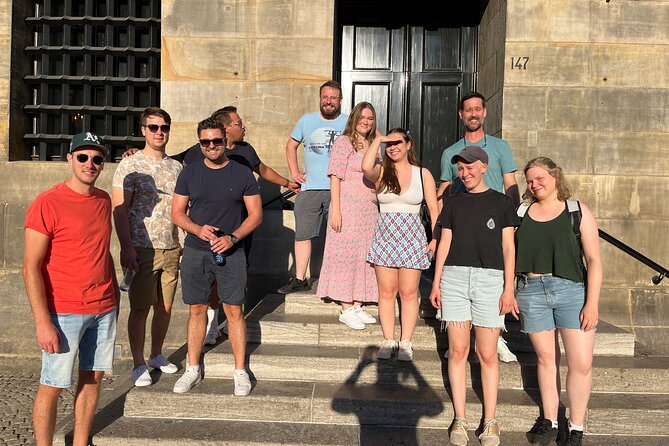
What I like most is how this stays human-sized. With a maximum of 26 people and a true walking format, you actually get questions answered and context explained. I also appreciate the route choices: you’re not only in the usual postcard zones—you learn why streets and institutions in central Amsterdam matter.
The main drawback: if you want a real food tour, this can disappoint. Snacks are tied to the longer option, and the shorter versions focus more on history and coffee-shop stops than on heavy tastings.
In This Review
- Key things I’d plan around
- Dam Square to Reguliersdwarsstraat: the easiest way to get your bearings
- Begijnhof: the 14th-century courtyard that still shapes Amsterdam
- Royal Palace Amsterdam at Dam Square: history with a front-row feel
- Spuistraat and the “oldest street” story
- Bloemenmarkt: floating flowers and a possible cheese moment
- Amsterdam Museum symbols: learning to read the city’s markings
- Smart shops and coffee shops: legalization history in plain language
- Snack reality check: what you actually get for $42
- Timing and pacing: why some departures feel better than others
- Space cakes, first-time nerves, and how to stay in control
- Who this tour suits best (and who should skip it)
- Should you book Zen Amsterdam Tour?
Key things I’d plan around
- A short, focused route that fits well into a first or second day in town
- Coffee-shop culture, tied to legalization history, not just facts for trivia night
- Begijnhof, Dam Square, and Bloemenmarkt for strong “Amsterdam context” without long museum time
- Optional longer time for more shops and neighborhoods, if you want more than the basics
- Warm in winter, cool in summer stops included to keep you comfortable while walking
- Bring your passport and be ready to show it (minimum age 18)
Dam Square to Reguliersdwarsstraat: the easiest way to get your bearings
If Amsterdam feels like it has two cities—the grand buildings and the sideways stories—this walk is designed to connect them. You start at Dam 6 (easy to find near the heart of town) and you end on Reguliersdwarsstraat, a street that’s famous for nightlife energy. In other words, you’re getting context in the morning-to-afternoon hours, then you’re set up to keep going on your own.
The tour runs about 1 hour 30 minutes for the main experience, with the option to upgrade to a longer version that adds more time, more stops, and more neighborhoods. That matters because the coffee-shop portion is time-sensitive. If you book the short option, you’ll get the highlights. If you book longer, you’ll have more breathing room to actually experience the culture side, not just be rushed from doorway to doorway.
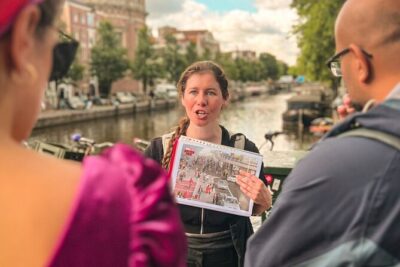
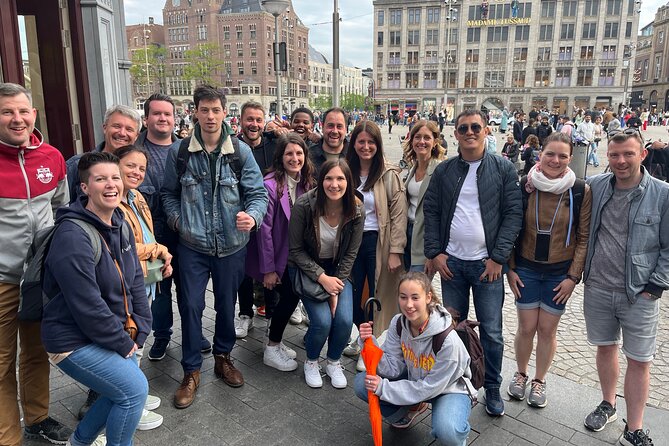
English is supported, and the overall format is a small-group walking tour. That’s a big deal in Amsterdam. With larger groups, you get dragged. Here, you’re more likely to stay together and still hear what the guide is saying.
You can also read our reviews of more historical tours in Amsterdam



Begijnhof: the 14th-century courtyard that still shapes Amsterdam

The walk begins with Begijnhof, a quiet pocket of medieval life that feels like a pocket watch in a loud city. You’ll learn about the 14th-century nuns who lived there and why their presence mattered to Amsterdam’s development. Even if you’ve never heard the story before, the guide’s job is to connect what you see on the street to why it happened.
Admission for this stop is listed as free, so you’re not losing time or money to entry lines. The bigger payoff is atmosphere. Begijnhof is the kind of place where you instantly understand why Amsterdam has a reputation for being both practical and strangely sheltered at the same time.
Consideration: it’s a walking tour. If you’re sensitive to uneven pavement or cobbles, wear shoes you’d actually trust on city stones.
Royal Palace Amsterdam at Dam Square: history with a front-row feel
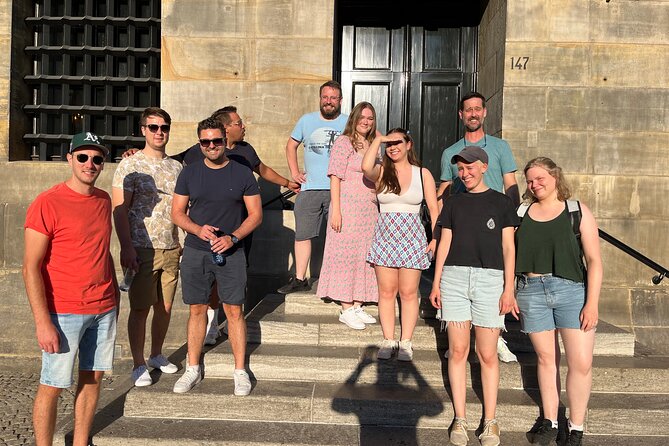
Next is Royal Palace Amsterdam on Dam Square. This stop is brief, but it’s designed to teach you how to read the space. You’ll look at what makes the palace famous and what happens inside. The description also notes that you can even see the King and Queen, depending on timing—so don’t be surprised if the guide points out symbolism tied to royal presence.
Then you circle back to Dam Square itself, where the guide explains what happened there and why it’s been busy for roughly 800 years. The stop also ties it to the origin of the city’s name, which is exactly the sort of small detail that helps a first-time visitor stop feeling like they’re just walking in circles.
Admission for the palace stop isn’t included. Translation: you’re observing and learning here, not paying your way through a long interior. If you want to go deeper later, you can always come back.
Spuistraat and the “oldest street” story
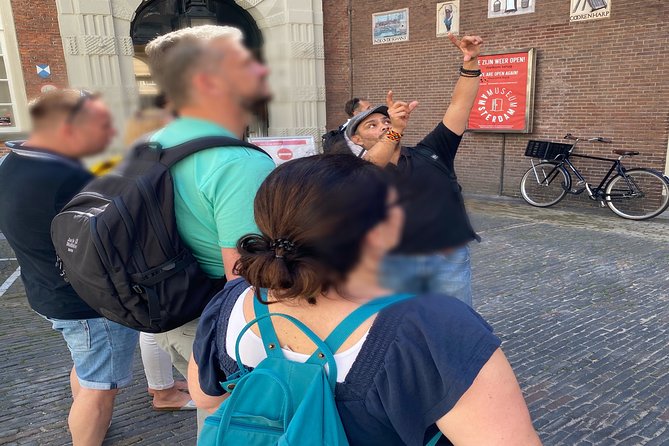
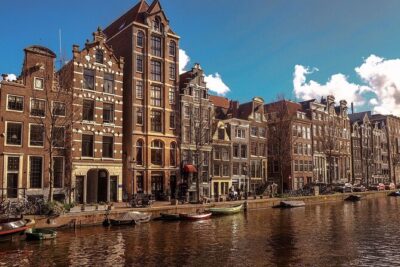
You’ll head to Spuistraat, described as Amsterdam’s oldest street. This stop is about transformation: you’ll hear what the street was before it became a street—specifically, how it changed from water into a walkway. In a city built on water management, that kind of explanation turns the canals from scenery into engineering.
You also get practical ideas for where to eat and drink nearby, because Spuistraat is packed with bars and restaurants. If you’re building a day plan, this is one of the places where the tour starts giving you immediate use.
Why this works: it’s not just myth-making. The guide helps you connect the street’s age to how Amsterdam grew and how visitors flow through the center today.
Bloemenmarkt: floating flowers and a possible cheese moment
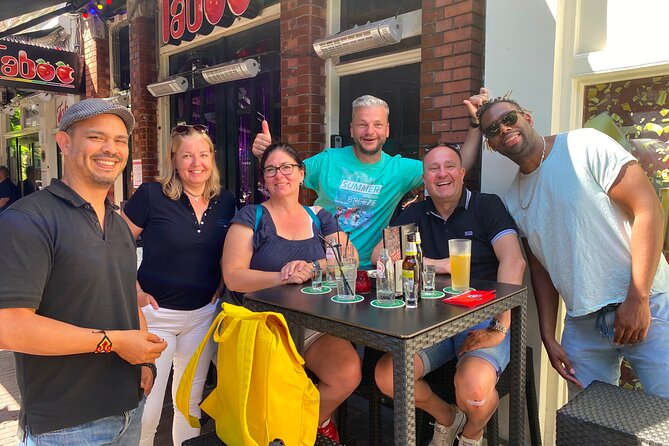
Then comes Bloemenmarkt, the famous floating flower market. It’s one of those Amsterdam landmarks that’s easy to understand even if you skip the spiel. The tour gives you the context, and then you see the market with fresh eyes.
Cheese sampling may be available depending on tour timing. That detail is important: if you’re counting on it, don’t book with the assumption it’s guaranteed at every departure. Amsterdam tours often run to the clock, and food-style perks can shift.
Consideration: if you have dietary restrictions, the company notes that you should advise them at booking and that a vegetarian option is available. If you’re vegetarian or have allergies, this is the moment to make sure your booking info is clear early.






Amsterdam Museum symbols: learning to read the city’s markings
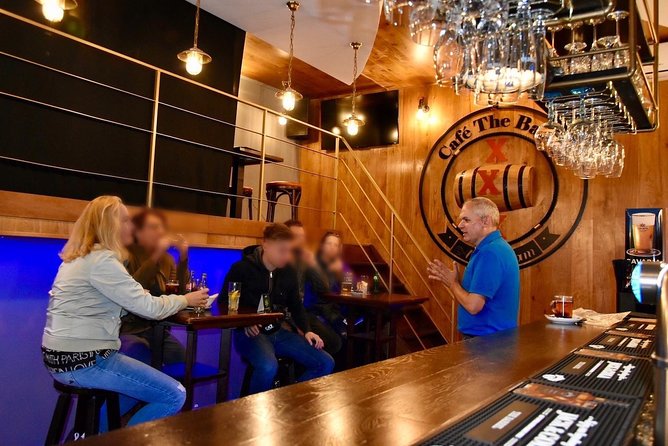
At Amsterdam Museum, the focus is on symbols outside the museum—including why the Amsterdam flag shows that infamous XXX-like mark mentioned in the tour description, plus other artwork you can see around the area.
This is a good stop for people who like “reading signs.” It’s also a smart use of time. Instead of doing a full museum visit, you get the story behind the visual language and move on. If museums aren’t your thing, you still leave with a clearer picture of how Amsterdam markets itself and what it considers important.
Admission is listed as free for this stop. Again, you’re not paying entry here; you’re learning what you can see from the outside.
Smart shops and coffee shops: legalization history in plain language
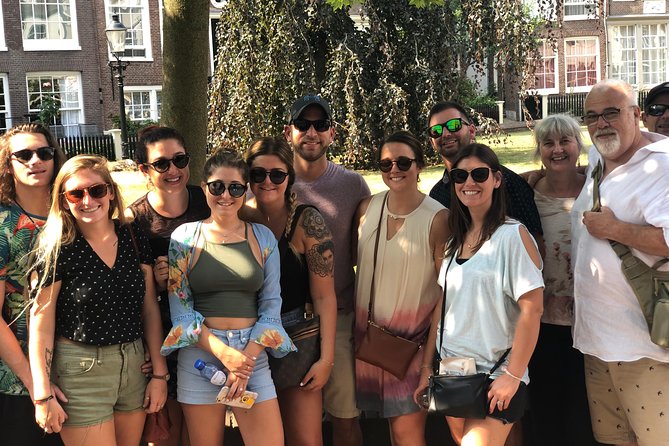
This is the heart of the tour name—alternative culture, legalization history, and a route that leads you into coffee-shop territory. The description says you’ll visit “smart shops,” learn about the history of legalization in the city, and explore how Amsterdam’s culture developed around regulated cannabis.
From guides mentioned in recent experiences—like Eric/Erik, Pedro, Ben, Caleb, Muha—the common thread is humor and a non-judgment approach. That matters because the topic can feel awkward or intimidating if you’re new. You don’t need to be a risk-taker to enjoy this part. You just need to be open to how Amsterdam talks about regulation, behavior, and public norms.
A couple practical notes if you’re planning to participate at a shop:
- Ask what’s happening and what’s expected before you try anything. Guides are there to guide.
- If you’re offered stronger edibles like space cakes, pay extra attention to guidance about portions and timing. One of the most serious complaints tied to the experience was confusion around how much to take and how that affected people later in the night.
Also, alcohol and drinks aren’t included. You can purchase them separately if you want. So if you don’t drink, you won’t be pressured. If you do, set your expectations: this isn’t a drink package.
Snack reality check: what you actually get for $42
The listed price is $42.05 per person, with the main version lasting about 90 minutes. That price makes sense if you treat it like a structured walking lesson. You’re paying for the guide, the planning, and the access to a route that would be harder to stitch together yourself in a short time.
But here’s the value question you should ask yourself: do you want tastings or context?
- For a 2-hour version, the data says food and snacks aren’t included.
- For a 3-hour version, snacks are included.
So if you’re expecting a classic food crawl with lots of eating, you may end up feeling shortchanged unless you book the longer option. The best strategy is to match your booking to your goal:
- If you want city stories + 1–2 coffee-shop stops, the shorter tour is likely fine.
- If you want more “hands-on” with snacks and extra time in the culture areas, upgrade to the longer option.
Timing and pacing: why some departures feel better than others
Walking tours are always at the mercy of timing. This one has multiple stops with short windows, and that makes pacing a big deal.
If you arrive late or miss the meeting point, it can become impossible to catch up. The tour description also notes no refunds if you miss due to late or non-arrival of a cruise ship, which tells you how strictly time-based this experience can be.
Also, weather matters. The experience is described as requiring good weather, and if it’s canceled due to poor weather you’ll be offered a different date or a full refund. Rain in Amsterdam isn’t rare—so pack for it and don’t expect long flexibility if conditions shift.
Space cakes, first-time nerves, and how to stay in control
The coffee-shop portion can include different types of experiences, and some people bring a high level of caution for a reason. You’re mixing a social setting with delayed effects and unfamiliar products.
My practical advice:
- If you’re new to edibles, keep expectations conservative and listen carefully to the guide’s instructions.
- Don’t let peer pressure make decisions for you.
- If you already know you’re sensitive, tell your guide before anything begins.
Some accounts of bad outcomes weren’t because the tour topic was inherently dangerous—they were about mismatched assumptions (like how much is one portion). Your best safety move is simple: get clarity on portions and how long effects take before you eat anything.
Who this tour suits best (and who should skip it)
This is a great fit if you want:
- Amsterdam context fast, with stops like Begijnhof and Dam Square that give real meaning to the scenery
- A guide who explains legalization history and coffee-shop culture in an approachable way
- A light first-day activity that ends in a lively area (Reguliersdwarsstraat)
- A small-group setup where you can ask questions
You may want to skip—or book differently—if you:
- Expect this to be a food tour with lots of tastings in the shorter duration
- Want a totally passive experience with no participation at coffee shops
- Hate time pressure. The short format means you’ll have limited wiggle room
One more filter: minimum age is 18, and a current valid passport is required on the day of travel. Don’t show up without it. Amsterdam tours can be strict about ID.
Should you book Zen Amsterdam Tour?
If you’re the type of traveler who likes learning why a place works—not just how it looks—yes, you should book it. The value for $42 is strongest when you treat it like a guided walk through Amsterdam’s public face and its regulated coffee-shop culture.
I’d especially book the longer option if:
- snacks matter to you,
- you want more shops and neighborhoods without feeling rushed,
- and you want extra time for the legalization story to land, not just be mentioned.
Just go in with the right mindset: this isn’t a buffet. It’s a cultural route, with coffee-shop history at the center, and a few small “try it” moments that depend on the tour length and timing.