REVIEW · AMSTERDAM
Anne Frank and Amsterdam Jewish History Walking Tour
Book on Viator →Operated by Breeze Guided Tours · Bookable on Viator
History walks right beside you. This 2-hour Anne Frank and Amsterdam Jewish history walking tour puts WWII stories on the streets you’ll actually recognize, with a small-group feel that keeps questions coming. I especially like the way the route builds context before you get anywhere near the Anne Frank House, but plan ahead: entry to the Anne Frank House isn’t included.
You’ll start at Beursplein 5 and finish outside the Anne Frank House area at Westermarkt 20, so you can keep going right after the walk. Guides such as Iris, Leo, Tristan, Stein, and Gee show up often in people’s stories, and a common theme is smart, human pacing when the subject turns heavy.
In This Review
- Key highlights you’ll feel fast
- A walking tour that changes the Anne Frank visit
- Dam Square: a WWII memorial, right at the start
- Kattengat and der silveren spiegel: hidden people in a bar setting
- Singelgracht and Willem Arondeus: a resistance thread you can track
- Anne Frank House zone: you end outside, so plan your next move
- Group size and the street reality of Amsterdam
- Guides, storytelling, and why it matters for hard topics
- Price and value: what $29 buys you (and what it doesn’t)
- Best way to fit it into your Amsterdam plan
- Who should book this Anne Frank Jewish history walk?
- Should you book it?
- FAQ
- Is Anne Frank House admission included?
- How long is the walking tour?
- How big is the group?
- Where does the tour start and end?
- Is the tour offered in English?
- Do I need a print ticket?
- What’s the cancellation policy?
- Is the tour accessible with public transportation?
Key highlights you’ll feel fast
- Street-level WWII survival stories that go beyond the usual photo stops
- Kattengat and der silveren spiegel, tied to a Nazi-era hiding story in a bar
- Singelgracht and Willem Arondeus, including a stumbling stone tied to resistance memory
- Dam Square as a serious opening note with a WWII memorial you’ll see early
- Max 15 people for a quieter, more personal walk and time to ask questions
- Ends outside the Anne Frank House so your next step is clear
A walking tour that changes the Anne Frank visit
Amsterdam has a way of making history feel close, even when it happened far away in time. This tour leans into that. Instead of only pointing at the headline sites, it sends you past places connected to Jewish life, resistance, and occupation—so when you later stand near the Anne Frank House, the neighborhood won’t feel like a single attraction. It’ll feel like a real set of streets where real people moved, hid, and hoped.
The biggest value is the sequence. You don’t start at the museum; you start with context. That matters because the Anne Frank story doesn’t sit alone. It sits inside Amsterdam’s Jewish community, Nazi occupation, and the pressure that kept tightening.
You can also read our reviews of more walking tours in Amsterdam



Dam Square: a WWII memorial, right at the start
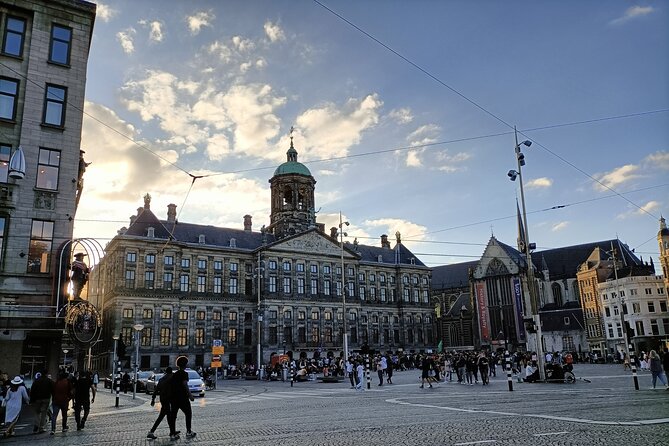
Your first stop is Dam Square, where you’ll see the memorial for fallen soldiers of the Second World War. It’s a short stop (about 10 minutes), but it sets the tone in a way that’s hard to replicate when you show up later, distracted, and hungry.
Why it works: starting here gives you a mental frame for everything that comes next. Even if you think you already know the big events, this kind of opening reminds you the Holocaust-era story is part of a wider WWII story—one with many victims, many fronts, and long consequences.
Practical tip: Dam Square is open and busy. Wear your “I’m here for walking” shoes. You’ll want to look up and around quickly, then move on.
Kattengat and der silveren spiegel: hidden people in a bar setting
Next you head to Kattengat, and the tour connects a specific hiding story to der silveren spiegel, a bar that played a role during the Nazi occupation in Amsterdam. The key detail is stark: during that period, 16 people hid inside.
This stop is only around 10 minutes, but it’s powerful because the setting sounds ordinary. A bar. A place you’d associate with night life, laughter, and routine. Yet in this story, it becomes something else entirely.
What I like about this approach: the tour doesn’t treat the occupation like a distant, museum-only topic. It shows how it fractured everyday spaces. You’ll likely find yourself noticing nearby buildings differently after hearing this kind of local detail.
Singelgracht and Willem Arondeus: a resistance thread you can track

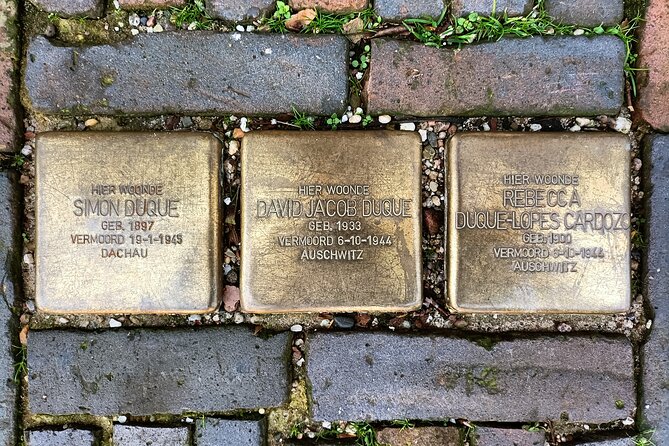
At Singelgracht, the tour follows another thread: the life and work of resistance fighter Willem Arondeus, including a stumbling stone tied to his memory.
This is where the walk stops feeling like a list of facts and starts feeling like Amsterdam has landmarks for remembrance. That stumbling stone detail is exactly the kind of thing you’d walk past a hundred times without noticing. With a guide pointing it out, the street becomes a kind of index—one you can read.
Why this part matters: resistance isn’t just a headline. It’s people acting while the danger is active. Hearing about it while you’re standing in the city makes the story less abstract. It also helps connect Anne Frank’s experience to a broader web of people who tried to fight back in different ways.
Anne Frank House zone: you end outside, so plan your next move
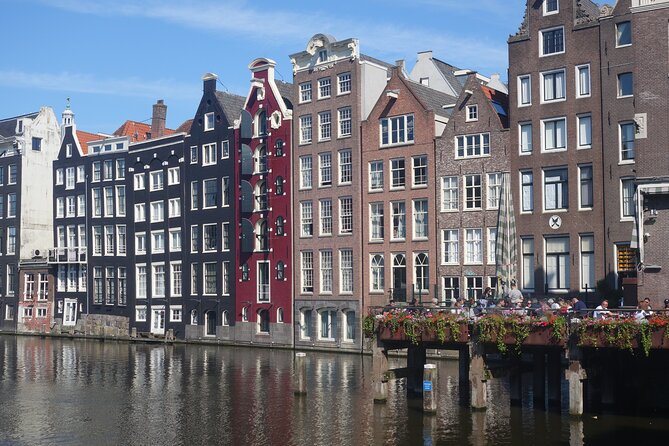
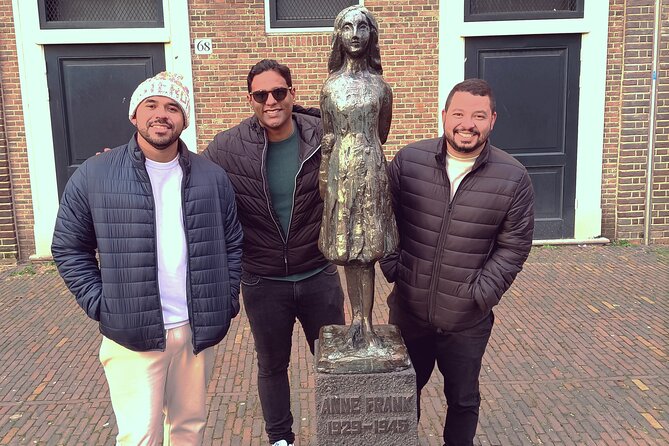
The tour ends at the Anne Frank House area, finishing around Westermarkt 20. Importantly, Anne Frank House admission is not included, so you’ll want to decide your follow-up plan before you start.
How to use the timing: if you’re planning to enter the Anne Frank House, consider this walk as your warm-up. It gives you names, streets, and context—then the house becomes more than a line you stand in. It’s a place you can locate inside the larger story.
One tradeoff to think about: the Anne Frank House itself is separate. If you’re hoping this tour automatically turns into house entry, it won’t. Your good move is to pair the walk with whatever ticket plan you already have.
You can also read our reviews of more historical tours in Amsterdam






Group size and the street reality of Amsterdam
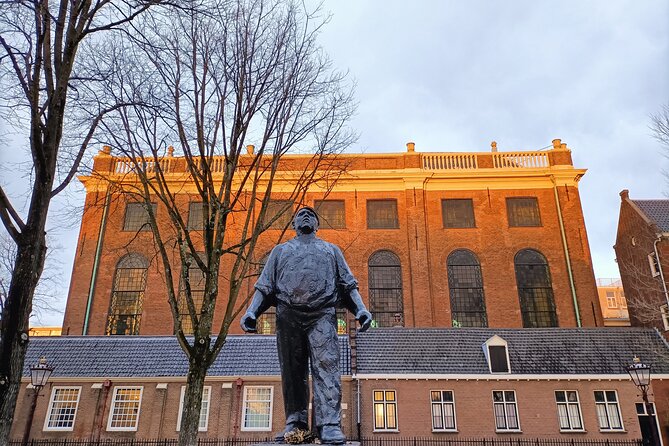
This is a small-group tour, limited to 15 travelers. That size is a sweet spot for human-scale history talks. You’re not shouting over a crowd, and you’re more likely to get your questions answered clearly.
Also, this is still Amsterdam walking. Expect uneven streets and plenty of bikes zooming past. If you have mobility challenges, wear supportive shoes and take the pace seriously. One of the practical lessons from people who’ve done this kind of route: if your knees aren’t having a great day, you’ll feel it.
Kids: most people can participate, but this is still a history-focused city walk. If you’re traveling with younger kids, you might want to choose an energy level first, then the tour.
Guides, storytelling, and why it matters for hard topics
What people consistently reward here isn’t just facts. It’s delivery. Names like Iris, Leo, Tristan, Stein, and Gee come up in connection with storytelling that keeps the material understandable, even when it’s brutal.
For you, that’s not a small thing. WWII and the Holocaust can easily become either too heavy to process or too general to remember. A good guide can keep the timeline clear, connect the street details back to people, and make sure you know what you’re looking at without turning it into a lecture.
Look for how the guide handles questions. On this route, the goal is to help you connect dots while you’re still on foot. You’ll get more value if you ask what you don’t yet understand.
Price and value: what $29 buys you (and what it doesn’t)
At $29.02 per person, this tour is priced like a serious walking-history experience that includes a local licensed guide and the tour itself. The “per person” number matters less than the structure: you’re paying for a guide to translate specific street locations into a coherent story.
The one clear extra cost to consider is Anne Frank House admission, which is not included. If you’re planning to enter the house anyway, the ticket becomes the only extra big line item. If you’re not planning to enter, you’ll still get a meaningful street-based history walk—but you should expect the final stop to act as an endpoint, not a full museum visit.
Timing note: this tour often gets booked ahead (on average, about 43 days in advance). If your dates are fixed, it’s smart to secure it earlier rather than later.
Best way to fit it into your Amsterdam plan
This is a “pairing” tour. It works best when you’re also visiting the Anne Frank House or you’re already committed to learning about Amsterdam’s Jewish history beyond the big marquee stop.
If you want a smooth day, do it like this:
- Start with this walk to build context and names.
- Then visit the Anne Frank House with more clarity about who, where, and why.
If you’re trying to pack too much, don’t. This walk is about attention and walking between a few focused points, not checking off 30 sights.
Who should book this Anne Frank Jewish history walk?
Book this if you want:
- Small-group pacing and real conversation time
- A route that treats the neighborhood as the story, not just the destination
- Help understanding how resistance, occupation, and Jewish life connect on the ground
- A guided lead-in before Anne Frank House—so your time there feels more specific
Skip it or reconsider if:
- You only want a standard quick-hit list of famous spots
- You don’t plan to go inside the Anne Frank House at all and prefer a lighter, more casual city stroll
Should you book it?
Yes, if you want to see Amsterdam with a different lens and you’re open to a guided walk through difficult history. The price is fair for what you’re getting: a licensed guide, a short, focused route, and an ending location that keeps your next step simple. Just remember the key limitation: the Anne Frank House ticket is on you, so line up your entry plan early.
If you’re traveling during peak times, treat it like a must-do and book ahead. And bring comfortable shoes. Amsterdam doesn’t care about your schedule, bikes included.
FAQ
Is Anne Frank House admission included?
No. The tour ends outside the Anne Frank House area, but admission to the Anne Frank House is not included.
How long is the walking tour?
It lasts about 2 hours.
How big is the group?
The tour is limited to a maximum of 15 travelers.
Where does the tour start and end?
It starts at Beursplein 5, 1012 JW Amsterdam and ends at the Anne Frank House area, Westermarkt 20, 1016 GV Amsterdam.
Is the tour offered in English?
Yes. The tour is offered in English.
Do I need a print ticket?
You’ll get a mobile ticket.
What’s the cancellation policy?
You can cancel for a full refund up to 24 hours in advance of the experience start time.
Is the tour accessible with public transportation?
Yes. It is near public transportation and service animals are allowed.